
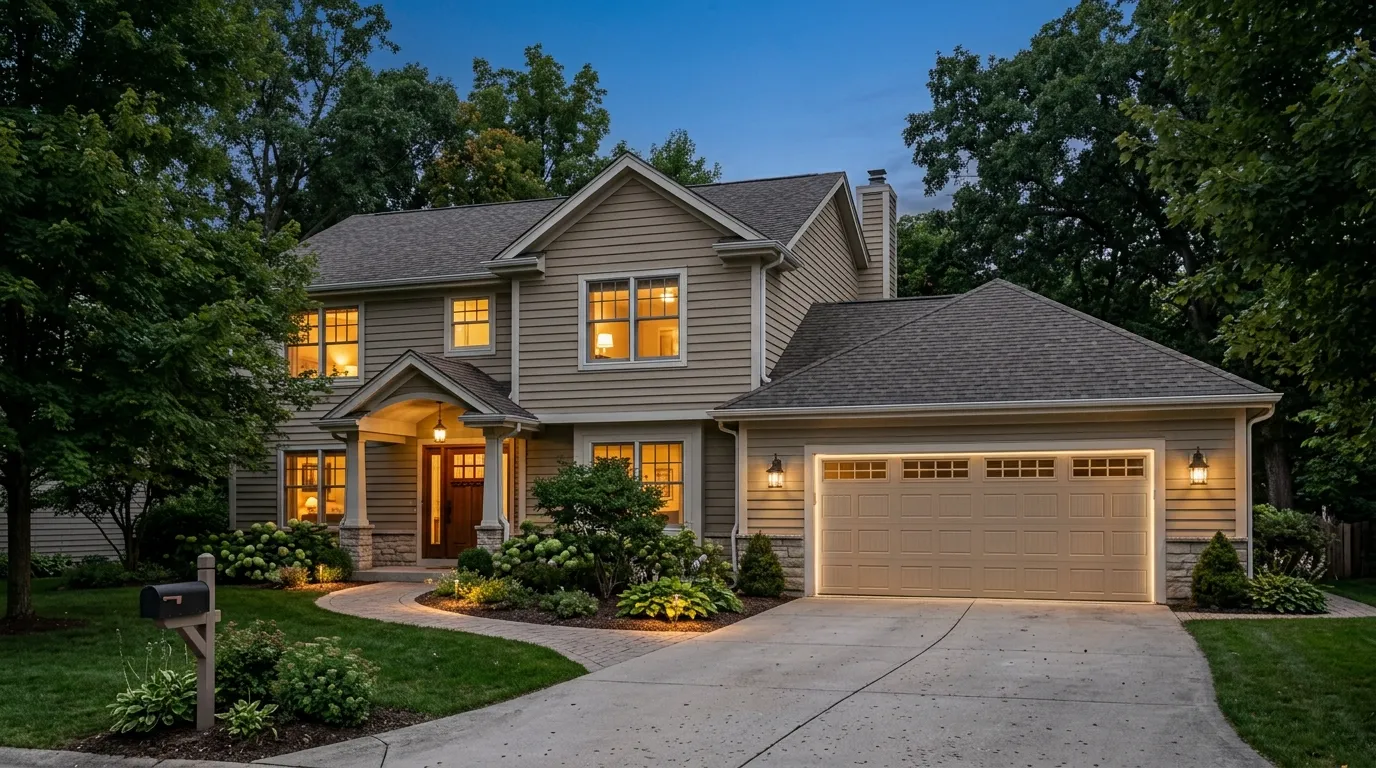
Service Areas
Where We Send Trucks Around St. Louis
See the towns and neighborhoods around St. Louis we run trucks to, from Central West End a mile out to Spanish Lake at eleven miles, and what breaks on each era of door.
- Licensed & Insured
- Same-Area Service Calls
- Upfront Pricing
What We Fix Most Here
Find your town below and you'll get a sense of what we usually find when we open the door. We're based in St. Louis and drive out to the surrounding communities rather than keeping crews stationed in them, so the truck that shows up in Clayton or Kirkwood is the same one working a job in Bevo an hour earlier.
Central West End is about a mile from us to the WNW, Midtown a mile east, and Downtown and the city of St. Louis proper sit around three miles out. Moving further, Maplewood, Pagedale, Clayton, Richmond Heights, and University City are all roughly five miles from us, with Shrewsbury, Brentwood, Normandy, and Jennings a mile or two past that.
Webster Groves, Affton, Lemay, Ladue, St. John, Riverview, Olivette, Overland, Glendale, Bellefontaine Neighbors, and Ferguson run seven to eight miles out. Crestwood, Berkeley, Green Park, Frontenac sit around nine, and St.
Ann, Mehlville, Concord, Kirkwood, and Sappington land near ten. Spanish Lake, at eleven miles, is the farthest stop on our regular list.
The closer-in neighborhoods like Tower Grove South, Lindenwood Park, and Carondelet tend toward tighter city lots and older attached garages, which changes how a track gets mounted and how much clearance we have to work with on a spring swap.
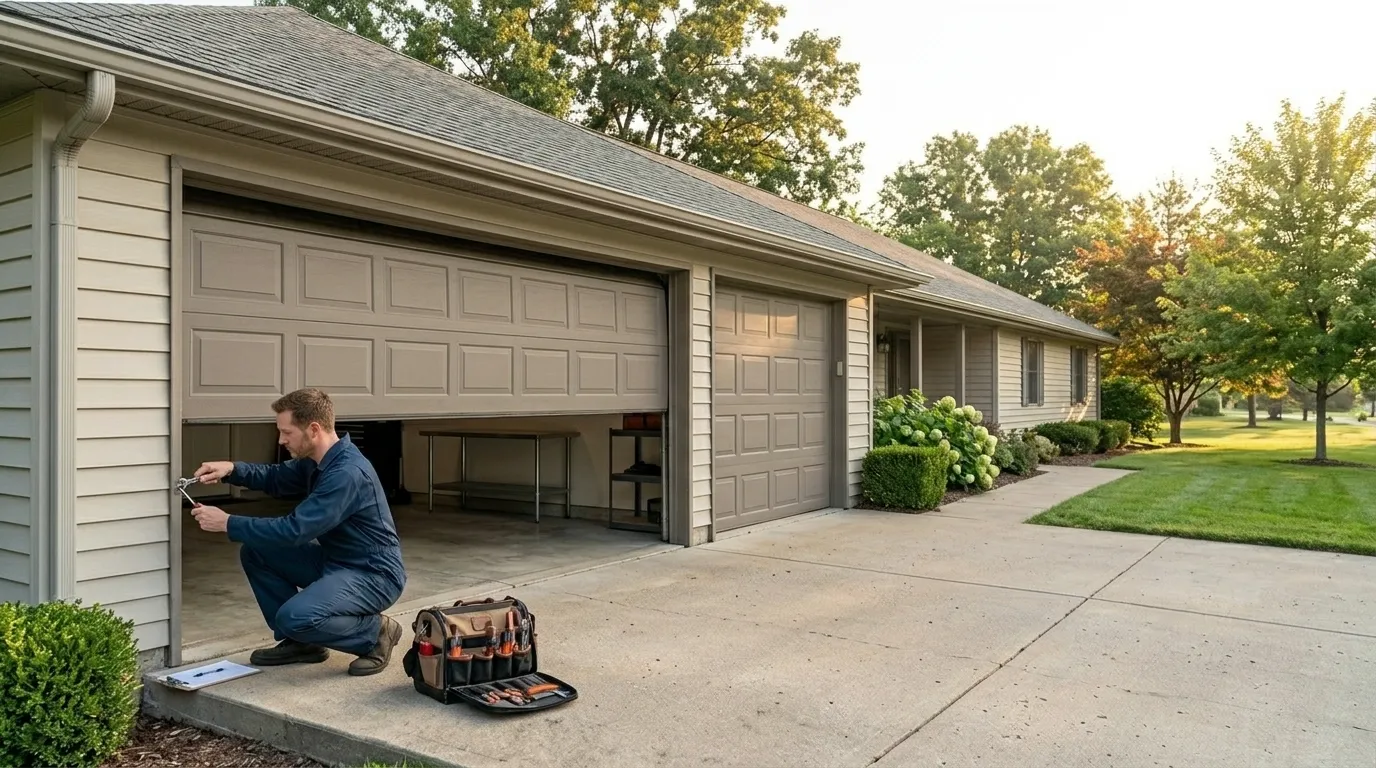
What Gets Built Around Here
Across the 49 named areas we cover, most of the housing went up between 1947 and 1990, with the median build year sitting at 1967. That means the doors we replace most are original steel or wood sectional doors from the 1960s and 70s runs - a lot of them on extension spring setups that were standard before torsion became the norm, and a lot of one-piece hardware nobody stocks new parts for anymore.
The region sits in a cold-moderate climate band, so seals, insulation ratings, and how well a door holds a thermal break matter more here than they would somewhere milder. On the older stock, foam gaskets have usually hardened or gone missing entirely by the time we get the call.
With 287,477 households and 146,725 owner-occupied houses across the service area, and a median household income of $84,389, we see a wide range of jobs - from a straight spring swap on a 1960s ranch to a full opener upgrade on a newer build near the edge of our range. The mix of build eras is really the whole story: what fails, and what it costs to source the part, tracks pretty closely to when the house was built.
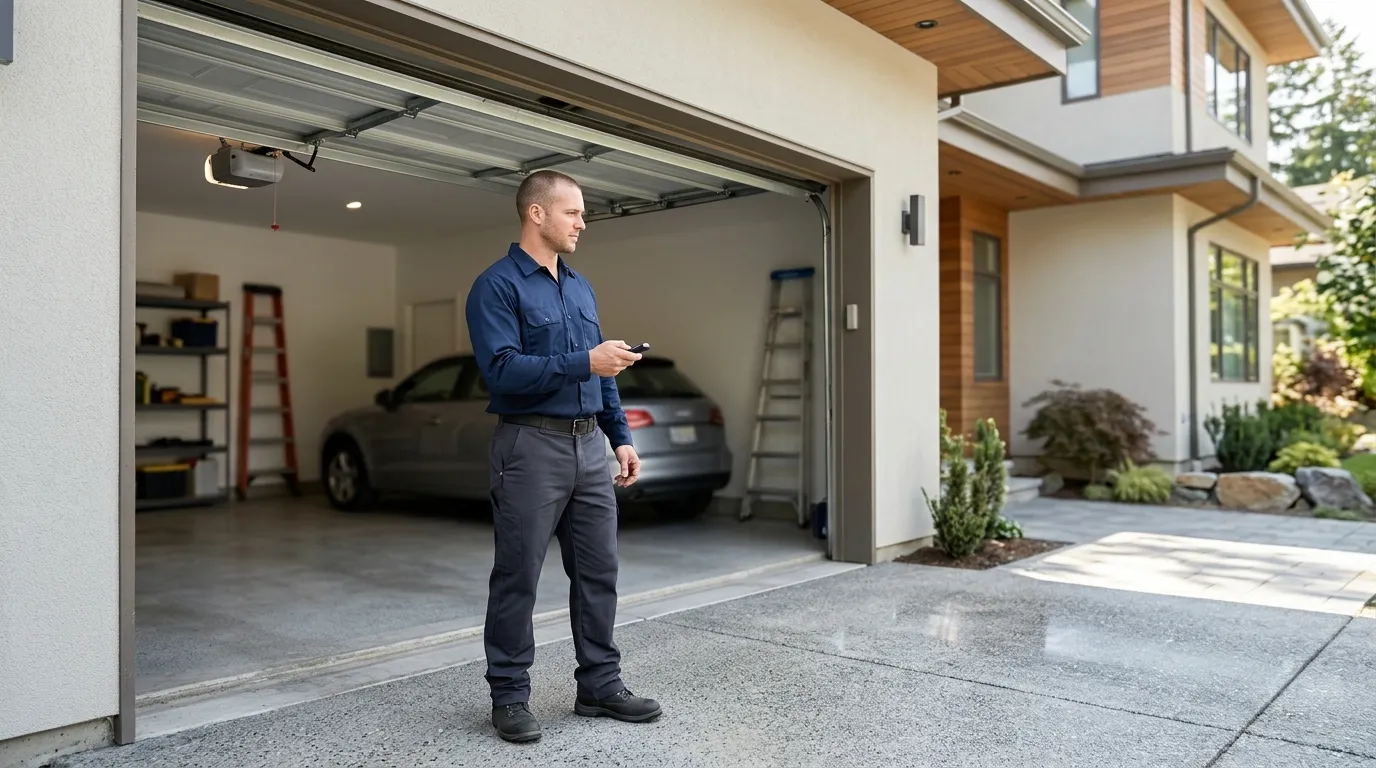
What Happens When You Call
We ask where you are first, because distance and door age both shape the visit. A job five miles out in Clayton and one eleven miles out in Spanish Lake both get the same truck, just a different drive time before it.
We'll ask the age of the house if you know it, since a lot of the stock in this service area dates to the 1960s and 70s, and that tells us whether we're likely dealing with extension springs, an older torsion setup, or something more recent. If your door is an odd or discontinued panel size from that era, we're honest about it up front: we don't keep every obsolete part on the truck, and a few specialty panels do need to be special-ordered, which can add time to the job. That's the one real limitation worth knowing before you book.
Once we're on site, we diagnose the actual failure rather than assuming it matches the house's age - plenty of newer openers get installed on old doors and vice versa. From there we tell you what it needs and what it costs before any work starts.
Full Service Area Directory
A
J
K
P
S
Frequently Asked Questions
Do you have a location in my town?
No, we're based in St. Louis and drive out to the surrounding communities rather than keeping a branch in each one. Towns like Kirkwood, Webster Groves, or Spanish Lake are all served by trucks dispatched from here, not a local office.
Why do you ask how old my house is?
Because most homes across this service area were built between 1947 and 1990, with a lot of 1960s and 70s construction. That era tends to have specific spring types and panel sizes, so knowing the build year helps us bring the right parts on the first visit.
Is my town too far out for a service call?
Our regular range runs from about a mile out, in places like Central West End, to roughly eleven miles, out toward Spanish Lake. If your town is on our list, we cover it; if you're not sure, ask when you call.
Will you always have the part for an older door?
Not always. Some panel styles from the 1960s and 70s stock common in this area are discontinued, and those occasionally need a special order, which adds time. We'll tell you that up front rather than guess.
Not Sure If We Cover Your Street?
Call and ask - we will tell you straight.