
Service
Garage Door Roller Replacement Across St. Louis
Most St. Louis garage doors date to the 1960s-70s boom, and original steel rollers are past due. Here's what roller replacement actually involves and costs you in downtime.
- Licensed & Insured
- Same-Area Service Calls
- Upfront Pricing
What Happens When You Call
-
1
Call or Request a Quote
Tell us what the door is doing and roughly how old the house is - that alone points us toward the likely part before a truck leaves.
-
2
On-Site Diagnosis
A tech checks the spring, cables, tracks, and opener in person and tells you plainly what is actually wrong.
-
3
Straight Price, No Surprises
You get a number before any work starts. It covers parts and labor, nothing added after the fact.
-
4
Fixed the Same Visit
Most repairs are done in one trip. If a part needs sourcing, we tell you that upfront instead of guessing.
Why This Fails Locally
Housing across this service area was mostly built between 1947 and 1990, with the median year sitting around 1967. That means a huge share of the doors we look at, from Pagedale to Kirkwood to Webster Groves, still have their original steel rollers or a mid-life replacement set that's now itself thirty or forty years old. Steel rollers with plain bearings weren't built to run smooth forever, and nobody in the 60s and 70s was thinking about a door that would still be in daily use fifty years later.
St. Louis sits in a cold-moderate climate band, which means real freeze-thaw cycles every winter. That cycling swells and shrinks the wood jambs a lot of these doors are still hung on, which nudges the track out of true a little more each year.
A roller that's slightly worn tolerates a straight track fine. The same roller in a track that's drifted out of alignment starts binding, chipping, and eventually cracking at the stem. This isn't a defect in any one door - it's what happens when 1960s-70s hardware meets decades of seasonal movement.
We see this pattern across the whole area we cover, not in one neighborhood. The fix is the same whether the house is in Ladue or Lemay: the rollers wear out roughly on schedule with the housing stock, and the climate just speeds up the misalignment that makes worn rollers fail loud instead of quiet.
The Symptom
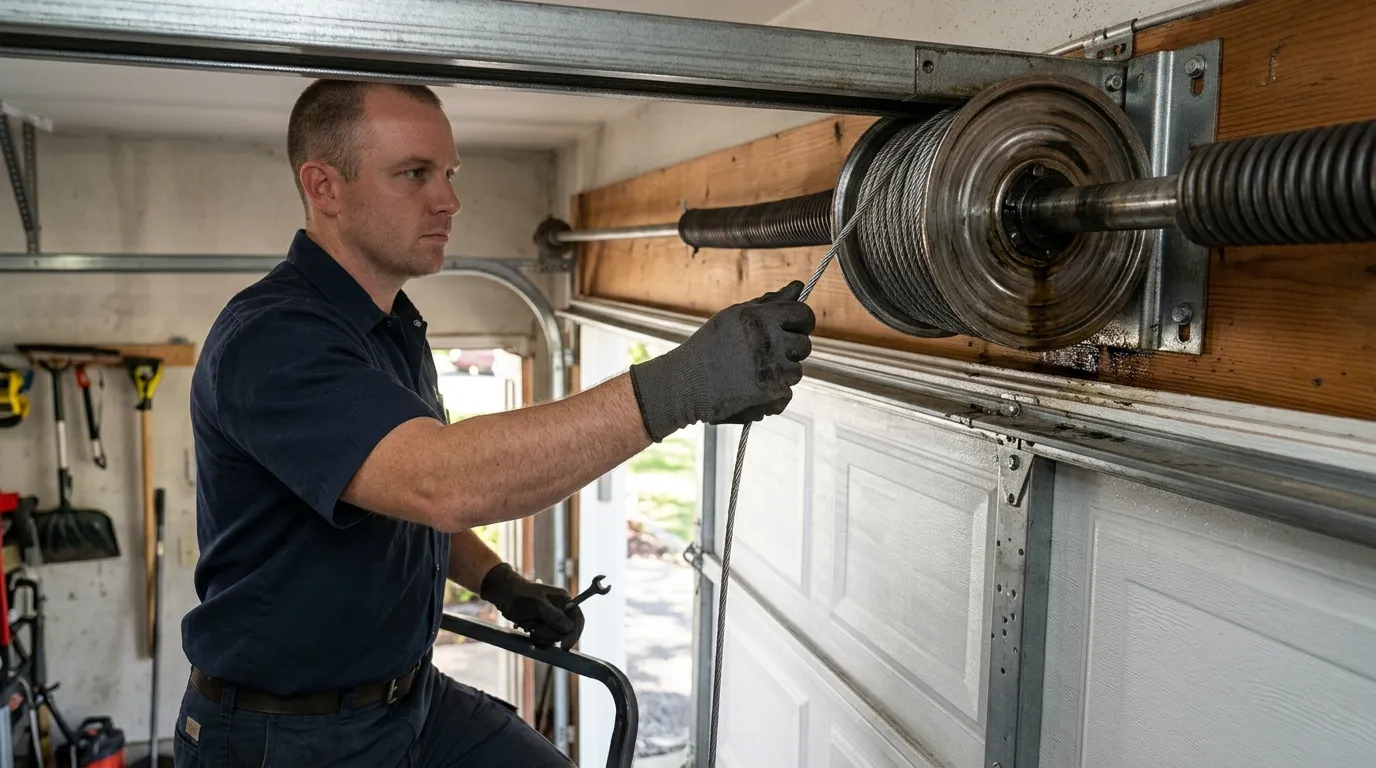
It starts as a rhythmic thump or grind every time the door moves, usually worse near the top of the travel where the track curves toward the ceiling. Some owners describe it as a shopping-cart wheel sound. If you look at the rollers themselves through the gap in the track, chipped nylon or a flattened, shiny spot on a steel roller is usually visible without taking anything apart.
Left alone, a bad roller doesn't stay a noise problem. As it wears unevenly it starts to bind in the track, which puts extra load on the cable and the opener's drive gear.
We've been called to jobs where what started as a squeak turned into a jumped track or a snapped cable within a few months, because the roller kept dragging until something else gave. If your door hesitates, jerks, or seems to catch at one specific point every single cycle, that's the roller, not the opener - the opener is just doing what it's told and fighting the friction the whole way.
What the Repair Takes
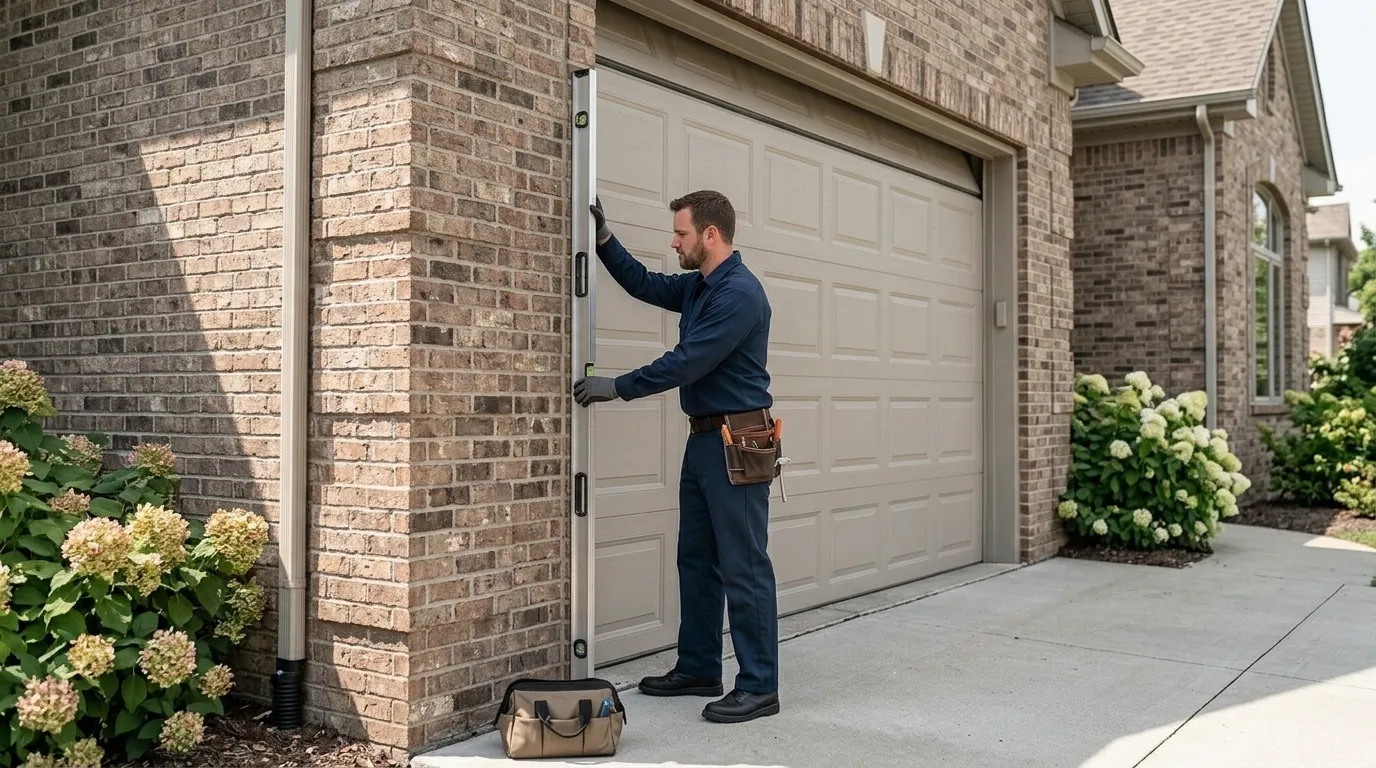
Roller replacement means pulling the old rollers out of the track one at a time, working around the cable and hinges, and setting new ones in without letting the door drop off the track mid-job. On a standard double door that's ten rollers plus the two at the bottom brackets, and each one has to seat correctly or you're back to the same grinding noise within a season.
We check track alignment at the same time, because a fresh roller in a track that's still out of true will wear the same way inside a year. If the track has shifted enough from decades of the jamb moving with the seasons, straightening or resetting the track brackets is part of the same visit, not a separate call.
One honest limitation: if the rollers are worn because the opener has been fighting a spring that's lost its lift for years, replacing rollers alone won't fix the noise for long. We'll tell you straight if the spring needs attention too rather than sending you home with a door that's quiet for a month and loud again by spring.
How Long You Are Without the Door
A standard roller replacement on one door, with a track that's already reasonably straight, is a same-visit job - the door goes back into full use before the truck leaves. If the track needs resetting or a bracket has to come off the jamb and go back on square, that adds time to the same visit rather than requiring a second trip.
With 146,725 owner-occupied houses across the area we serve, and most of that stock dating to the same 1960s-70s window, this is one of the more predictable repairs we run - the parts and the process don't vary much from house to house, even though the jamb condition does. The door isn't usually left open or unusable overnight for this kind of work.
Talk to a Technician Before You Book
Describe what the door is doing and get a straight answer on what it likely needs.
Jobs Like Yours
Recent work from this service line.
Why St. Louis Calls Us
Frequently Asked Questions
Why do garage door rollers wear out around the same time on so many St. Louis houses?
Most housing in this service area went up between 1947 and 1990, with a heavy concentration in the 1960s and 70s. Original steel rollers from that era are now decades past their working life, and the cold-moderate climate's freeze-thaw cycling has spent that whole time nudging tracks slightly out of alignment, which speeds up roller wear even further.
Can I just replace one roller instead of the whole set?
You can, but if one has worn out from age and normal use, the others in the same set are close behind. We'll look at the wear pattern on the visit and tell you honestly whether a single swap makes sense or whether you're better off doing the full set now instead of paying for another visit in a few months.
Will new rollers fix a noisy door if the track is bent?
No. A new roller in a track that's out of true will wear the same way the old one did, just faster. We check alignment as part of the job because rollers and track wear together - fixing one without the other is a short-term patch, not a repair.
Does this affect the opener too?
A worn roller adds drag, and the opener has to pull harder to move the door through that drag. Over time that extra strain can wear the drive gear or trip the opener's force settings. Fixing the roller early usually protects the opener from that added stress.
Need Garage Door Roller Replacement Across St. Louis?
Call now for straight answers on cost and timing.