
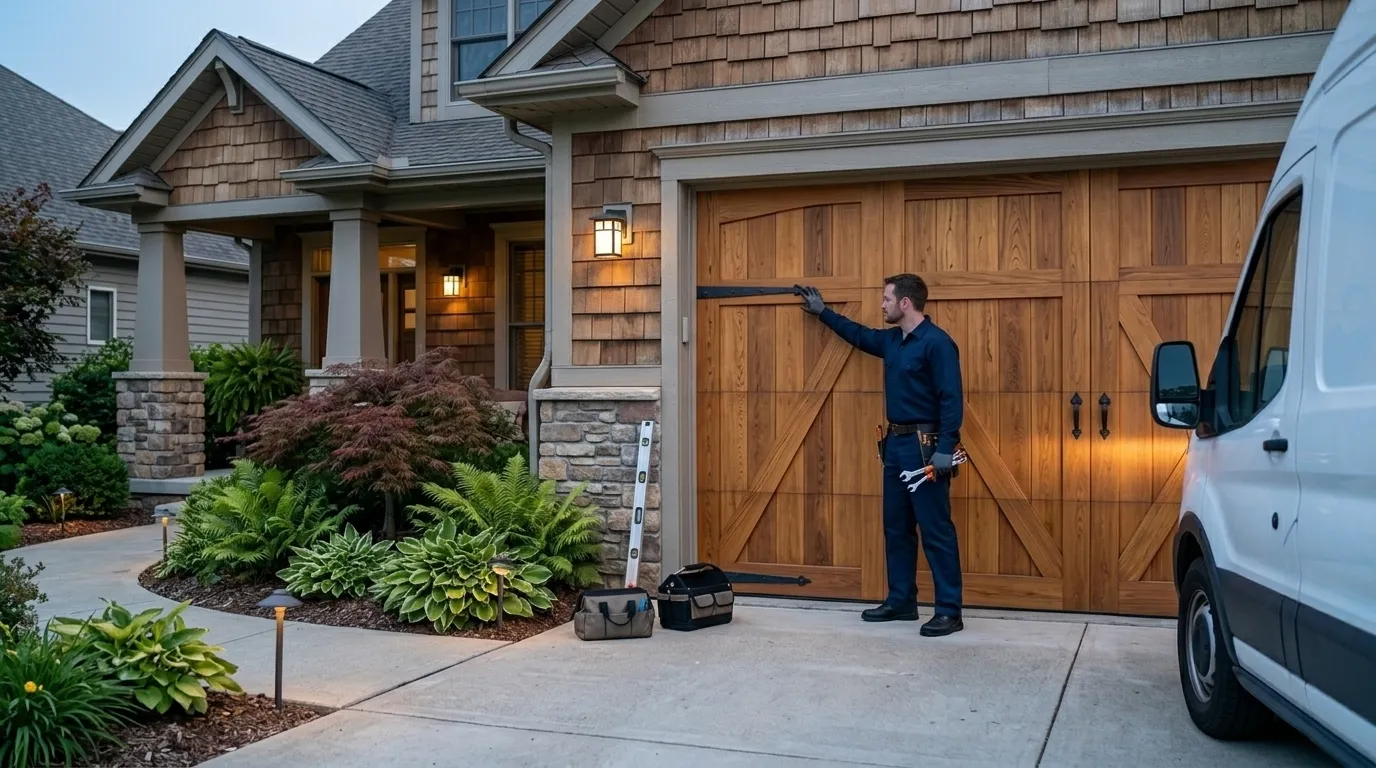
Panel Replacement in Webster Groves
Panel Replacement for Webster Groves' 1951-Era Garage Doors
Webster Groves homes built around 1951 often still carry original steel panels. We match gauge and track width for a clean, code-right panel swap.
- Licensed & Insured
- Same-Area Service Calls
- Upfront Pricing
What Happens When You Call
-
1
Call or Request a Quote
Tell us what the door is doing and roughly how old the house is - that alone points us toward the likely part before a truck leaves.
-
2
On-Site Diagnosis
A tech checks the spring, cables, tracks, and opener in person and tells you plainly what is actually wrong.
-
3
Straight Price, No Surprises
You get a number before any work starts. It covers parts and labor, nothing added after the fact.
-
4
Fixed the Same Visit
Most repairs are done in one trip. If a part needs sourcing, we tell you that upfront instead of guessing.
Why This Fails Locally
Most houses in Webster Groves went up around 1951, a good bit earlier than the broader St. Louis service area's median of 1967. That matters for panel work: a door installed on a house from that build year has usually had one owner-driven repair at most, and in a lot of cases the panels are still the originals that came with the house.
Steel gauges from that era ran thinner and the panel widths don't match anything on a current shelf. When a section on one of these doors gets creased or rusted through, you're not popping in a stock replacement - you're either sourcing a panel that matches the old track spacing or replacing more of the door than the homeowner expected to touch. With 9,641 households in Webster Groves and a lot of them sitting on this same original hardware, this isn't a rare call.
It's the most common panel job we run in this part of the area, and it's different from the newer-stock repairs we do in areas built through the 70s and 80s.
The Symptom
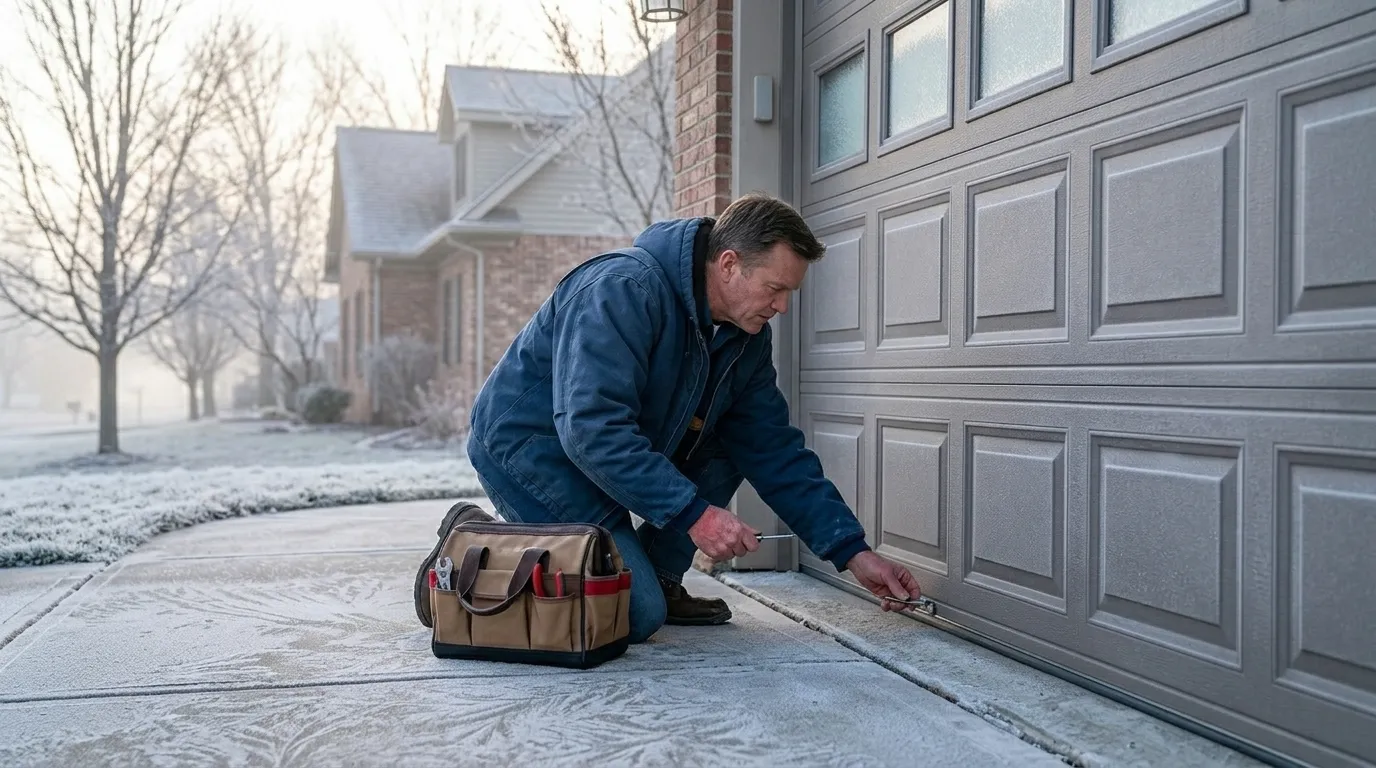
The tell is usually a bottom or second-from-bottom panel with a visible bow, a rust line at the seam, or a crack where a car mirror or trash can clipped it. On a 1951-era door, that panel is holding weight it wasn't built for anymore - the steel has thinned over seven decades of Missouri winters, and this area sits in a cold moderate climate band, so freeze-thaw cycling at the seams is part of what got you here. Sometimes the whole door still runs fine on the opener and the damage looks cosmetic.
It isn't. A compromised panel changes how the door tracks in the rollers, and if it's an insulated door, moisture gets behind the dented steel and starts working on the panel next to it too. If you're only now noticing the bow, it's been happening slowly for longer than you think.
Doing It Yourself
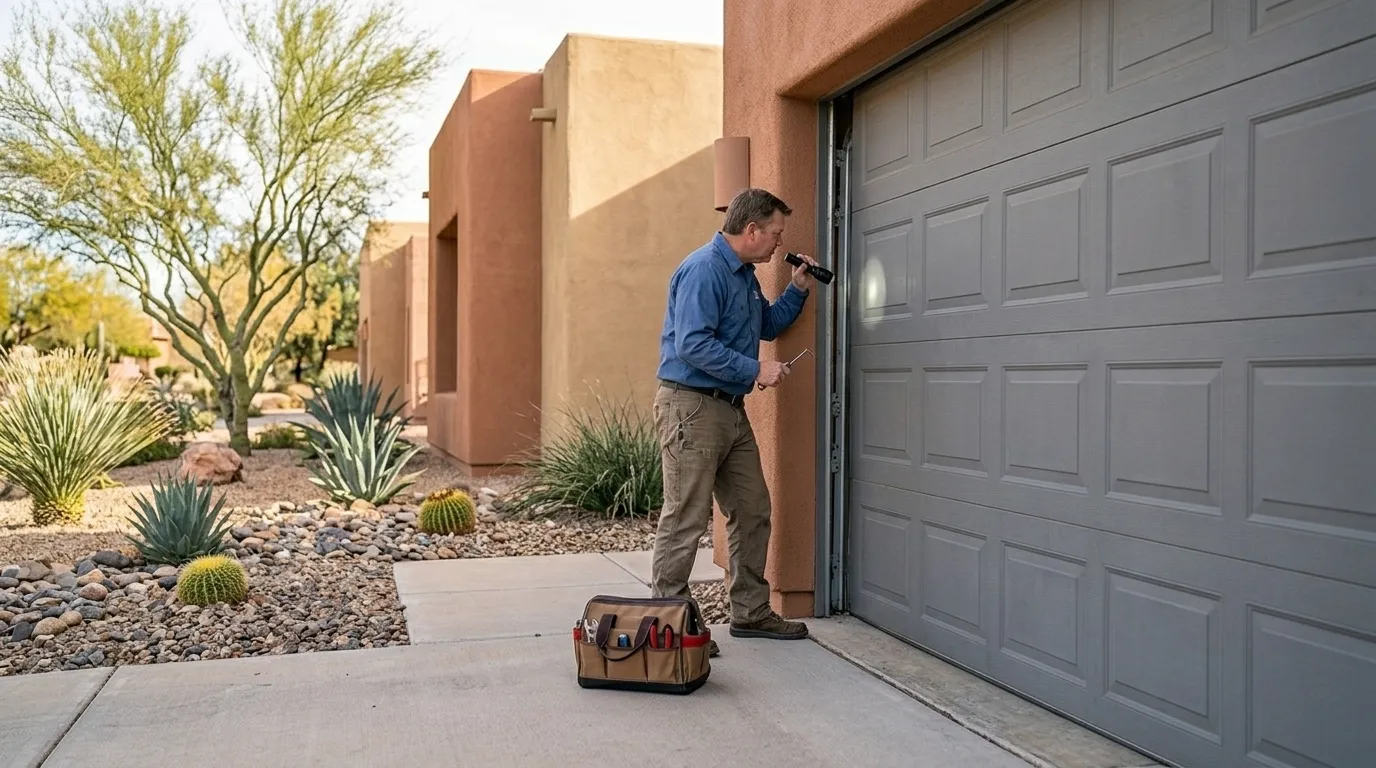
You can order a generic replacement panel online and bolt it in if the door is a common width and the model is still in production. On a house from 1951, though, the odds are against you - the original manufacturer may not make that panel anymore, and matching paint, profile, and screw spacing on a mismatched panel leaves a door that looks patched rather than fixed. The honest limitation here: if we can't source a matching panel for your exact door, full replacement is often the better call than forcing a mismatched section onto original hardware.
That's not us upselling you - it's what actually holds up over another winter. If your door is a newer model with a current part number, DIY swap is reasonable. If it's original to the house, get someone to look at it before you order parts.
What the Repair Takes
We come out from St. Louis, about seven miles to reach Webster Groves, so this isn't a same-block callback - we plan the visit around having the right panel on the truck. That means confirming your door's brand, width, and section height before we drive, which usually takes a photo and the model tag if it's still legible.
If the panel matches, it's a straightforward section swap: pull the hinges, drop the old panel, set the new one, re-hang. If it doesn't match - which happens more often on original 1951-era doors than on anything built later - we talk through whether a full door replacement makes more sense than chasing a discontinued part. Either way, the goal is a door that tracks square and seals right for this area's winters, not just one that looks fixed from the driveway.
Talk to a Webster Groves Technician First
Describe what the door is doing and get a straight answer on what it likely needs.
Other Garage Door Services in Webster Groves
Recent Work in Webster Groves
A look at jobs our crew has been on nearby.
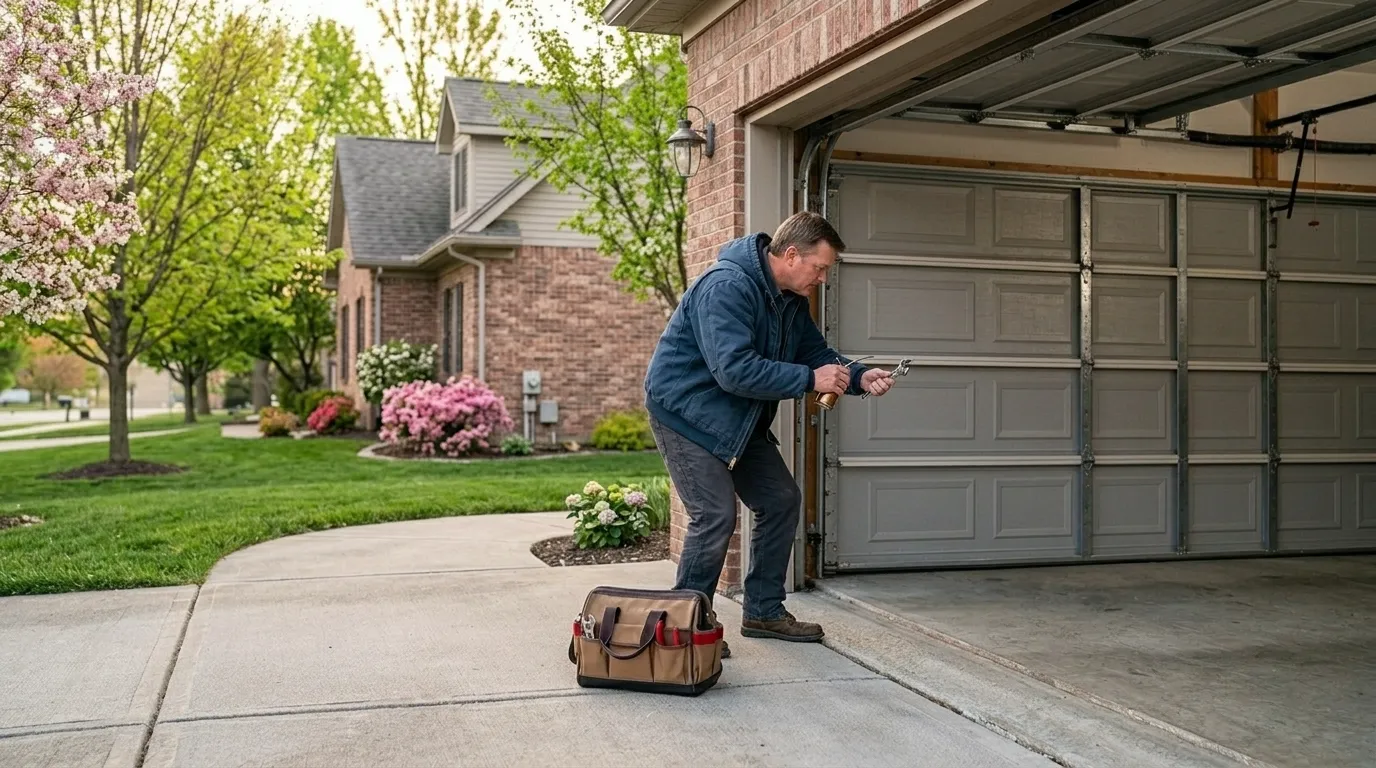
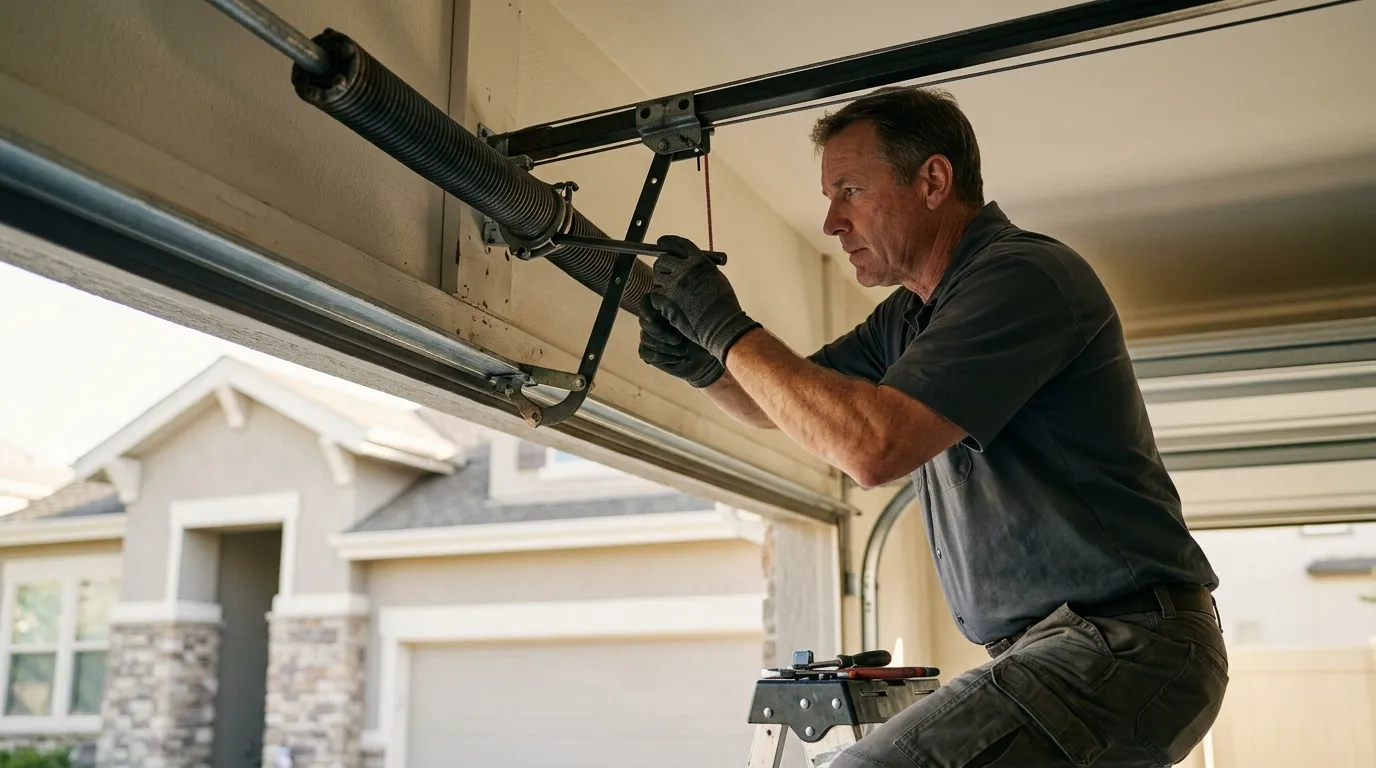
Why Webster Groves Calls Us
Frequently Asked Questions
Is my garage door panel original to my Webster Groves house?
If your house was built around 1951 and the door has never been replaced, it's a real possibility. A lot of Webster Groves homes from that era never had the garage door swapped out, only repaired. Check the panel width and any manufacturer tag inside the track - if there's no visible part number, that's a strong sign it's original.
Can you match a panel on an old door instead of replacing the whole thing?
Sometimes. It depends on whether the manufacturer still makes that panel width and profile. On doors from around 1951 the odds are lower than on newer stock. We check before we commit you to a full replacement, but we won't force a mismatched panel onto your door just to save a trip.
Do you have a branch in Webster Groves?
No. We're based in St. Louis and drive out to Webster Groves for panel jobs, about seven miles each way. We schedule around having the right parts loaded rather than promising a fixed arrival window.
Why does the cold matter for an old steel panel?
This area sits in a cold moderate climate band, and repeated freeze-thaw cycling works on the seams and rust points of an aging steel panel every winter. A panel that's bowed or cracked will usually get worse, not better, over another cold season.
Need Panel Replacement in Webster Groves?
Call now for straight answers on cost and timing.