
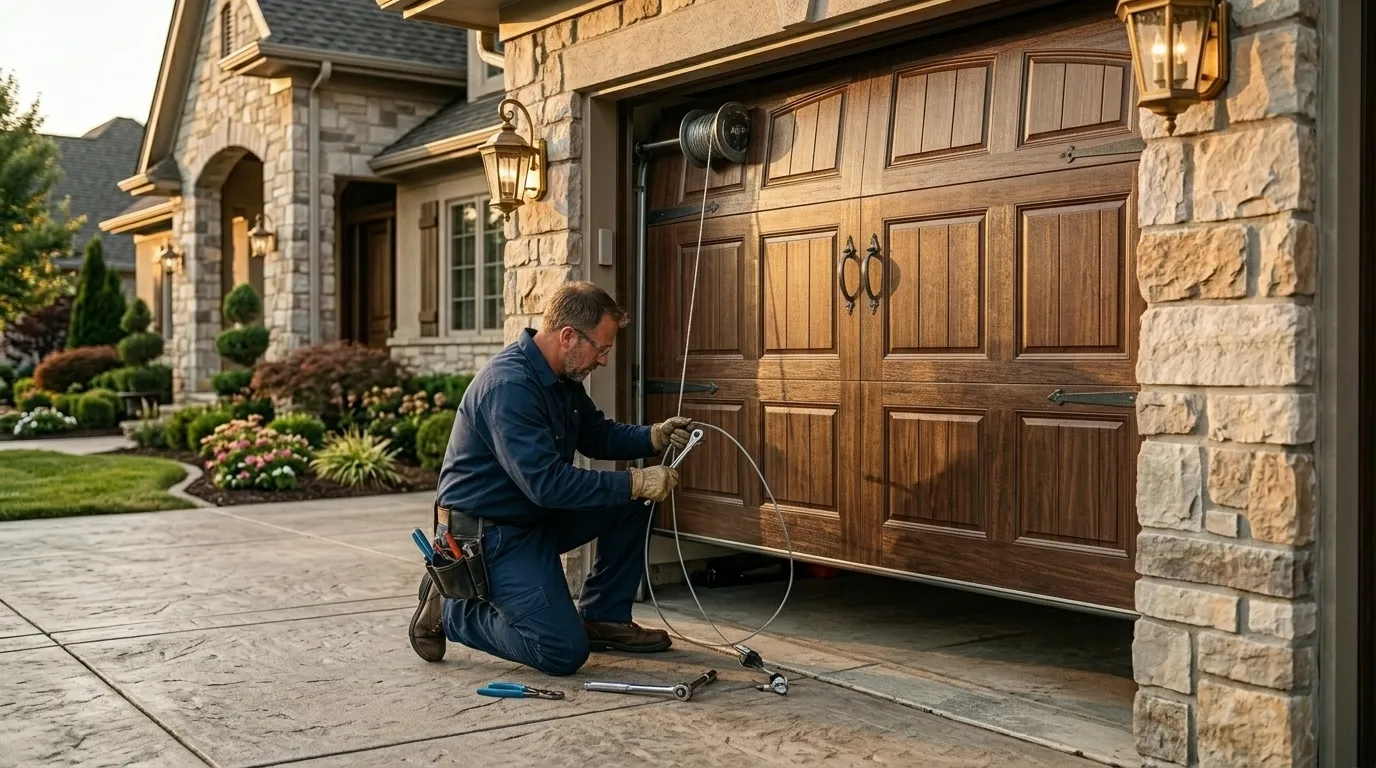
Roller Replacement in Webster Groves
Roller Replacement for Webster Groves' 1950s Garage Doors
Webster Groves houses mostly date to the early 1950s, and their original steel rollers are wearing out on openings built for one car. Here's what that failure looks like and what fixing it takes.
- Licensed & Insured
- Same-Area Service Calls
- Upfront Pricing
What Happens When You Call
-
1
Call or Request a Quote
Tell us what the door is doing and roughly how old the house is - that alone points us toward the likely part before a truck leaves.
-
2
On-Site Diagnosis
A tech checks the spring, cables, tracks, and opener in person and tells you plainly what is actually wrong.
-
3
Straight Price, No Surprises
You get a number before any work starts. It covers parts and labor, nothing added after the fact.
-
4
Fixed the Same Visit
Most repairs are done in one trip. If a part needs sourcing, we tell you that upfront instead of guessing.
Why This Fails Locally
Start with the door itself, not the noise it makes. Webster Groves houses run older than the region as a whole - the area-wide housing stock spans 1947 to 1990 with a median around 1967, but Webster Groves itself centers on 1951. That means a lot of single-car openings, narrower tracks, and doors that were built for lighter panels than what gets sold today.
The rollers that came with those houses were plain galvanized steel on steel stems, no bearings, no nylon tire. They were fine for decades because nobody touched them.
The problem shows up now because steel-on-steel wears the track groove itself, not just the roller. Once that groove wears oval instead of round, a new steel roller sits crooked in an old track and grinds against the same worn spot within a season.
Add a climate that swings cold through winter, and the grease in that track gums up or dries out, so the roller drags before it ever breaks. On a narrower single-car opening, there's less slack in the system to hide any of this - the door binds sooner and louder than it would on a wider two-car door.
The Symptom
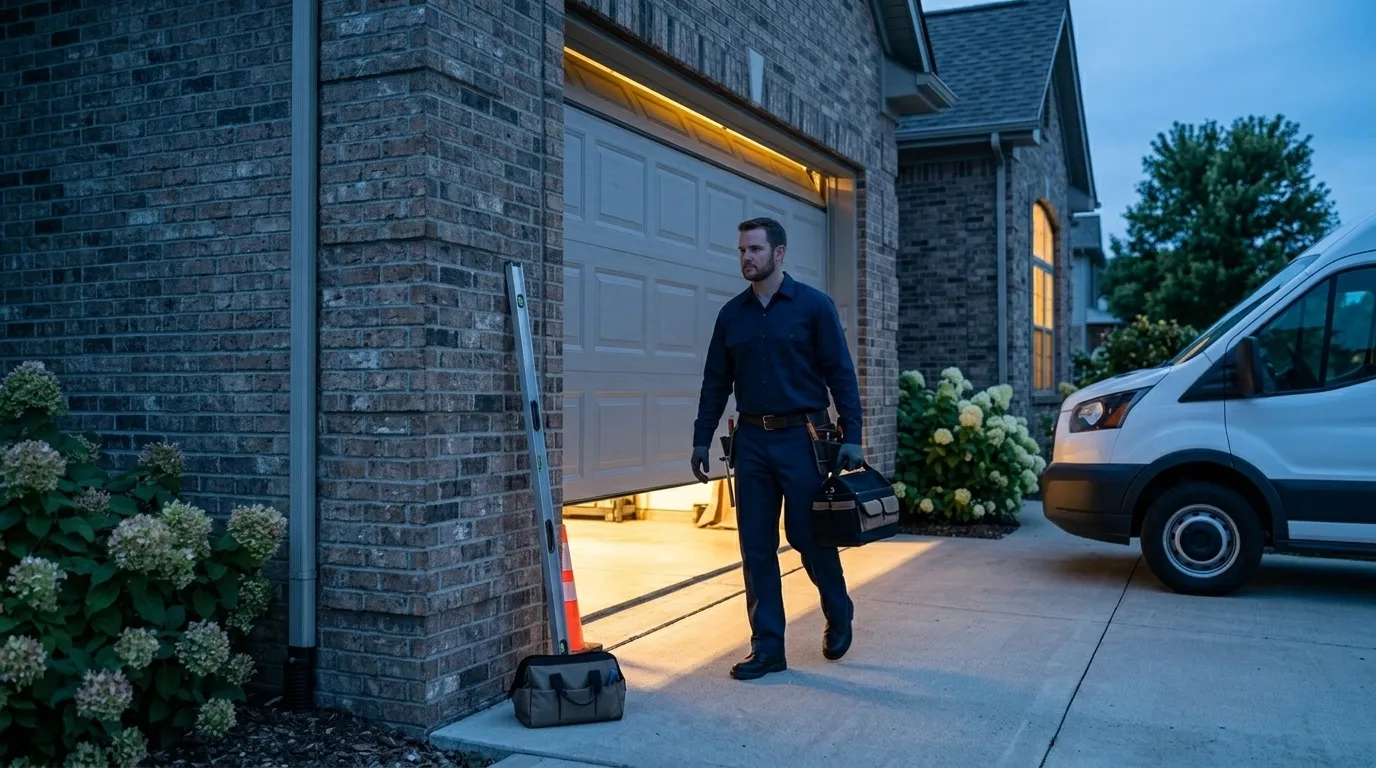
You'll hear it before you see it. A worn roller on one of these older single-car doors usually announces itself as a rhythmic clunk, once per roller revolution, that gets louder as the door nears the top or bottom of the track - that's the flat spot on the roller striking the rail. On a steel-on-steel setup from a house this age, you may also get a grinding or scraping sound that doesn't go away with WD-40, because the noise is metal-on-worn-metal, not just dry metal.
Some owners notice the door hesitating instead of jumping straight into motion, especially in the coldest part of winter, which fits this area's cold-moderate climate - stiff grease and a rough track groove both slow a roller down before it fails outright. If one side lags behind the other, the door can walk sideways in the opening and rub the weatherstripping, which on a narrower single-car door is a tighter margin for error than on a wider one.
None of this means the opener is the problem. It's almost always the roller and the track it rides in, wearing together.
Doing It Yourself
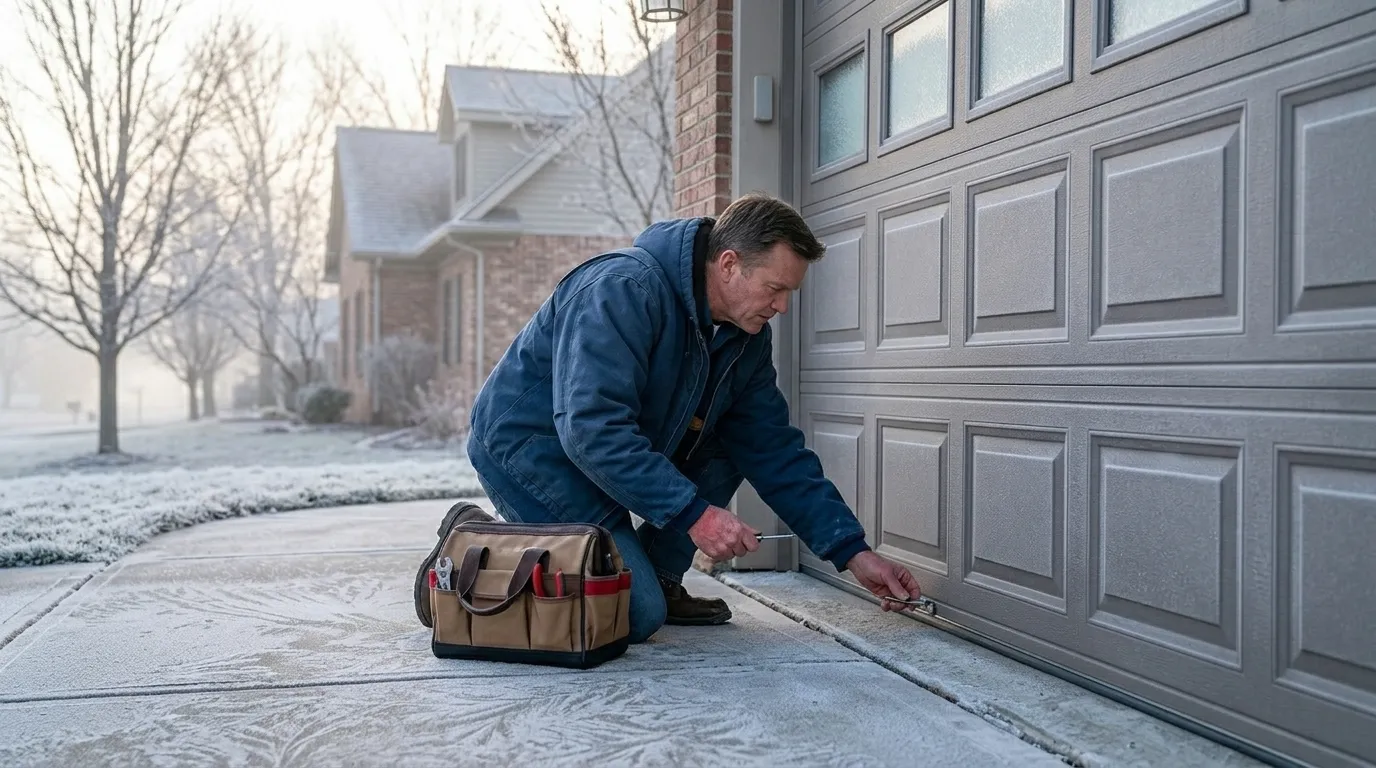
Swapping a bottom roller on a door with the spring properly locked off isn't beyond a homeowner with the right clamp and a free afternoon. The honest limit is the track groove itself.
If your rollers came off an original 1951-era steel door, the track has likely worn to match that exact roller's wear pattern, and a fresh roller - even a good nylon one - can bind in a groove shaped around decades of the old one. You can swap the part and still have the same clunk a week later, because the wear is in the rail, not just the wheel.
We don't do the job over the phone and won't quote a fix sight-unseen, because on a house this age we usually need to see the track before we know if it's a roller swap or a track resurface. If you're set on doing it yourself, at minimum check whether the rail shows a visible dip or shine line at the failure point before you buy parts - that tells you whether you're solving the actual problem or a symptom of it.
What the Repair Takes
A straightforward roller replacement on one of these single-car doors is a full-set swap, not a one-off - if one steel roller has worn a flat spot after 70-some years of service, the rest are close behind, and mismatched wear on a narrow track shows up fast as binding. We usually move the whole run to sealed nylon rollers, which run quieter and don't need the same lubrication schedule a steel roller depends on.
Where the original track has worn to match the old rollers, the job includes checking rail alignment and, where needed, resetting or replacing a section of track rather than forcing new rollers into an old groove. We travel out from St.
Louis for this work, so we book the visit rather than doing same-day walk-ups. Given the income and housing profile in Webster Groves, most owners here choose the nylon upgrade over a like-for-like steel swap, since the price difference is small against a door that's already outlasted its original hardware once.
Talk to a Webster Groves Technician First
Describe what the door is doing and get a straight answer on what it likely needs.
Other Garage Door Services in Webster Groves
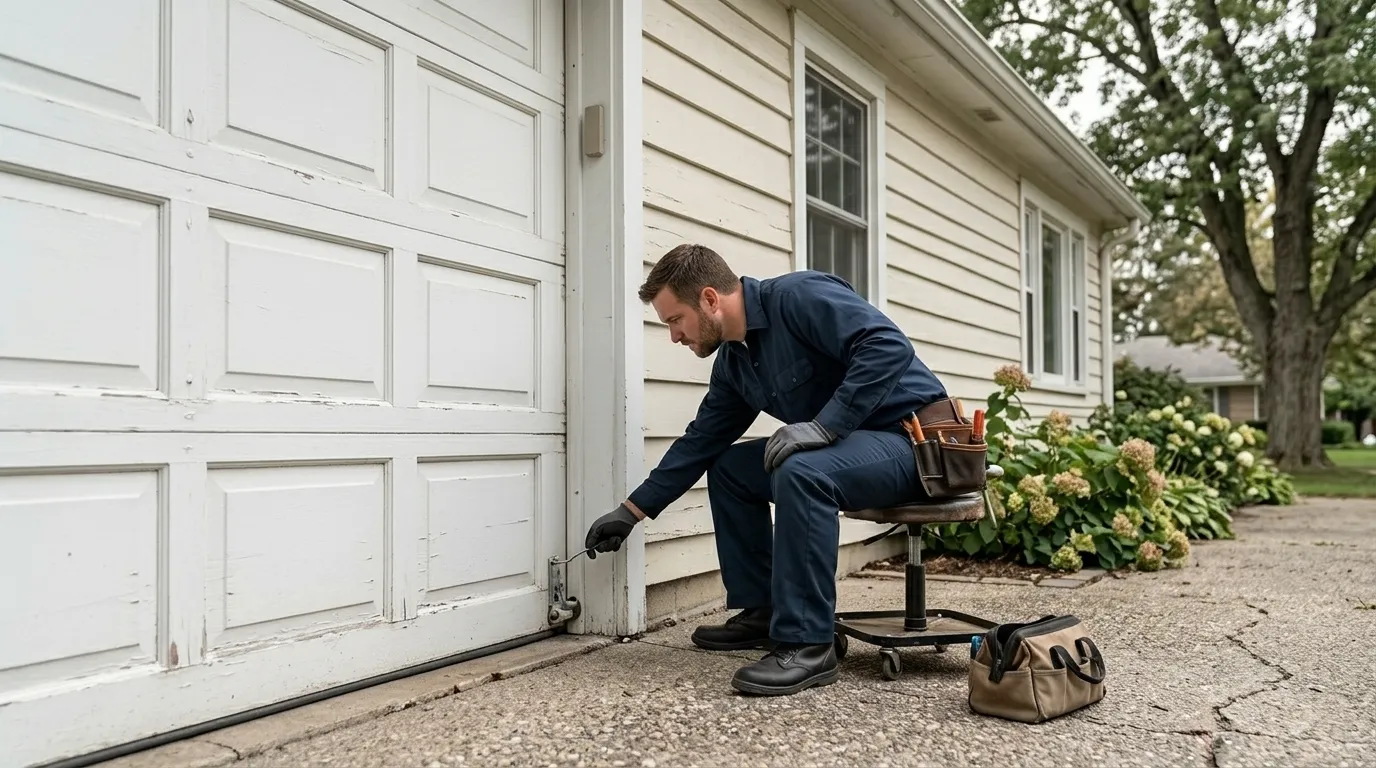
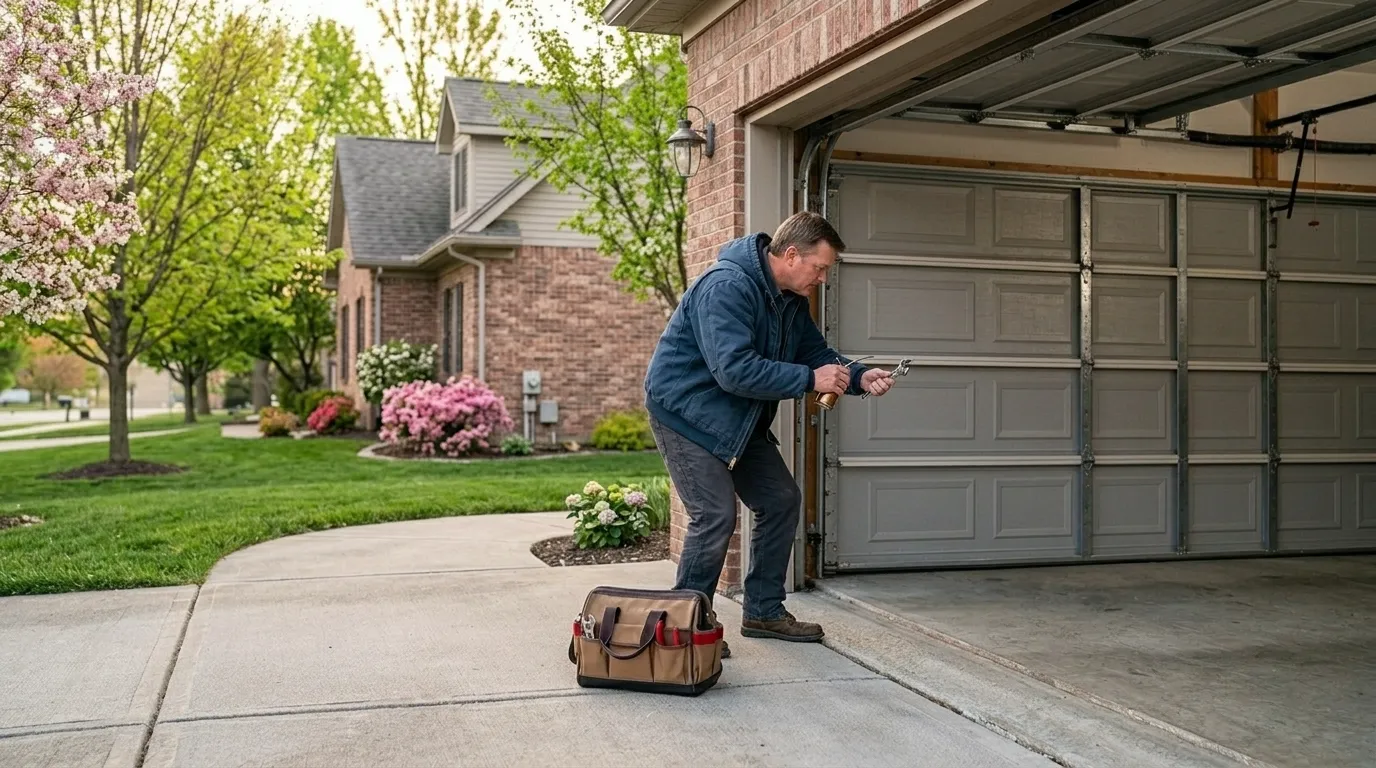
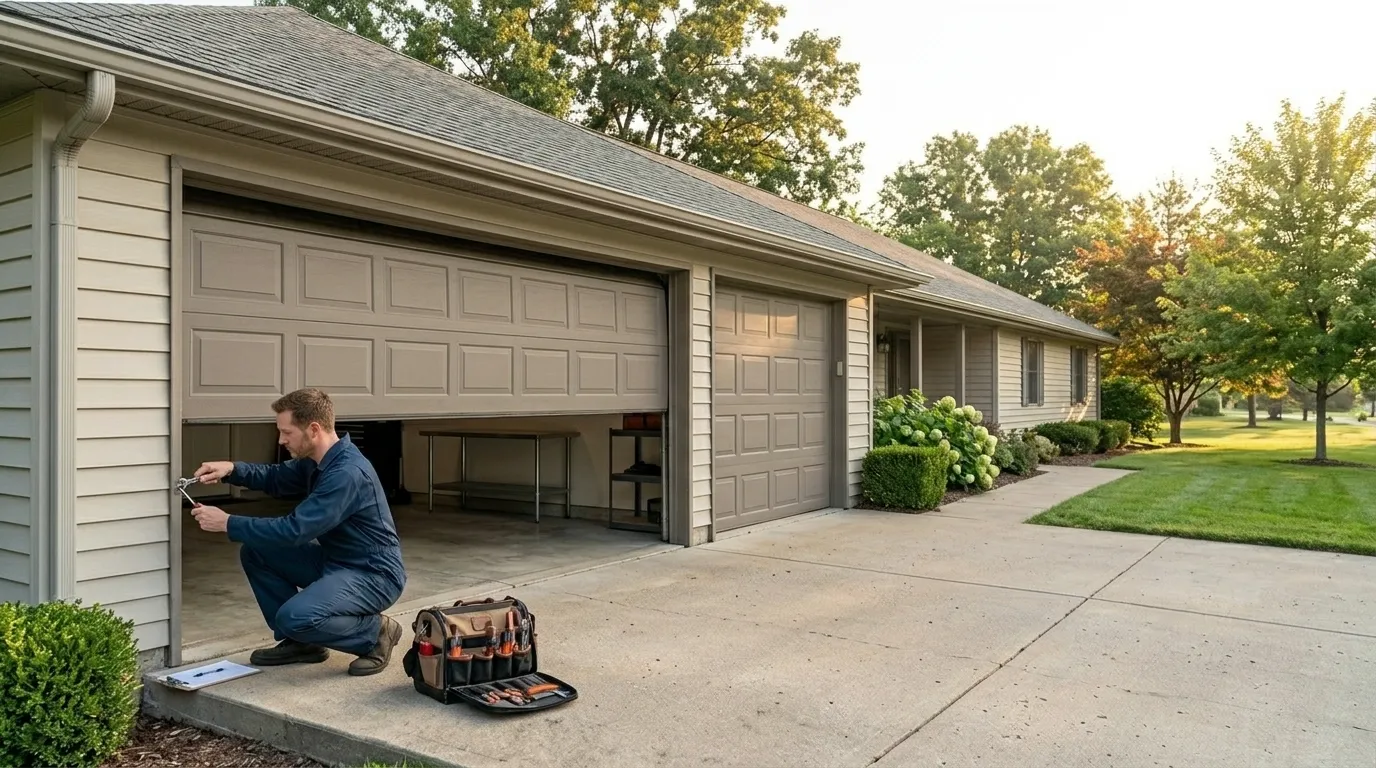
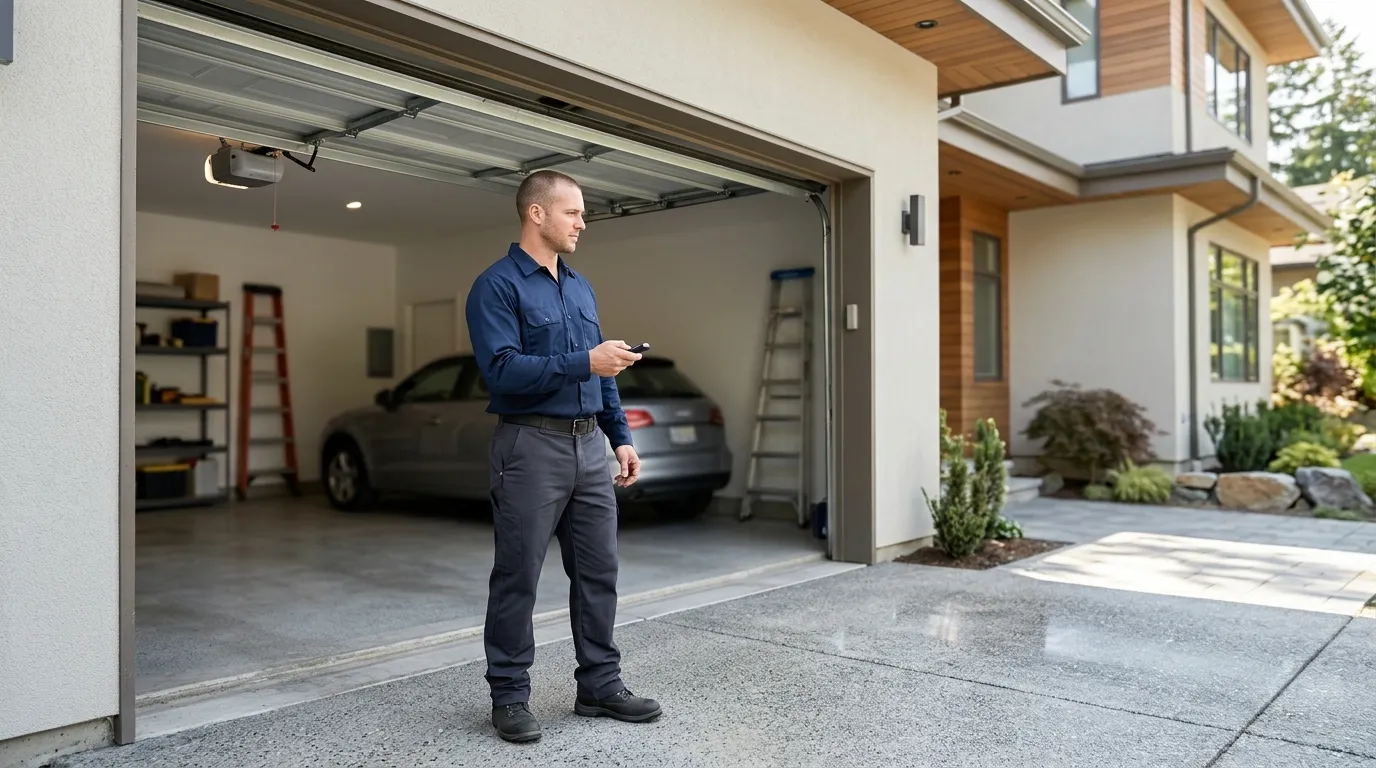
Recent Work in Webster Groves
A look at jobs our crew has been on nearby.
Why Webster Groves Calls Us
Frequently Asked Questions
Why do my garage door rollers make a clunking sound only in winter?
Cold makes old grease in the track stiffen up, and a worn steel roller with a flat spot hits that stiff spot harder on every revolution. On a house built around 1951 with original steel rollers, that combination is common - the noise isn't new, it's just louder and more frequent once temperatures drop for the season.
Can I just replace one roller instead of the whole set?
You can, but on a door this old the other rollers are usually close behind the one that failed. Replacing one and leaving the rest means you're back doing this again within a year or two, and mismatched roller wear on a narrow single-car track tends to cause binding sooner than an even set would.
Do you have a shop or depot in Webster Groves?
No. We work out of St. Louis and drive out for jobs in Webster Groves and the surrounding area. We book the visit rather than offering walk-in service, since the trip is planned ahead rather than same-day.
Will new rollers fix the noise if my track is worn?
Not on their own. If the track groove has worn to match the shape of the old roller, a new roller can still bind or rattle in that groove. We check the rail before quoting the job, because sometimes the fix is a track reset or partial replacement alongside the rollers, not the rollers alone.
Need Roller Replacement in Webster Groves?
Call now for straight answers on cost and timing.