
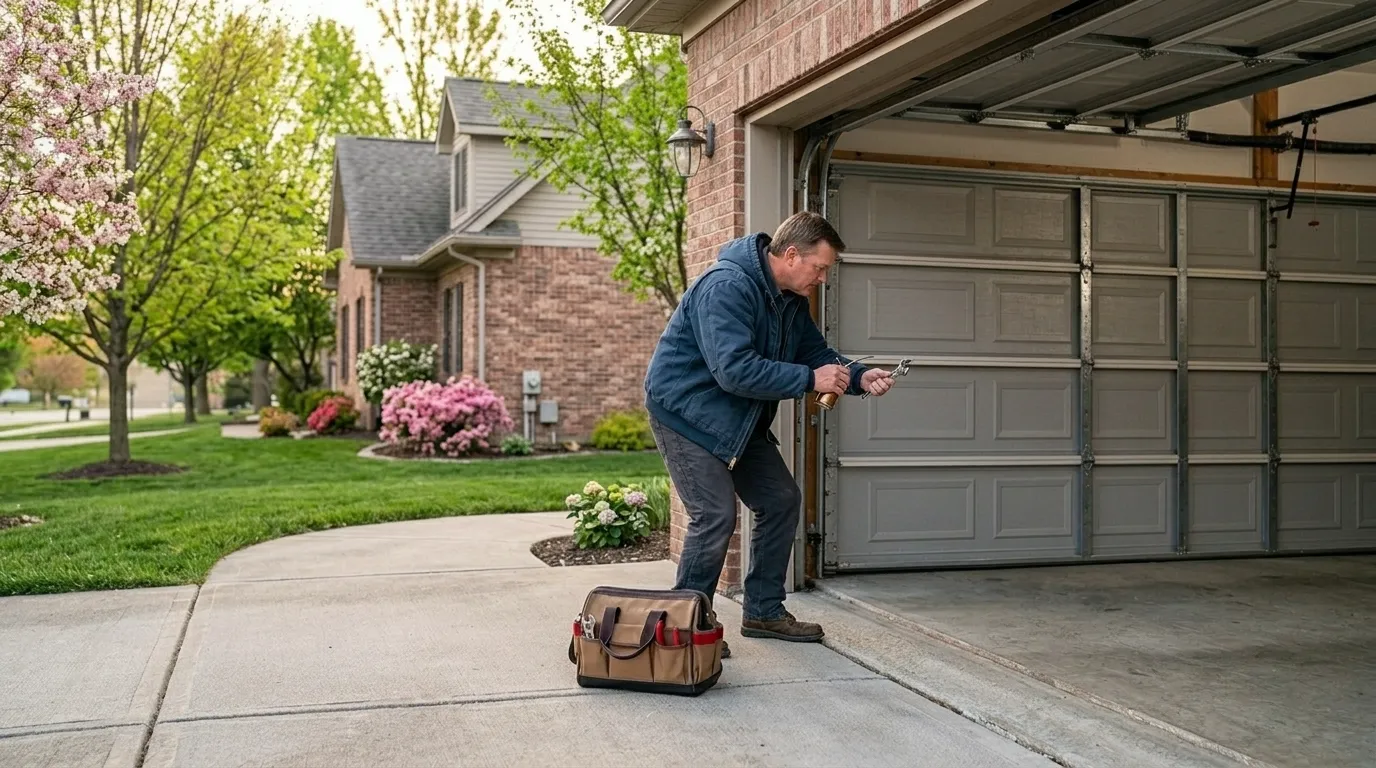
Garage Door Service in Richmond Heights
Garage Door Service for Richmond Heights' Older Housing Stock
Richmond Heights homes date to 1947, decades ahead of the area's postwar wave. We travel 5 miles from St. Louis to fix the older hardware that comes with that age.
- Licensed & Insured
- Same-Area Service Calls
- Upfront Pricing
What Happens When You Call
-
1
Call or Request a Quote
Tell us what the door is doing and roughly how old the house is - that alone points us toward the likely part before a truck leaves.
-
2
On-Site Diagnosis
A tech checks the spring, cables, tracks, and opener in person and tells you plainly what is actually wrong.
-
3
Straight Price, No Surprises
You get a number before any work starts. It covers parts and labor, nothing added after the fact.
-
4
Fixed the Same Visit
Most repairs are done in one trip. If a part needs sourcing, we tell you that upfront instead of guessing.
Booking a Visit
We run this job out of St. Louis, about five miles out to Richmond Heights, so there's no branch office here and no separate crew - just a truck that comes to you. When you call, tell us the age of the house if you know it.
Homes in Richmond Heights went up mostly around 1947, which is well ahead of the 1960s-70s wave that shaped a lot of the rest of the area we cover, and that one detail changes what we bring on the truck. A door and opener installed on a 1947 build often sits on hardware nobody else stocks, so knowing the vintage before we roll out saves a second trip. Book through the Richmond Heights service page, or if you want the broader picture of everything we run across the metro, that's covered on the [St.
Louis service page](/st-louis/garage-door-service/). Either way, give us the make of the opener if there's a label still readable on the housing - half the time on a house this old, there isn't.
How Long You Are Without the Door
With 4,481 households in Richmond Heights, we're not chasing a huge call volume in any one week, but the age of the housing means jobs here sometimes run longer than a same-era repair somewhere newer. A 1947 opening was often built to a size that stopped being standard decades ago, so if a panel needs swapping instead of just a spring, we may be waiting on a part rather than fixing it same-visit. We tell you that up front rather than guessing at a timeline we can't back.
If the fix is a broken spring or a cable, that's usually a one-visit job regardless of the house's age - it's the sheet-metal and track work on original hardware that stretches things out. We'd rather say 'this one needs a part ordered' than promise a fix we can't deliver that day.
Doing It Yourself
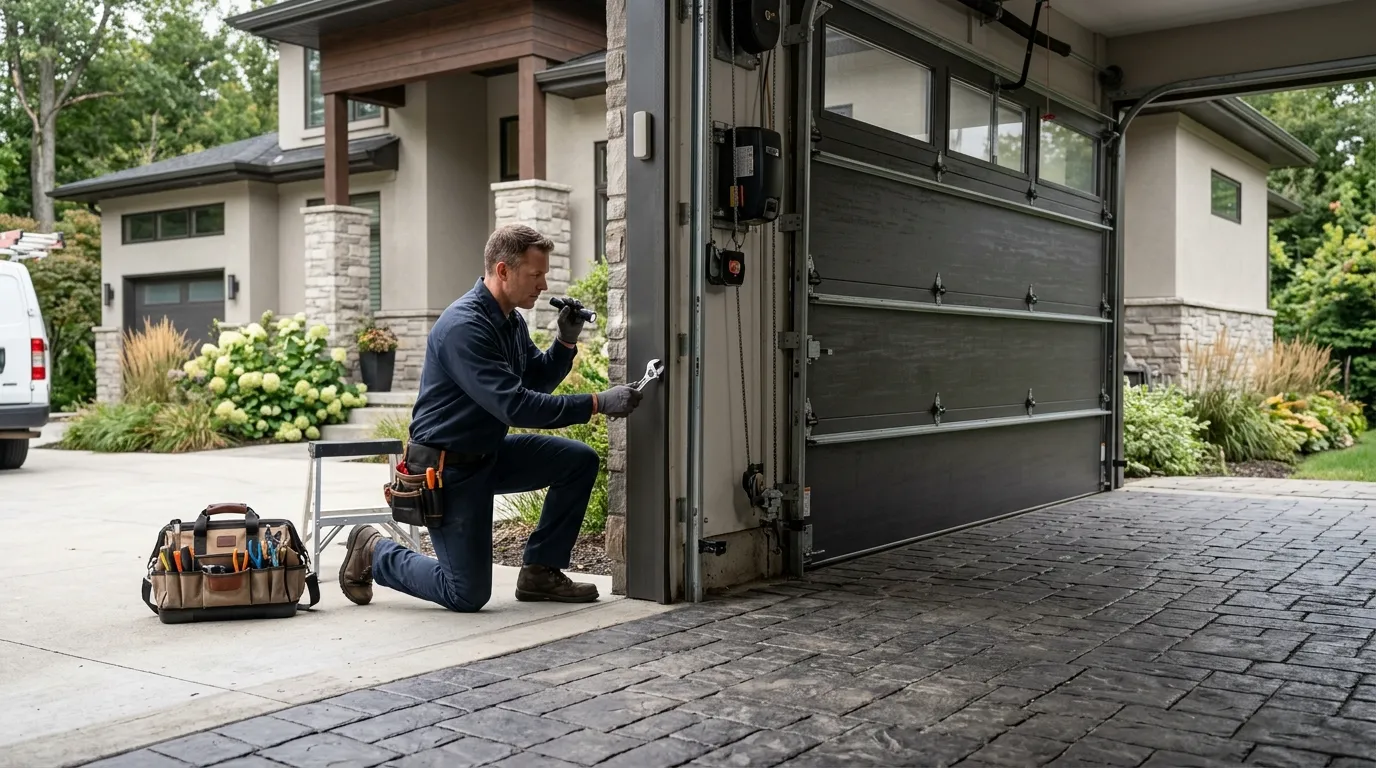
A torsion spring under load can break a wrist or worse, and that risk doesn't care what year your door was built. What does change with a 1947 door is the track geometry - a lot of these older openings run narrower headroom than anything built after the 1960s, so even the winding bar clearance can be different from what a general how-to video shows. If your opener is original or close to it, the wiring alone can be a reason to stop: components from that era weren't built to current code, and mixing new parts onto old wiring is a bad combination.
Tightening a loose bracket or lubricating a track is fine to do yourself. Springs, cables, and anything involving the torsion bar on a door this old - not worth it. The savings from doing it yourself disappear fast against a trip to urgent care.
What the Repair Takes
On a standard call, we start by identifying whether the hardware is original to the 1947 build or already replaced - a surprising number of doors in this area still carry at least one original component like a track bracket or a drum. We check spring wind and cable wear, look at the rollers, and test the opener's force settings, which matter more on an older door because the panel weight and balance were set for a different style of spring than what's typically sold today. If it's a straightforward spring or cable swap, we do it on-site with parts off the truck.
If it's a panel or a full section that needs matching to a 1947-era opening size, we measure on-site and order rather than guess. Either way, we walk you through what failed and why before we start work, not after the invoice.
The Complications
The single biggest complication in Richmond Heights is headroom. Doors built around 1947 were often installed with less overhead clearance than the standard torsion setups sold now, which means a straight swap of a modern opener or spring kit doesn't always fit without adapting the mounting. We also run into original track that's been bent slightly out of true over seventy-plus years of use - it still opens, but it's working the rollers harder than it should, and that wear compounds.
Winters here sit in the same cold-moderate band as the rest of the region, and that cold takes a harder toll on a door running on decades-old brackets than it does on newer hardware. None of this is unusual for the age of house - it's just work that takes an extra look before we quote it, rather than a repair we can price over the phone.
Stocked Parts
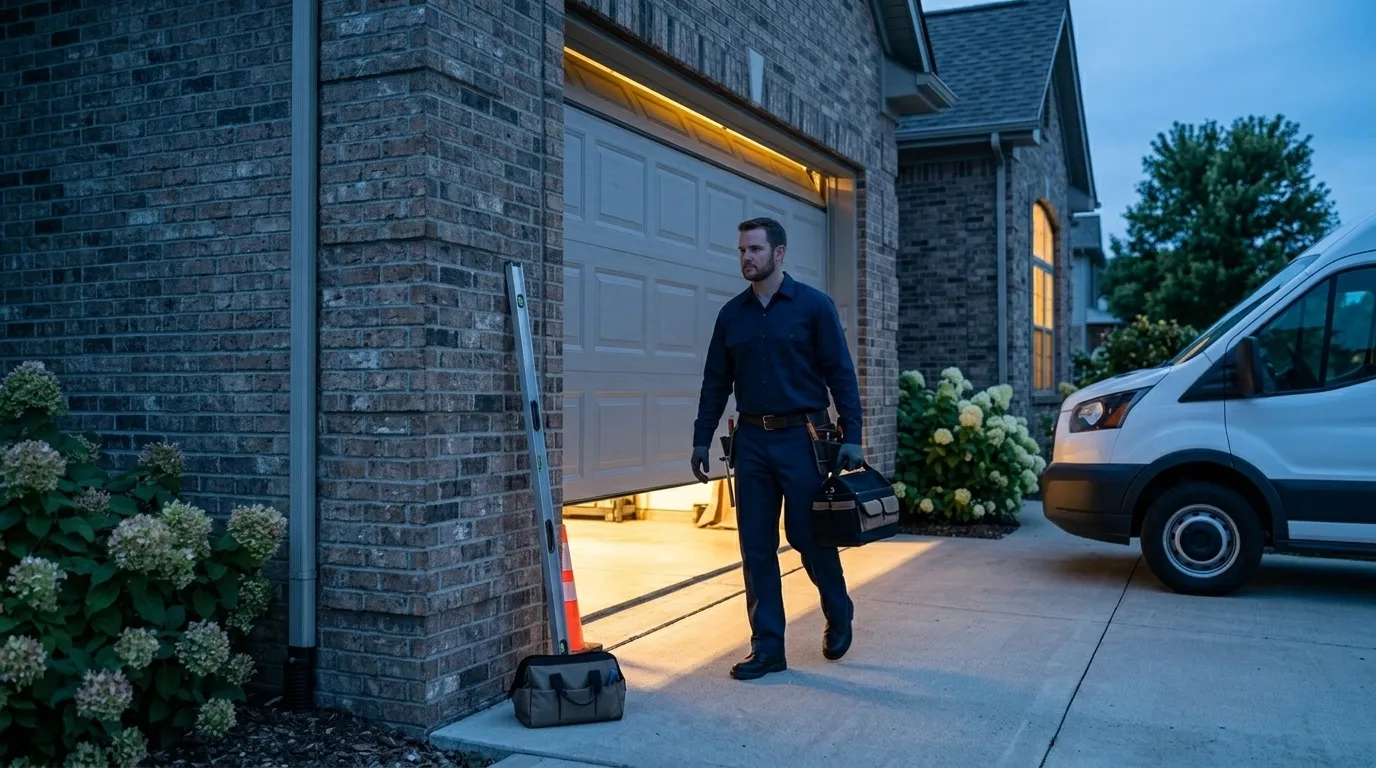
We carry the parts that fail most often regardless of the house's age - standard torsion springs, rollers, cables, common opener boards. What we don't carry on the truck is anything sized specifically to a 1947-era opening or an original panel design, because that hardware isn't something any supplier stocks at volume anymore. If your repair needs one of those, we order it and give you a real timeline rather than a guess.
This is the honest limit of same-day work on a house this old: the common failures get fixed on the first visit, and the uncommon ones - original panel replacement, obsolete track hardware - take a part order. We'd rather tell you that on the first call than discover it standing in your driveway.
Talk to a Richmond Heights Technician First
Describe what the door is doing and get a straight answer on what it likely needs.
Other Garage Door Services in Richmond Heights
Recent Work in Richmond Heights
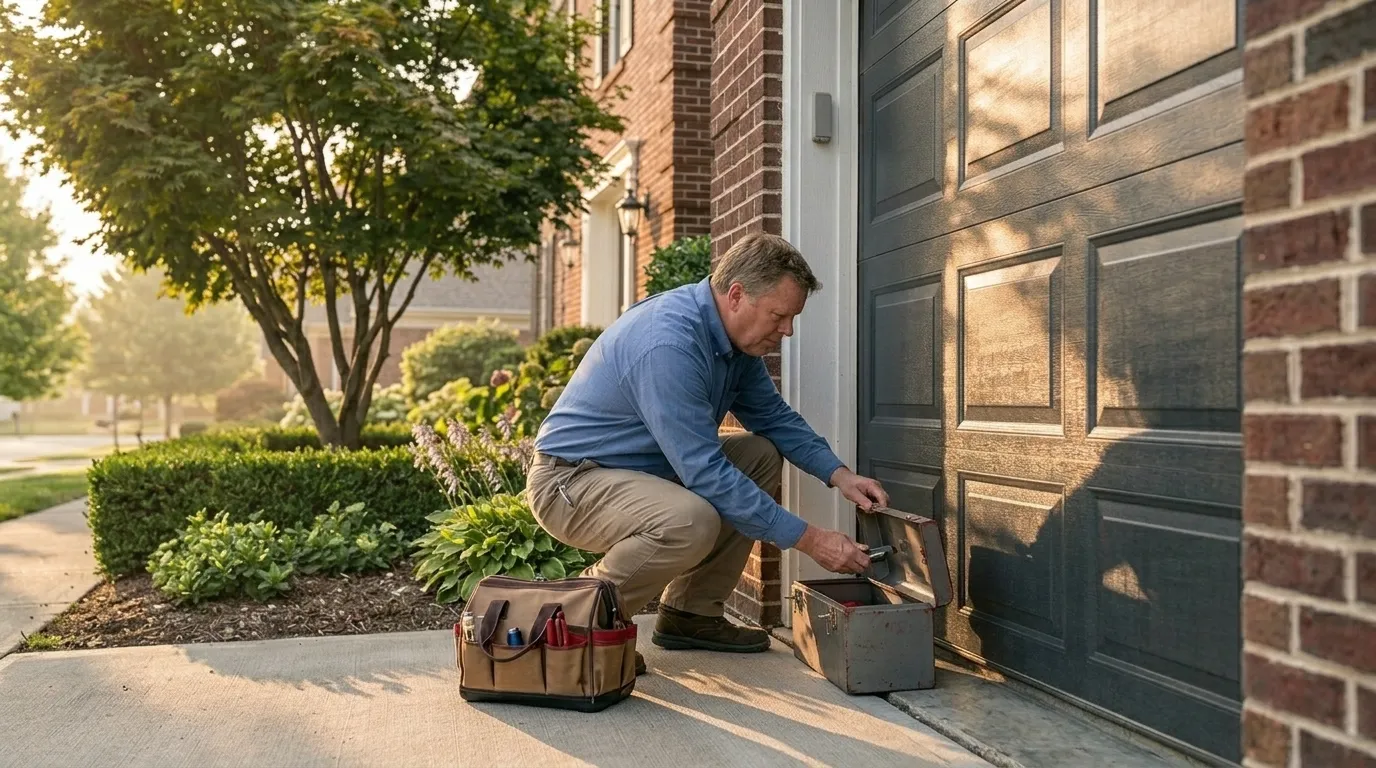
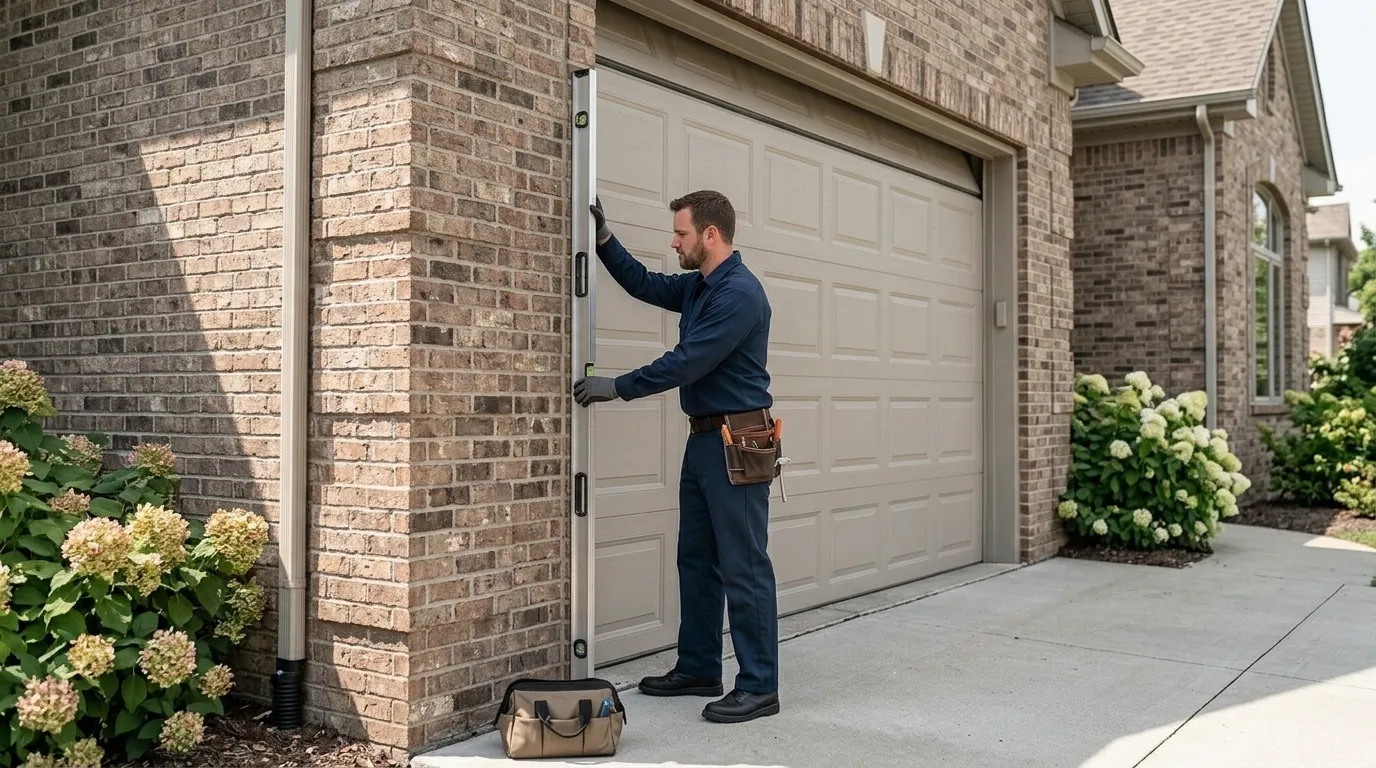
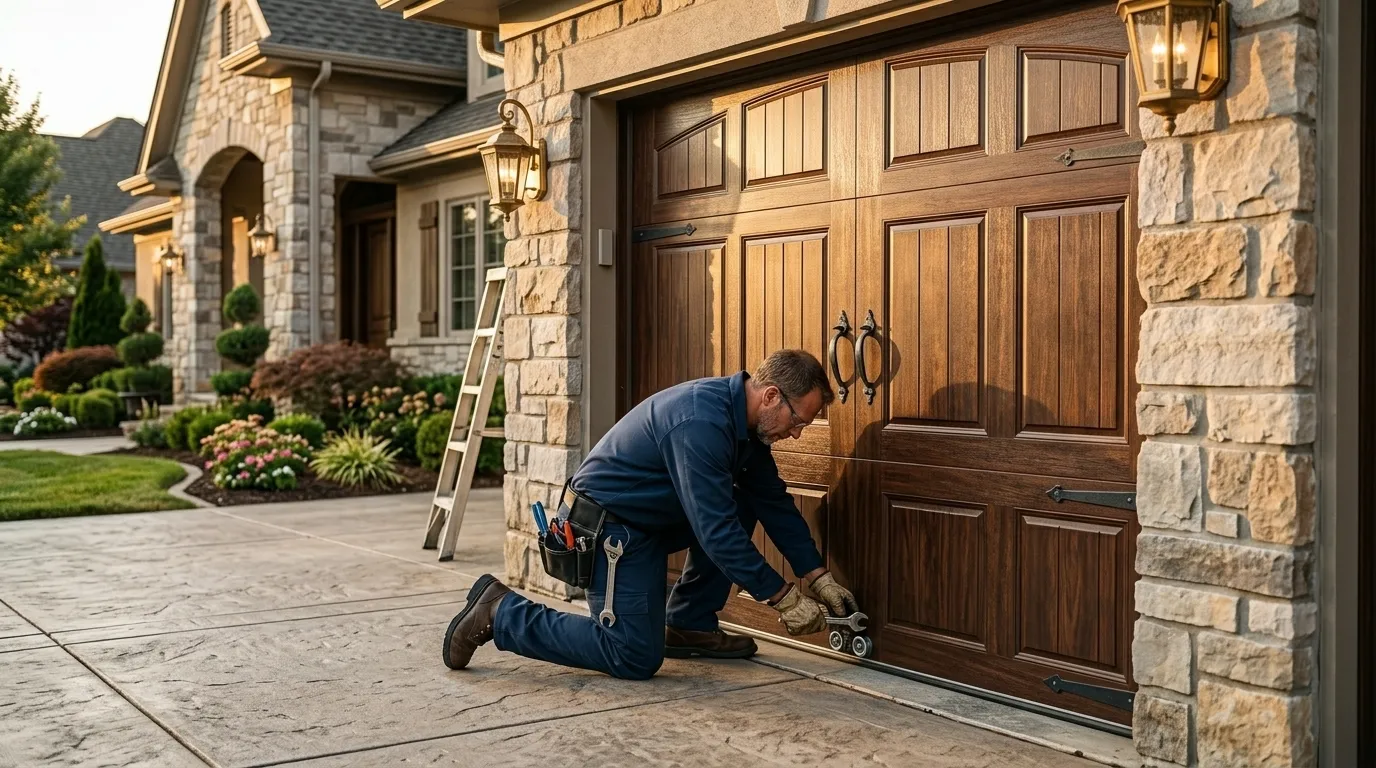
A look at jobs our crew has been on nearby.
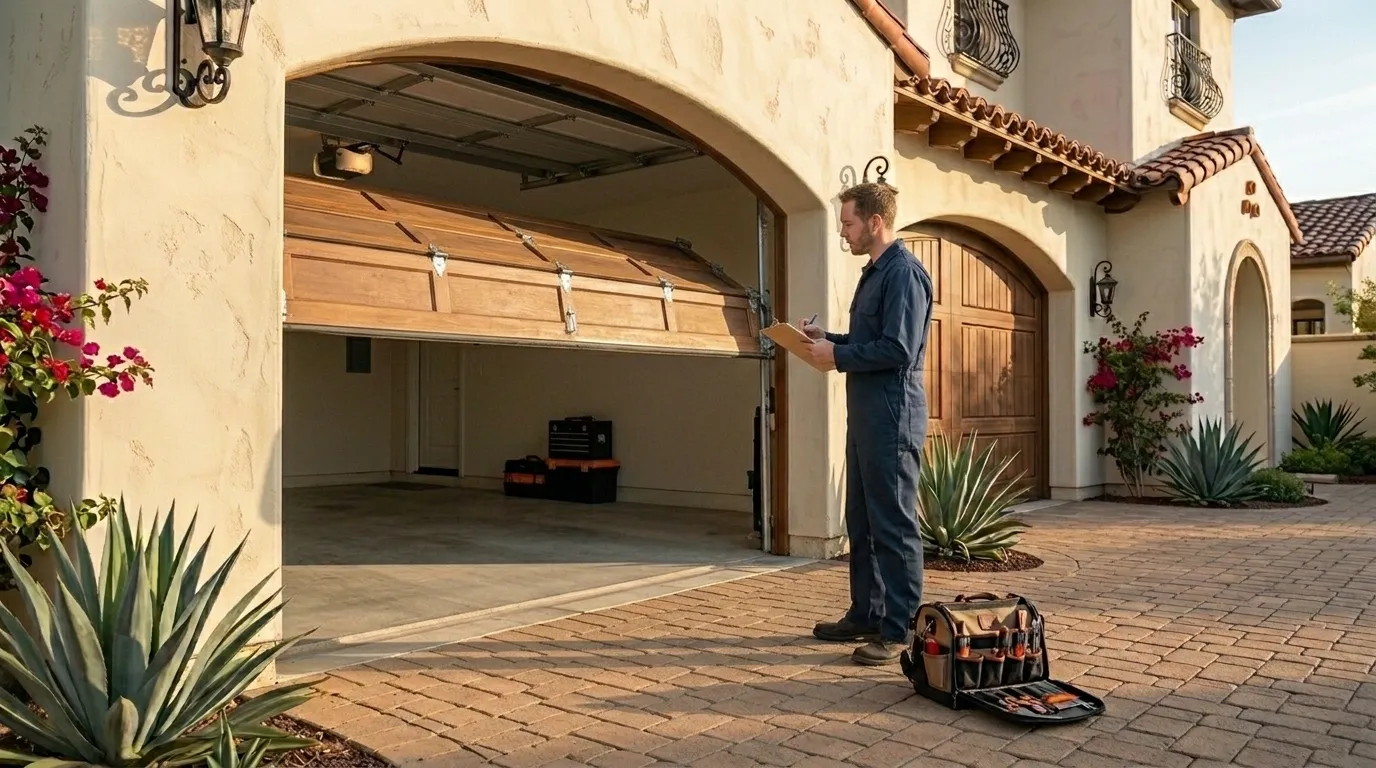
Why Richmond Heights Calls Us
Frequently Asked Questions
Why does the age of my house in Richmond Heights matter for a garage door repair?
Most homes here date to around 1947, well before the 1960s-70s stock common across much of the rest of the service area. Doors and openers from that era often use track and spring hardware sized differently than what's sold today, so a repair sometimes needs a part ordered rather than swapped same-visit.
Do you have a branch located in Richmond Heights?
No. We run this job out of St. Louis, about five miles from Richmond Heights. There's no separate office or depot here - a truck comes out to you when you book.
Can I replace a torsion spring on an older door myself?
Not recommended. A torsion spring under load can cause serious injury regardless of the door's age, and older doors built around 1947 sometimes have narrower headroom that changes the winding clearance from what general instructions assume.
Will parts for a 1947-era door be in stock on the truck?
Common failures - springs, cables, rollers, standard opener parts - are stocked. Panel sections or track hardware specific to an original 1947 opening usually aren't, since suppliers don't keep volume stock of that vintage. Those get ordered.
Need Garage Door Service in Richmond Heights?
Call now for straight answers on cost and timing.