
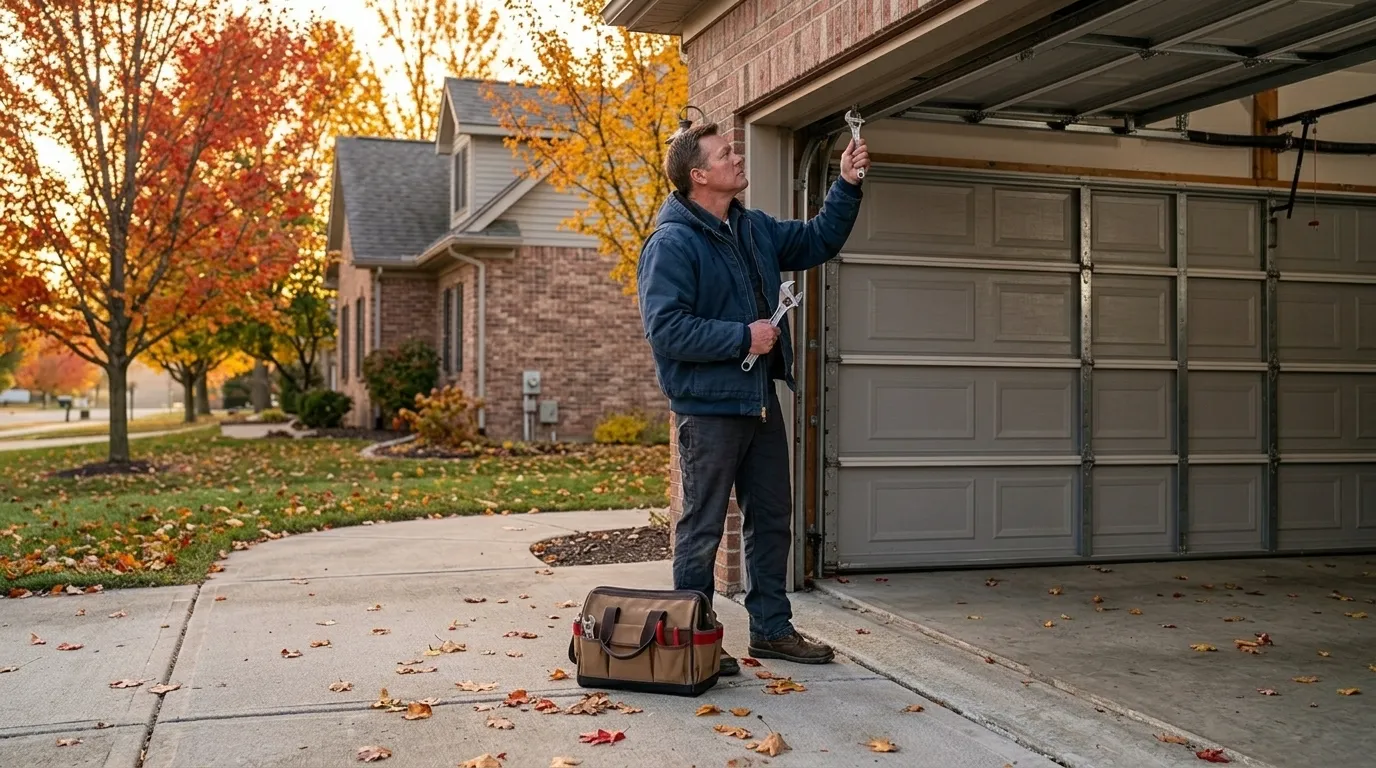
Panel Replacement in Richmond Heights
Panel Replacement for Richmond Heights Garage Doors
Panel replacement for Richmond Heights homes built around 1947, five miles from our St. Louis shop. Matching old steel panels and what the drive means for your job.
- Licensed & Insured
- Same-Area Service Calls
- Upfront Pricing
What Happens When You Call
-
1
Call or Request a Quote
Tell us what the door is doing and roughly how old the house is - that alone points us toward the likely part before a truck leaves.
-
2
On-Site Diagnosis
A tech checks the spring, cables, tracks, and opener in person and tells you plainly what is actually wrong.
-
3
Straight Price, No Surprises
You get a number before any work starts. It covers parts and labor, nothing added after the fact.
-
4
Fixed the Same Visit
Most repairs are done in one trip. If a part needs sourcing, we tell you that upfront instead of guessing.
Booking a Visit
Richmond Heights sits five miles from our St. Louis shop, a short enough run that a panel job here fits into the same day as two or three other calls without anyone waiting until evening for a truck. That distance matters more than it sounds like it should: on a job that needs a return trip for a special-order panel, five miles is the difference between a same-week second visit and one pushed out because the truck had to cross half the metro.
We schedule the measuring visit first, then the install once the panel's in hand. We don't keep a branch in Richmond Heights - every job here is dispatched from St. Louis, and we tell you that up front instead of pretending otherwise.
How Long You Are Without the Door
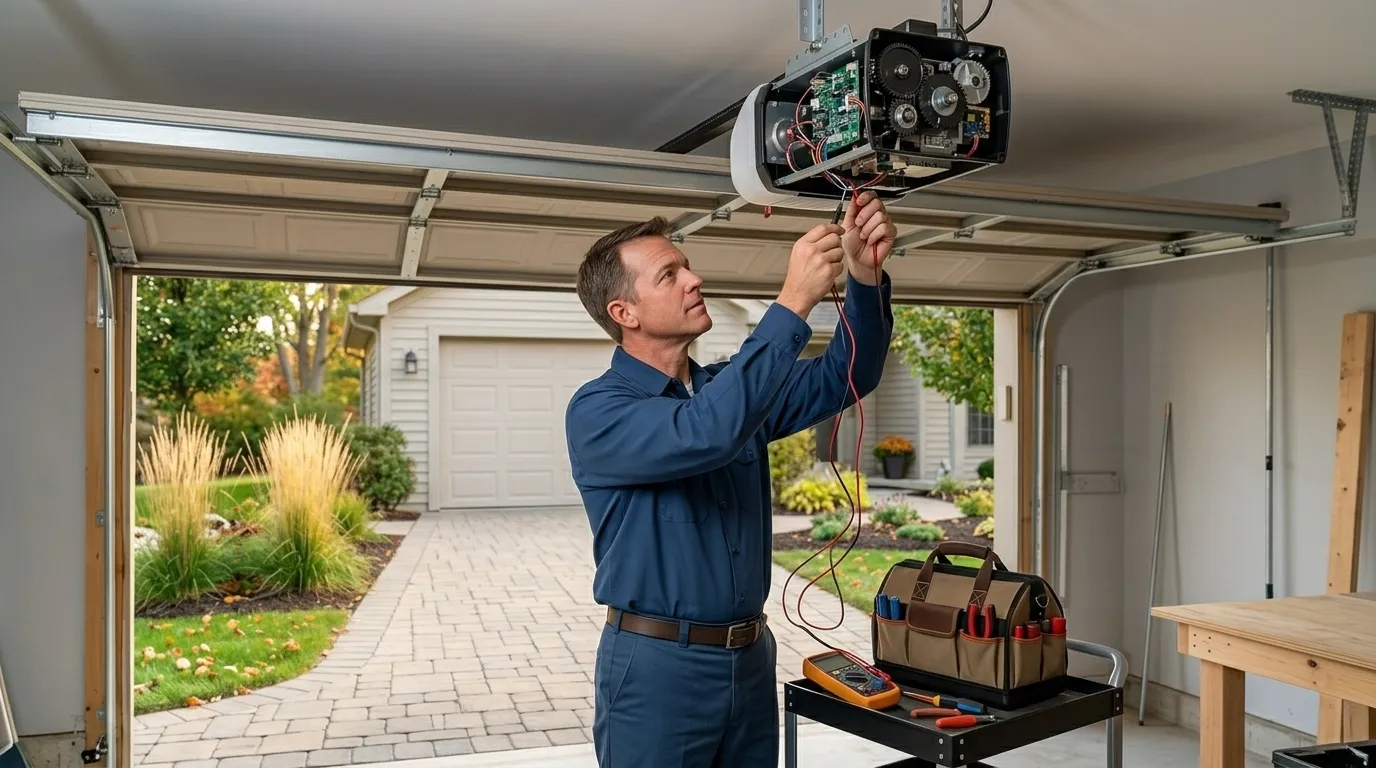
A single dented or rusted-through panel on a door that still opens and closes doesn't leave you without a garage - you can usually keep using the door while you wait on the replacement panel to arrive. That's different from a full section failure on an older door, where a bent track or a panel torn loose at the hinge can jam the whole thing shut. Richmond Heights' housing stock, much of it going back to 1947, tends to run steel sectional doors from replacements done decades after the houses were built, so the panel style is rarely the newest thing on the shelf.
If your panel is a common size we stock, you're not without a working door for more than a day. If it's an odd width or an older ribbed profile, plan on the door being propped or braced until the part lands - we'll tell you which case you're in at the estimate, not after.
Doing It Yourself
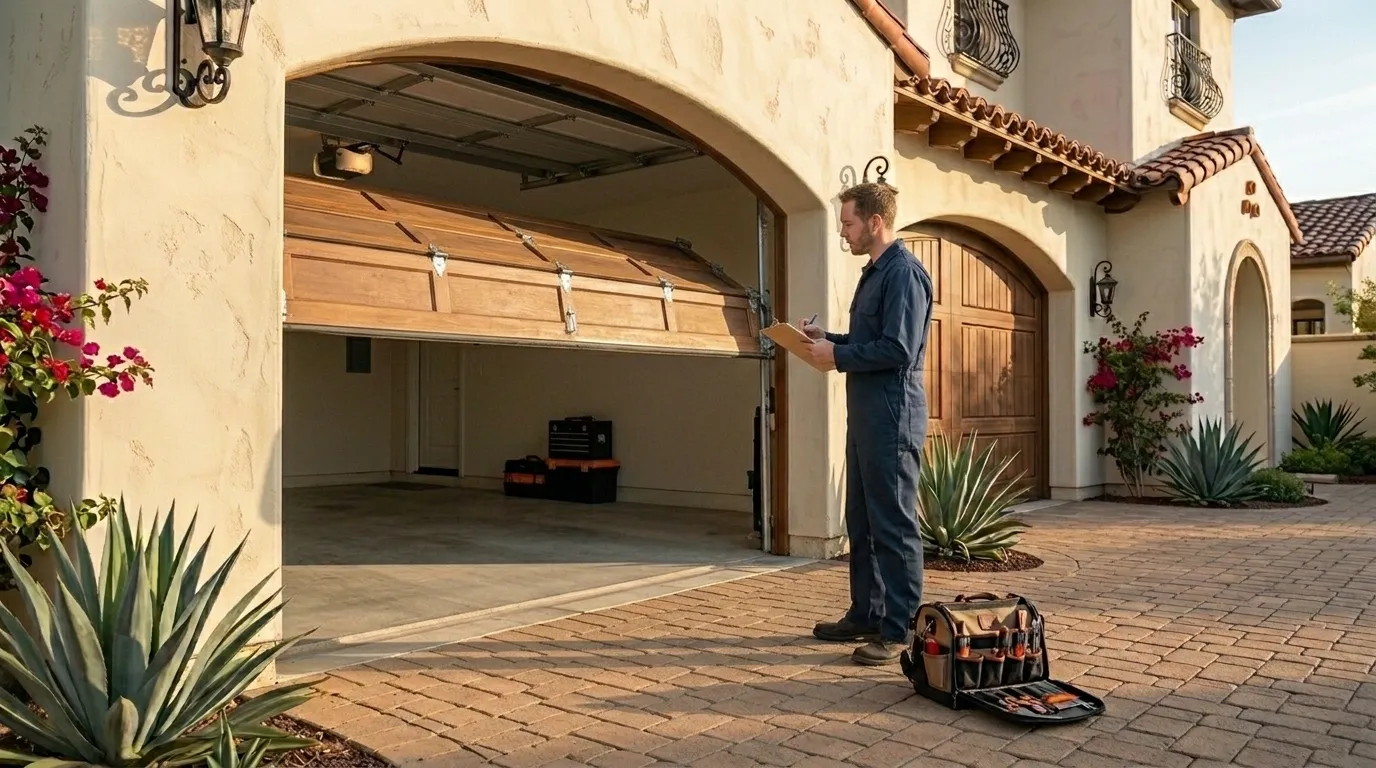
Swapping one panel on a sectional door looks simple from a video, and on a newer door with standard hardware it sometimes is. On a Richmond Heights house from the late 1940s or the decades right after, the panel you're replacing may be fastened with hardware that doesn't match anything sold today, and the reason we say that plainly: the door still carries its original tracks or spring hardware even if the panels themselves were swapped once already. Get the panel gauge or the hinge spacing wrong and you throw the door out of alignment, which then stresses the opener and the springs on either side of it.
We're not going to tell you it can't be done - a light aluminum panel with standard hinges is a reasonable DIY job for someone with the right clamps. A steel panel on a door with side-mounted torsion hardware from that era is a different job, and that one we'd rather you call in before you're holding a door off its track.
What the Repair Takes
Panel replacement starts with matching what's there - width, gauge, whether it's a raised or flat panel, and how it was originally fastened to the stiles. On houses built close to 1947, that often means an older ribbed steel profile that current manufacturers don't run anymore, so the closest match is sometimes a near-match rather than exact. We take the door out of service section by section, not by pulling the whole assembly, which keeps the spring tension undisturbed and the rest of the door untouched.
Once the new or refurbished panel is set, we re-square the section against its neighbors and check that the door still travels its full range without binding. On a straightforward job this runs a couple of hours. On a door where the panel has been holding the whole section together after years of rust, we sometimes find we need to replace more of the section than the visible dent suggests.
The Complications
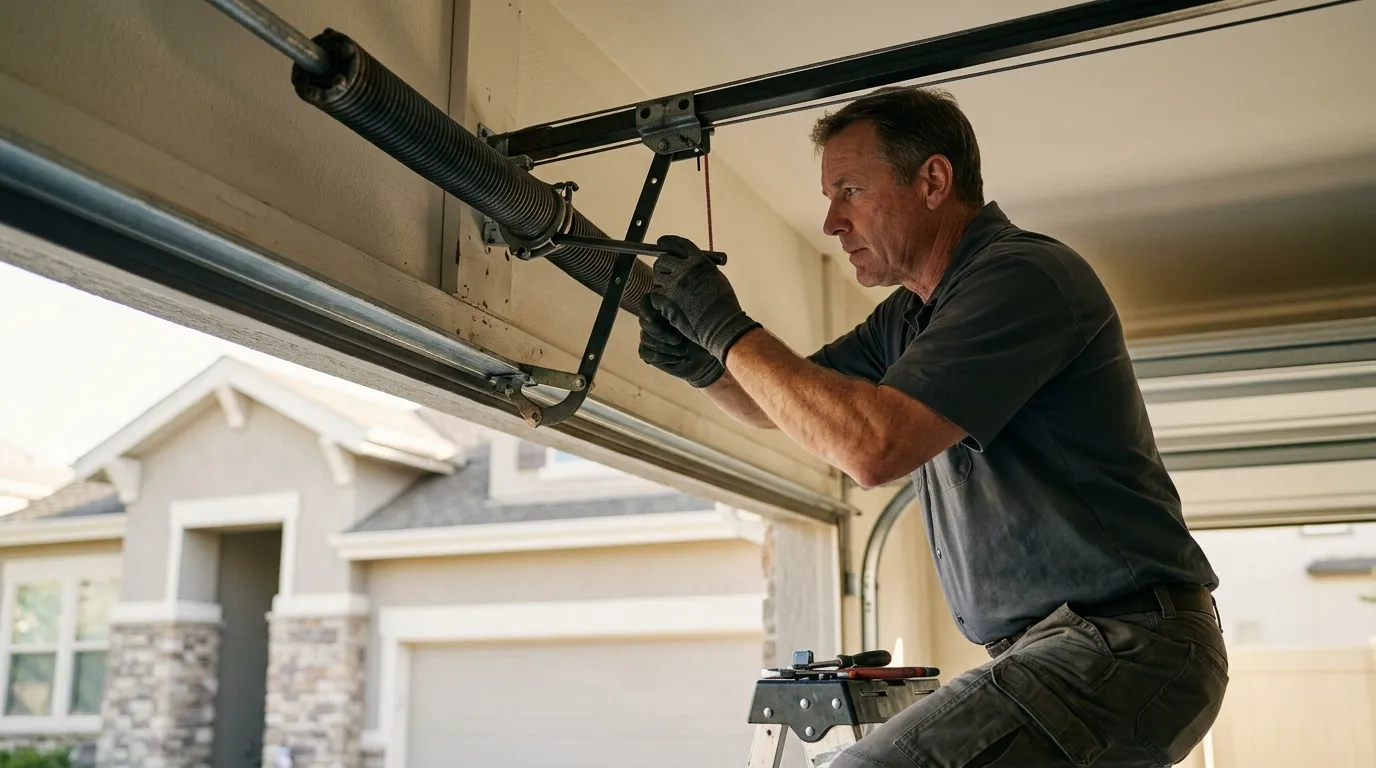
The main complication in Richmond Heights isn't the panel - it's what's around it. A house built in 1947 or shortly after has had roughly seventy-plus years for the door hardware to be replaced piecemeal: a new opener in one decade, new springs in another, panels patched or swapped without ever touching the track. That means the panel you need matched has to work with whatever generation of track and roller is already installed, not with a factory-original setup.
St. Louis winters put cold-weather stress on steel panels too - the COLD moderate climate band here means panels see real freeze-thaw cycling, and a panel that's already thin from rust can crack at a hinge point rather than just dent. We check the roller and hinge condition on the sections next to the damaged one before we commit to a single-panel fix, because if those are also failing, a new panel bolted next to worn hardware just moves the next failure over one section.
Stocked Parts
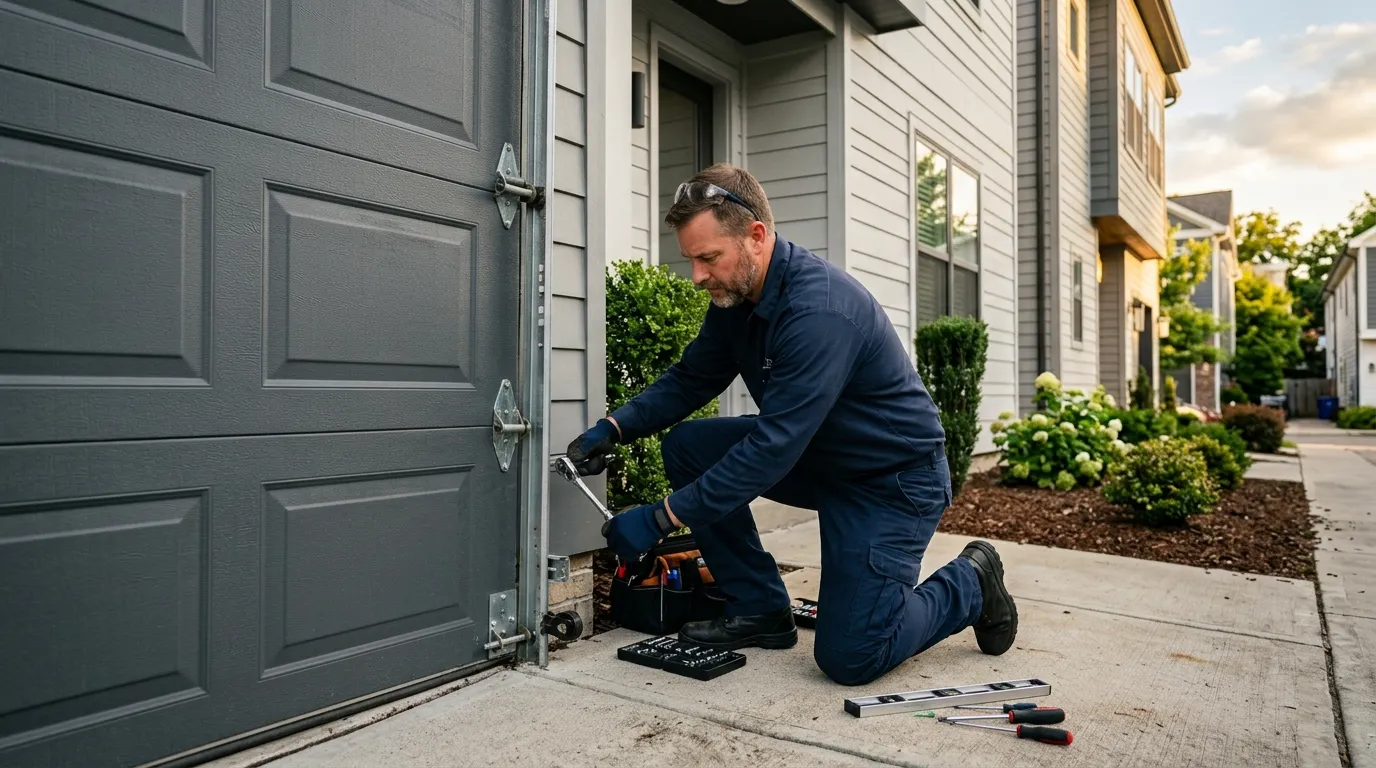
We carry the panel sizes and hinge hardware that come up most often on the steel sectional doors common across the area's 1960s-70s stock, and Richmond Heights' 1947 median build year puts it on the older end of that range, so its panels sometimes predate what we keep on the truck as standard stock. When that happens, we order the closest match rather than force-fit something wrong-sized, which is the honest limitation here: an odd or discontinued panel profile can mean a few extra days' wait on the part, not a same-day fix. What we don't do is patch a cracked panel with sealant and call it done - if the steel's compromised, replacing the section is the only fix that holds through another winter.
Talk to a Richmond Heights Technician First
Describe what the door is doing and get a straight answer on what it likely needs.
Other Garage Door Services in Richmond Heights
Recent Work in Richmond Heights
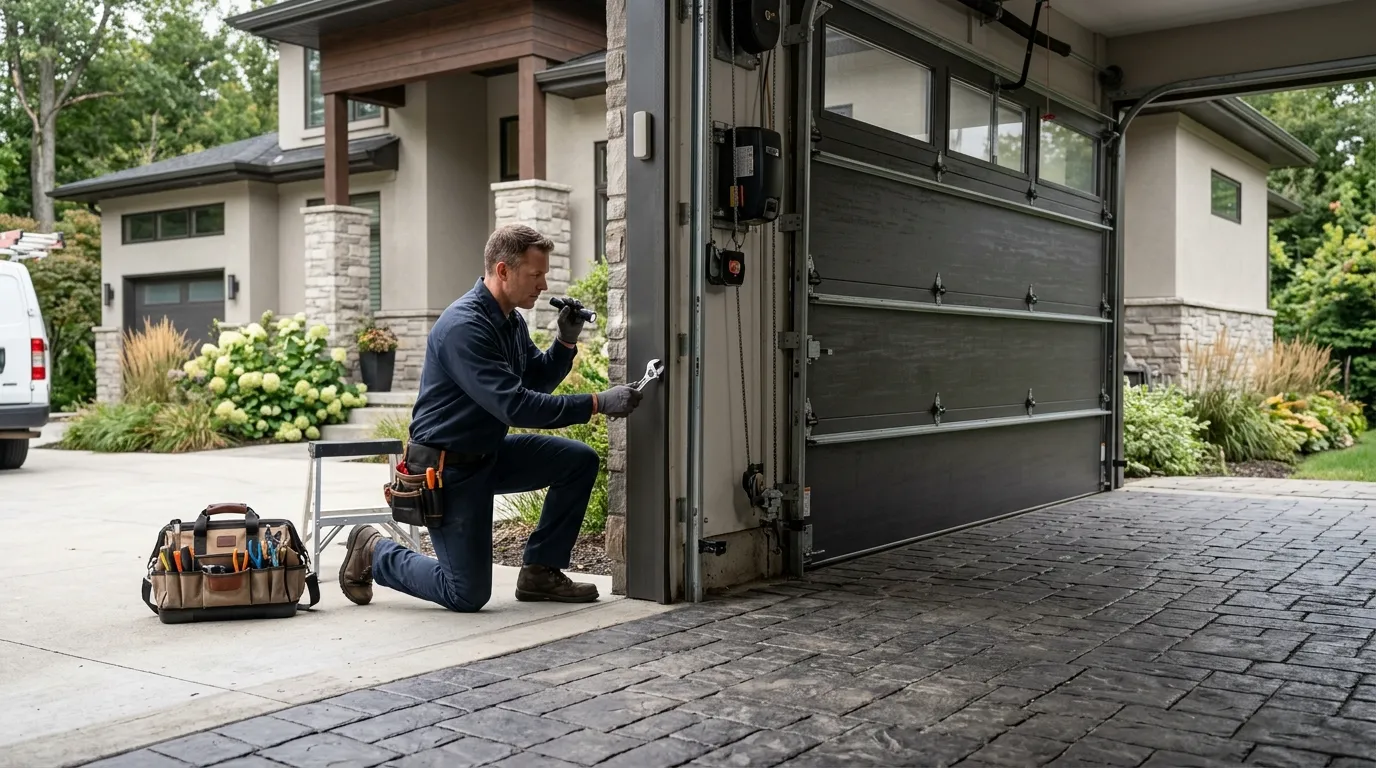
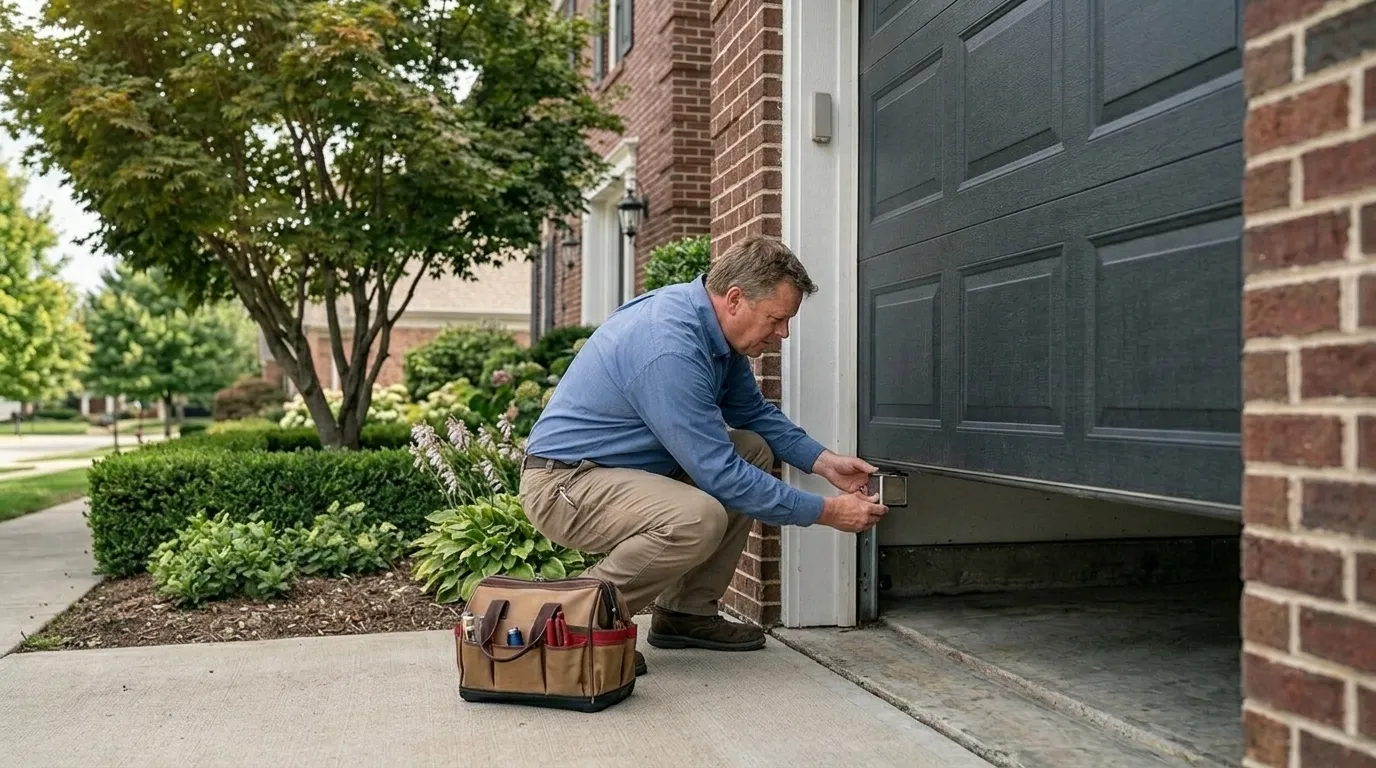
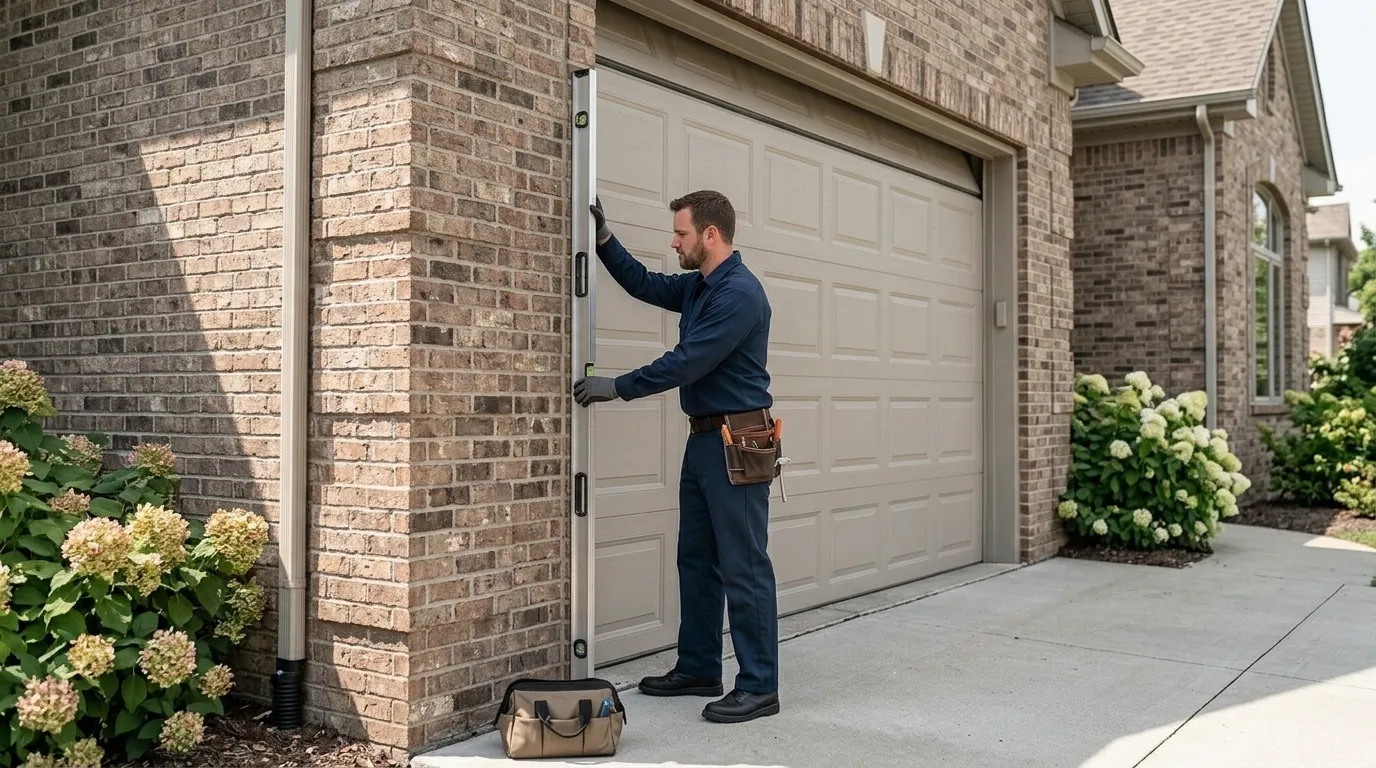
A look at jobs our crew has been on nearby.
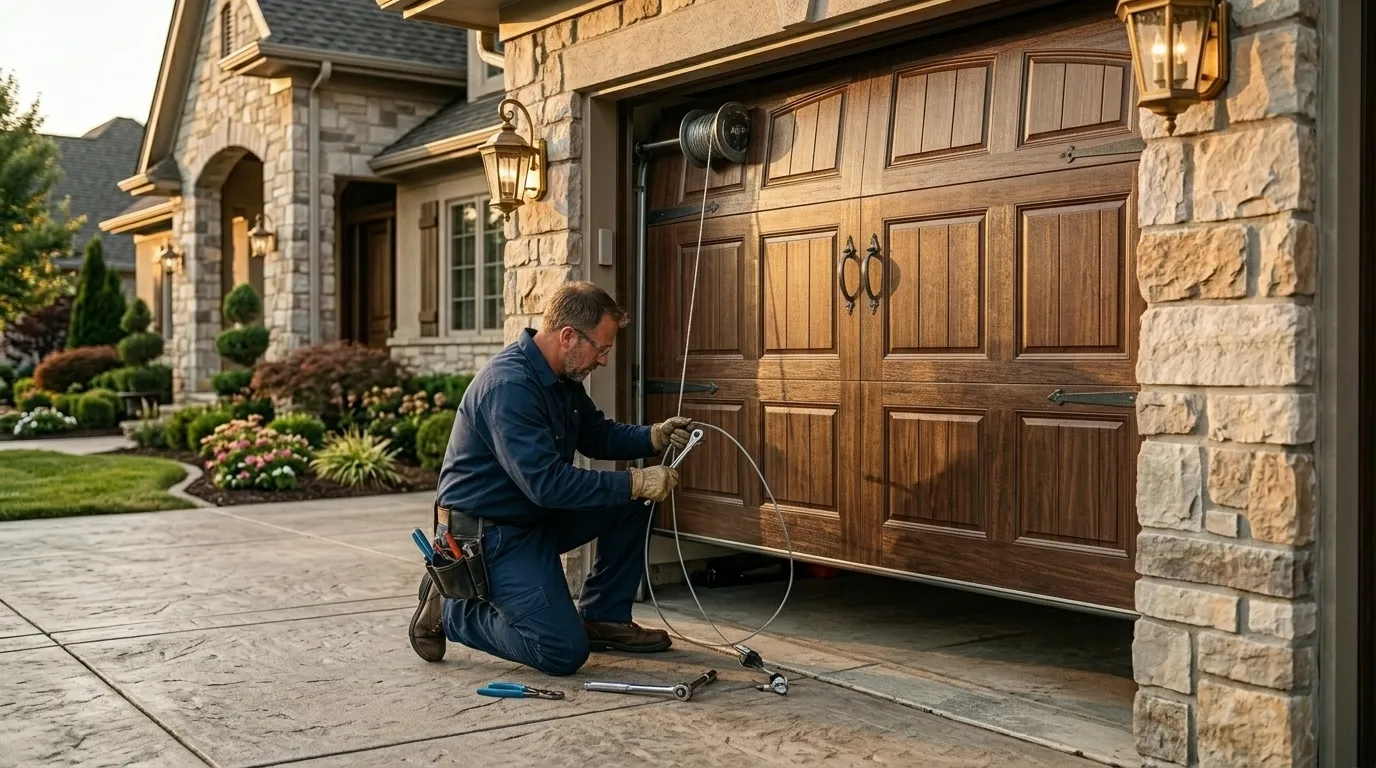
Why Richmond Heights Calls Us
Frequently Asked Questions
How far out do you come for a panel job in Richmond Heights?
About five miles from our St. Louis shop, which is close enough that we don't treat it as a special trip - a panel measure-and-order visit and the install both fit into a normal day's route without extra travel charges tacked on for distance.
Can you match the panel on an older Richmond Heights door?
Often, yes, especially on doors from the 1960s-70s replacement wave common to the area. Houses closer to the neighborhood's 1947 median build year sometimes have older ribbed steel profiles that take a special order rather than a stocked match, which we'll tell you at the estimate.
Do I need to replace the whole door or just the damaged panel?
If the track, springs, and rollers on the rest of the door are sound, a single panel swap is usually enough. If the hardware next to the damaged section shows real wear, replacing just that panel can shift the strain and cause the next failure sooner.
Is a dented panel something I can leave alone?
If the door still opens, closes, and seals at the bottom, a cosmetic dent isn't urgent. Once a panel is cracked or rusted through, it stops carrying load properly, especially through the freeze-thaw cycles this area gets every winter.
Need Panel Replacement in Richmond Heights?
Call now for straight answers on cost and timing.