
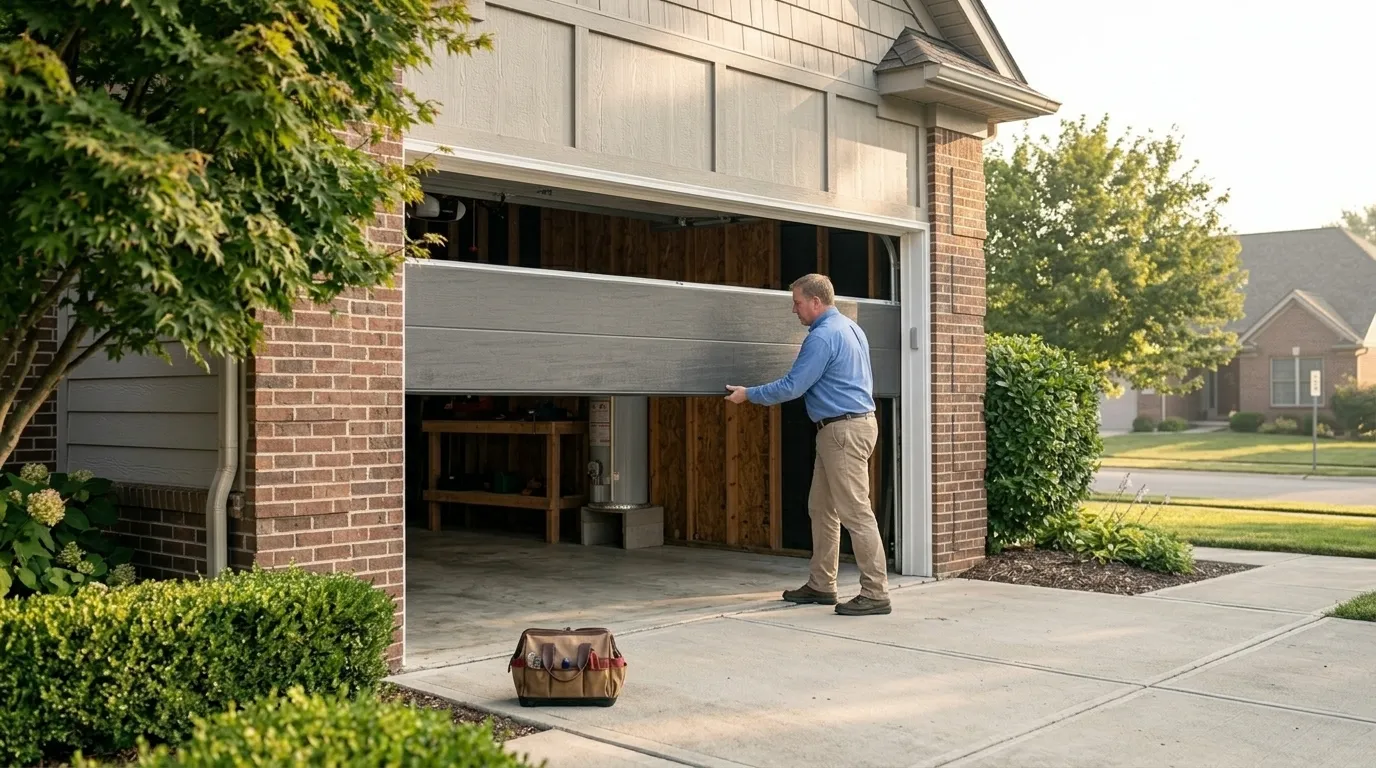
New Door Installation in Richmond Heights
Installing a New Door on a 1947-Era Richmond Heights Garage
New garage door installs for Richmond Heights homes built around 1947, where original 1940s framing means openings and jambs rarely match today's standard sizes.
- Licensed & Insured
- Same-Area Service Calls
- Upfront Pricing
What Happens When You Call
-
1
Call or Request a Quote
Tell us what the door is doing and roughly how old the house is - that alone points us toward the likely part before a truck leaves.
-
2
On-Site Diagnosis
A tech checks the spring, cables, tracks, and opener in person and tells you plainly what is actually wrong.
-
3
Straight Price, No Surprises
You get a number before any work starts. It covers parts and labor, nothing added after the fact.
-
4
Fixed the Same Visit
Most repairs are done in one trip. If a part needs sourcing, we tell you that upfront instead of guessing.
Booking a Visit
We run this job out of St. Louis, five miles from Richmond Heights, and there's no branch office sitting in the neighborhood - the truck comes to you. Because the drive is short, a morning call can usually still land an afternoon measure-and-quote visit, but we book installs, not walk-ins, so we need to see the opening before we commit to a door and a day.
Most calls here start the same way: a homeowner wants to know if their opening will take a standard door or something cut to size. In a neighborhood where the median home dates to 1947, that's not a small question.
Framing from that era wasn't built to a modern module, so we schedule the measure visit as its own step rather than guessing off a phone description. That visit also tells us whether the jamb and header can carry a new door's weight without extra bracing, which is common in houses this old.
We'll give you a firm install date once we've seen the opening, not before.
How Long You Are Without the Door
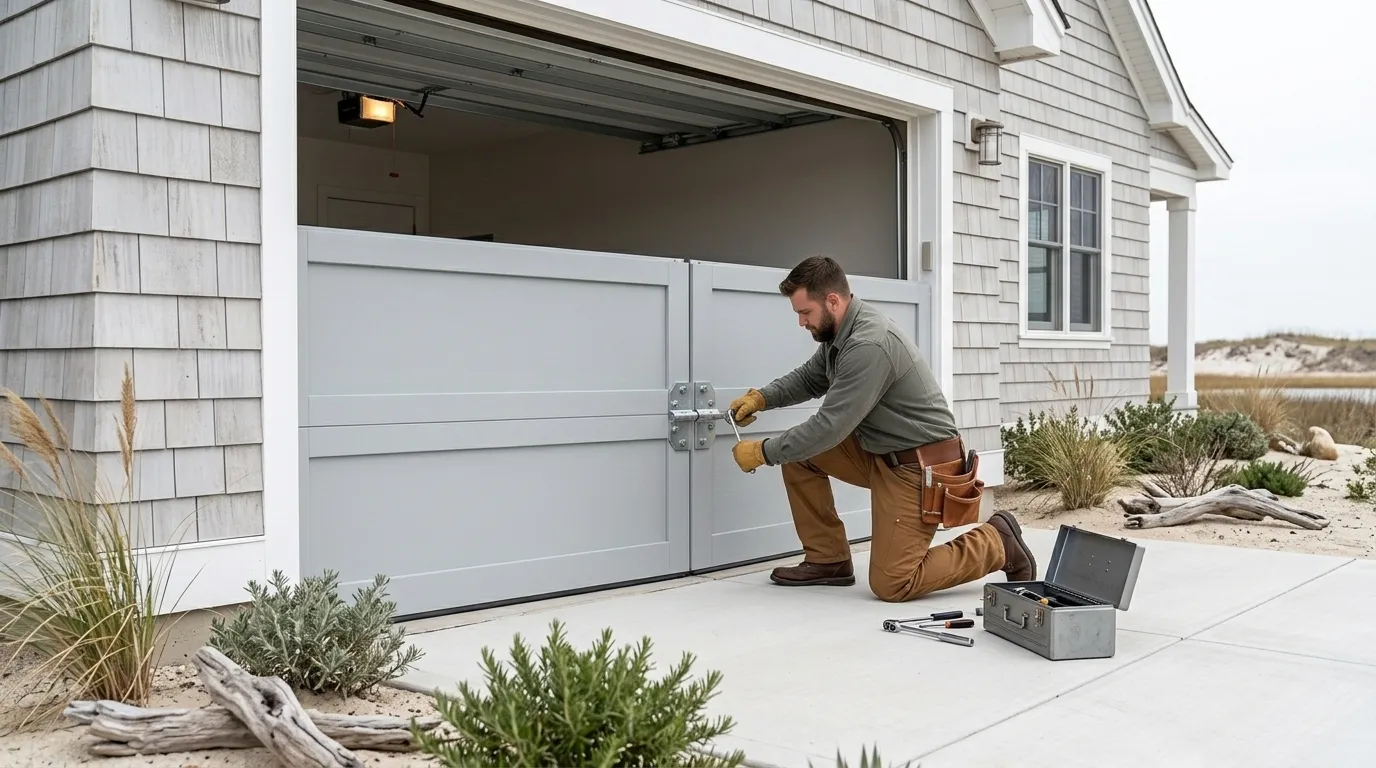
A straightforward swap - same-size opening, header and jamb in decent shape - is a same-day job from the time the truck arrives. You're without a working door for the hours it takes to pull the old one and hang the new one, not overnight.
Richmond Heights complicates that timeline more than a newer subdivision would. With a median build year of 1947, twenty years older than the 1967 median across the wider service area we cover from St.
Louis, a lot of openings here were framed before garage doors came in standard widths. If the measure visit turns up an opening that needs the jamb reset or the header reinforced, that's added time beyond the door itself, and we'll tell you that up front rather than discover it mid-install.
Weather plays a role too. This area sits in a cold-moderate climate band, and we don't like leaving an opening uncovered longer than we have to in the months when that matters. On a clean swap, plan for a morning start and a door you can close by afternoon.
Doing It Yourself
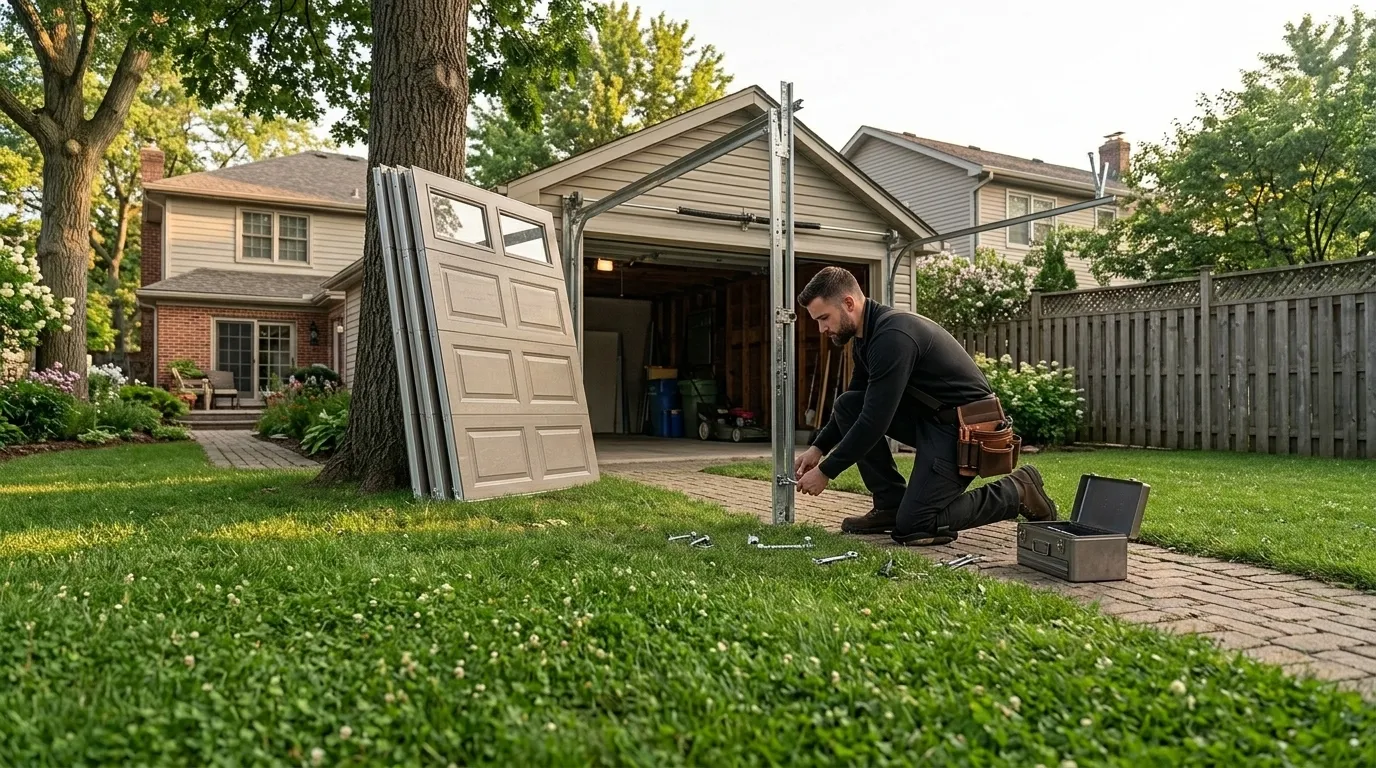
A new garage door is not a good first DIY project, and a 1947 opening makes it worse. The panels aren't the risk - it's the spring system. A torsion spring under load can put someone in the hospital, and on an older jamb you're also fighting hardware that was never sized for a big-box store's off-the-shelf brackets.
We'll say this plainly: if your opening is a true standard size and you've done this kind of work before, a basic panel swap on newer construction is within reach for a careful DIYer. That's not this neighborhood's typical house. With most homes here dating to the late 1940s, framing tolerances are looser than what current door kits expect, and a rushed install can leave you with a door that binds on the track within a season.
What we don't do is sell you a door and walk away. If you want to handle demo yourself to save labor cost, say so on the call - but the spring set and track alignment on an opening this age is worth having someone who's seen it before.
What the Repair Takes
Once we've measured, the job breaks into three parts: pulling the old door and track, checking and if needed shimming or resetting the jamb, and hanging the new door with its spring system tensioned to the door's actual weight.
On a house from Richmond Heights' era, the middle step is the one that decides how the rest goes. Framing from 1947 has usually settled over the decades, and a jamb that's out of plumb by even half an inch changes how the track has to be set. We check that before the new door goes up, not after, because a door installed square on an unsquare jamb will fight its opener from day one.
Insulation and material choice come down to what the household wants and what the opening allows - a wider double door needs a header that can carry it, and not every 1947 header can without added support. We'll tell you on-site if that's the case rather than assume it. Most jobs close out the same day once the jamb work, if any, is done.
The Complications
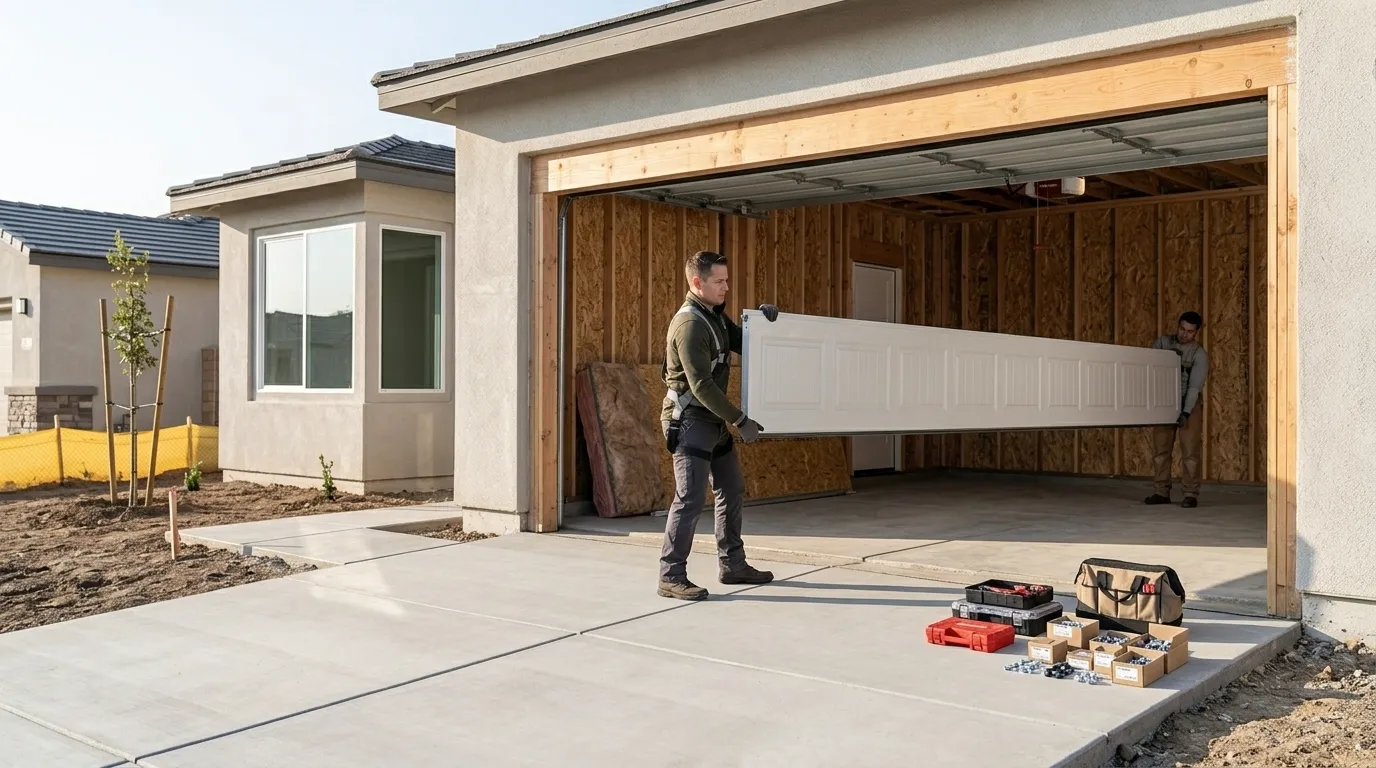
The complication we hit most often in Richmond Heights isn't the door - it's what's still original behind it. A house built in 1947 almost never has a garage opening cut to today's 16-foot double-door standard, and a lot of single-door openings run narrower than current stock sizes too. That means either a custom-cut door or reframing the opening, and the two options carry very different price tags.
The second complication is hardware that was never replaced. With 4,481 households in Richmond Heights and a housing stock that skews this old, we regularly find track brackets and header lag bolts original to the build - sound enough to have lasted eighty years, but not drilled to match a modern track's bolt pattern. We work around that where we can and replace it where we can't.
Winters in this climate band mean an unsealed jamb from 1947 has had eight decades to shift, so a fresh weather seal is worth budgeting even on a job that otherwise looks simple.
Stocked Parts
We carry common torsion springs, standard track sections, and openers on the truck, so a straightforward install on a standard-size opening doesn't wait on a parts order. Where we run into a lead time is custom-width doors and non-standard track built for an opening that's narrower or shorter than today's stock sizes - the kind of opening common in a neighborhood built before 1950.
If your measure visit turns up an opening like that, we'll tell you the lead time on the specific door rather than promise a date we can't hit. It's usually a matter of days, not weeks, but it's not same-day like a standard swap.
One honest limit: we don't stock every historic hardware match for original 1940s brackets. If yours are still sound, we'll reuse what we can; if they're not, you're moving to modern equivalents, and we'll say so before the job starts, not after the old bracket is already off the wall.
Talk to a Richmond Heights Technician First
Describe what the door is doing and get a straight answer on what it likely needs.
Other Garage Door Services in Richmond Heights
Recent Work in Richmond Heights
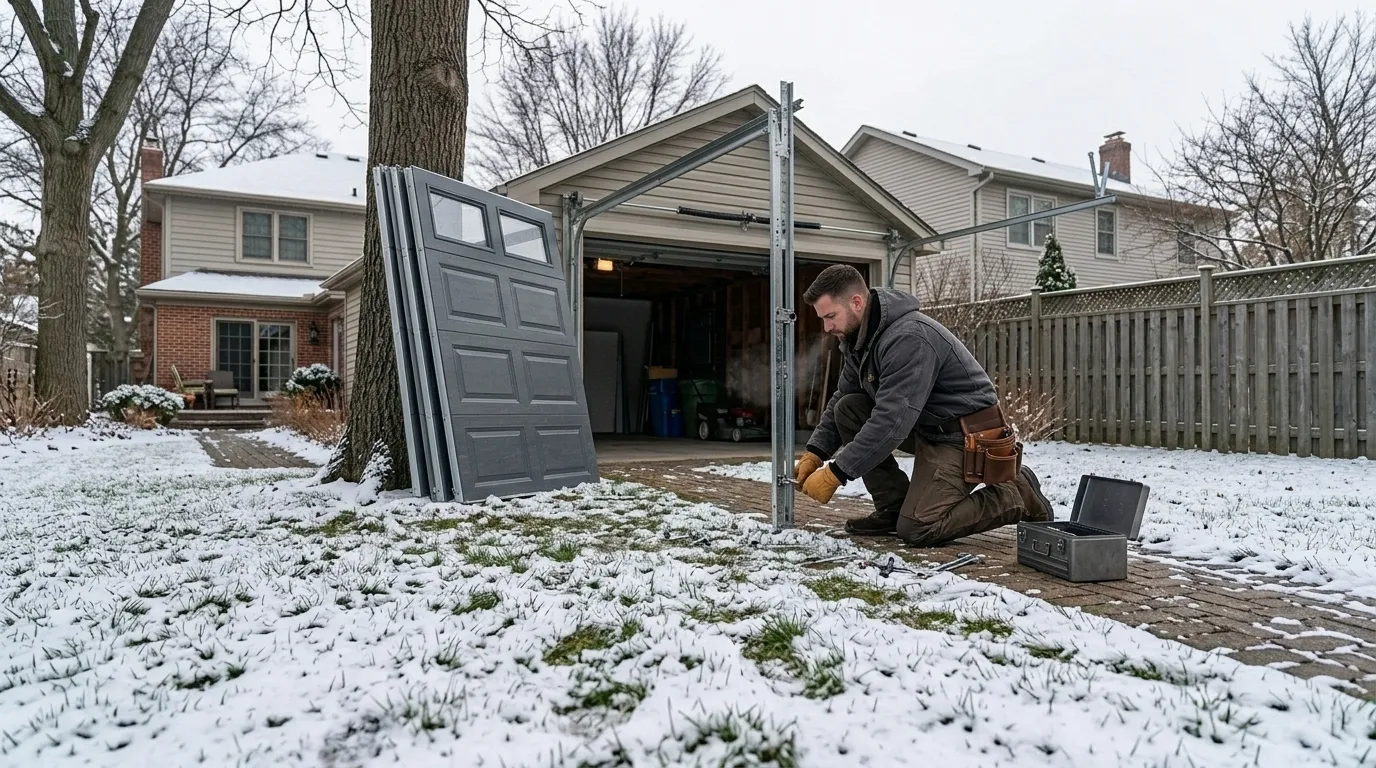
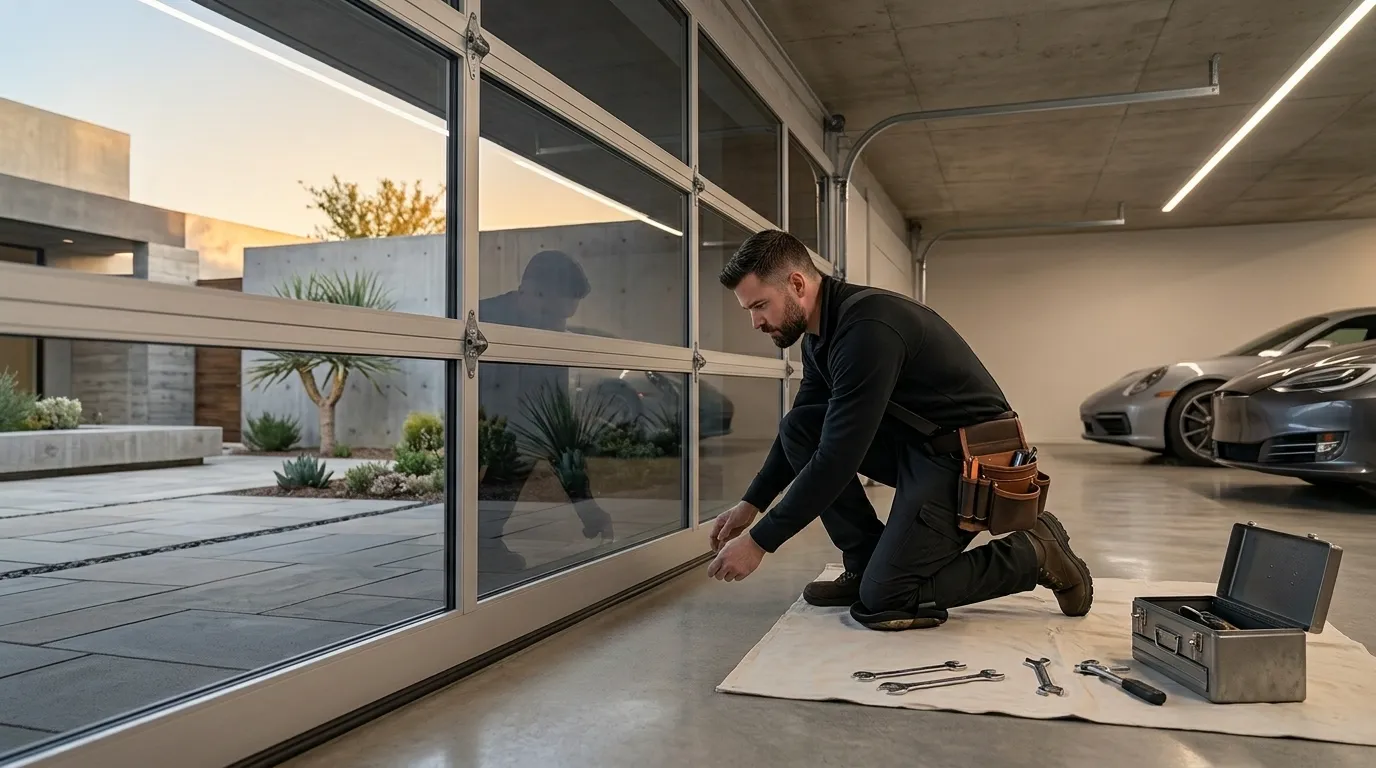
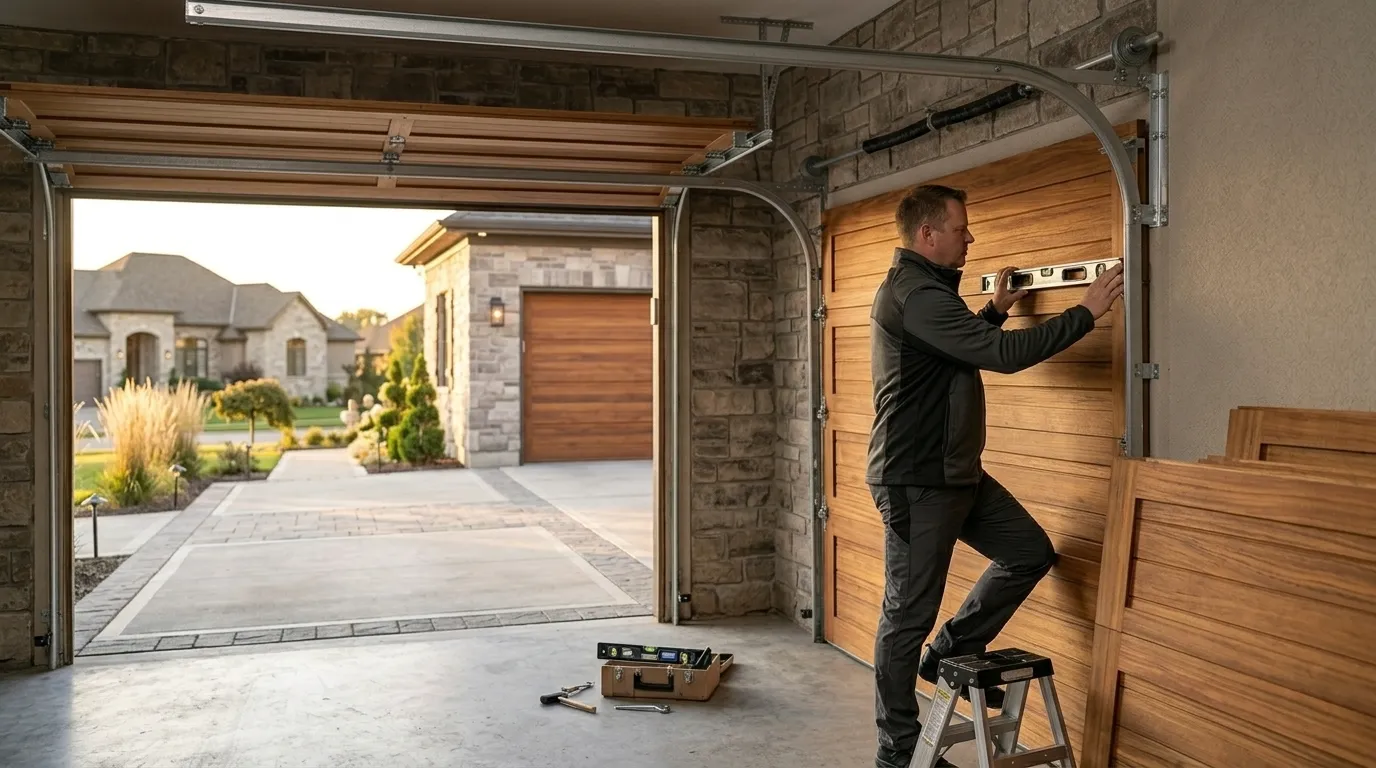
A look at jobs our crew has been on nearby.
Why Richmond Heights Calls Us
Frequently Asked Questions
Will a new door fit my Richmond Heights garage without reframing?
It depends on the opening. Homes here often date to the late 1940s, before doors came in today's standard widths, so we measure before quoting. Some openings take a standard door as-is; others need the jamb or header adjusted first. We'll tell you which after the measure visit, not before.
How far out do you travel for an install in Richmond Heights?
We run this job from St. Louis, about five miles away, so travel time is short. There's no local branch in Richmond Heights itself - the crew and truck come from St. Louis for the measure visit and the install.
Can I keep my original garage hardware with a new door?
Sometimes. If the brackets and header bolts from the original build are still sound, we can reuse them. A lot of 1947-era hardware wasn't drilled for modern track patterns, though, so we often end up replacing it - we'll check on-site and tell you either way.
Is a same-day install realistic for my house?
On a standard-size opening with a jamb in good shape, yes - same-day is typical. If the measure visit finds framing that needs resetting, which is common in houses built around 1947, we'll add that time to the schedule and give you a real date.
Need New Door Installation in Richmond Heights?
Call now for straight answers on cost and timing.