
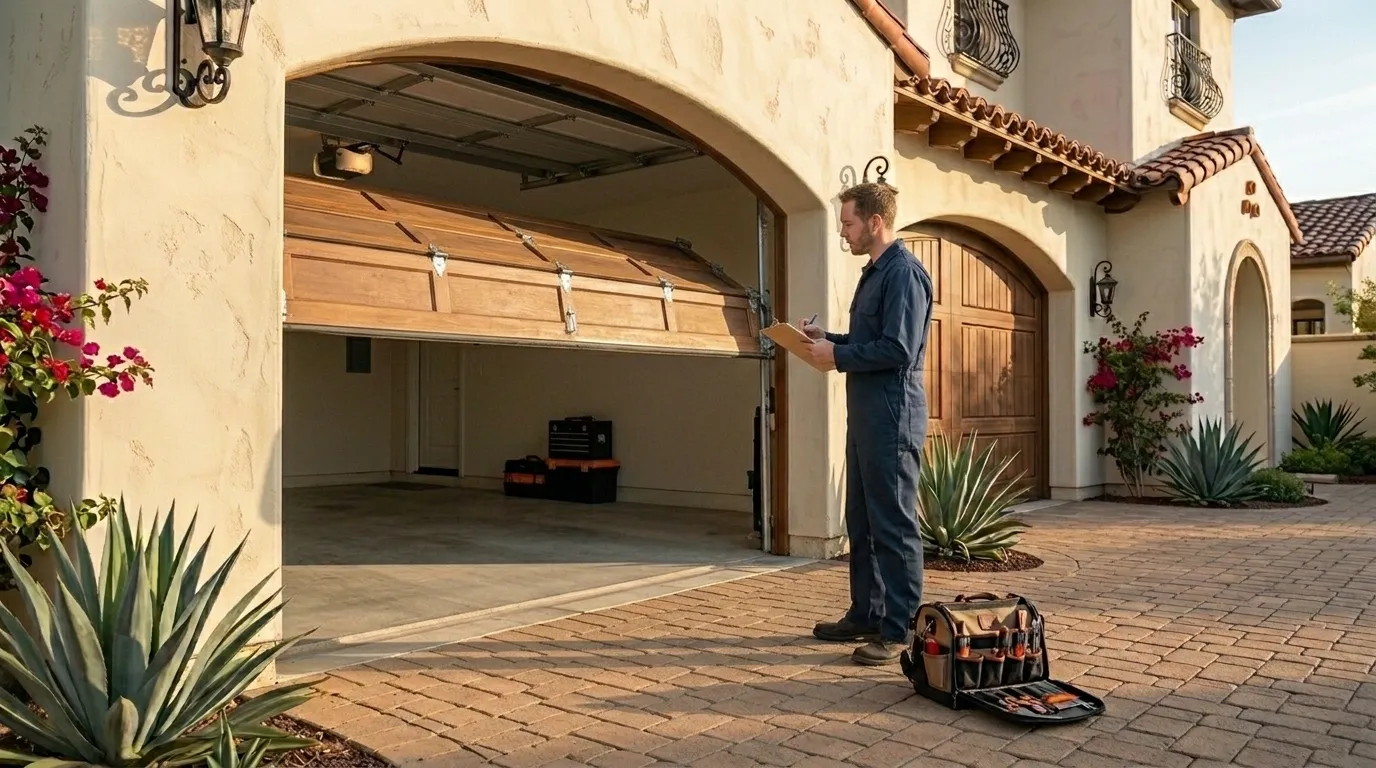
Garage Door Service in Clayton
Garage Door Repair for Clayton Homes Built Around 1953
Clayton, MO homes mostly date to 1953, still running original spring hardware. St. Louis Garage Door Pros repairs and replaces doors, coming in from St. Louis.
- Licensed & Insured
- Same-Area Service Calls
- Upfront Pricing
What Happens When You Call
-
1
Call or Request a Quote
Tell us what the door is doing and roughly how old the house is - that alone points us toward the likely part before a truck leaves.
-
2
On-Site Diagnosis
A tech checks the spring, cables, tracks, and opener in person and tells you plainly what is actually wrong.
-
3
Straight Price, No Surprises
You get a number before any work starts. It covers parts and labor, nothing added after the fact.
-
4
Fixed the Same Visit
Most repairs are done in one trip. If a part needs sourcing, we tell you that upfront instead of guessing.
Doing It Yourself
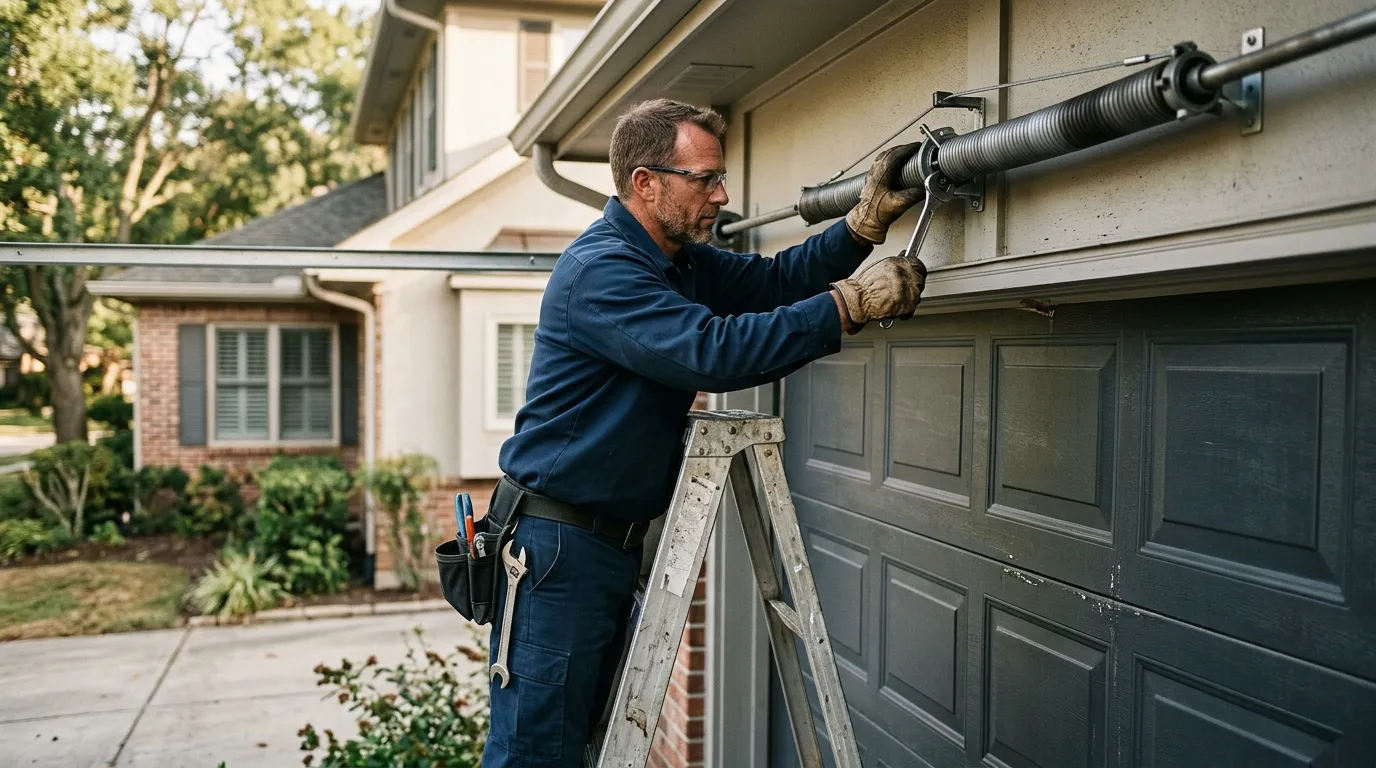
The fault we see most in Clayton isn't a dead opener - it's a torsion spring that was sized for a lighter door than the one hanging on it now, or a spring that's simply outlived the steel in it. A spring rated for 10,000 cycles doesn't care how nice the house is; it winds down on its own schedule, and once it goes, the door either won't lift or slams down on its own weight.
Most houses in Clayton went up around 1953, well ahead of the region-wide median build year of 1967 that shows up across the rest of the service area. That decade-plus head start matters: a lot of these garages still carry their original torsion hardware, or a mismatched replacement installed decades ago without anyone checking the door's actual weight against the spring's wind.
You can watch videos on winding a torsion spring, but the tension involved has put people in the hospital, and we won't talk anyone through it over the phone. Track alignment, cable fraying, and roller wear are lower-risk jobs a handy owner can inspect, but the spring itself is not a DIY repair here - not with hardware this old.
Booking a Visit
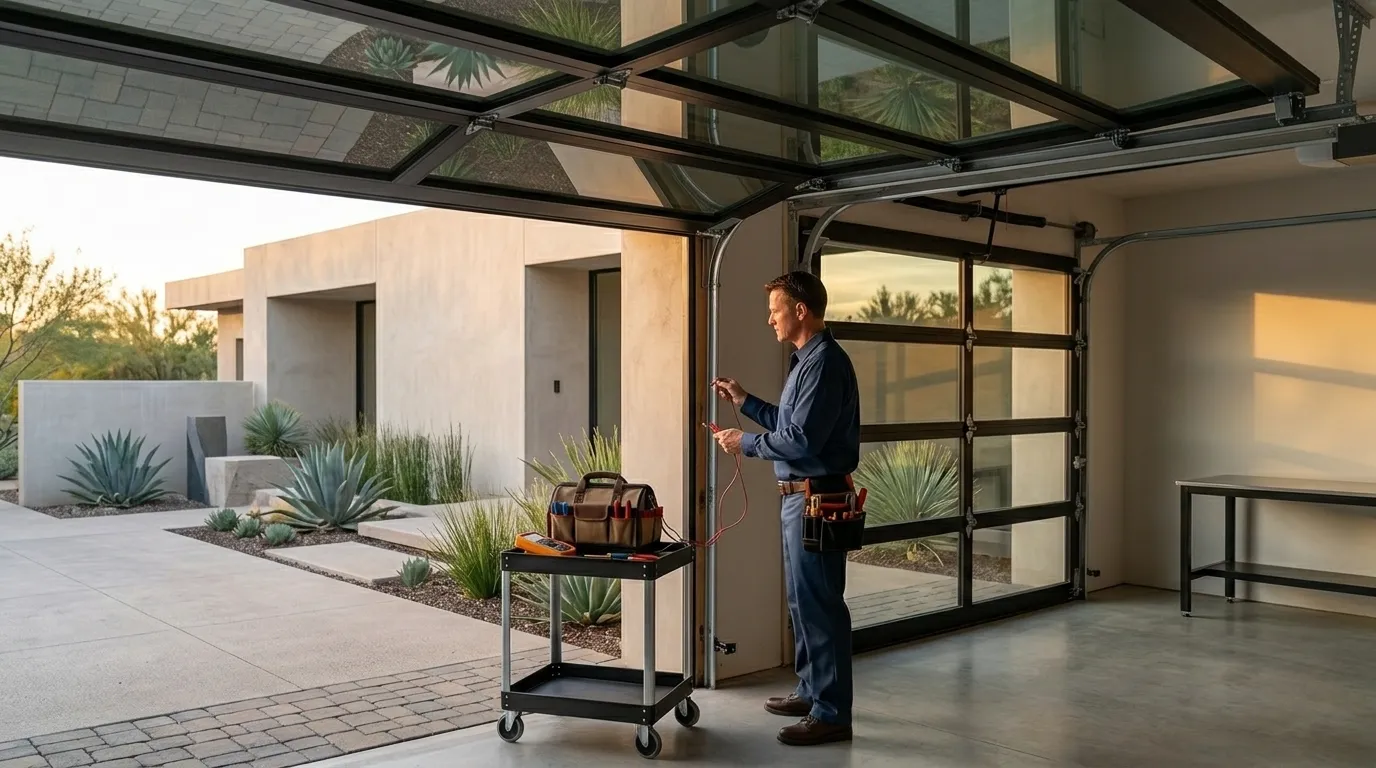
We run this job from St. Louis, five miles out to Clayton - there's no branch office or drop-in counter in town, so a visit starts with a call or a request through our site. We ask what the door is doing (won't open, opens crooked, makes a grinding noise) because that tells us which parts to bring rather than guessing on the truck.
If you're weighing garage door work generally rather than one specific fault, our main service page covers the full range across the area we work. This page is about the repair itself once you're ready to book - you can also go straight to the Clayton service page to get a visit on the calendar.
How Long You Are Without the Door
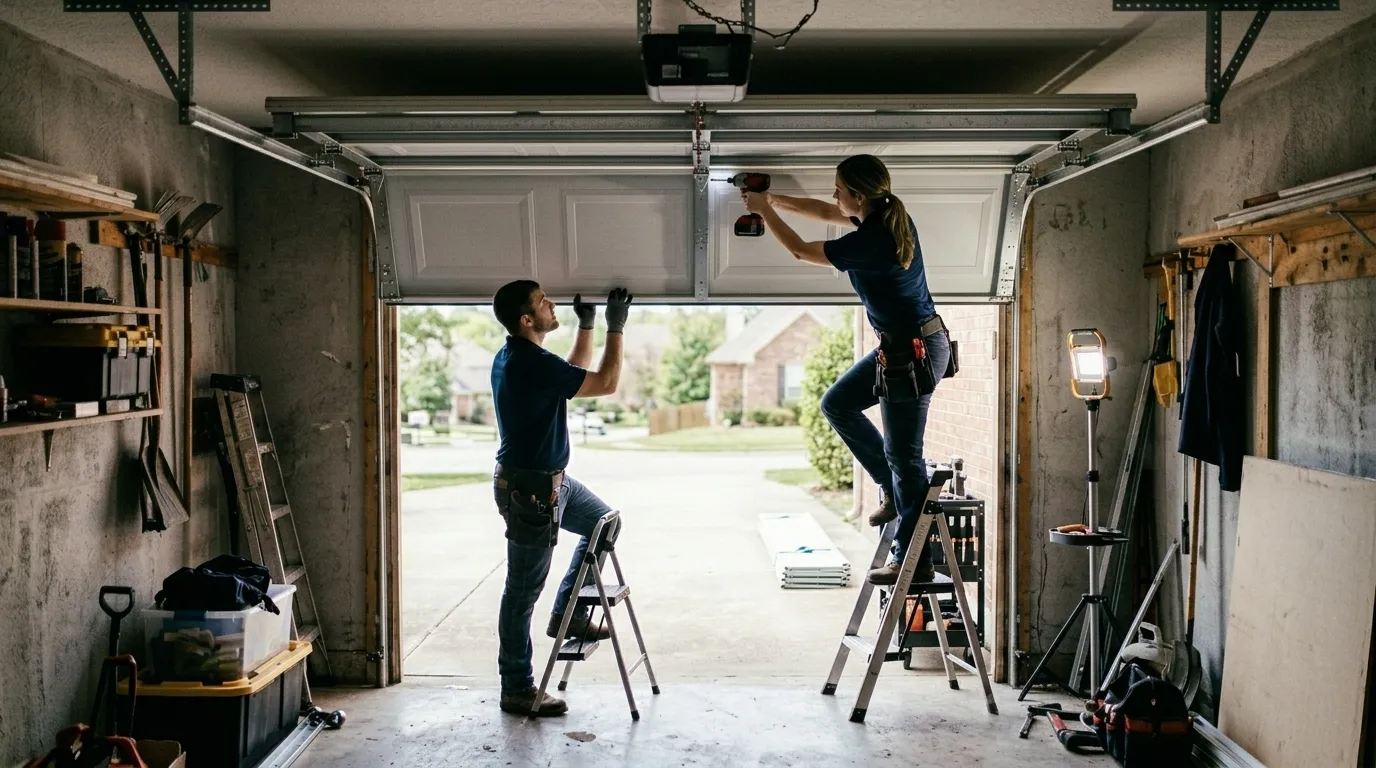
We don't quote a fixed turnaround here, because it depends on what's actually broken and whether the part is a stock size or something we have to source for older hardware. A standard torsion spring swap is usually a same-visit job once we're on-site with the right part. Where it slows down is when the spring, drum, or shaft size doesn't match anything current - which happens more often in Clayton than in newer subdivisions, given how many garages here still run gear installed when the house was built in the early 1950s.
The honest answer: if your door is original or close to it, expect us to confirm the exact spec before we commit to a same-day fix, rather than promise a number we can't back up sight unseen.
What the Repair Takes
A torsion spring job means unwinding the old spring with winding bars under controlled tension, pulling the shaft, replacing the spring and often the cable drums if they show wear, then re-winding to the door's actual weight - not a generic setting. On a door this age, we also check the track for the kind of gap that opens up after decades of seasonal movement; this area sits in a cold-moderate climate band, and repeated freeze-thaw cycling loosens track bolts and stiffens old lubricant faster than a mild climate would.
We also check the opener's force settings if there is one, since a spring that's been failing slowly often gets compensated for by cranking up motor force - which just moves the strain from the spring to the opener's gears. Replacing one without checking the other is a half-repair. Where the drum, shaft, or track hardware is bent or badly pitted rather than just worn, we'll say so and price a partial hardware swap rather than patch around it.
Why This Fails Locally
Clayton's median household income of $128,898 runs well above the $84,389 median across the broader 287,477-household service area. In practice that shows up less in whether people fix a door and more in what they fix it with - owners here more often ask for matched, higher-spec replacement hardware rather than the cheapest compatible part, since the original doors were often a step up in build quality to begin with.
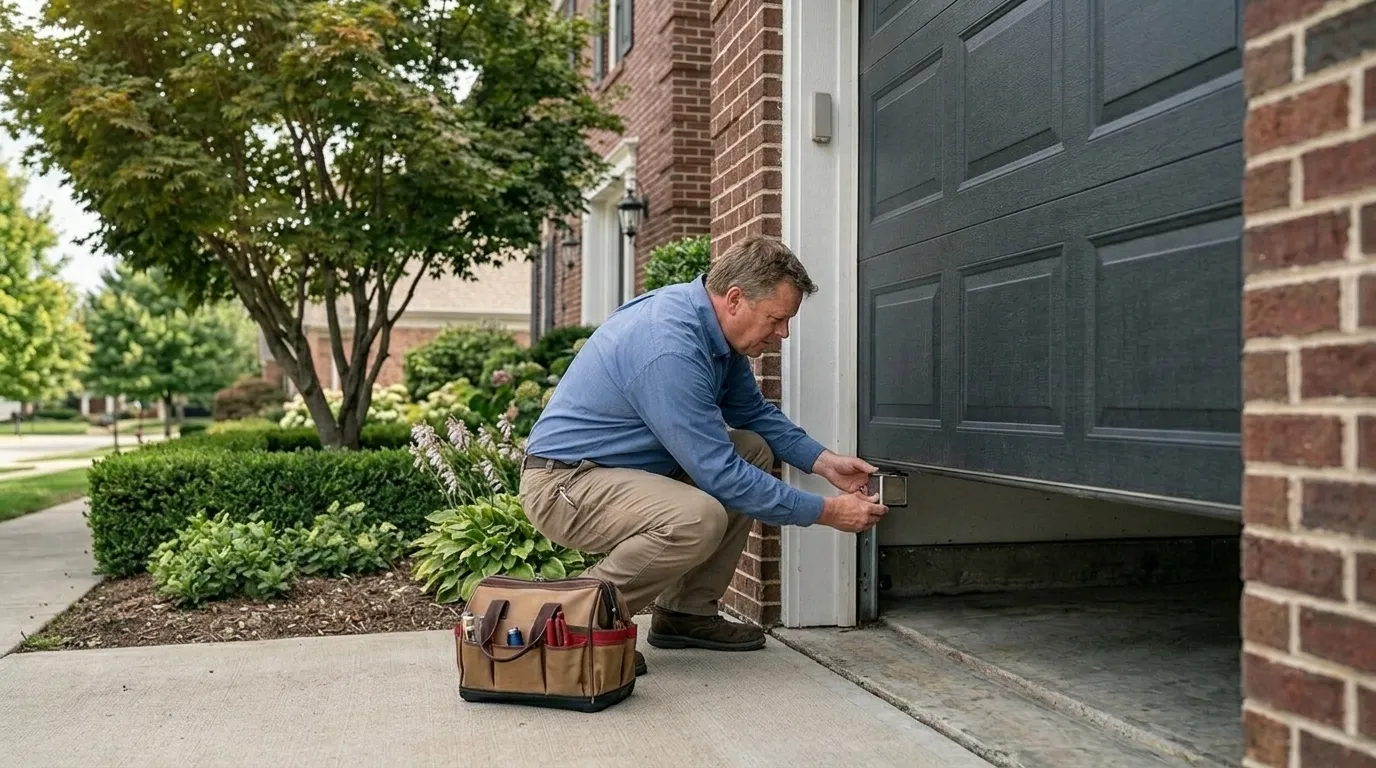
With roughly 5,964 households in Clayton, and most of the housing stock dating to 1953, the springs and openers installed when these garages were built are now well past any reasonable service life. A spring rated for a certain number of cycles doesn't last 70 years no matter how well the house around it has been kept up, and a lot of these doors are still running gear from the original build or a single replacement decades ago.
The Symptom
The complaint we hear most from Clayton is a door that stutters partway up, or drops the last foot instead of lowering smoothly - both point to a spring that's lost tension unevenly rather than failed outright. A loud bang from the garage, followed by a door that won't budge, usually means the spring let go completely; that's not an emergency in the sense of danger, but it does mean the door is effectively locked until the spring's replaced.
A slower symptom, more common on the older doors here, is a grinding or scraping sound as the door travels - often a roller or track issue rather than the spring, and worth checking separately since fixing the spring won't quiet a bad roller.
Talk to a Clayton Technician First
Describe what the door is doing and get a straight answer on what it likely needs.
Other Garage Door Services in Clayton
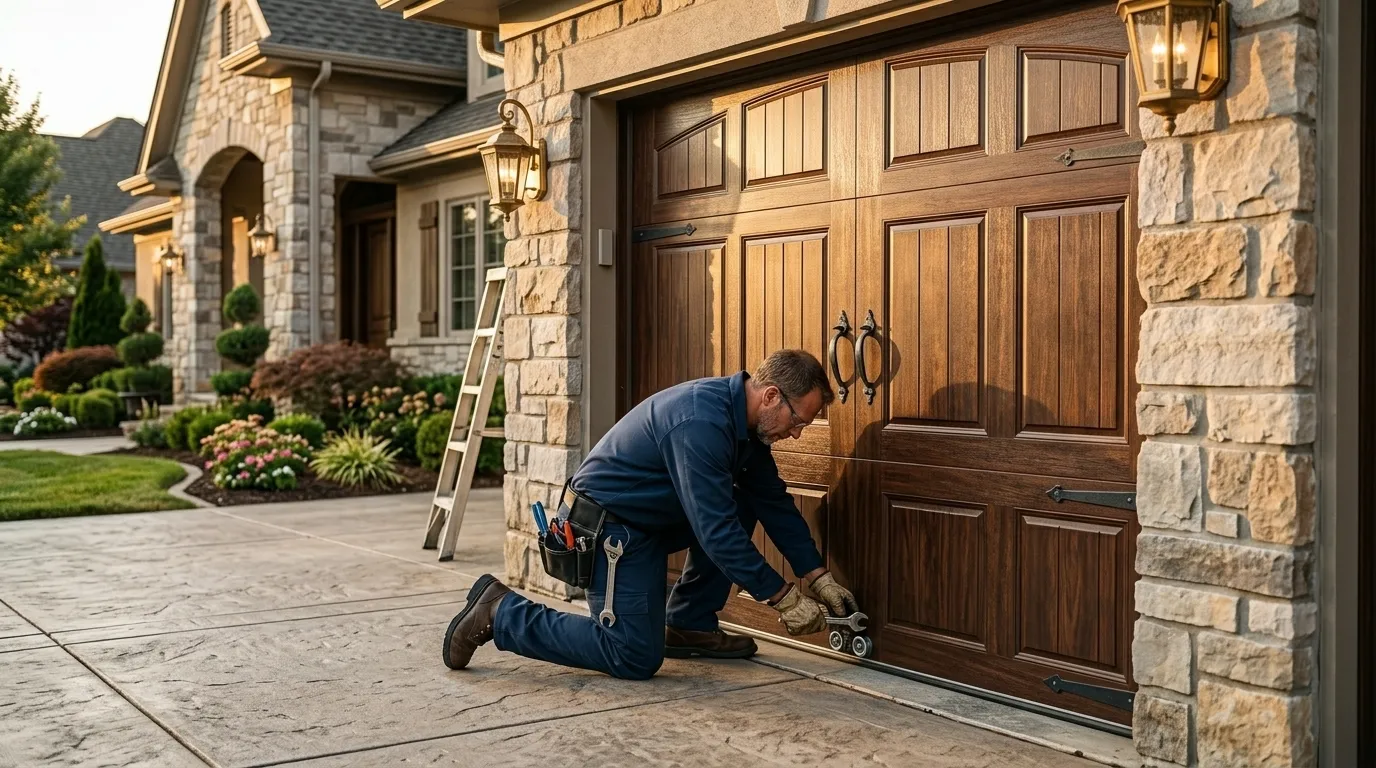
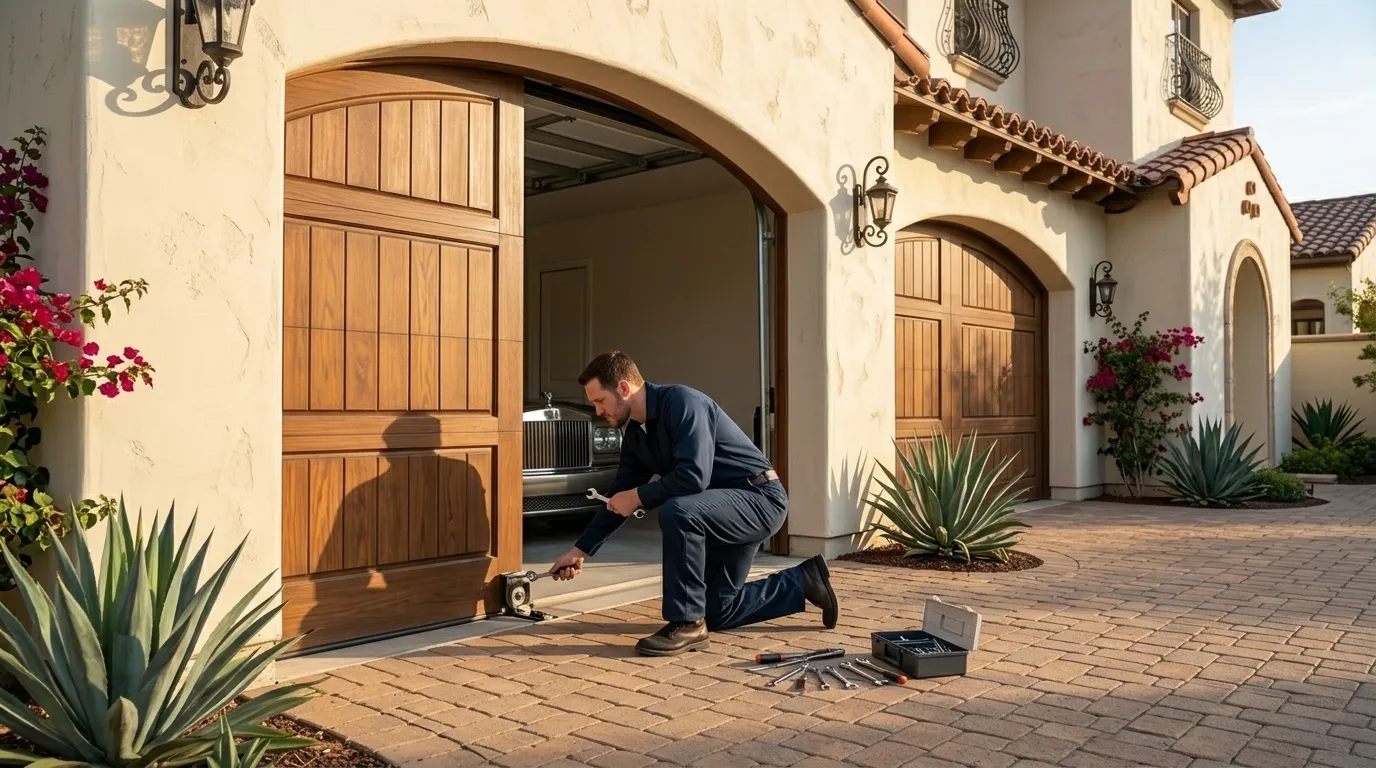
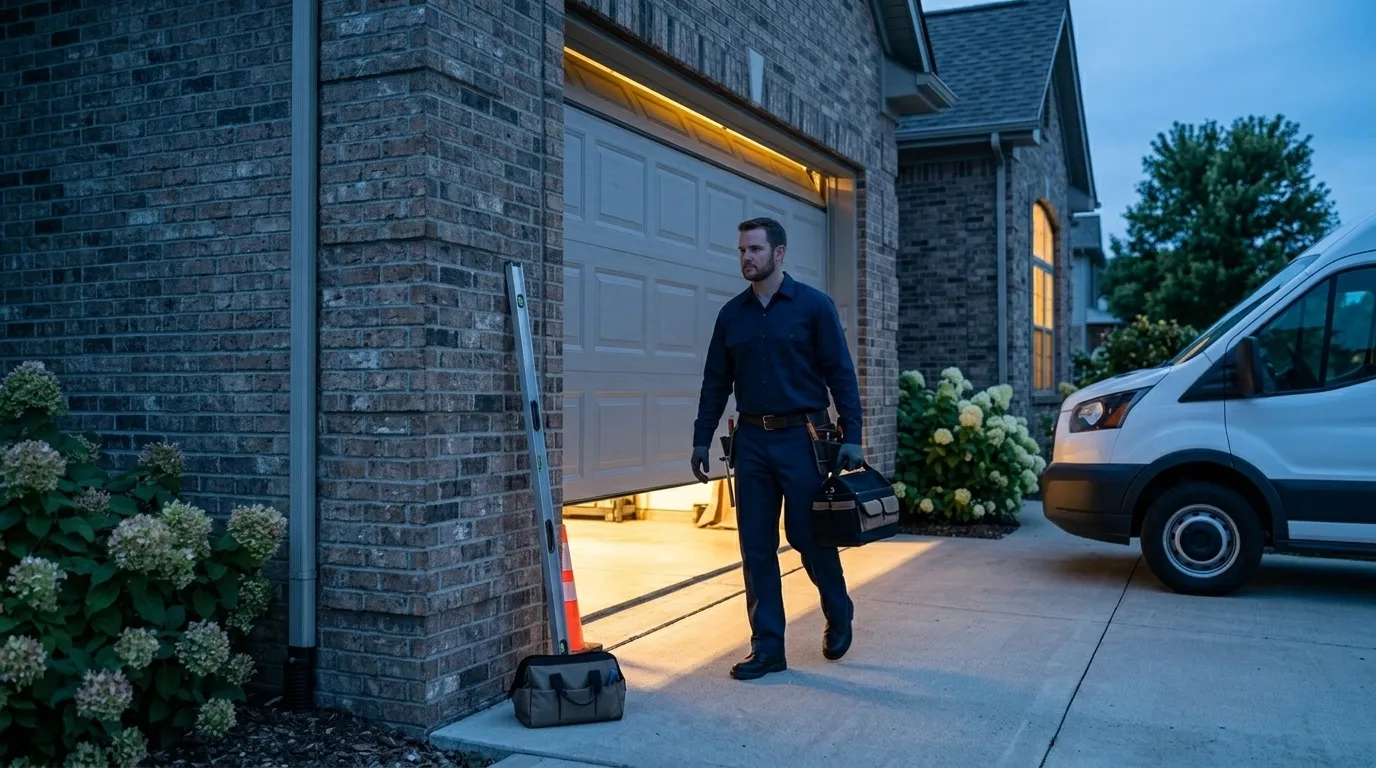
Recent Work in Clayton
A look at jobs our crew has been on nearby.
Why Clayton Calls Us
Frequently Asked Questions
Why do garages in Clayton need spring work more than newer neighborhoods?
Most Clayton homes date to around 1953, well ahead of the service area's median build year of 1967. A lot of these garages still run original or long-ago-replaced torsion springs that have simply outlived their rated cycle count, so failures show up more often here than in newer construction.
Can I replace a torsion spring myself?
We don't recommend it. Torsion springs hold enough tension to cause serious injury if released wrong, and on a lot of Clayton's older doors the spring and shaft sizing doesn't match current stock parts, which makes a DIY swap even riskier without the right spec confirmed first.
Do you have a shop in Clayton?
No. We run this job out of St. Louis, about five miles from Clayton, and travel in for each visit rather than staffing a local branch.
Will you always recommend repair over replacement?
No. If the track, drum, or shaft hardware is bent or badly pitted rather than just worn, patching around it is a half-fix. In that case we'll price a hardware swap or replacement rather than repair a door that's going to fail again soon.
Need Garage Door Service in Clayton?
Call now for straight answers on cost and timing.