
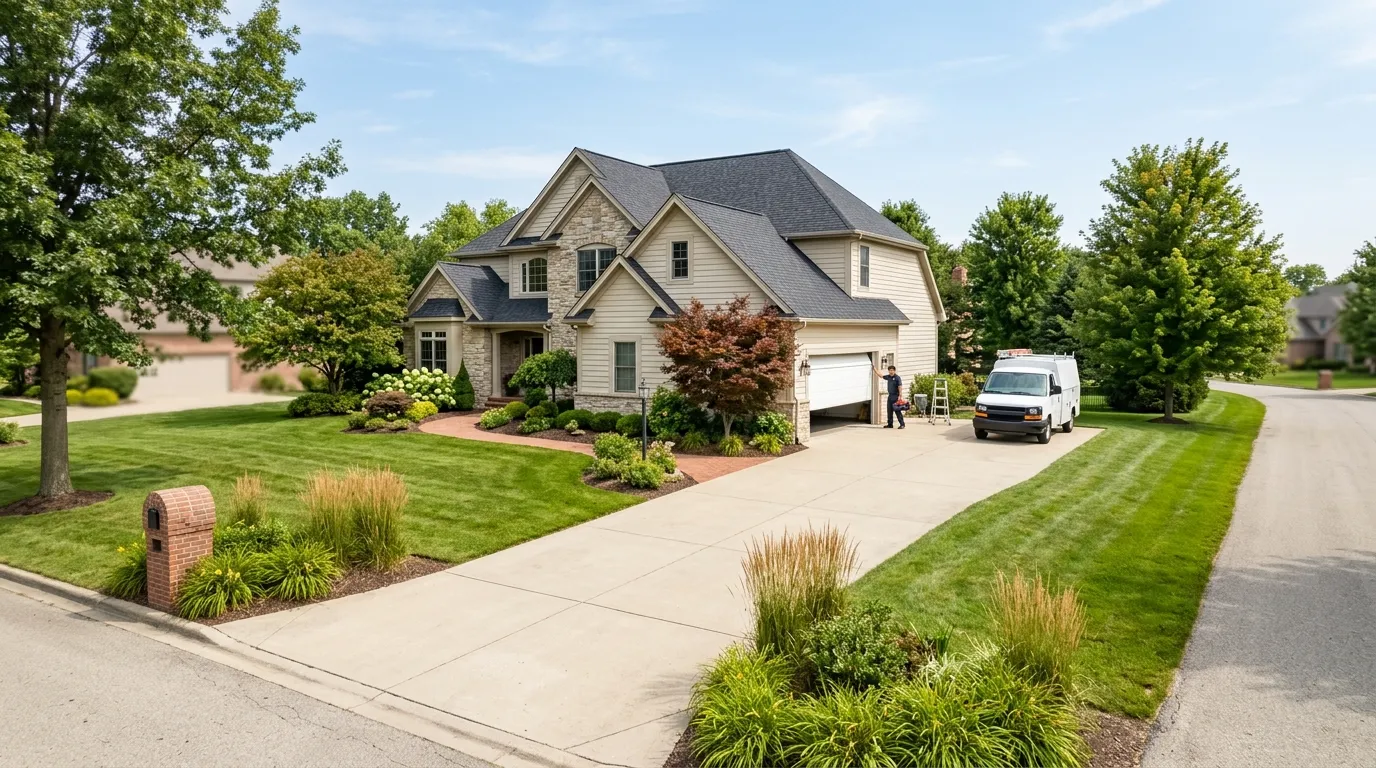
Panel Replacement in Clayton
Panel Replacement for Clayton Garage Doors
Panel replacement for Clayton's 1950s-era garage doors, driven in from St. Louis. What the repair takes, how long you're without a door, and why generic panels don't fit here.
- Licensed & Insured
- Same-Area Service Calls
- Upfront Pricing
What Happens When You Call
-
1
Call or Request a Quote
Tell us what the door is doing and roughly how old the house is - that alone points us toward the likely part before a truck leaves.
-
2
On-Site Diagnosis
A tech checks the spring, cables, tracks, and opener in person and tells you plainly what is actually wrong.
-
3
Straight Price, No Surprises
You get a number before any work starts. It covers parts and labor, nothing added after the fact.
-
4
Fixed the Same Visit
Most repairs are done in one trip. If a part needs sourcing, we tell you that upfront instead of guessing.
Doing It Yourself
Clayton is five miles from St. Louis, which is close enough that a lot of homeowners here figure they'll just order a panel online and swap it themselves over a weekend. The trouble starts with the measurement.
Houses in this pocket of the metro were mostly built around 1953, and doors from that era often ran on section heights and track widths that later manufacturers changed. Order a panel sized for a modern door and it won't seat against the neighboring sections, even if the listing says it's a universal fit.
There's also the weight and balance problem. Pull one section out of a torsion-spring door and the remaining sections can rack sideways in the track, especially if the spring is already tired from decades of cycles. That's not a knock on doing your own work generally - it's specific to swapping a single panel out of an older assembly, where the tolerances are tighter than they look.
If you've already got the section pulled and just need it hung straight, that's a fair DIY job. If you're still hunting for a match, that's where a lot of these projects stall out, and it's worth a call before you buy the wrong part twice.
Booking a Visit
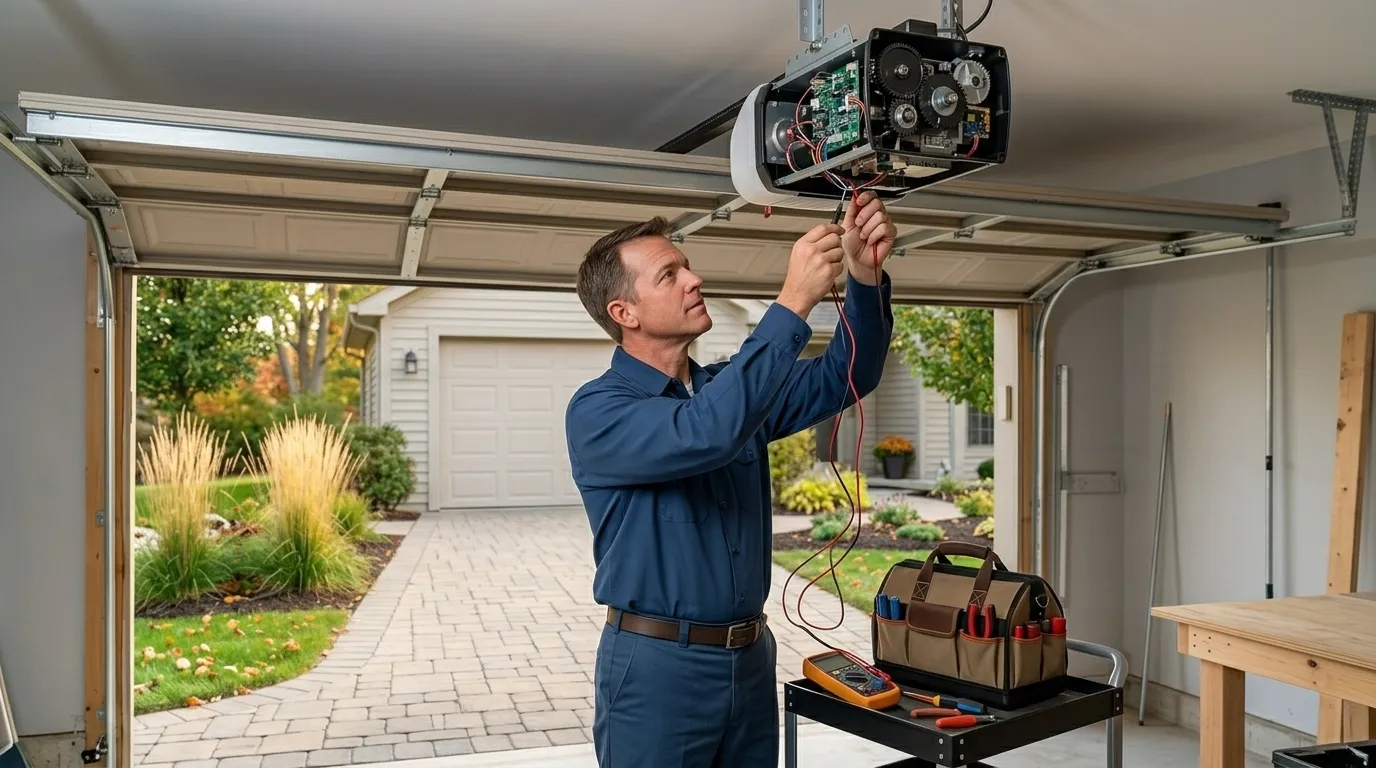
We work out of St. Louis, and Clayton is a five-mile drive from there, so a visit here isn't a special trip - it's routine ground on the daily route. What that means practically: we bring panel samples and measuring tools on the truck rather than guessing dimensions over the phone, because a mismatched panel on a house this age is the single most common return call we'd otherwise get.
We don't run a branch or drop-in counter in Clayton itself, so there's no walk-in option - every job starts with a call or a booking through the site, and we confirm door make, section height, and rough age of the house before we load parts. On a street where original 1950s doors are still common, knowing the era before we arrive saves a second trip for the right hardware.
How Long You Are Without the Door
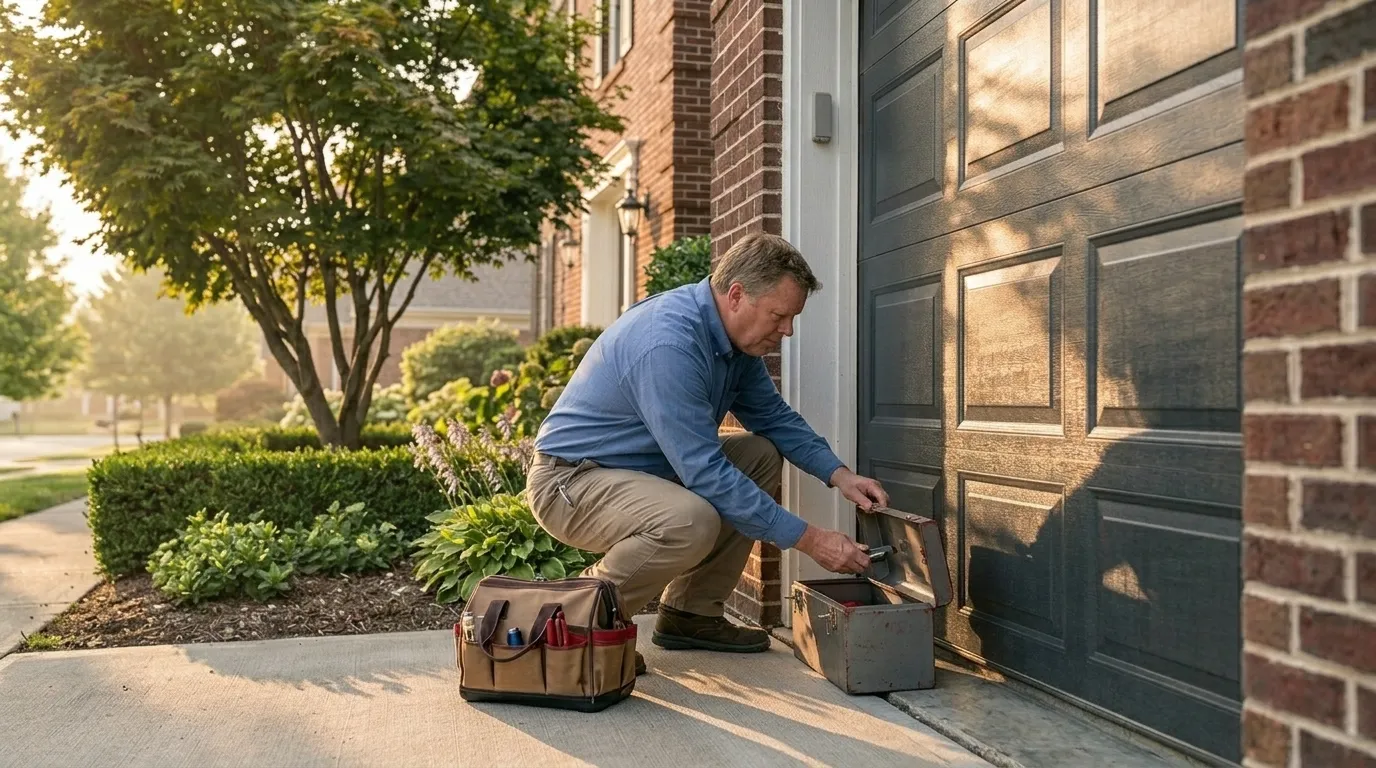
A straightforward panel swap, where we're matching to a door already on hand or a stock size, is usually a same-visit job - the door goes back into service before we leave. What extends that timeline is sourcing.
Doors original to houses built around 1953, which describes a real share of Clayton's stock, sometimes used panel dimensions or seam patterns that current manufacturers no longer stamp. When that happens, we're either special-ordering a compatible panel or, if the run is discontinued, looking at replacing more than the one section to get a consistent fit.
We won't promise a same-day turnaround on a house where the panel has to be special-ordered - that's the honest limit here, and it has nothing to do with the drive from St. Louis and everything to do with what the factory still makes.
If the door is a more common size, plan on one visit. If it's an older, oddball dimension, plan on a return trip once the part is in.
What the Repair Takes
Swapping a panel isn't just unbolting one section and bolting in the next. On a torsion-spring door, which is what you'll find on most attached garages built in this era, we release spring tension first, then disconnect the hinges and rollers from the damaged section without letting the rest of the door shift in the track. The new panel gets aligned, hinged, and rollered back in, and then the whole door gets rebalanced - because a door that was in balance with the old panel usually isn't with the new one, even a matching replacement.
We also check the track and hardware while it's apart. A lot of these doors are original to houses from the late 1940s through the 1960s, and a bent track or a spring near the end of its cycle count often shows up as a panel problem when the real issue is upstream of it. Replacing the panel without addressing worn hardware just moves the next failure a few months down the road.
Why This Fails Locally
The area's median household income runs well above the wider service area's average, and that shows up in the doors themselves - Clayton has more insulated, heavier-gauge panels and higher-end finishes than the typical stock door, which changes what a replacement panel needs to match in both weight and appearance. A mismatched panel here isn't just a color problem; a lighter replacement section can throw off spring tension calibrated for a heavier original.
The climate is the other half of it. This is a cold-winter region, and panels here need to hold up to real freeze-thaw cycling, not just look right on install day.
Steel that's thinner than the original spec can dent and crease faster once temperatures start swinging, and a foam-core panel that isn't matched to the rest of the door's insulation value creates a cold spot that's easy to feel from inside the garage. Houses built around 1953 weren't speced for today's foam-core standards at all, which is exactly why matching old to new takes more than ordering the nearest size.
The Symptom
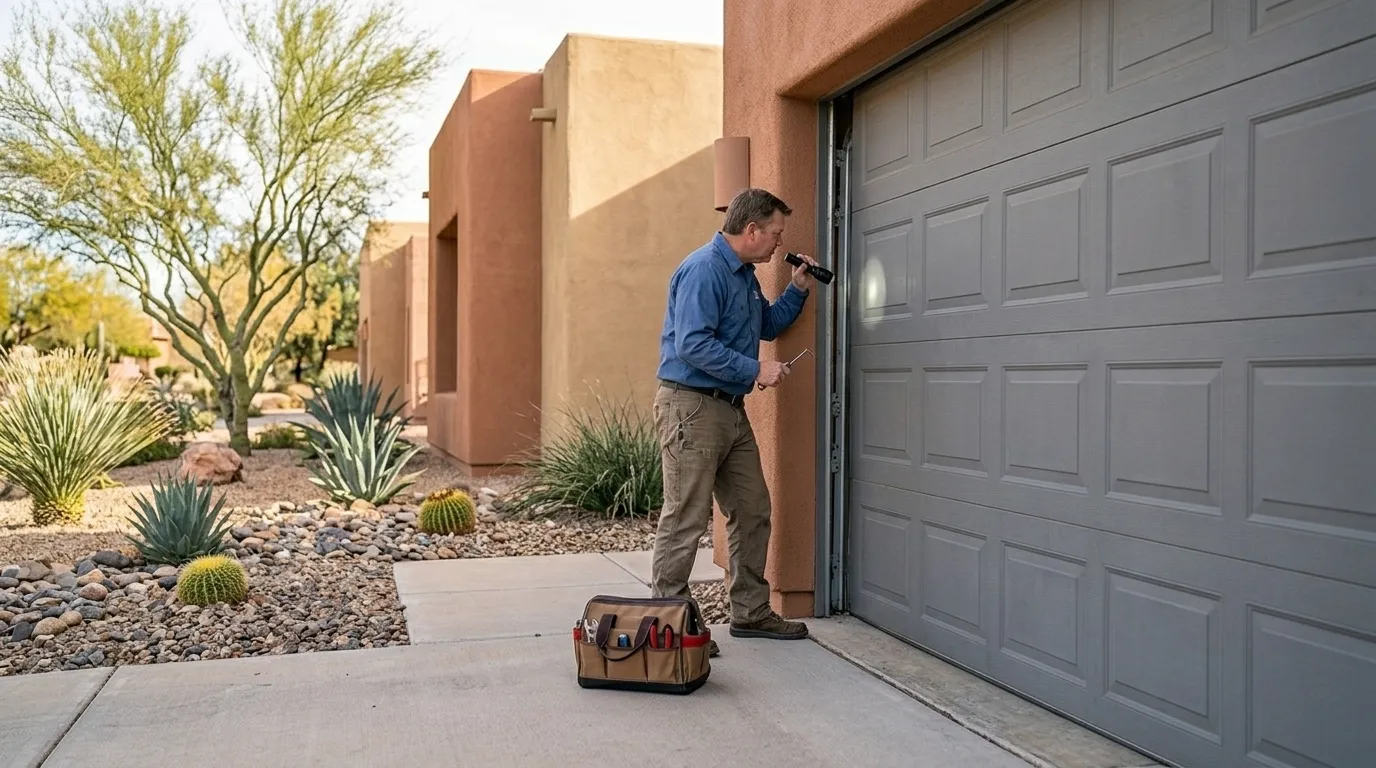
Most calls start the same way: a dent from a car bumper, a crease from a falling branch, or a section that's rusted through at the bottom where snowmelt sits against it over a cold winter. On a door original to a 1953-era house, that damaged section is often the first real failure the door has had in decades, which is a sign the rest of the door is old enough to be worth a second look at the same visit.
If the dent is cosmetic and the door still opens, closes, and seals evenly, a single panel swap solves it. If you're also hearing new noise from the opener, seeing daylight at the seams, or the door's been sticking before the damage happened, that's usually more than a panel problem, and we'll tell you that on the visit rather than sell a panel that won't fix what's actually wrong.
Talk to a Clayton Technician First
Describe what the door is doing and get a straight answer on what it likely needs.
Other Garage Door Services in Clayton
Recent Work in Clayton
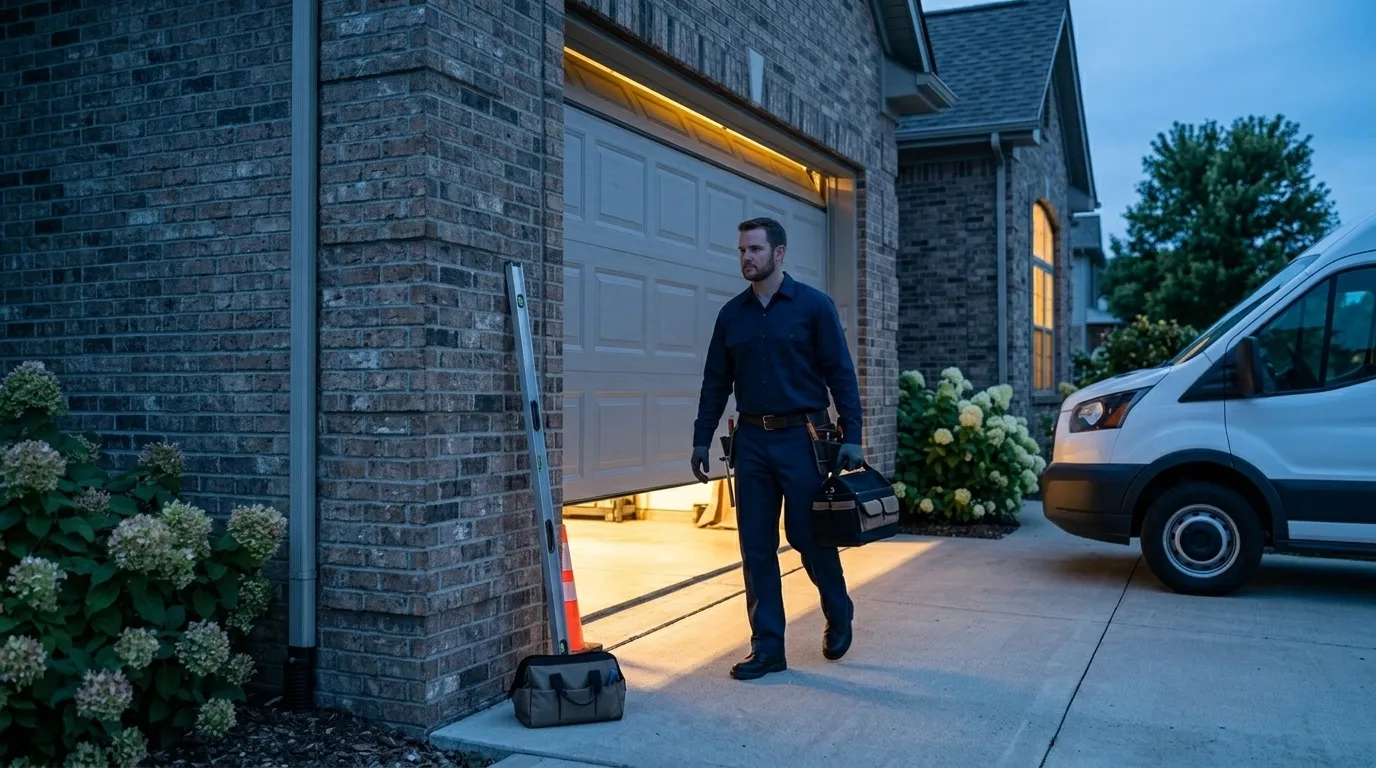
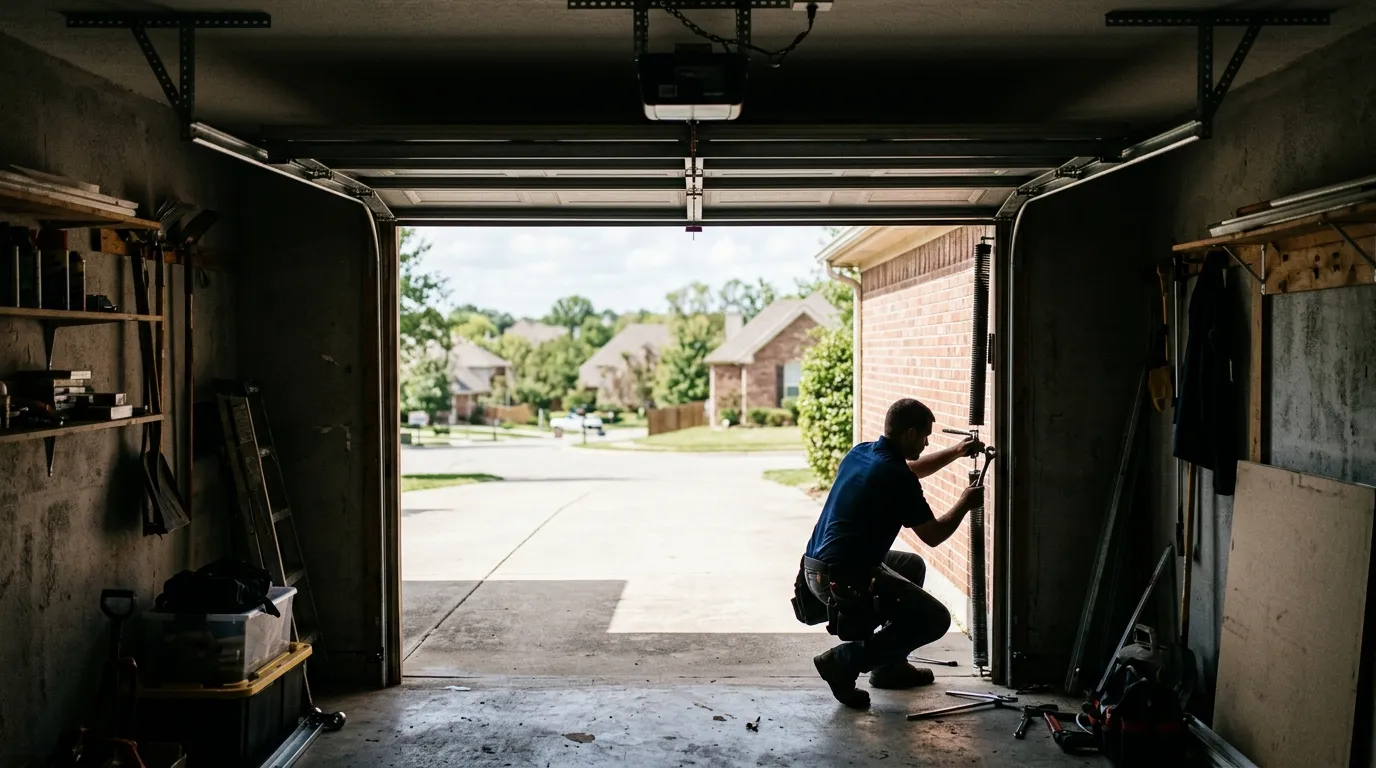
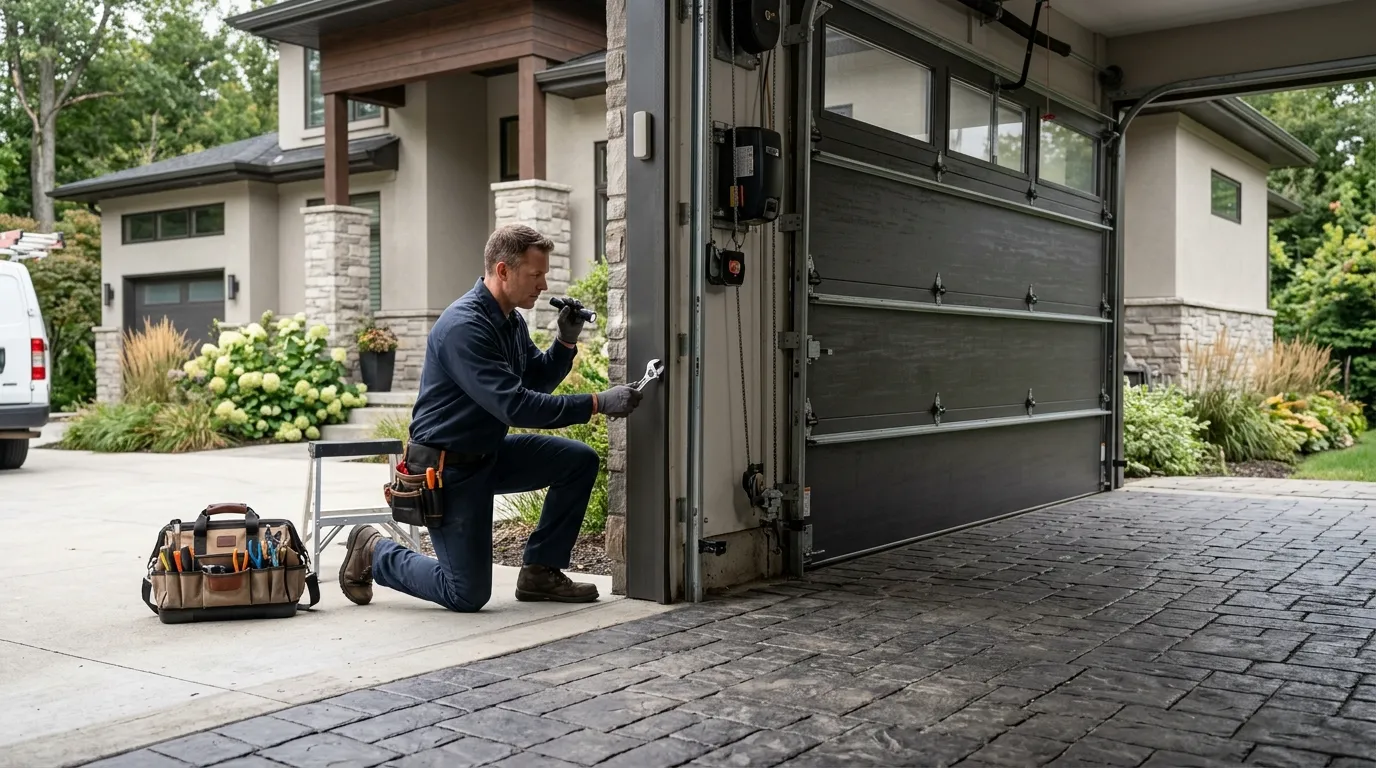
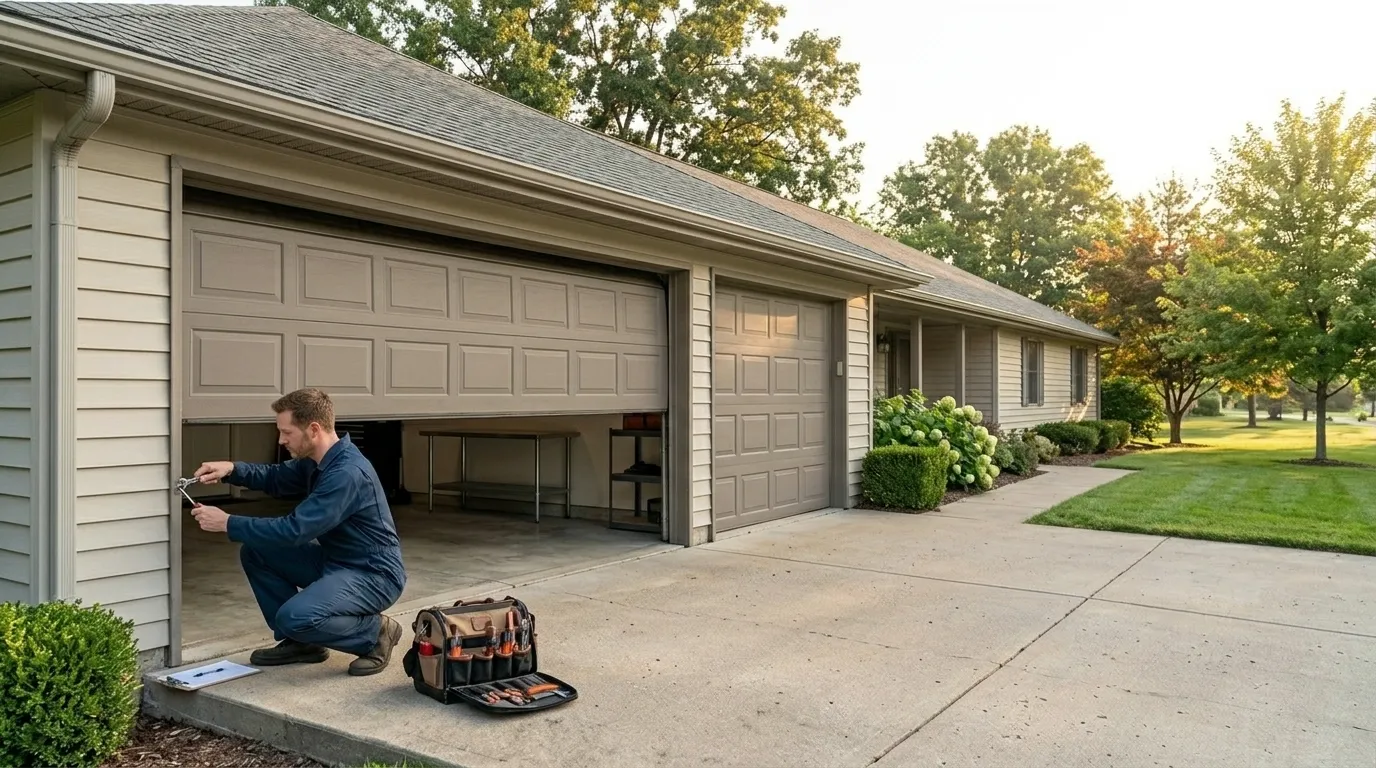
A look at jobs our crew has been on nearby.
Why Clayton Calls Us
Frequently Asked Questions
Can you match a panel to my original 1950s door?
Sometimes. If the section dimensions are close to a current stock size, yes. If the door uses an older seam pattern or height that's since been discontinued, we special-order where possible, and if that's not available we'll tell you honestly whether a full door replacement makes more sense than chasing a discontinued panel.
How far out is Clayton from your base in St. Louis?
About five miles. It's a routine part of the daily route, not a special trip, so scheduling here works the same as anywhere else close in - we just confirm door details before we drive out so we bring the right panel stock.
Will a new panel match the insulation of my old door?
We check for that specifically. Clayton has a higher share of insulated, heavier panels than the average house in the service area, and pairing a new section with the wrong foam core creates a cold spot you can feel, especially through a full winter.
Do you offer same-day panel replacement in Clayton?
If the panel is a common size we stock or can source same-day, yes. If your door is old enough to need a special-order match - which is common on houses from the early 1950s - we'll be upfront that it takes a return visit rather than promise a timeline we can't hit.
Need Panel Replacement in Clayton?
Call now for straight answers on cost and timing.