
Roller Replacement in Clayton
Roller Replacement for Clayton's 1950s Garage Doors
Clayton, MO has just under 6,000 households and a housing stock centered on 1953 - old steel rollers and narrow tracks that need matched hardware, not guesswork.
- Licensed & Insured
- Same-Area Service Calls
- Upfront Pricing
What Happens When You Call
-
1
Call or Request a Quote
Tell us what the door is doing and roughly how old the house is - that alone points us toward the likely part before a truck leaves.
-
2
On-Site Diagnosis
A tech checks the spring, cables, tracks, and opener in person and tells you plainly what is actually wrong.
-
3
Straight Price, No Surprises
You get a number before any work starts. It covers parts and labor, nothing added after the fact.
-
4
Fixed the Same Visit
Most repairs are done in one trip. If a part needs sourcing, we tell you that upfront instead of guessing.
Doing It Yourself
Clayton is a small town - under 6,000 households - so most of the doors here aren't mass-produced builder-grade units, they're original to houses that went up close to 1953. That matters for rollers. A homeowner can swap a single nylon roller on a newer door with a socket set and twenty minutes.
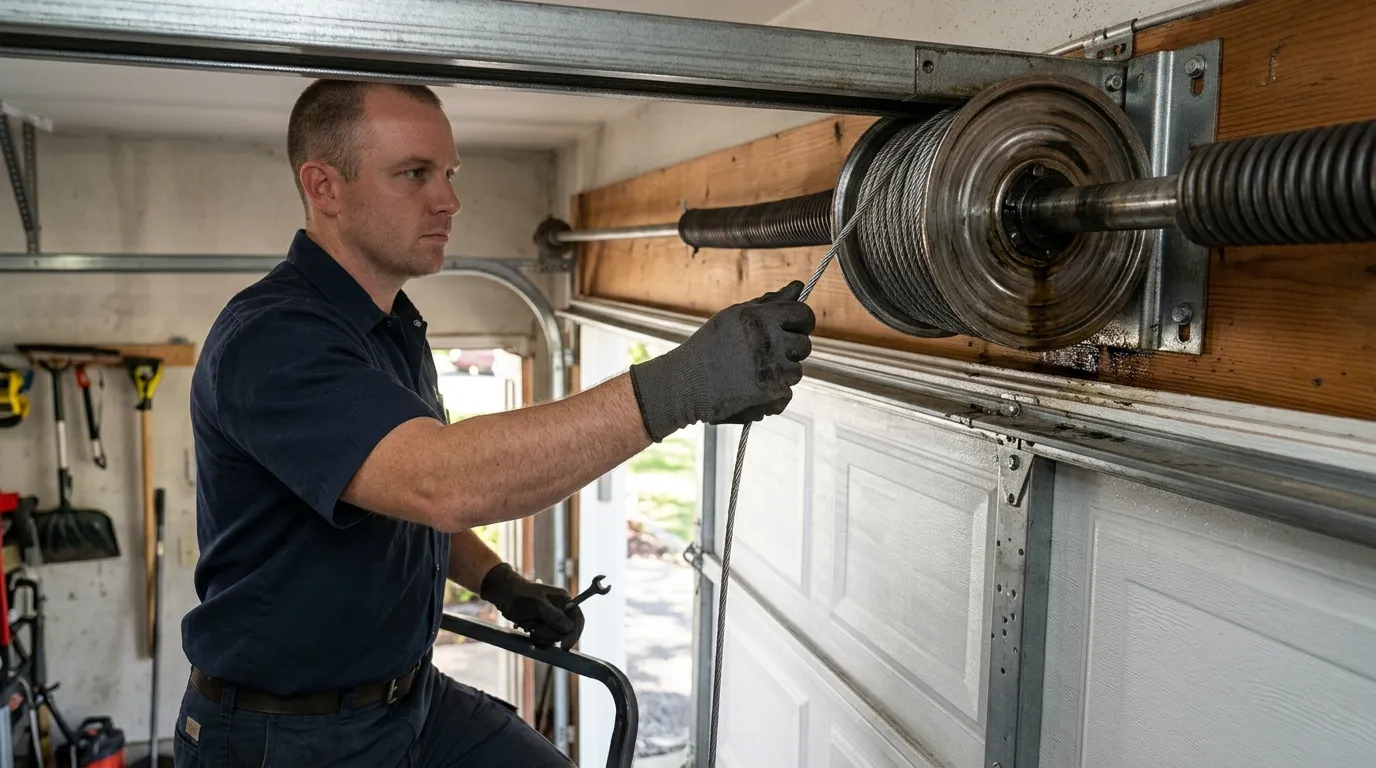
What trips people up in Clayton is that a lot of these doors still run on steel rollers in a track profile that hasn't been made in decades. You can't just grab a ten-pack from a hardware store and expect it to seat right. If the roller stem is bent, or the track itself has pulled away from the jamb from years of that stem grinding sideways, you're not doing a swap anymore, you're doing an alignment job, and that's where a torsion spring can let go on you if you don't know what you're loading.
We'll walk you through what's safe to try and where to stop before you're pulling the whole door off its hinges. Replacing four or six rollers on a working track is a reasonable weekend job.
Booking a Visit
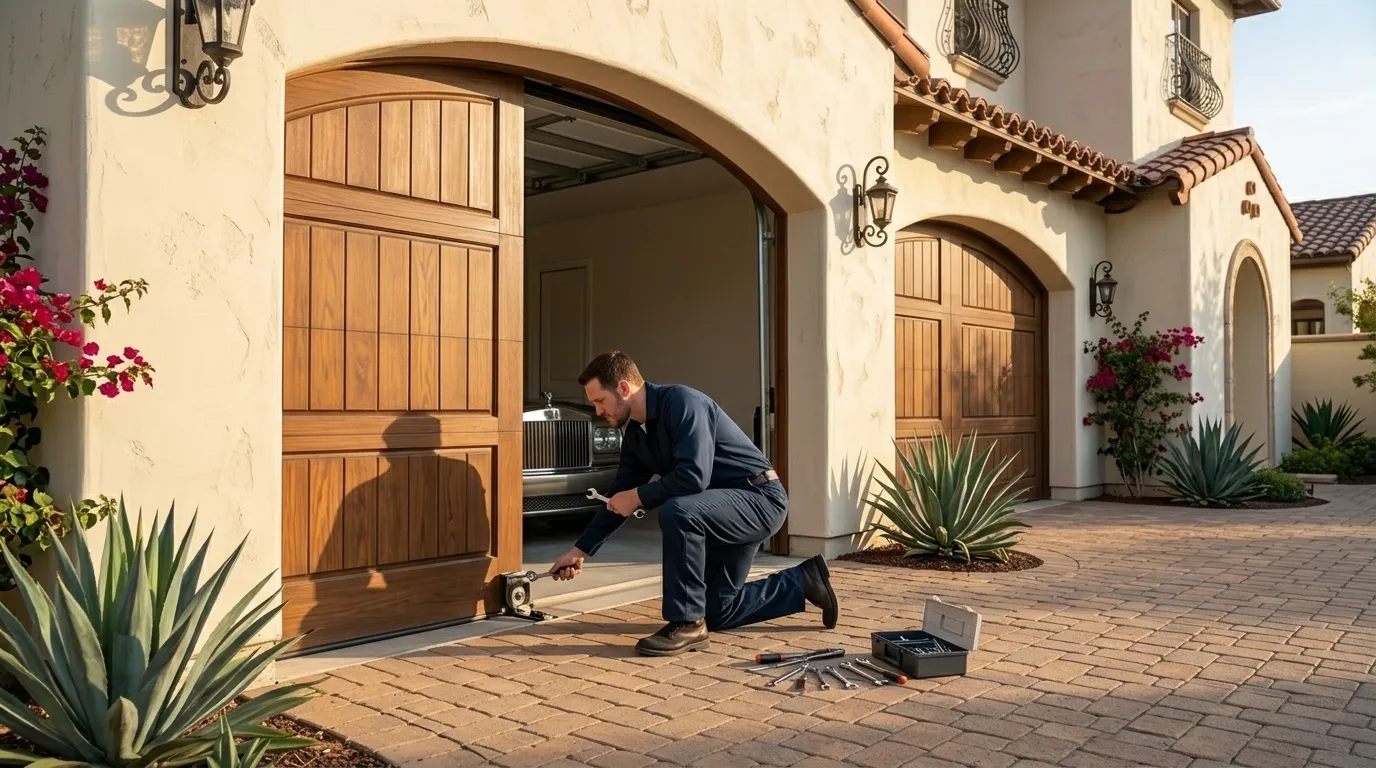
We run this job out of St. Louis, and Clayton sits about 5 miles out, so there's no separate branch or crew based in town - every truck that shows up here started somewhere else on the route. What we ask for on the phone is simple: the age of the house if you know it, whether the door is single or double, and whether it's grinding, jumping, or has already come off one side of the track.
That tells us whether we're bringing a bag of rollers or a full hardware kit. Clayton's housing sits older than a lot of the surrounding area, which means we often bring both steel and nylon options and match on site rather than guess from a phone call. You can see the general service page for the town at /clayton/garage-door-service/, or read the wider roller-replacement writeup that covers the whole St.
Louis service area at /garage-door-roller-replacement-st-louis-mo.
How Long You Are Without the Door
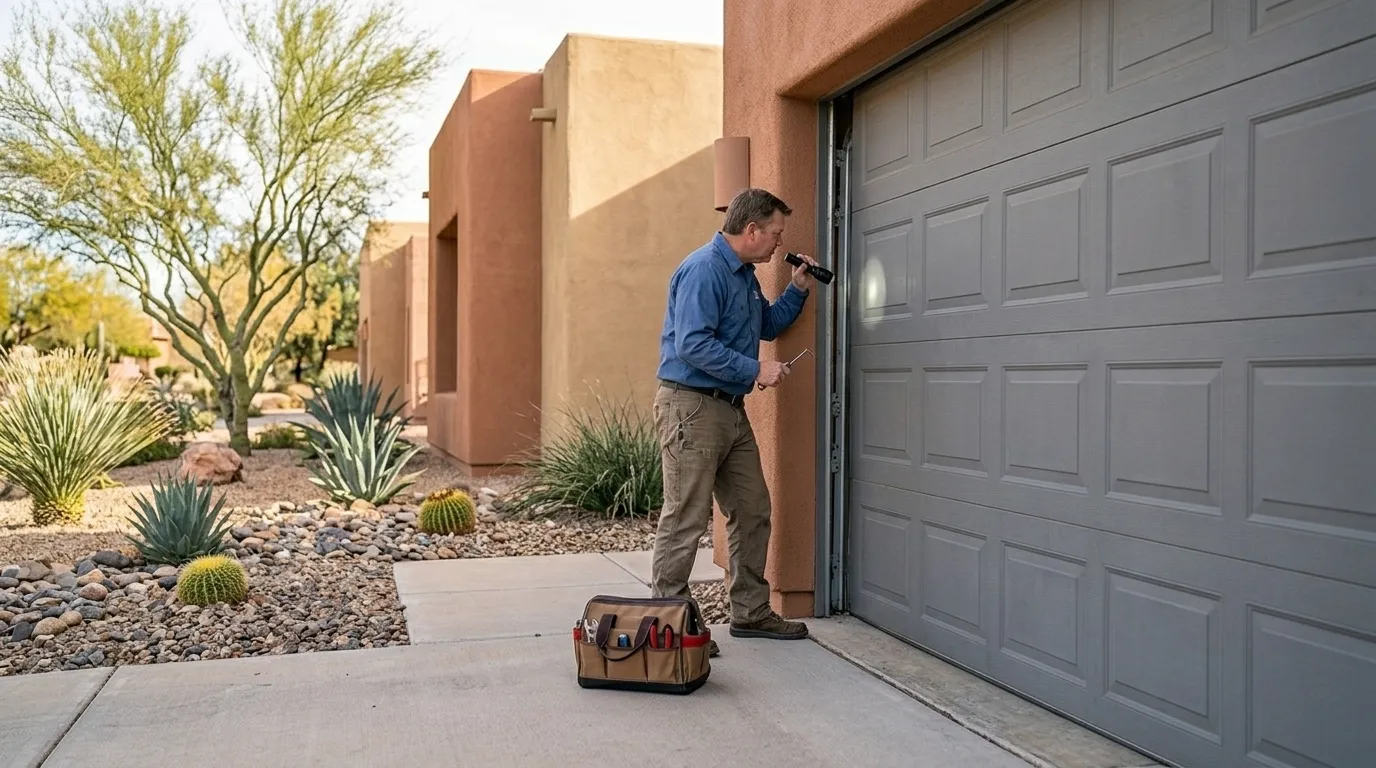
A straight roller swap on a door that still travels true is a same-visit job - the door goes up and down on the new rollers before the truck leaves. Where it stretches out is when the track has to come off the wall to be reset, or when a bent roller stem has chewed up the track flange enough that a section needs replacing rather than just straightening. On a 1953-era door with the original track hardware, that second scenario isn't rare - narrow gauge track from that period bends easier than what's sold today.
We won't quote you a firm hour count sight unseen, because the honest answer depends on whether we're replacing parts or rebuilding a track run. What we can tell you is that a working door doesn't sit torn apart overnight; the goal on every visit is to leave with the door operable, even if a follow-up part needs ordering.
What the Repair Takes
Rollers themselves are cheap and quick - the work is in getting the track true again once the old ones have been grinding sideways for years. On a door from around 1953, the track is often narrower than current stock, riveted rather than bolted, and mounted on hardware that predates the standard spacing used since. That means matching, not swapping blind.
We check the stem length, the roller diameter, and whether the track needs to be pulled and reset square before new rollers go in - putting good rollers into a bent track just repeats the failure in a few months. Nylon rollers run quieter and don't need lubrication the way steel ones do, which is worth mentioning since a lot of these older doors were built with steel as standard. One limitation worth stating plainly: if the track has rusted through or the roller stems have worn oval holes into the bracket, a roller swap won't fix it - at that point you're looking at new track hardware, and we'll tell you that up front rather than sell you rollers that won't hold.
Why This Fails Locally
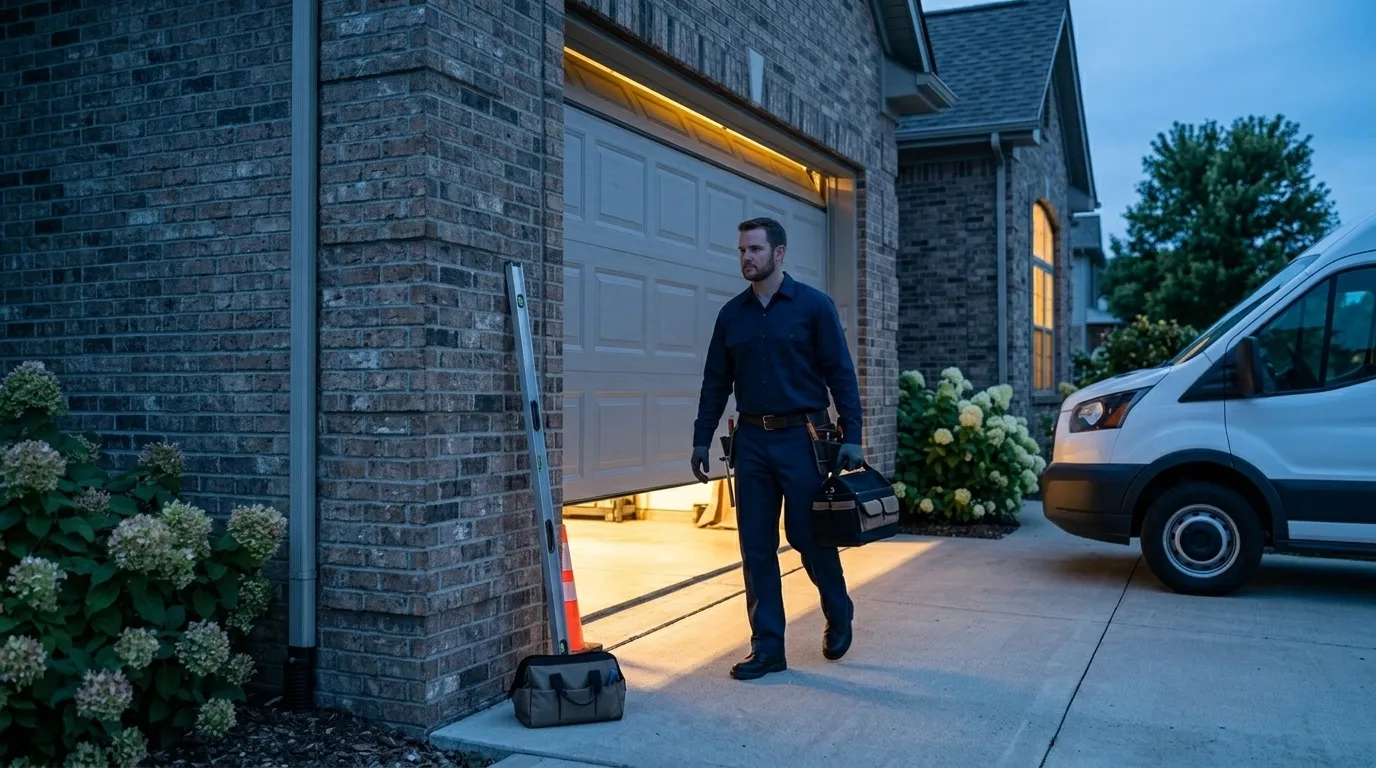
The region sits in a cold, moderate climate band, and steel rollers in an unheated garage take the brunt of that - they contract in winter, expand in summer, and every cycle works the stem a little looser in its bracket. Combine that with a housing stock centered on 1953 and you get track hardware that was never designed for the roller weight or torsion-spring tension used on doors built since. Across the wider St.
Louis service area, the housing runs mostly 1960s and 70s, so this failure shows up earlier and more often on Clayton's older stock than on a lot of the surrounding suburbs. It's not that Clayton residents maintain doors worse - the households here report a median income well above the regional figure, and these are not deferred-maintenance houses. It's that the original hardware simply predates the loads it's carrying now, and no amount of oil changes that.
The Symptom
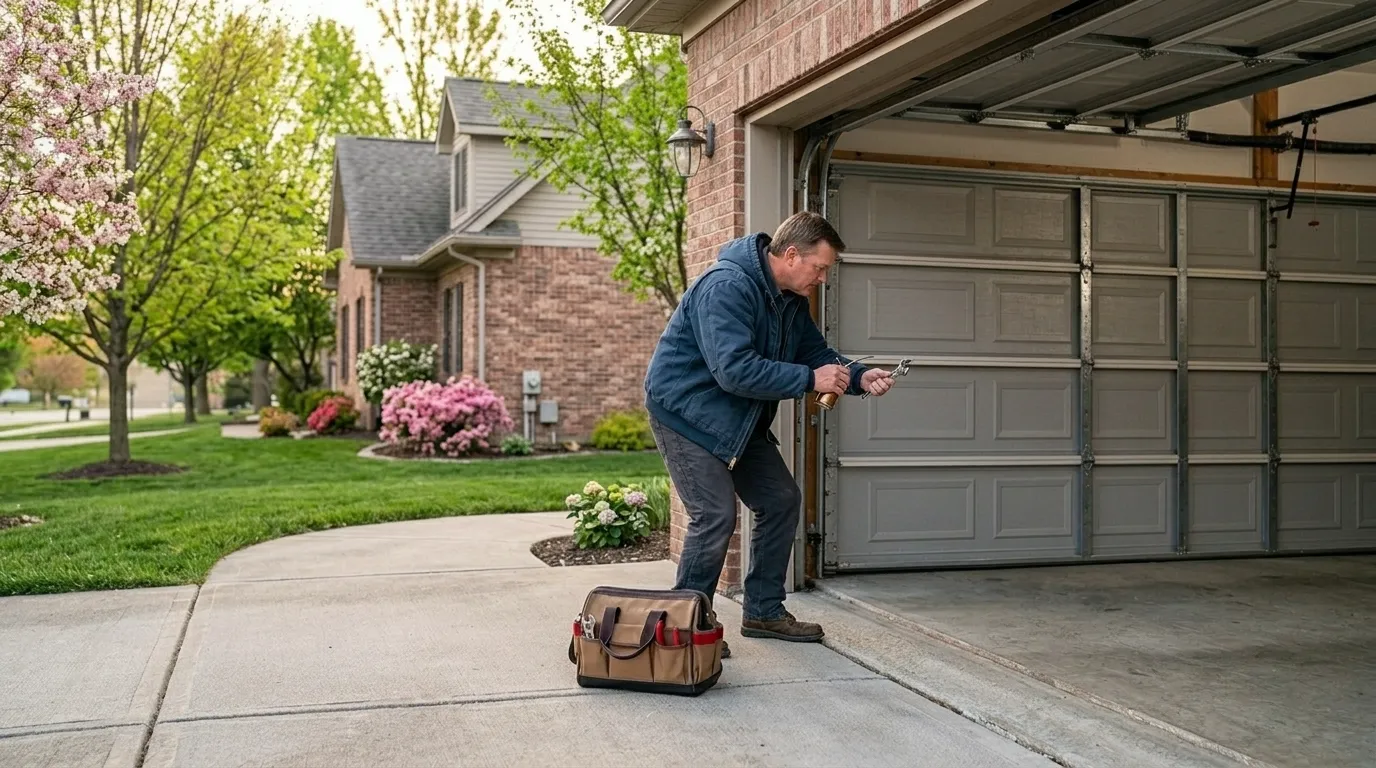
The tell is almost always sound before it's motion - a grinding or clunking as the door travels, worse at the same spot on the track every time. That repeat-position grind means a specific roller has gone bad, not the whole run. If the noise turns into the door catching or jumping at that spot, the roller has likely worn enough that the wheel is riding on the stem instead of turning freely, and it's starting to chew the track.
Left long enough, that wear transfers to the track flange itself, and then you're not replacing a $10 roller, you're replacing a track section. On a door that's been in place since the house was built around 1953, that's the pattern we see most: years of quiet wear, then a season of noise, then a day it won't move at all.
Talk to a Clayton Technician First
Describe what the door is doing and get a straight answer on what it likely needs.
Other Garage Door Services in Clayton
Recent Work in Clayton
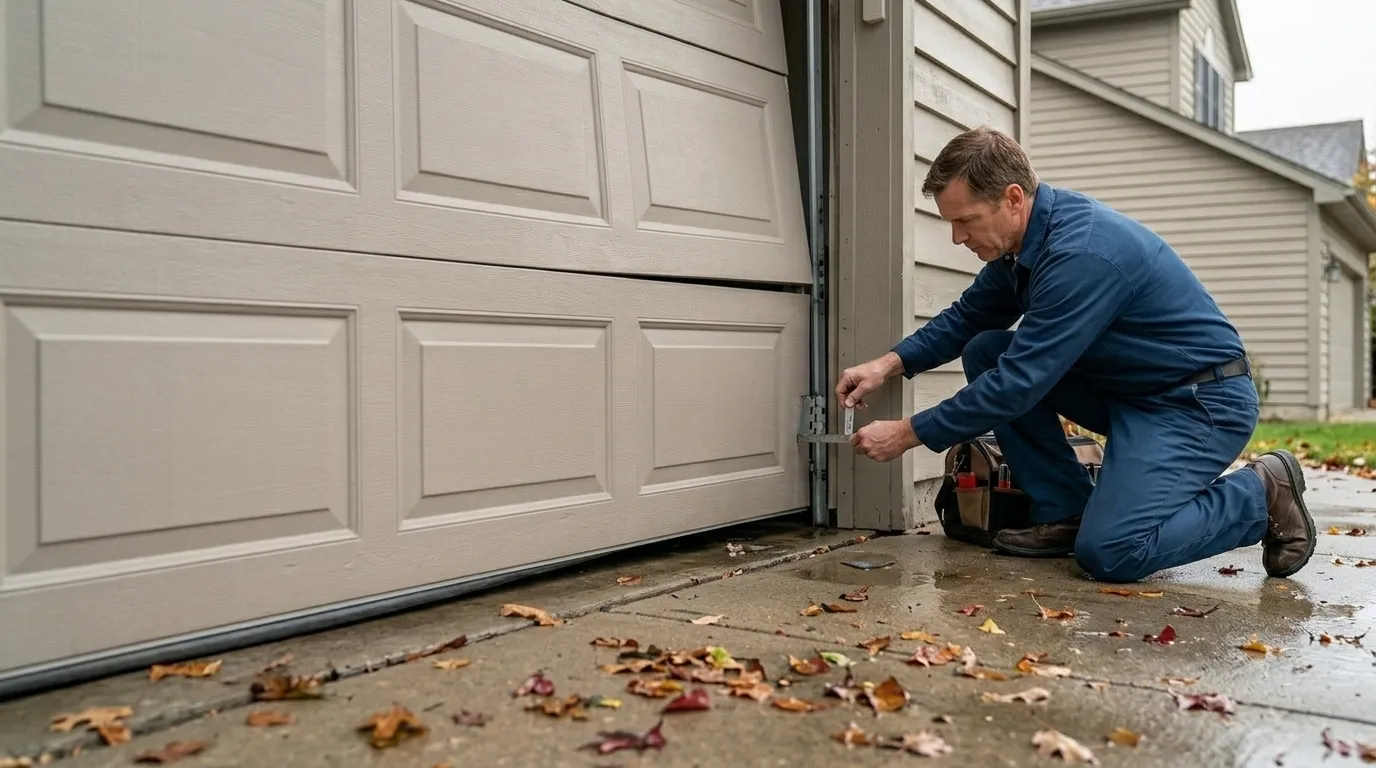
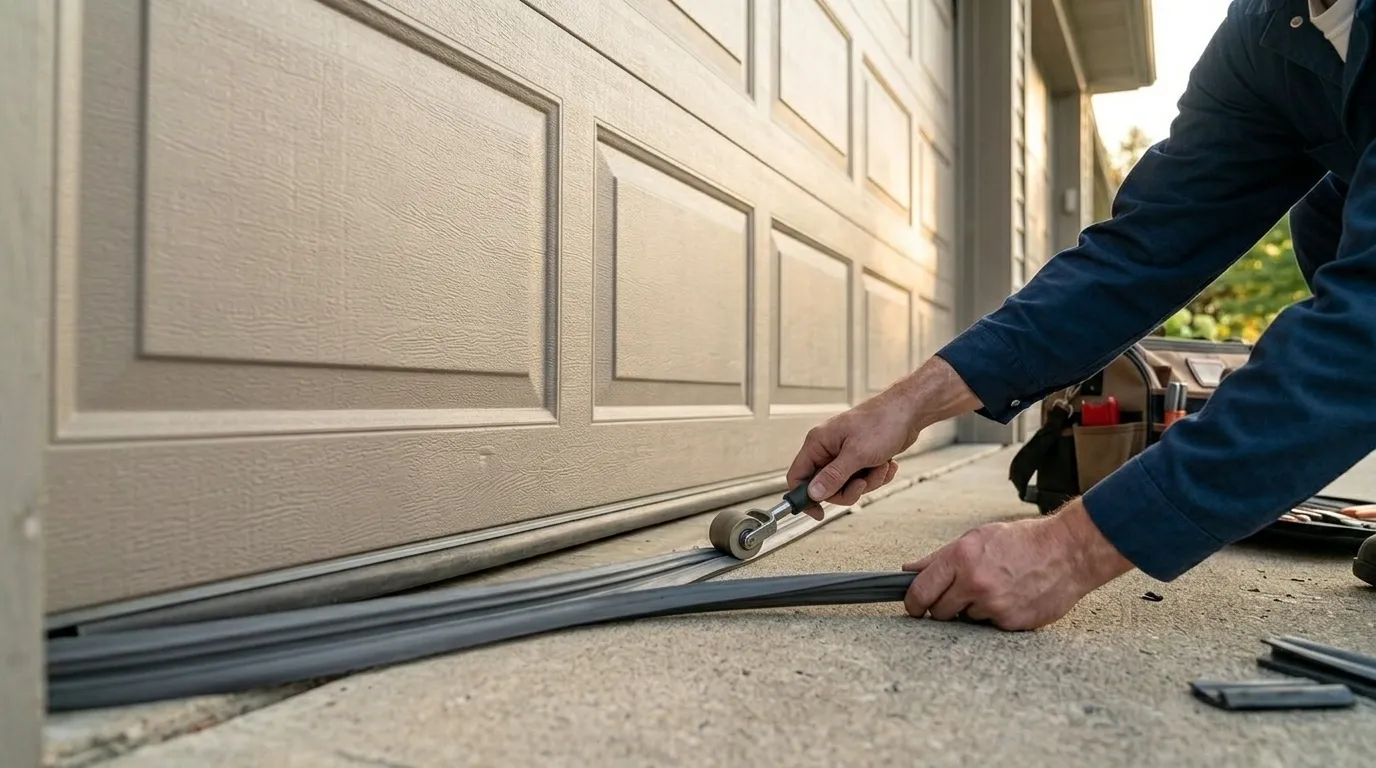
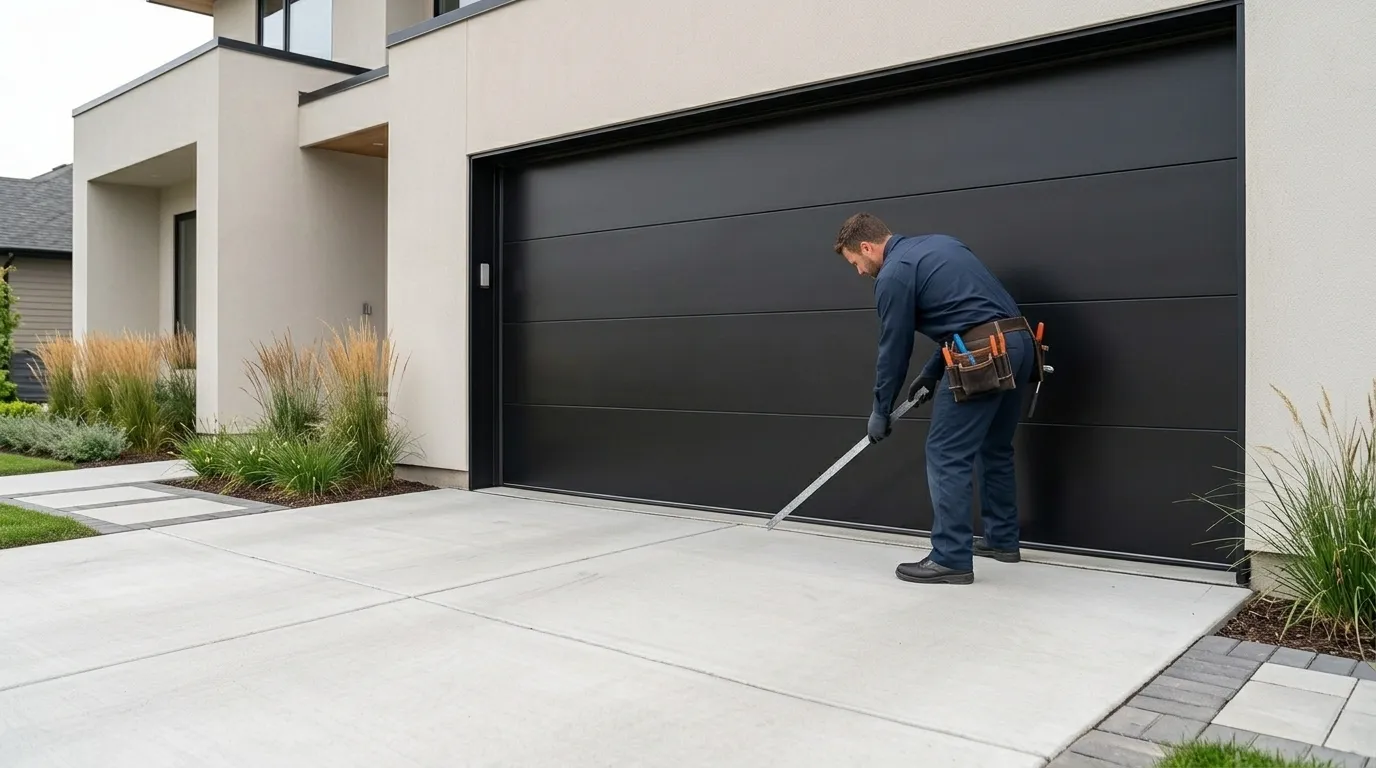
A look at jobs our crew has been on nearby.
Why Clayton Calls Us
Frequently Asked Questions
Are Clayton's garage doors different from newer suburbs nearby?
Often, yes. Clayton's housing centers on 1953, older than the 1960s-70s stock common across much of the wider service area. That means narrower track gauges and steel rollers on original hardware, which behave differently under load and temperature swings than newer builder-grade doors.
Can I replace just one roller instead of the whole set?
You can, if the track is still straight and the other rollers are turning freely. On older track hardware we usually check the whole run first - a single bad roller often means the neighboring ones aren't far behind, especially on steel rollers that have been running the same track for decades.
Do you keep a crew or truck based in Clayton?
No. We run every job in Clayton from our St. Louis base, about 5 miles out. There's no local depot here - the truck that shows up drove in for your appointment, same as any other stop on the route that day.
Will new rollers fix a door that's jumping the track?
Sometimes. If the jumping is caused by a worn roller riding wrong, new rollers solve it. If the track itself has bent or the bracket holes have worn oval, rollers alone won't hold the fix - that's a track repair, and we'll tell you which one you're looking at before starting work.
Need Roller Replacement in Clayton?
Call now for straight answers on cost and timing.