
Nearby Community
Garage Door Service for Berkeley, MO
Berkeley homes mostly date to 1957, older than the metro average, meaning original hardware on many doors. St. Louis Garage Door Pros travels out for repairs and replacements.
- Licensed & Insured
- Same-Area Service Calls
- Upfront Pricing
The Houses Here
Berkeley's houses cluster around 1957 on average, which puts this area ahead of the broader service region, where the typical build year runs closer to 1967. That decade-plus difference matters more than it sounds. A door and opener installed in the late 1950s was built for a lighter panel and a simpler spring setup than what went into homes built in the 60s and 70s across the rest of the coverage area.
If your house is original to the neighborhood, there's a decent chance nobody has touched the torsion hardware since it went in, and the track alignment has shifted slowly enough that you may not have noticed until the door started binding. With roughly 3,044 households in Berkeley, we see a lot of these same-era doors on the same block, wearing out around the same time.
The area sits about 9 miles from St. Louis, which is just travel time for us, not a reason for delay. We bring parts sized for older single-panel and early sectional doors because we know that's what's common here, not just newer stock that fits houses built decades later.
How Soon We Can Come Out
We're based in St. Louis and drive out to Berkeley as calls come in.
We don't keep a depot or a crew stationed in the area, so we won't promise a same-hour arrival - that's not honest, and we'd rather tell you that up front than have you wait on a truck that isn't close. What we can tell you is that the trip is short enough that it doesn't change how we schedule the work; a spring job or opener call from Berkeley gets slotted the same way one from anywhere else in our coverage does.
If your door is stuck shut and the car's trapped inside, say so when you call. We prioritize jobs that leave a household without a working garage, especially heading into a cold stretch, since a door that won't seal costs you heat fast in a house built before insulation codes tightened up.
What We Do Most in This Area
Given the 1957-era housing stock, the calls we get from Berkeley skew toward original torsion springs that have simply outlived their cycle count, and openers that are the second or third unit installed on hardware that's never been swapped out. We also see more one-piece and early sectional doors here than in newer parts of the coverage area - doors that don't fold the way modern sectional panels do, and that use track hardware you can't just special-order from a big-box store.
Median household income in Berkeley runs about $40,654, noticeably below the roughly $84,389 median across the wider service area. That's not a judgment, it's context: we try to steer toward spring and cable repairs when the door itself and the track are still sound, rather than pushing a full replacement when a repair will genuinely hold. We'll tell you plainly when a door's worn past the point where fixing it is the better spend - sometimes the track is bent enough, or the panel rusted enough, that a new door costs less over five years than another repair.
How That Shows Up in the Door
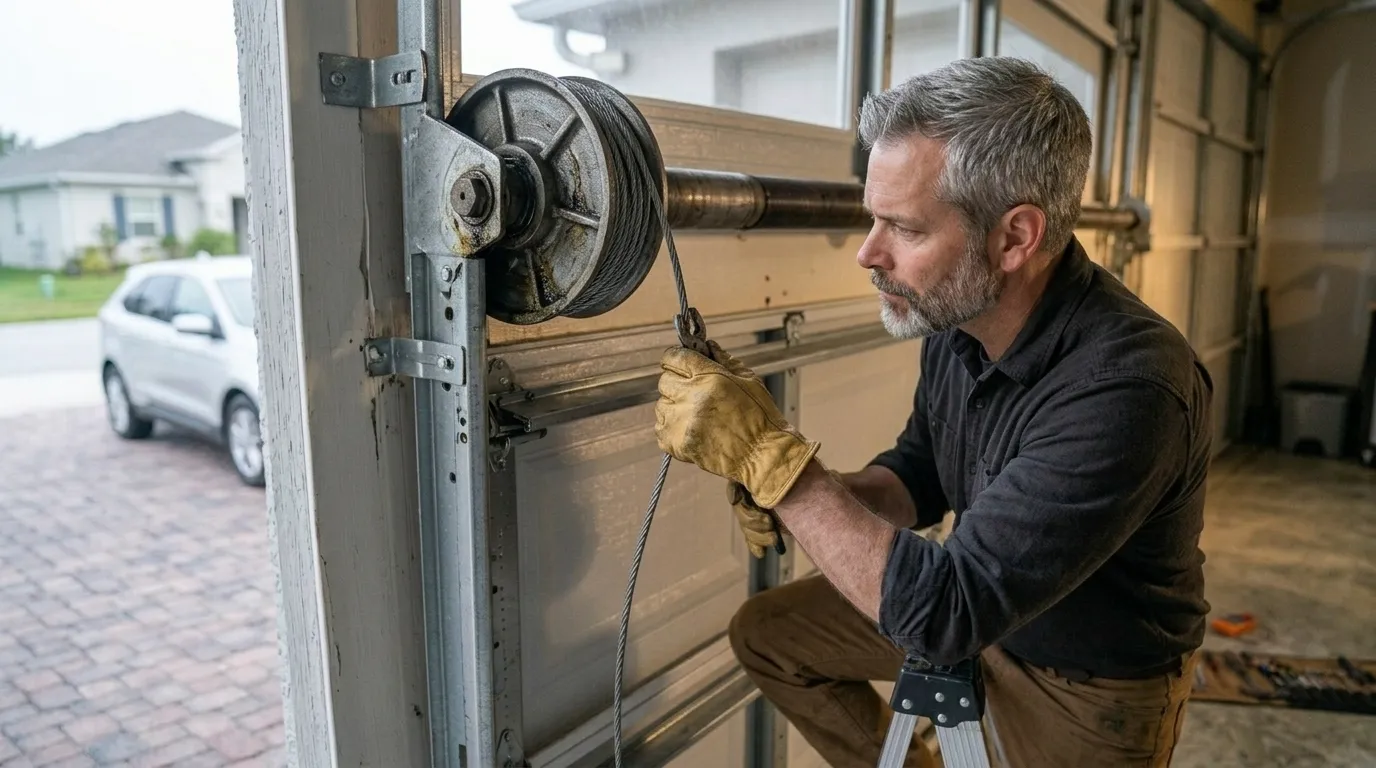
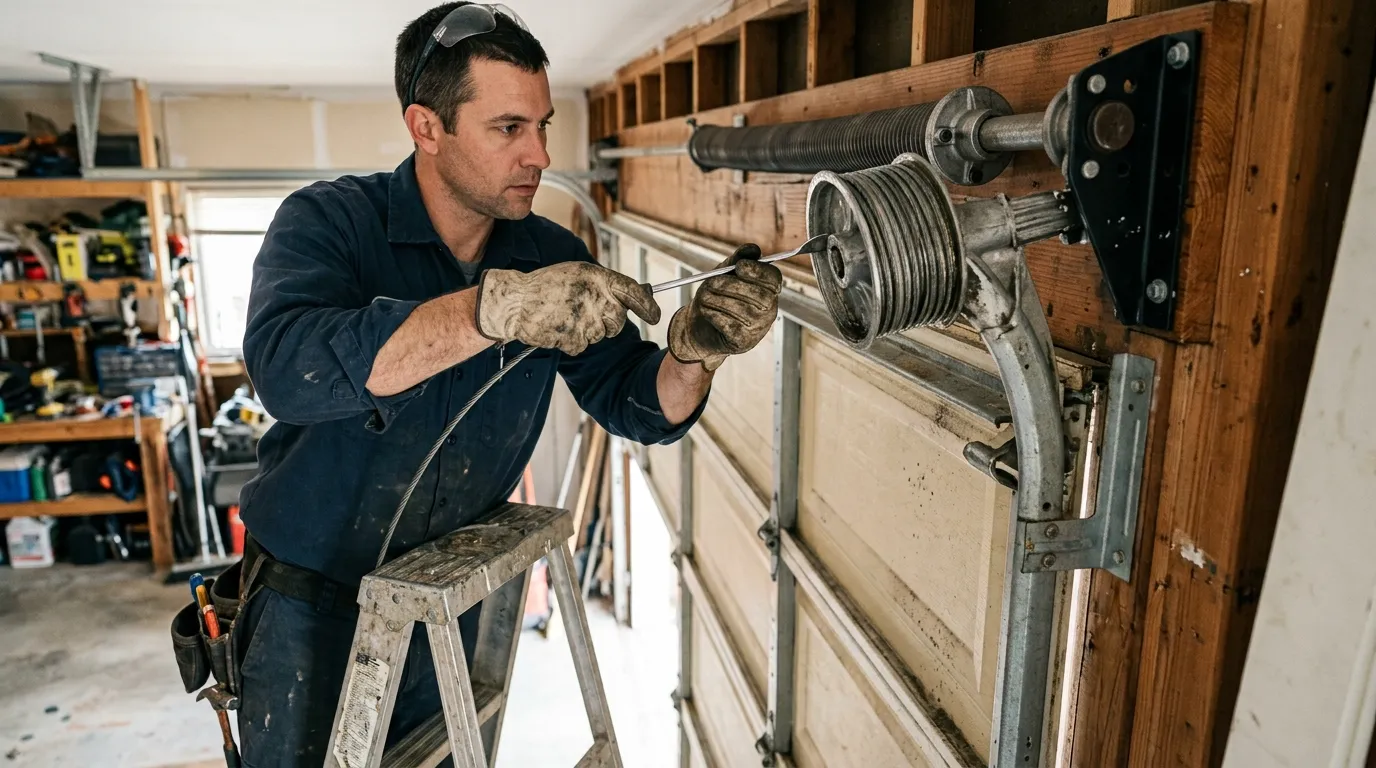
A door built for a house from 1957 usually runs on lighter-gauge track and a single torsion spring rated for a lighter panel than what you'd find on a house built in the 70s. When that spring finally breaks, and it will, since these are original-era installs still in service, the door tends to slam down hard rather than settle, because there's no second spring to share the load. That's the call we get most from this area: a door that dropped fast and won't lift, with the owner assuming the opener burned out when it's almost always the spring.
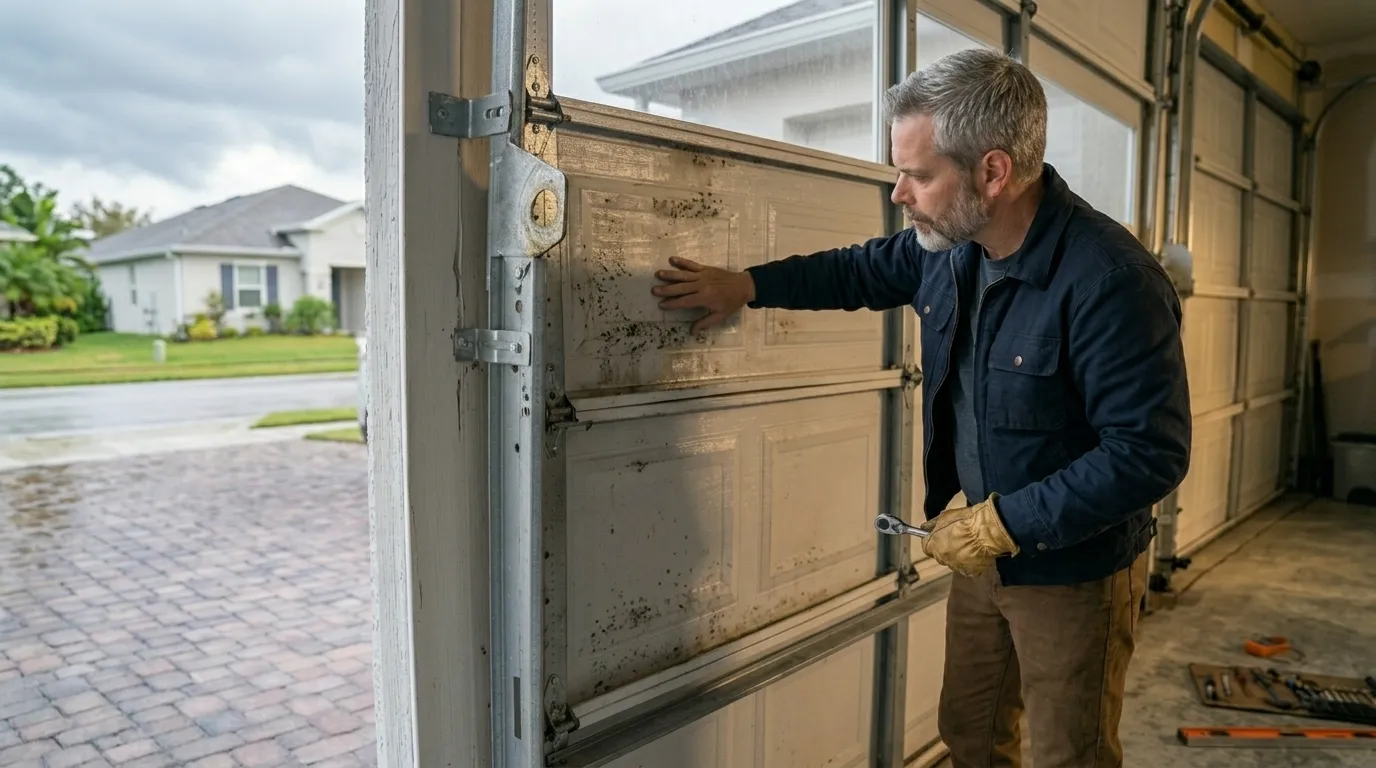
Cold weather makes this worse. Older steel doors from this era typically have thinner insulation, if any, and the metal contracts enough in a hard freeze that hardware already stressed from age is more likely to give out on the coldest morning of the year, not the mildest. If your door is groaning or shuddering when it opens, that's usually the rollers and hinges telling you the same story the spring will tell you later, just earlier and cheaper to fix.
How We Can Help
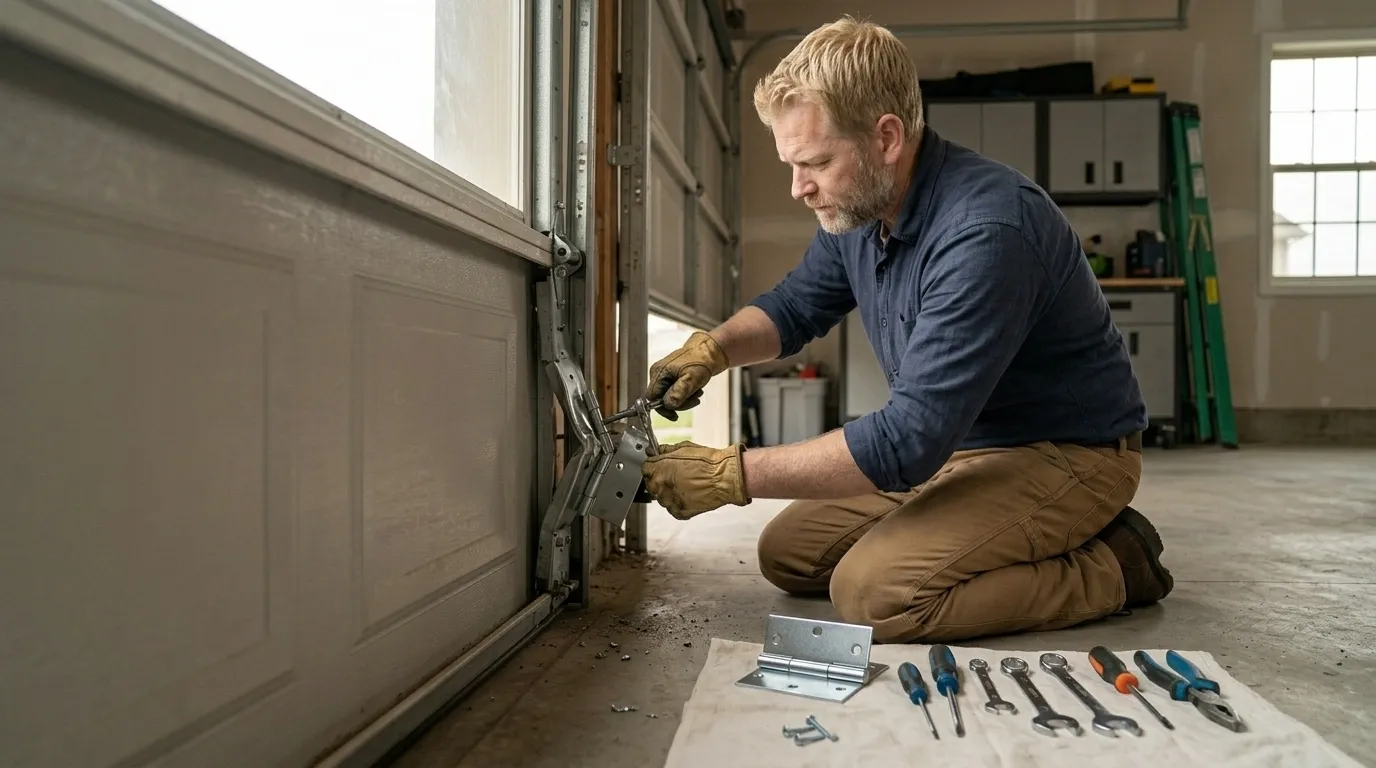
Garage Door Repair
Springs, cables, tracks, rollers, and openers fixed by a tech who explains the problem before touching anything.
Learn more →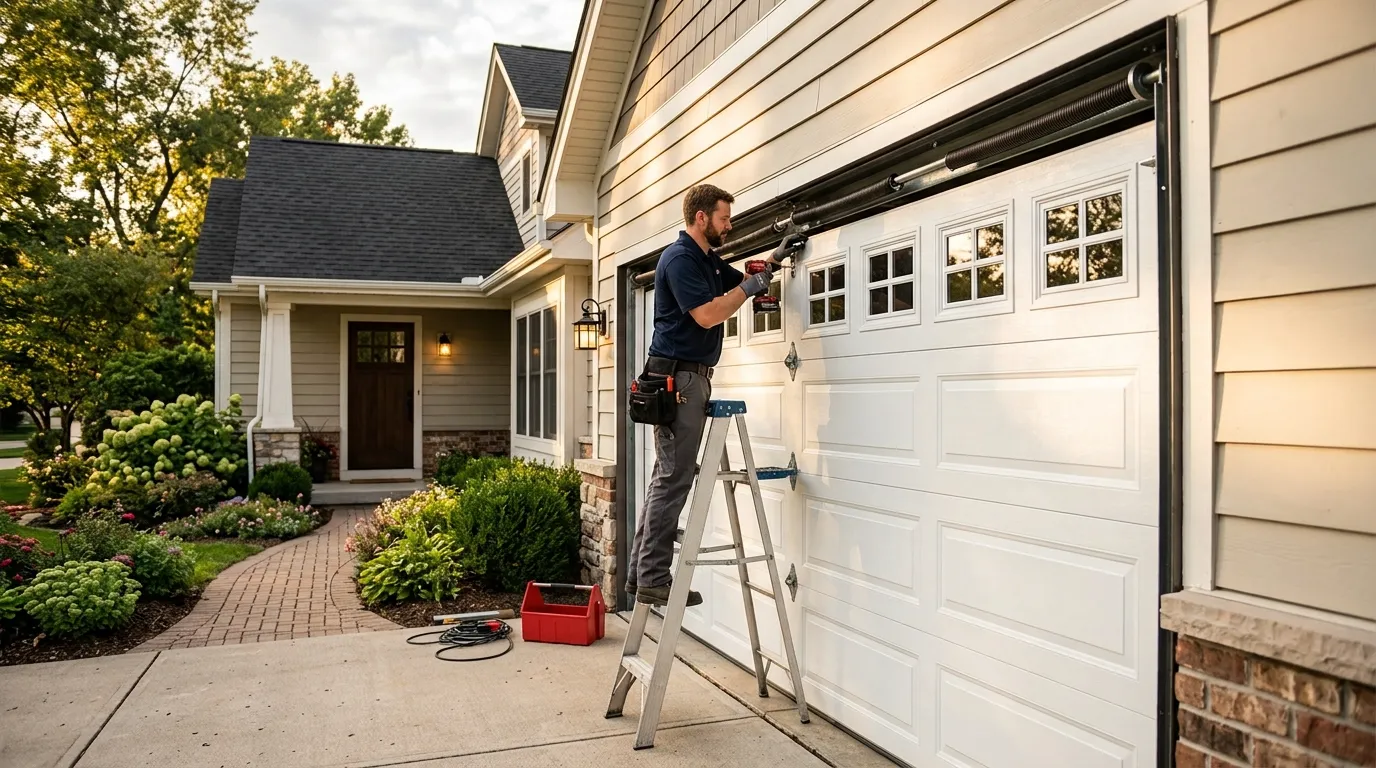
Garage Door Installation
New sectional doors sized and installed for the housing stock actually built in this area.
Learn more →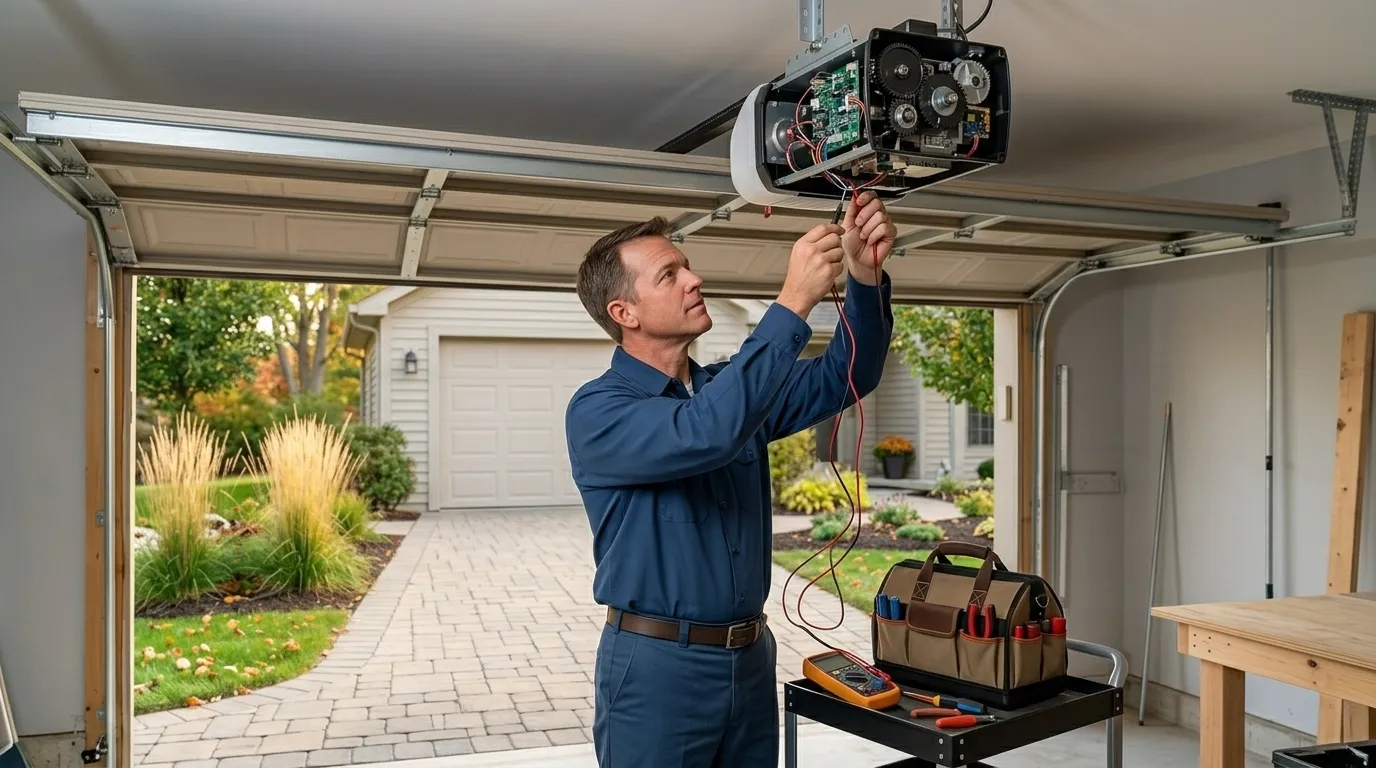
Garage Door Service
Tune-ups, lubrication, and safety checks that catch a small problem before it becomes a service call.
Learn more →What Happens When You Call
-
1
Call or Request a Quote
Tell us what the door is doing and roughly how old the house is - that alone points us toward the likely part before a truck leaves.
-
2
On-Site Diagnosis
A tech checks the spring, cables, tracks, and opener in person and tells you plainly what is actually wrong.
-
3
Straight Price, No Surprises
You get a number before any work starts. It covers parts and labor, nothing added after the fact.
-
4
Fixed the Same Visit
Most repairs are done in one trip. If a part needs sourcing, we tell you that upfront instead of guessing.
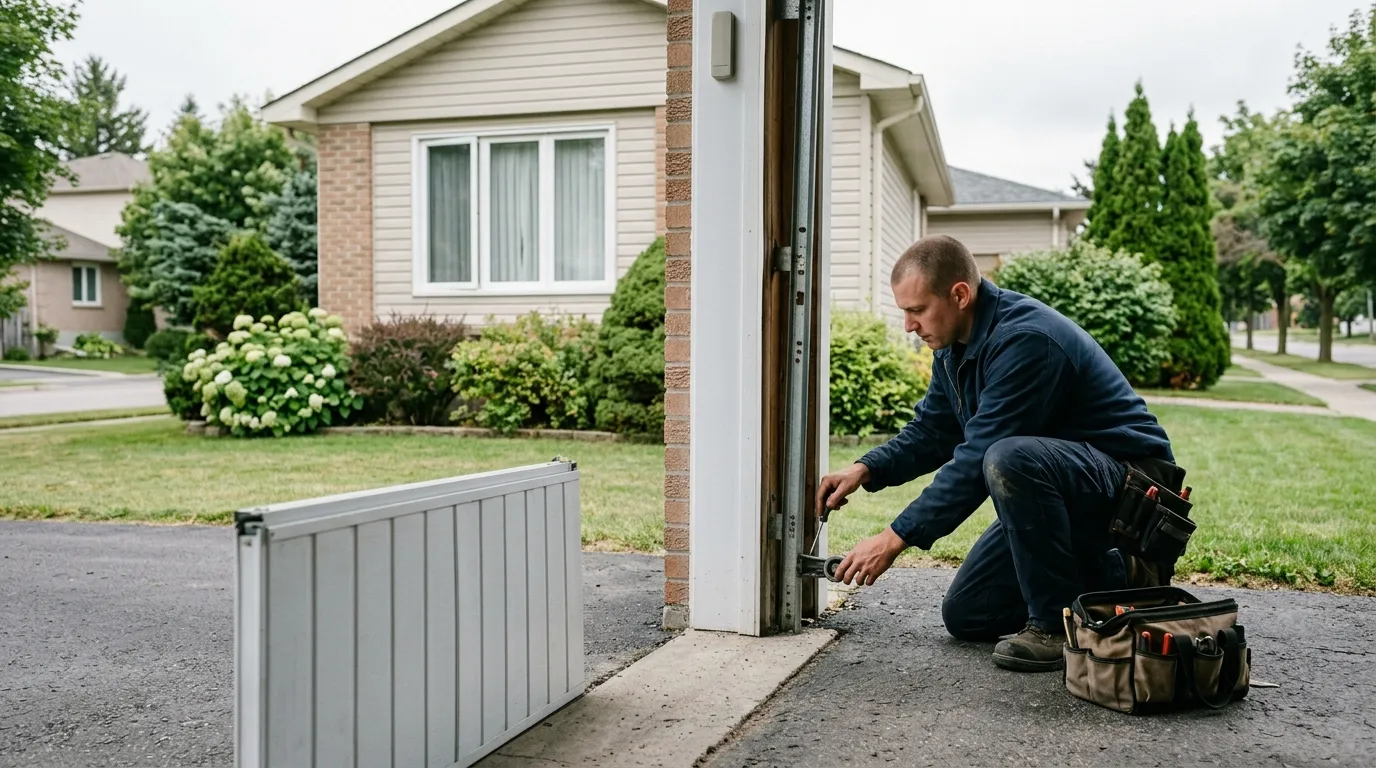
Recent Work Near Berkeley
Frequently Asked Questions
Why does my door feel heavier or slam down harder than my neighbor's newer door?
If your house dates to the late 1950s like much of Berkeley, your door likely runs on a single torsion spring sized for a lighter, older panel. When it breaks, there's no second spring to catch the load, so the door drops fast instead of settling. That's different from newer double-spring setups in houses built later across the area.
Do you have a depot or crew based in Berkeley?
No. We're based in St. Louis, about 9 miles out, and travel to Berkeley for every call. We don't promise same-hour arrival because we're not staged locally, but the distance doesn't change how we prioritize or schedule the job once you call.
Should I repair or replace an original 1950s-era door?
It depends on the track and panel condition, not just the spring. If the track is straight and the panel isn't rusted through, a spring or cable repair usually makes sense. If the door's worn past that point, we'll say so plainly rather than repair something that'll fail again in a year.
Does cold weather affect older garage doors more?
Yes. Doors from this era typically have thin or no insulation, and the steel contracts in a hard freeze. Hardware that's already stressed from decades of use is more likely to fail on the coldest mornings, which is why winter tends to bring more spring and hinge calls from older houses.
Get Your Door Fixed in Berkeley
Call now for same-area service.