
St. Louis Garage Door Guide
What a Service Call Actually Covers in St. Louis
St. Louis homes built between 1947 and 1990 carry original spring and track hardware that ages differently in a cold-moderate climate. Here's what a real service call checks.
- Licensed & Insured
- Same-Area Service Calls
- Upfront Pricing
What It Costs
We're not going to hand you a number here, because a fair one depends on what's actually on your door, and we won't guess that over the phone. What we can tell you is what drives the range. A lot of houses in this service area - the ring running from Clayton and Richmond Heights out to Kirkwood and Mehlville - were built between 1947 and 1990, with most of that stock going up in the 1960s and 70s.
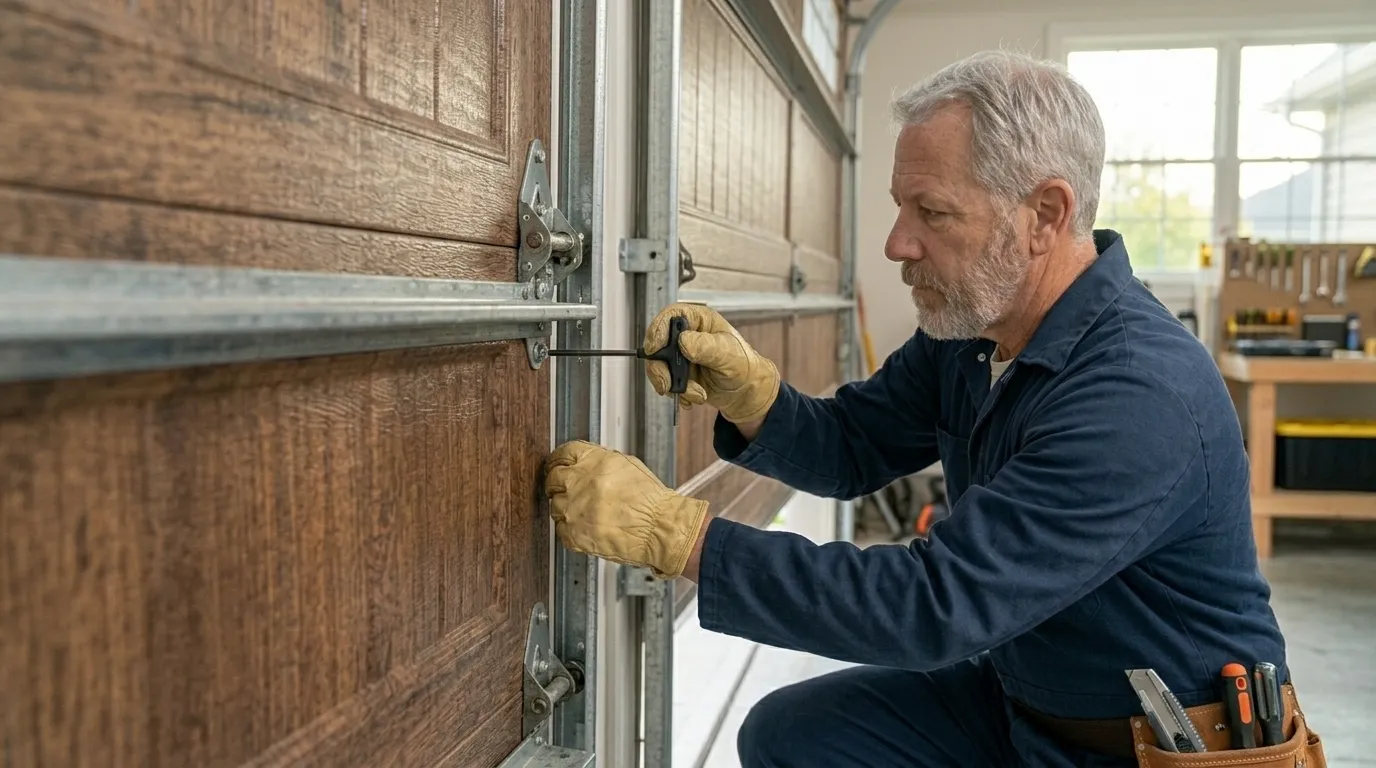
That era means original one-piece doors, side-mounted torsion hardware, and openers that have been replaced once already but often onto the same old track. Parts for that setup aren't always something a truck carries as a default stock item, so a job can run longer than a same-era torsion spring swap on newer extension-spring hardware. A service call starts with us pulling the door, checking the spring wind, the cable condition, the track alignment, and the opener's force settings before we say what it needs.
If the door's original hardware is sound, the job is usually a spring or cable replacement. If the track or opener has been fighting a mismatch for years, the honest number goes up because we're correcting more than one thing.
What Is Going On
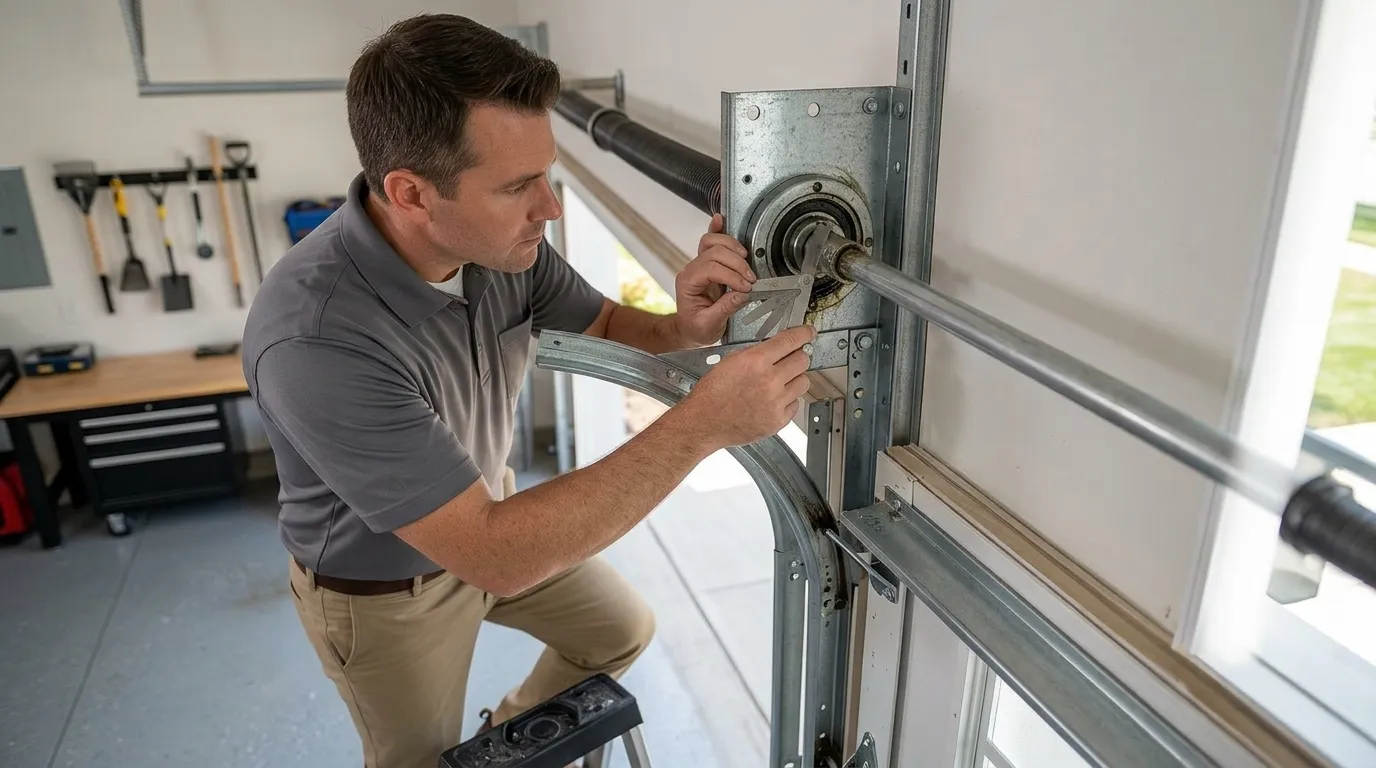
Most calls we get in neighborhoods like Bevo, Lindenwood Park, and Carondelet trace back to the same root cause: hardware sized for a house built decades before insulated steel doors became standard. A torsion spring wound for a lighter 1960s-era door works harder every cycle once a heavier replacement door goes on the same track, and that shortens its life whether or not the homeowner ever notices. We also see a lot of original rollers still running in tracks that have shifted slightly out of plumb over fifty-plus years of foundation settling, which is common across this stretch of the metro.
That combination - old track geometry plus a door it wasn't built for - is behind more noisy, sticking, or off-track calls than any single broken part. It's rarely one thing. A spring that finally snaps has usually been overworking against a track that needed adjustment for years, and fixing only the spring without checking the rest just buys you another call sooner than it should.
What the Weather Here Does to It
St. Louis sits in a cold-moderate climate band, and that matters more to a garage door than most people expect. It's not the summer heat that does the damage - it's the freeze-thaw swing every winter.
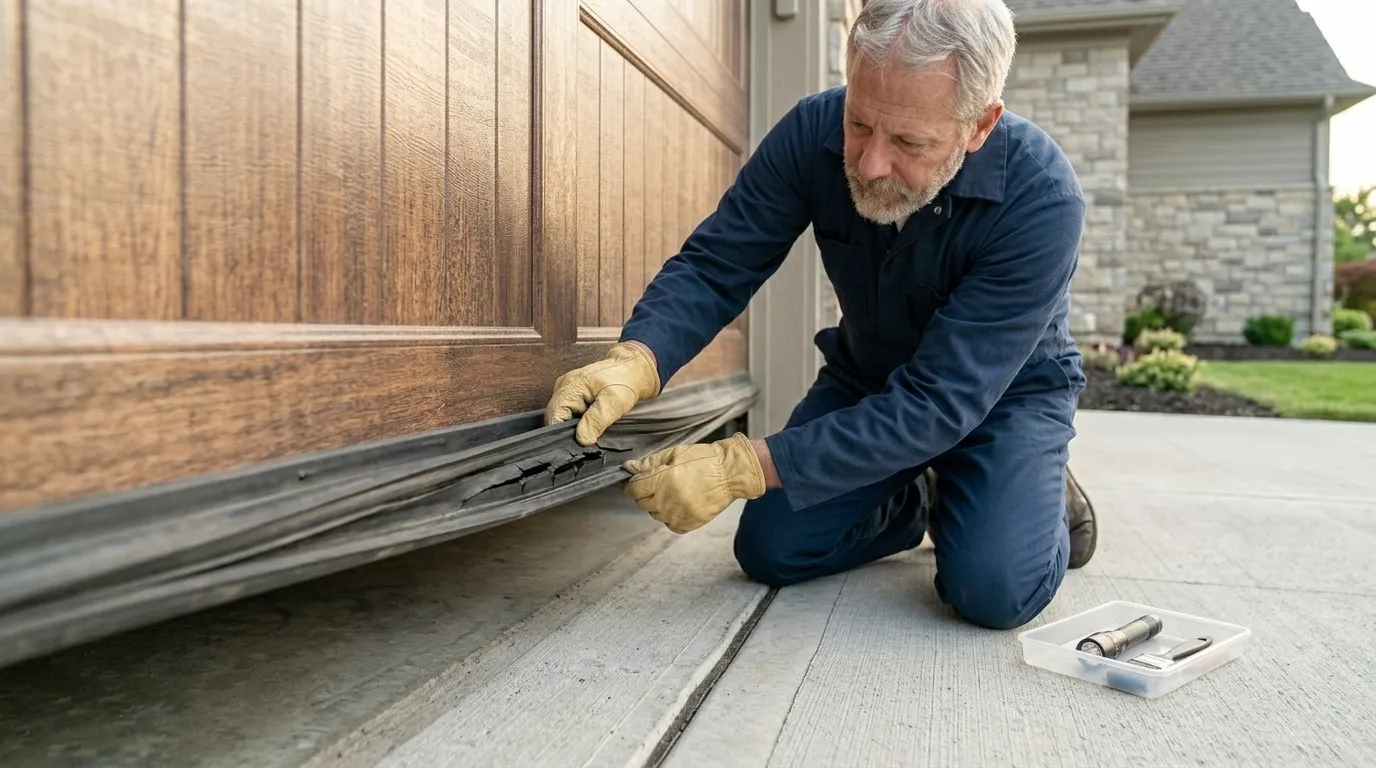
Steel contracts in the cold, lubricant thickens, and a torsion spring that's already fatigued from decades of cycling is far more likely to snap on a cold morning than a mild one. Cables fray faster where moisture gets into the strands and then freezes, and that's a slow process that shows up as fraying near the bottom roller bracket long before a cable actually lets go. Openers also feel it: a chain drive that's slightly loose runs noisier once the metal contracts in winter, and a limit setting that was fine in July can bind in January.
None of this means you need a call every season. It means the door hardware common to houses built here between 1947 and 1990 is doing more seasonal work than a newer, better-matched setup would be.
Checking It Yourself
Before you call anyone, there's a short list worth checking, especially on a door with original hardware. Pull the release cord and lift the door by hand about halfway - it should stay put on its own. If it drops or shoots up, the spring tension is off and that's not a DIY fix on torsion hardware; the spring is under enough load to hurt you.
Look at the cables on both sides near the bottom bracket for fraying or rust, common where moisture sits through a Midwest winter. Check the track for gaps between the rollers and the rail, especially near the top where old brackets loosen over the years. Listen for the run: a grinding or popping sound usually means a roller or bearing, not the opener itself.
What you shouldn't do is spray anything but a garage-door-specific lubricant on the springs, and don't loosen or tighten a torsion spring yourself - that's the one part of this job we don't hand off, no matter how straightforward it looks.
How We Can Help
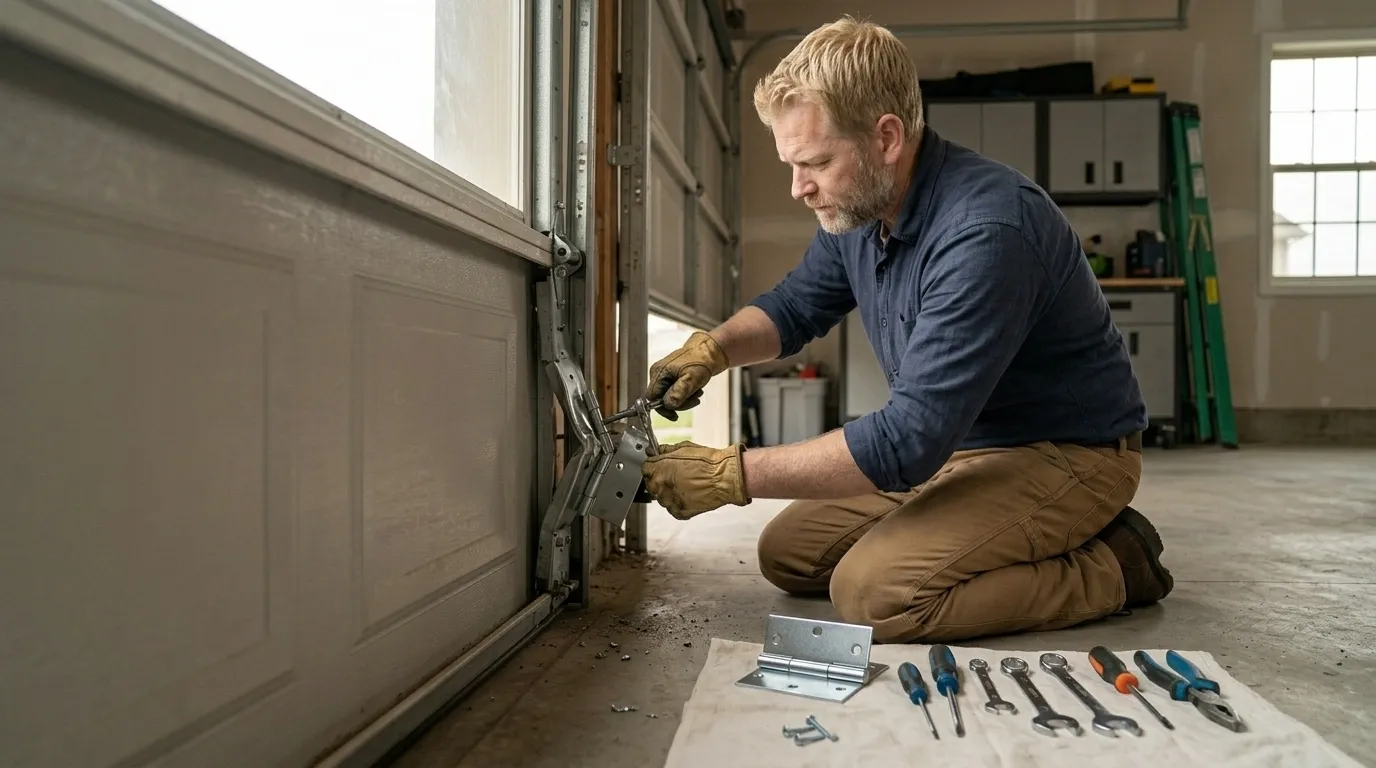
Garage Door Repair
Springs, cables, tracks, rollers, and openers fixed by a tech who explains the problem before touching anything.
Learn more →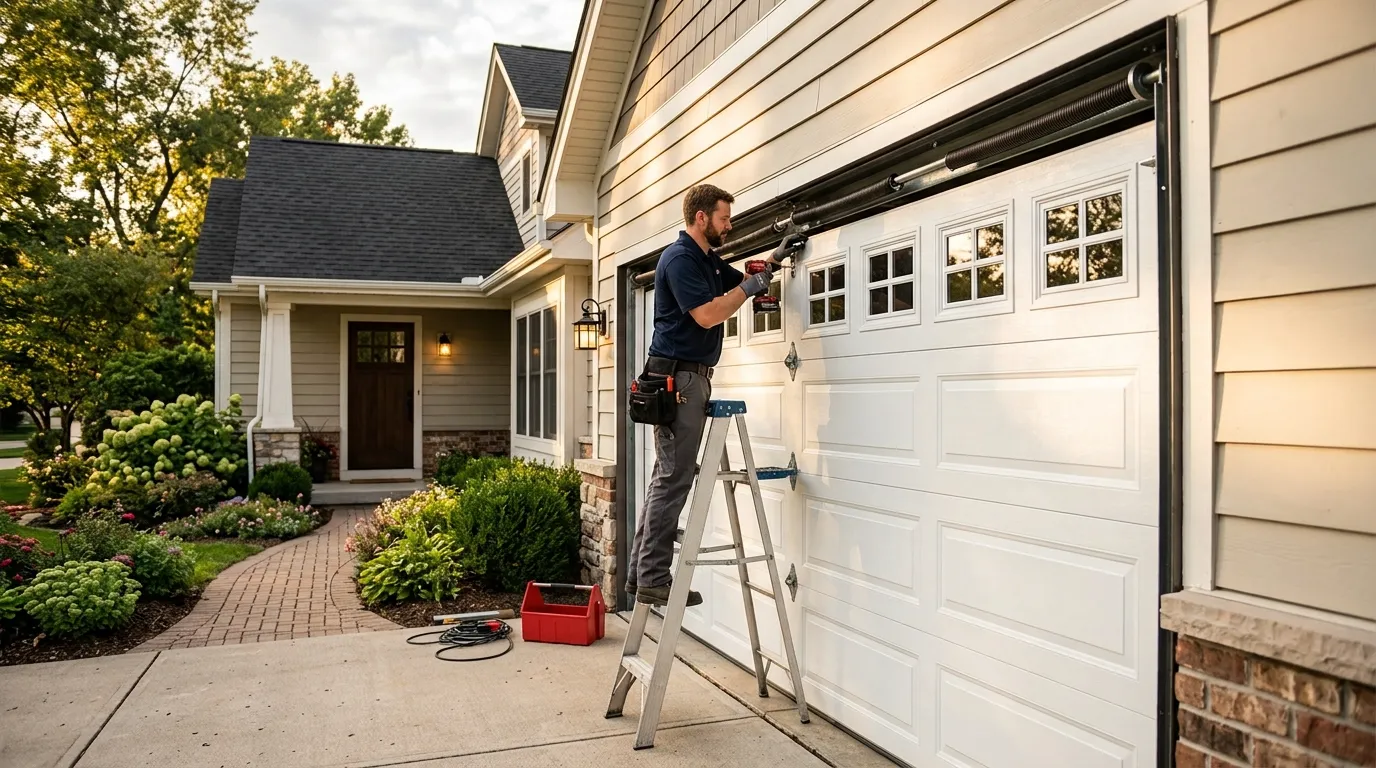
Garage Door Installation
New sectional doors sized and installed for the housing stock actually built in this area.
Learn more →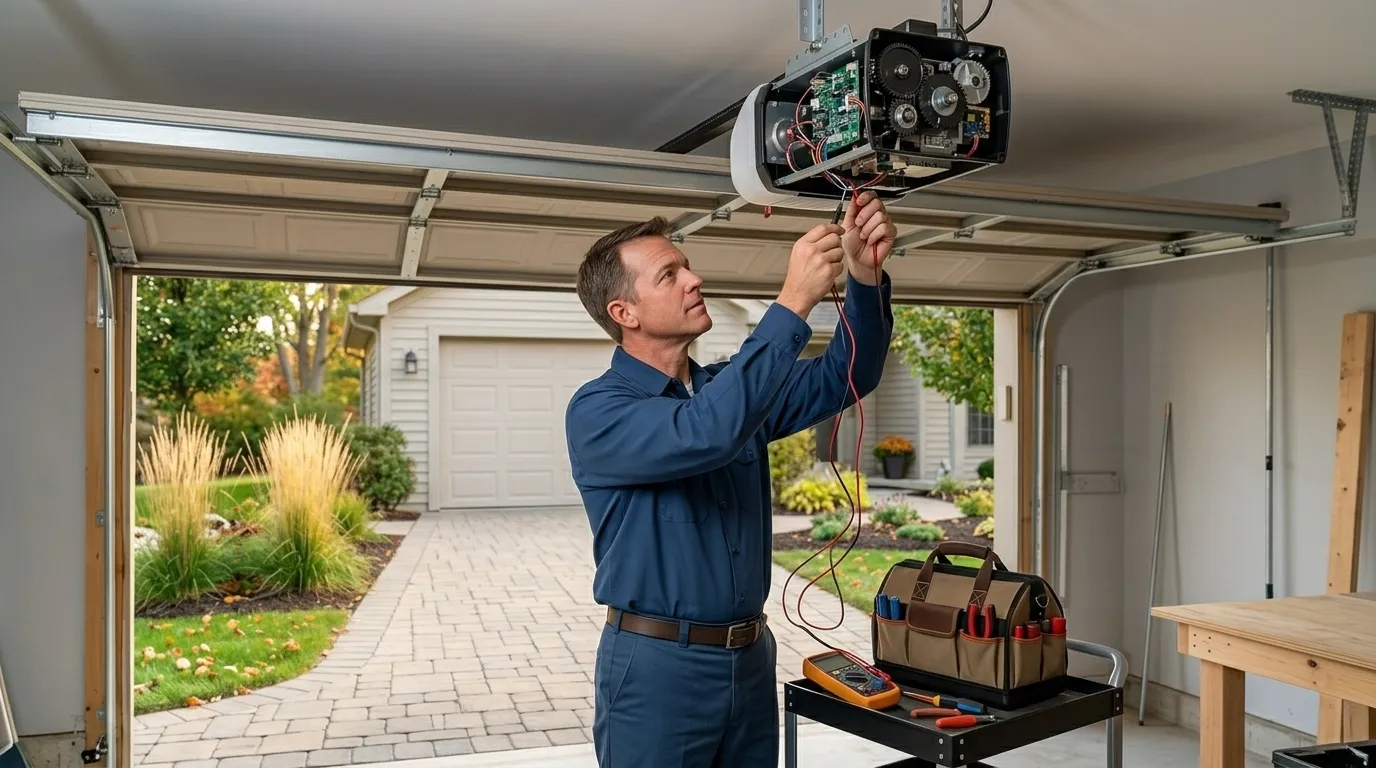
Garage Door Service
Tune-ups, lubrication, and safety checks that catch a small problem before it becomes a service call.
Learn more →Frequently Asked Questions
Why does my garage door spring keep breaking in winter?
St. Louis sits in a cold-moderate climate band, and the freeze-thaw cycle each winter is harder on a spring than summer heat. Cold steel is more brittle, and a spring that's already fatigued from years of cycling is more likely to give out on a cold morning than a mild one. If yours has broken more than once, the wind may be undersized for your door.
Is my garage door hardware original to the house?
If your house was built between 1947 and 1990, which covers most of this service area, there's a real chance the track and spring mounting are original, even if the door panel itself was swapped later. We check this on every call because original hardware often wasn't sized for a heavier replacement door.
Do you give a price over the phone?
Not a firm one. What a job needs depends on the actual hardware on the door, and a lot of houses here have older track and spring setups that change the scope. We give a real number after we've looked at the spring, cables, track, and opener in person.
Can I just tighten the spring myself?
No. A torsion spring holds enough tension to cause a serious injury if it lets go while you're adjusting it. Everything else on this checklist - cables, track gaps, roller noise - is safe to inspect yourself, but spring tension is the one thing we don't recommend handling without the right bars and experience.
Have a Door That Needs a Second Opinion?
Call and describe what it is doing - we will tell you what it likely is.