
St. Louis Garage Door Guide
When a Spring Goes in Cold Weather Here
St. Louis homes built 1947-1990 run mostly original torsion springs. Here's what breaks them in the cold band this city sits in, and how to check yours safely.
- Licensed & Insured
- Same-Area Service Calls
- Upfront Pricing
What It Costs
We don't have a price list to hand you here, so we're not going to make one up. What we can tell you is what drives the number on a real job. A single torsion spring rated for a lighter door costs less to replace than a matched pair on a heavier insulated door, and which one you've got usually comes down to when the house was built.
Across this area housing runs mostly 1947 to 1990, with the heaviest concentration in the 1960s and 70s, so a lot of doors are still on the same size and style of hardware they shipped with. If your spring is original to a house from that stretch, it was likely sized for a lighter door than what gets installed today, and swapping it 1-for-1 isn't always the right call - sometimes the door itself has outlived the hardware. That's a conversation a tech has standing at your header, not something we can price sight unseen.
One honest limit: if your opener, springs, and tracks are all original from a 1960s build, a spring-only repair can turn into a bigger job once the panel or track shows its age. We'd rather tell you that upfront than swap a spring and have you call back in a month.
What Is Going On
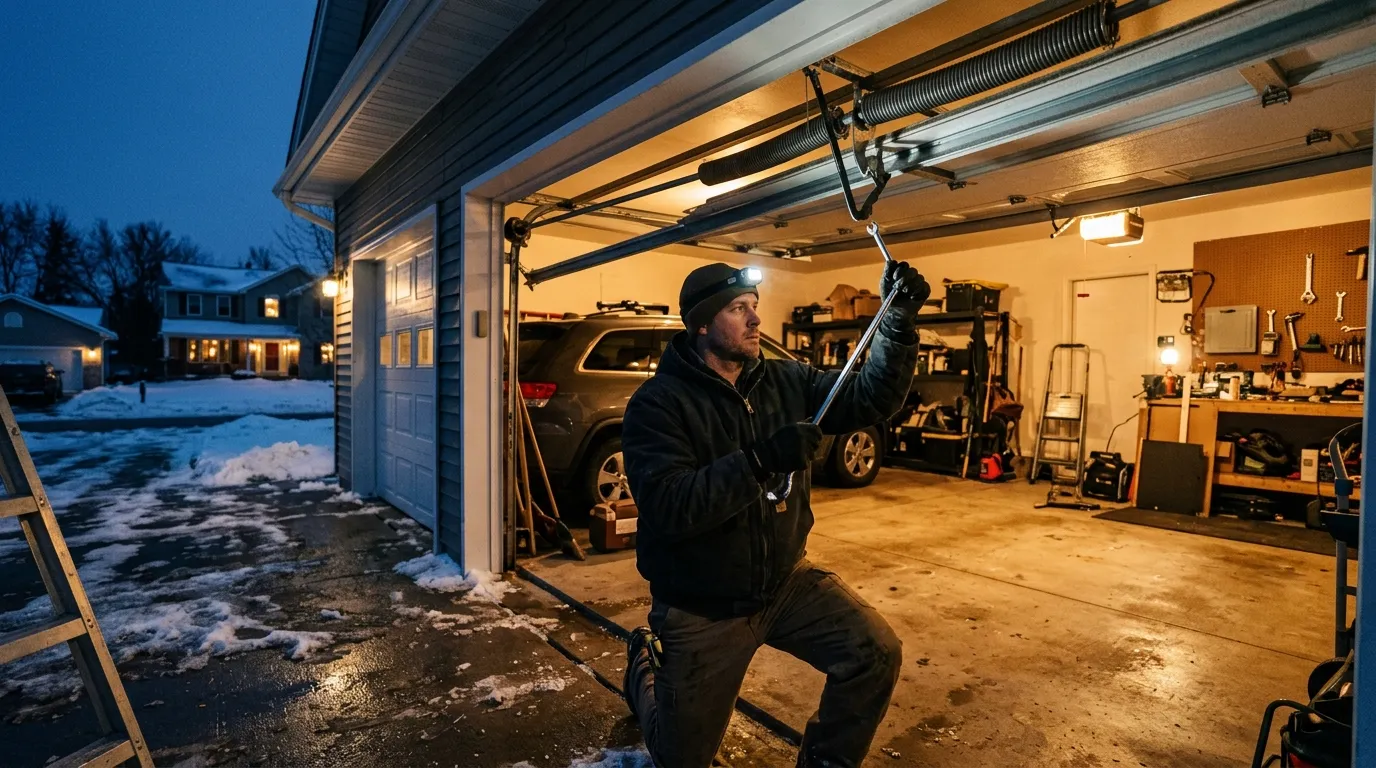
A torsion spring is a coil of high-tension steel that does the actual lifting - the opener just tells it when to let go. Every open and close is a cycle, and springs are rated for a set number of them before the metal fatigues and snaps, usually without much warning. Houses in this area built between 1947 and 1990, especially the 1960s-70s stock that makes up most of it, have had decades to run through those cycles.
A spring that was fine ten years ago can be sitting at the end of its life right now, and cold weather is often what finishes it off rather than causes it. Steel contracts as it gets cold, which makes an already-fatigued coil more brittle right at the moment it's under full load lifting a heavy door. That's why the failures cluster in winter even though the spring's real problem was age, not temperature.
If your garage isn't heated - and most from this era weren't built with that in mind - the spring inside it is running colder than the air in your living room, all winter, every winter.
What the Weather Here Does to It
St. Louis sits in a cold-moderate climate band, which means winters cold enough to matter for steel hardware but not the deep-freeze extremes you'd get further north. That's actually a rough combination for springs: the metal goes through real freeze-thaw swings rather than staying uniformly cold, and each swing stresses the coil a little more.
A spring under tension that's already near the end of its rated cycle count doesn't need much of a push to let go, and a cold snap after a warm stretch is exactly that kind of push. Garages built as part of a 1947-1990 house typically weren't insulated as living space, so the temperature swing inside the garage tracks close to the swing outside. None of this is unique to any one street - it's a function of the climate band this whole area sits in, from the older stock near the city core out to the newer construction toward the edges of the service area.
What it means practically is that a spring that's been fine for years can go on the first genuinely cold morning of the season, not because anything changed, but because the cold finally asked more of it than it had left to give.
Checking It Yourself
You can look, but don't touch a wound spring - that's the one place we draw a hard line, because a torsion spring under tension can do real damage if it lets go while you're working on it. What you can safely check: look at the spring above the door for visible gaps in the coil, which means it's already separated. Look for rust streaking, which weakens steel faster than plain age does.
Pull the manual release with the door closed and lift the door by hand - it should feel roughly balanced and stay put around waist height. If it feels heavy, drops on its own, or the balance feels off compared to what you remember, the spring is likely past its rated life or already partly gone. Given how much of the housing in this area dates to 1947-1990, a lot of these springs are original or close to it, and a visual check twice a year, especially before the first cold stretch, catches most of them before they snap on you at 6am on a work day.
How We Can Help
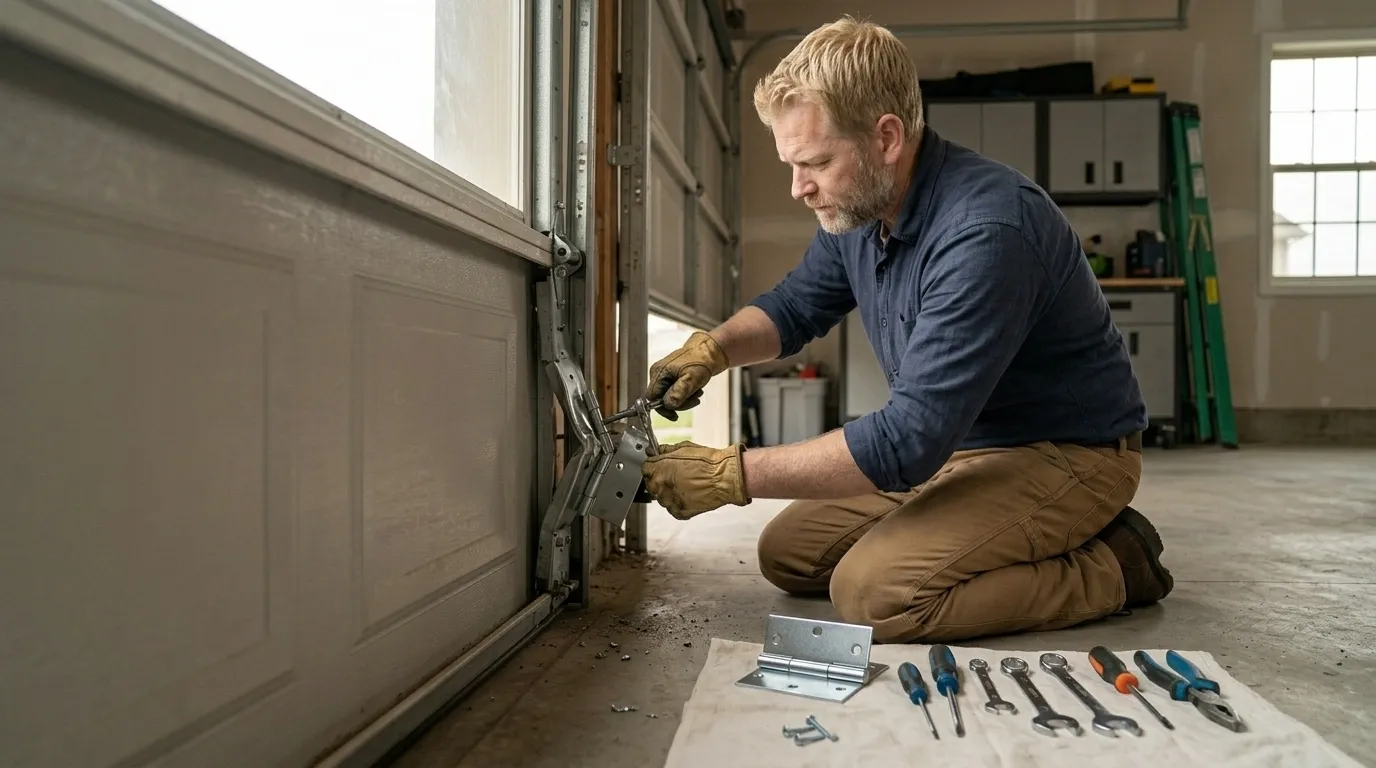
Garage Door Repair
Springs, cables, tracks, rollers, and openers fixed by a tech who explains the problem before touching anything.
Learn more →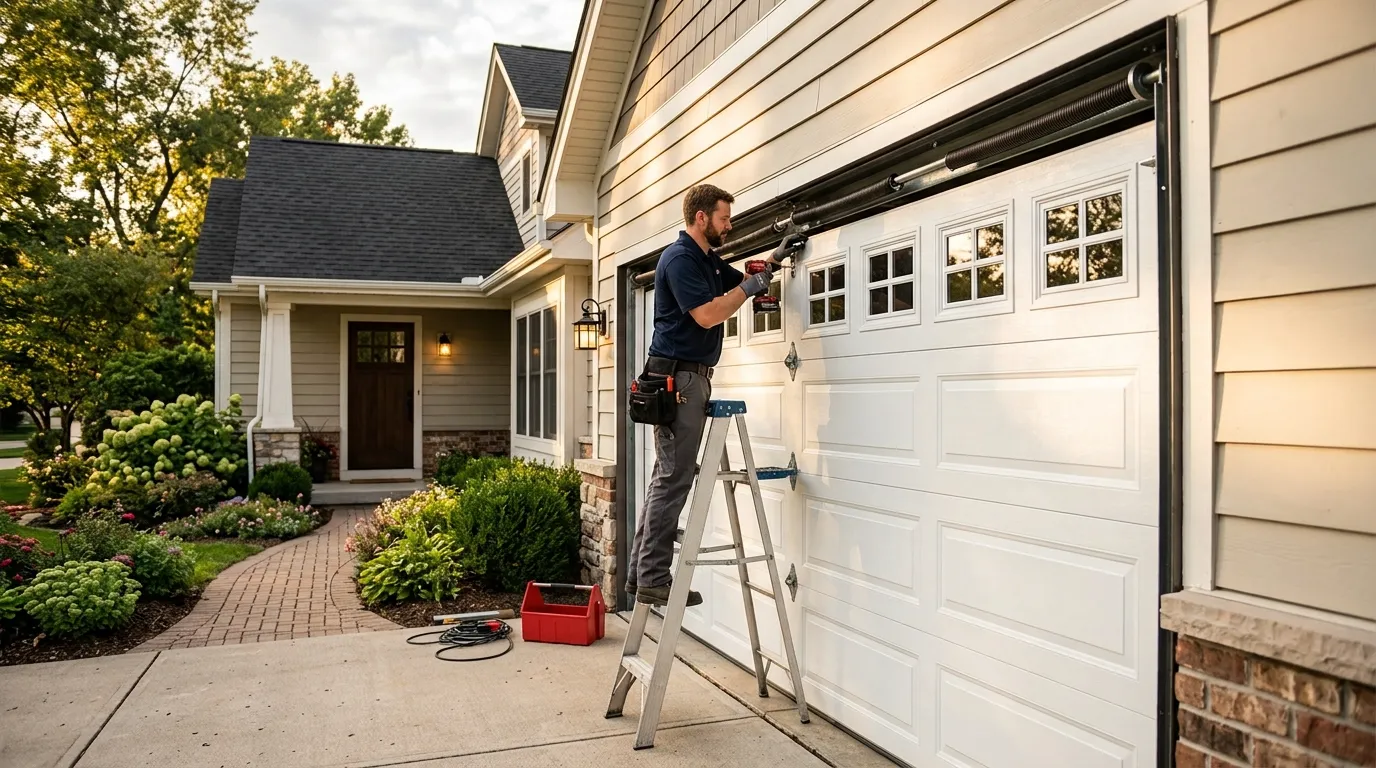
Garage Door Installation
New sectional doors sized and installed for the housing stock actually built in this area.
Learn more →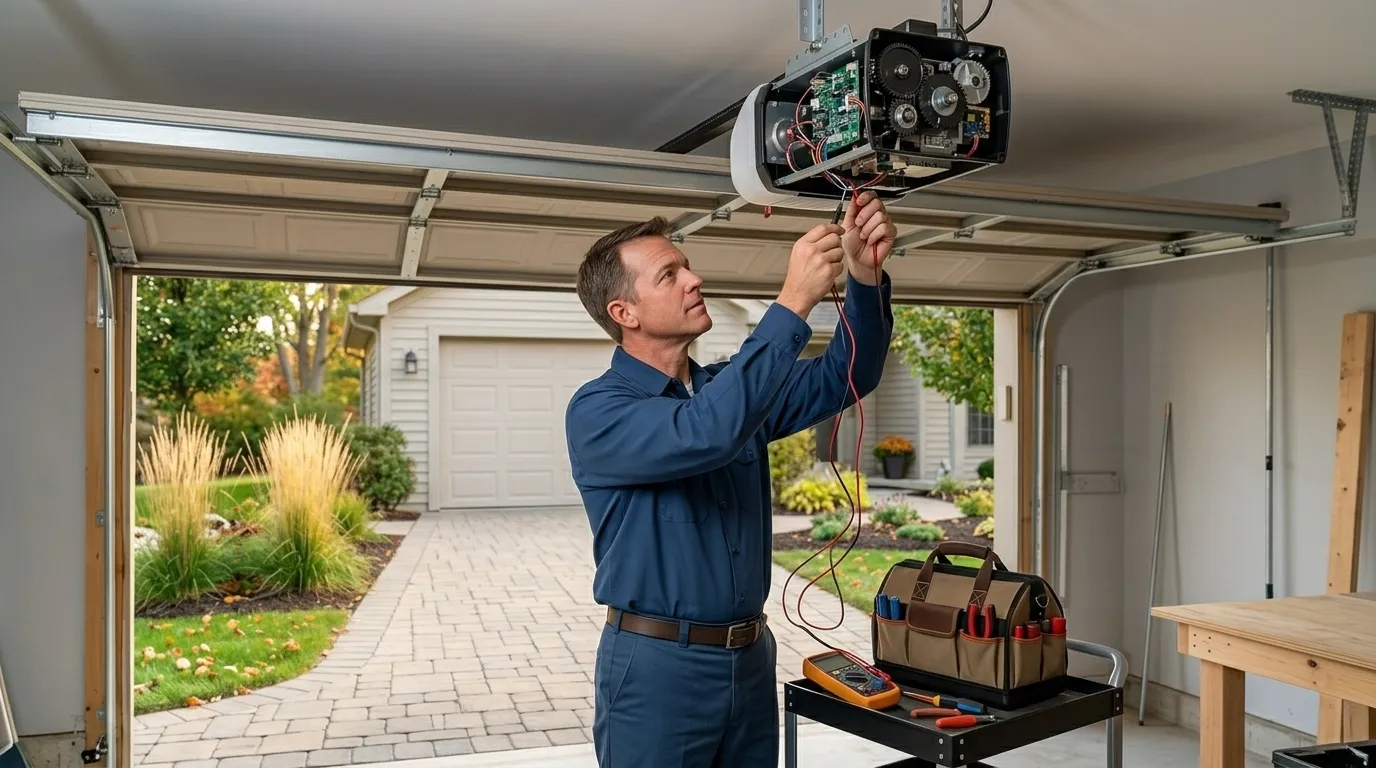
Garage Door Service
Tune-ups, lubrication, and safety checks that catch a small problem before it becomes a service call.
Learn more →Frequently Asked Questions
Why did my spring break on the coldest morning of the year?
It probably didn't fail because of that one cold morning - it failed because it was already near the end of its cycle life, and the cold made the steel brittle enough that it finally let go. In this area's cold-moderate climate, that pattern is common with springs original to houses built between 1947 and 1990.
Is my spring original to the house?
If your house was built in the 1960s or 70s, which covers most of the stock in this area, and you've never had the spring replaced, it's likely original or close to it. A tech can tell by the wire gauge and coil wear whether it's near the end of its rated cycles.
Can I replace a torsion spring myself?
We'd advise against it. A wound torsion spring holds enough stored tension to cause real injury if it releases while you're working on it. Checking balance and looking for visible wear is safe to do yourself - winding or unwinding the spring is not.
Does St. Louis's climate actually make springs fail more?
The cold-moderate band this area sits in puts steel through real freeze-thaw swings each winter, which adds stress to a coil that's already fatigued from age. It's less about extreme cold and more about a spring near the end of its life finally being pushed past what it has left.
Have a Door That Needs a Second Opinion?
Call and describe what it is doing - we will tell you what it likely is.