
St. Louis Garage Door Guide
When the Opener Quits: Power Cuts and Worn Gears in St. Louis
Openers in St. Louis houses built between 1947 and 1990 wear and fail in patterns tied to that age and to cold-moderate winters. Here's what drives the cost and what to check first.
- Licensed & Insured
- Same-Area Service Calls
- Upfront Pricing
What It Costs
There's no single number here, because what you're actually paying for depends on what's wrong. A dead capacitor or a burnt logic board on an opener is a different job than replacing the unit outright, and a lot of the houses in this service area - built between 1947 and 1990, with most of that stock going up in the 60s and 70s - still have the original chain-drive units or a first-generation replacement from decades back. Parts for those older units aren't always sitting on a shelf; sometimes the board or gear kit has to be ordered, and that adds a day or two, not because we're slow but because nobody stockpiles parts for a motor that stopped being made twenty years ago.
If your opener is that old, we'll tell you straight when a new unit is the better spend versus chasing parts for one that's on its way out anyway. We don't sell you a repair we don't believe in just to get a truck out.
What Is Going On
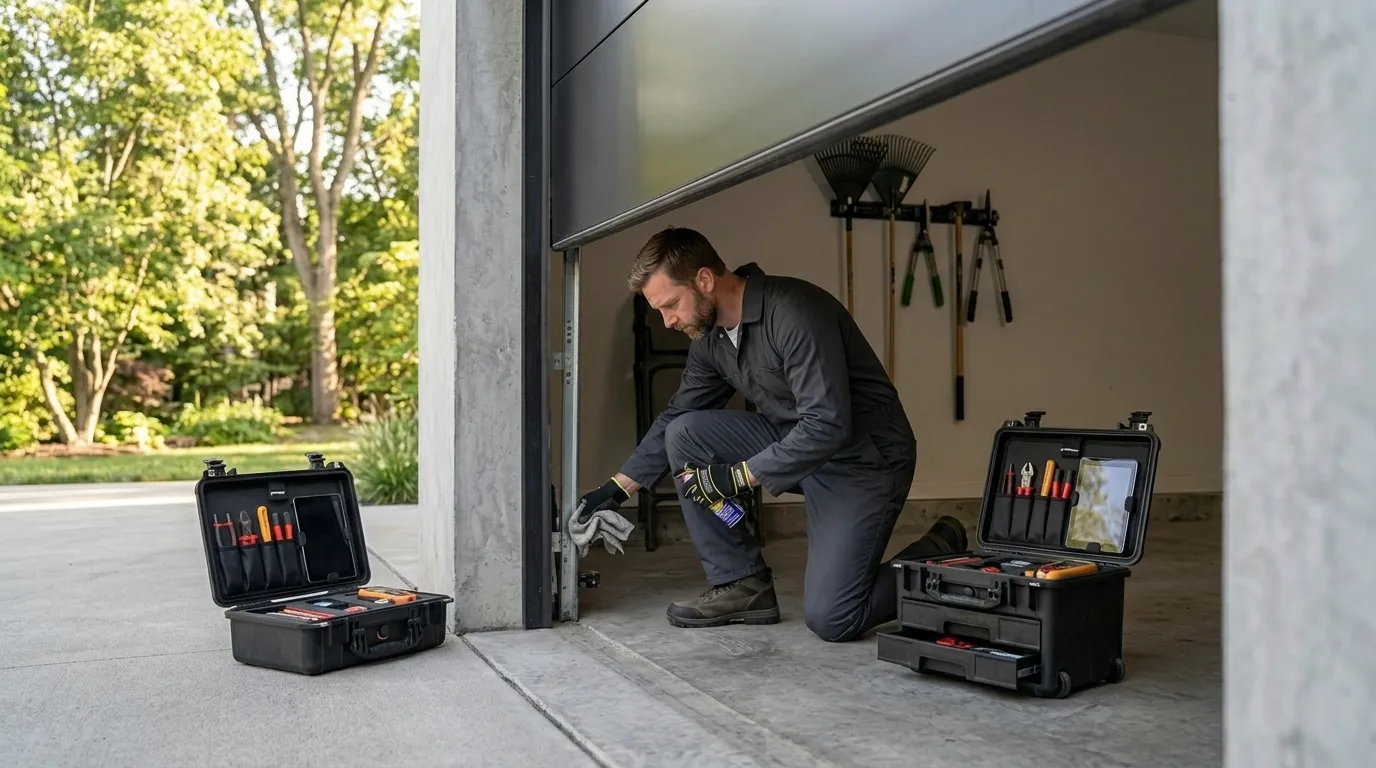
Two different problems get lumped together as "the opener's broken," and they're not the same fix. One is a power cut - the unit loses juice mid-cycle, the door stops halfway, and now you've got a door stuck open or shut with no way to move it from the wall switch. The other is the opener itself giving out: worn drive gear, a motor that hums but doesn't pull, a logic board that's finally quit after running since a house built in 1967 or thereabouts still has its original unit.
With 146,725 owner-occupied houses in a service area of 287,477 households, a good share of those openers are original equipment or a single replacement behind. Older units also don't have battery backup, so a power cut leaves the door wherever it was when the lights went out - which matters if a car's inside or the door's your only way in. Knowing which of these two you've got before we show up saves you a diagnostic call you don't need.
What the Weather Here Does to It
St. Louis sits in a cold-moderate climate band, and that shows up in openers more than people expect. Cold snaps stiffen the grease in an opener's drive gear and tighten steel cable and springs, so the unit has to work harder to pull the same door it moved easily in October.
An opener that's already marginal - gears half worn, a motor that's been drawing more current than it should - is the one that finally quits on the coldest morning of the year, not because the cold caused the failure but because it's the load that pushes a weak unit over the edge. This is also when power cuts land hardest: winter storms take out power more than any other season, and a door with no battery backup and a worn opener is a bad combination on a night you actually need the garage. We can't stop the power from going out.
What we can do is make sure the unit itself isn't the reason the door won't budge once it's back on.
Checking It Yourself
Before you call anyone, a few things take five minutes. Pull the manual release cord - the red handle hanging from the trolley - and see if the door moves by hand smoothly or fights you. If it's heavy or uneven, that's a spring or track problem, not the opener, and no new motor fixes that.
Check whether the wall switch lights up at all; if it's completely dark, it might be the outlet or breaker, not the unit, and that's worth ruling out before paying for a diagnostic. Listen for a hum with no movement - that's usually the motor trying and failing, which points to the gear or capacitor, not something you fix with WD-40. One honest limit: if your opener is original to a house built before 1990, which describes a lot of homes in this area, replacing the gear kit on a unit that old sometimes costs close to a new opener with a battery backup built in.
We'll tell you which side of that line you're on before we start.
How We Can Help
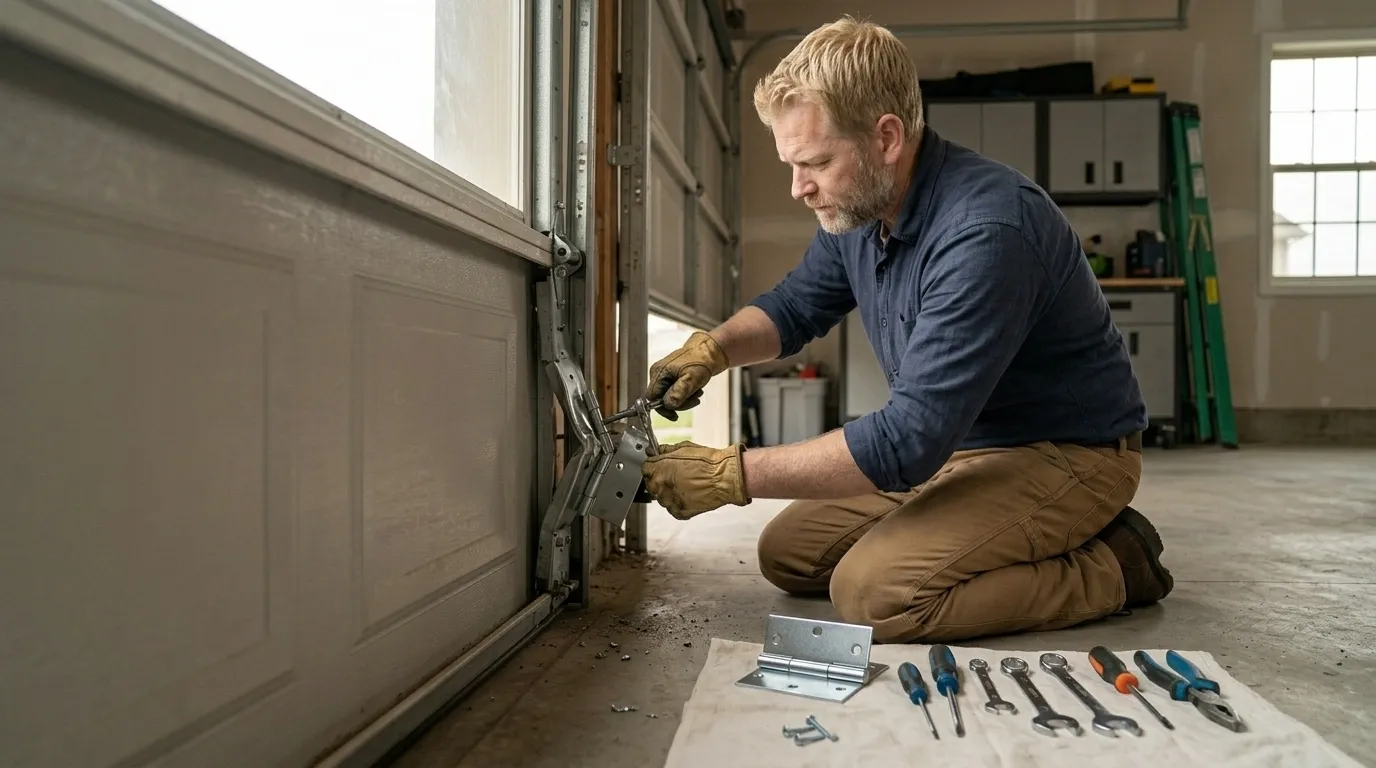
Garage Door Repair
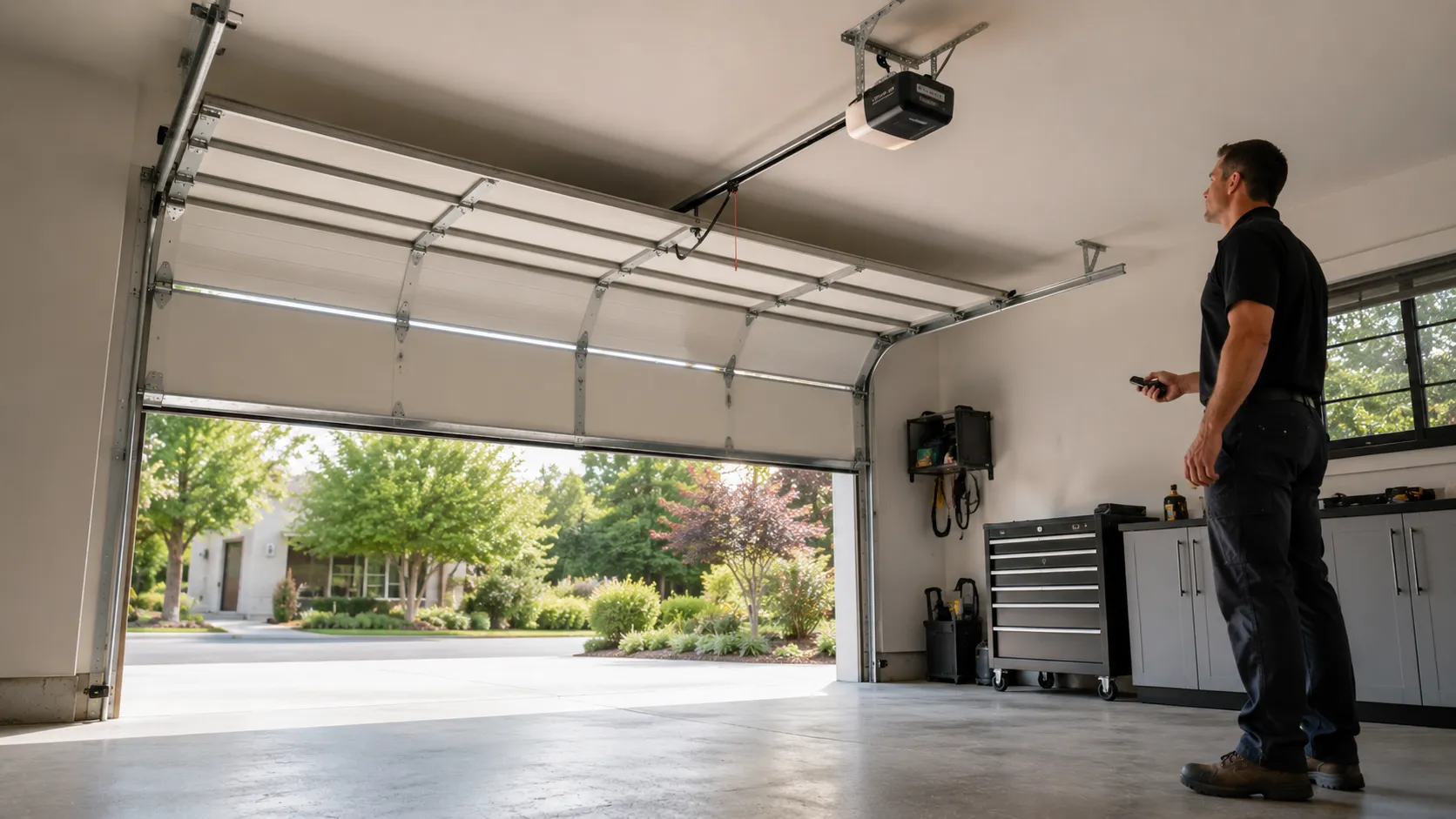
Springs, cables, tracks, rollers, and openers fixed by a tech who explains the problem before touching anything.
Learn more →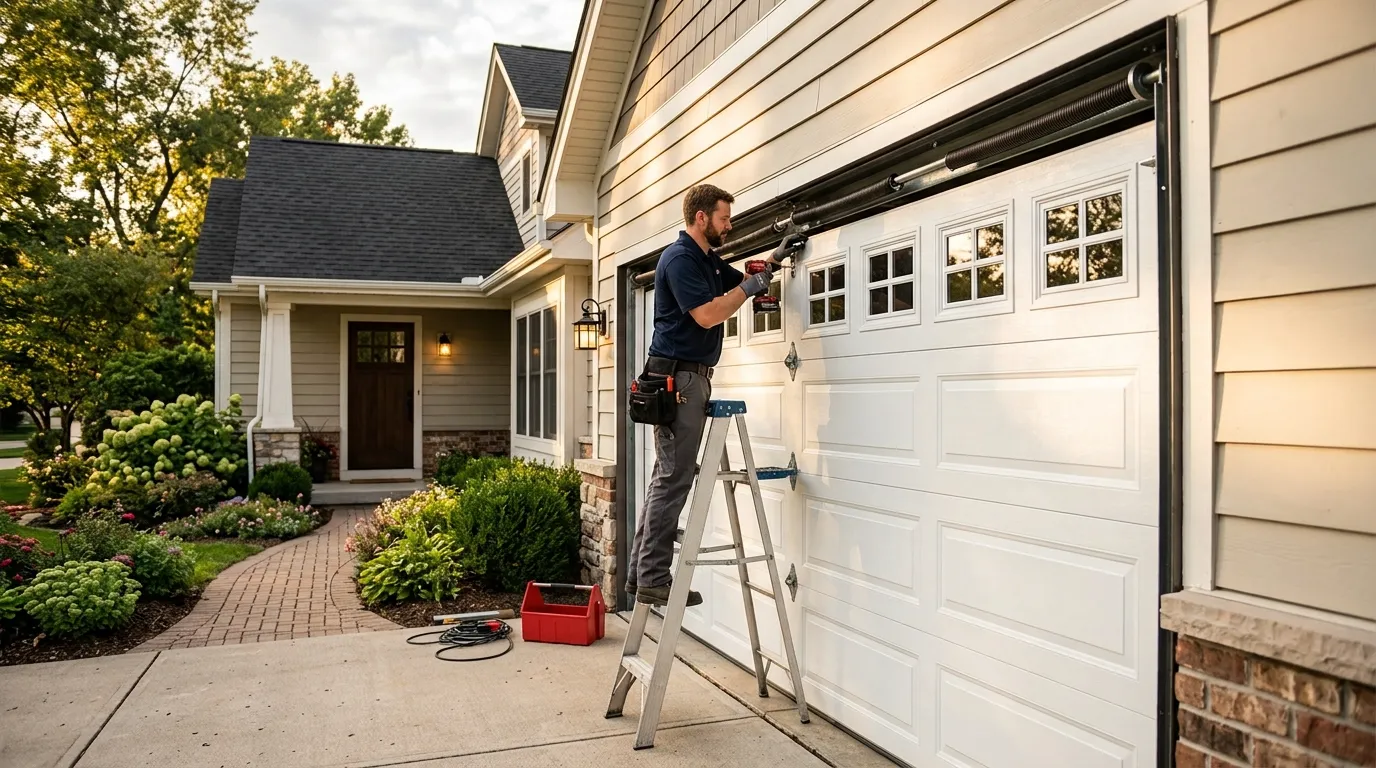
Garage Door Installation
New sectional doors sized and installed for the housing stock actually built in this area.
Learn more →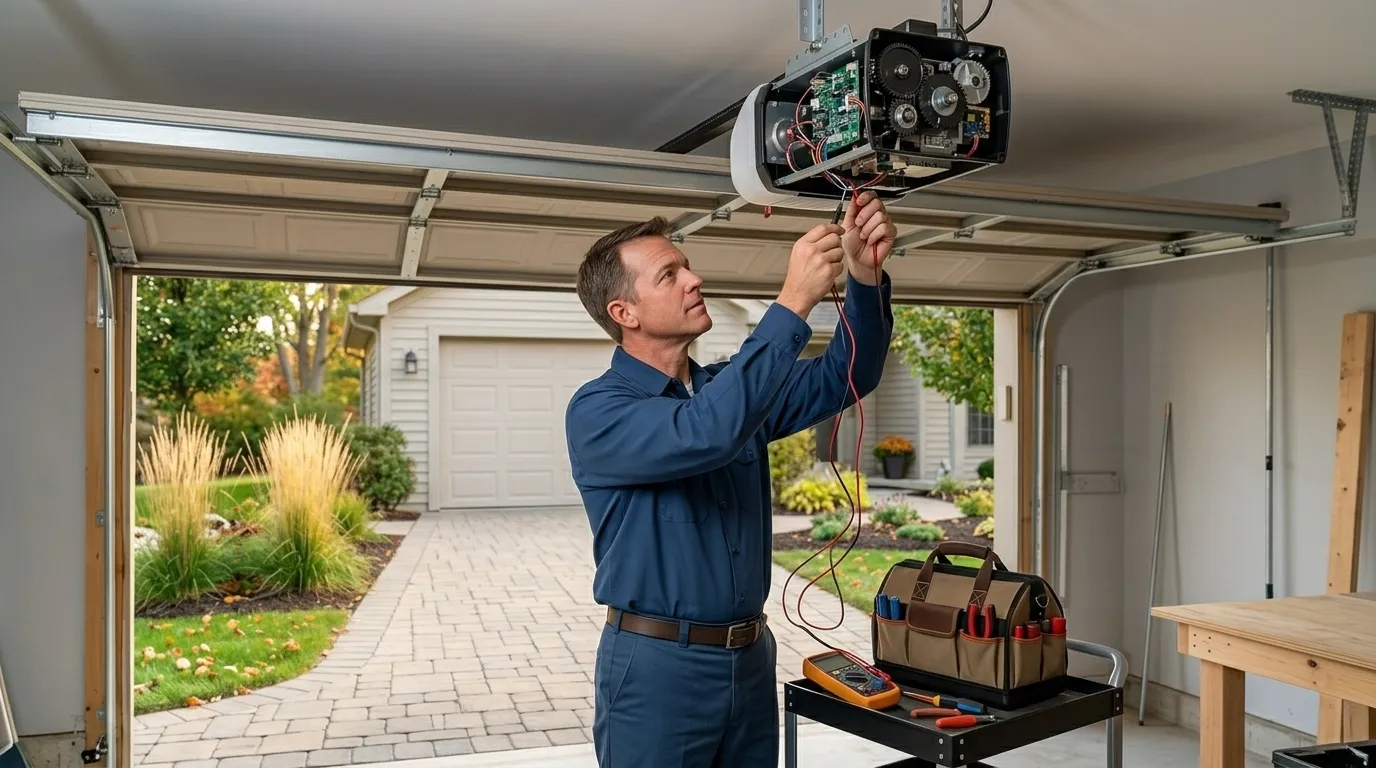
Garage Door Service
Tune-ups, lubrication, and safety checks that catch a small problem before it becomes a service call.
Learn more →Frequently Asked Questions
My garage door won't move after the power came back on. Is that the opener or the power?
Usually the opener's fine once power's restored, but the door may have lost its position memory mid-cycle. Try the wall switch first. If nothing happens and the switch light is on, the issue's likely the opener's board or motor rather than the outage itself, and that's worth a call.
Is it worth adding a battery backup to an older opener?
If your opener is original to a house built decades ago, adding a backup module to it isn't usually possible - those units weren't built for it. In that case a full opener swap that includes backup as a feature is the more realistic option, not a bolt-on accessory.
Why does my opener struggle more in winter?
Cold thickens the grease in the drive gear and stiffens cable and springs, so the motor works harder to do the same job. If the unit was already marginal, winter is usually when it finally gives out, not because the cold broke it but because it added the load that pushed it over.
Can I just replace the opener myself?
You can, and plenty of people do for a straightforward swap. Where it gets risky is anything involving the springs or cable under tension - that's not a DIY repair regardless of the opener, and we'd rather you call for that part than end up in the ER over it.
Have a Door That Needs a Second Opinion?
Call and describe what it is doing - we will tell you what it likely is.