
St. Louis Garage Door Guide
Is Your Old Garage Door Worth Fixing, or Time to Replace It
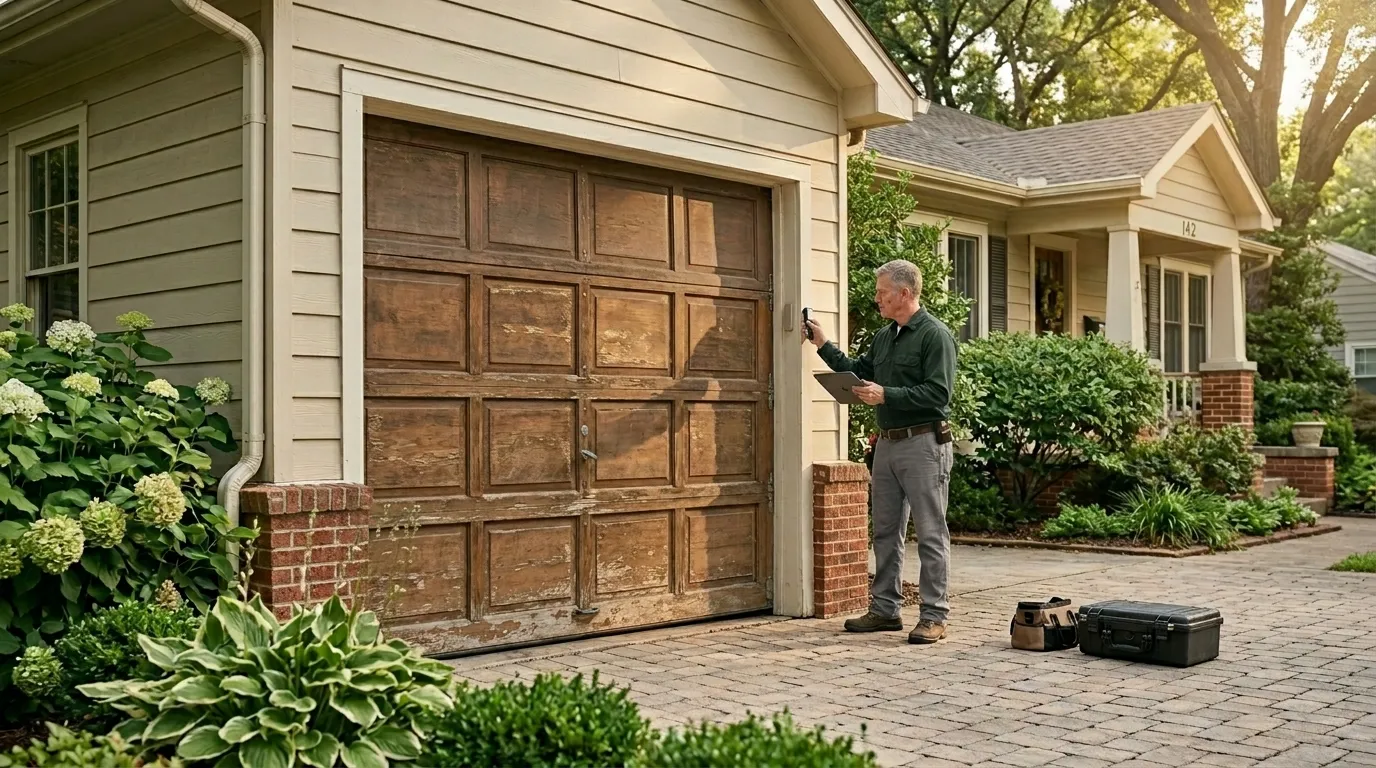
Most St. Louis area homes date to 1947-1990. Here's how to tell if your old torsion spring door is worth repairing or if it's time to replace it.
- Licensed & Insured
- Same-Area Service Calls
- Upfront Pricing
What It Costs
We don't post a price list here because what a repair runs depends on what's actually broken, and on a door built before 1990 that's rarely just one thing. A single torsion spring on a door from that era is a different job than a full track-and-roller rebuild on hardware nobody's touched since the Reagan administration. What we can tell you is how we think about it on the phone or in your driveway: if the door is original to a house built in the 1960s or 70s - and across this service area, a lot of them are - we price the repair against what a comparable new door costs installed, not against some national average.
If the repair gets you within striking distance of replacement cost, we say so before we start, not after. That's the honest limitation here: we won't quote you a number without seeing the door, because doors from the 1947-1990 window vary more than people expect, even within the same block.
What we will say is that with median household income across this area sitting around $84,389, most owners we talk to want a straight answer on whether they're throwing good money after bad, not a sales pitch either direction.

What Is Going On
Housing stock through this part of St. Louis and the close-in suburbs mostly went up between 1947 and 1990, with the median landing around 1967.
That matters because a door from that build era is almost always a single steel or wood panel on a side-mounted torsion spring, not the sectional doors with today's extension or torsion setups. Parts for those original units are getting harder to source - not impossible, but your local counter guy is ordering, not pulling off a shelf.
Across the 49 named areas we cover, from Clayton and University City in close to Kirkwood and Mehlville further out, the pattern repeats: original door, original opener bracket, original track bent slightly from forty-plus years of a car clipping it once or twice. None of that means the door is junk.
A torsion spring, a bent track section, or worn rollers on a door like this is usually a fair repair. What tips it toward replacement is when the door panel itself has rusted through at the bottom or the track mounting has pulled out of framing that's also 1960s-era and starting to go.
What the Weather Here Does to It
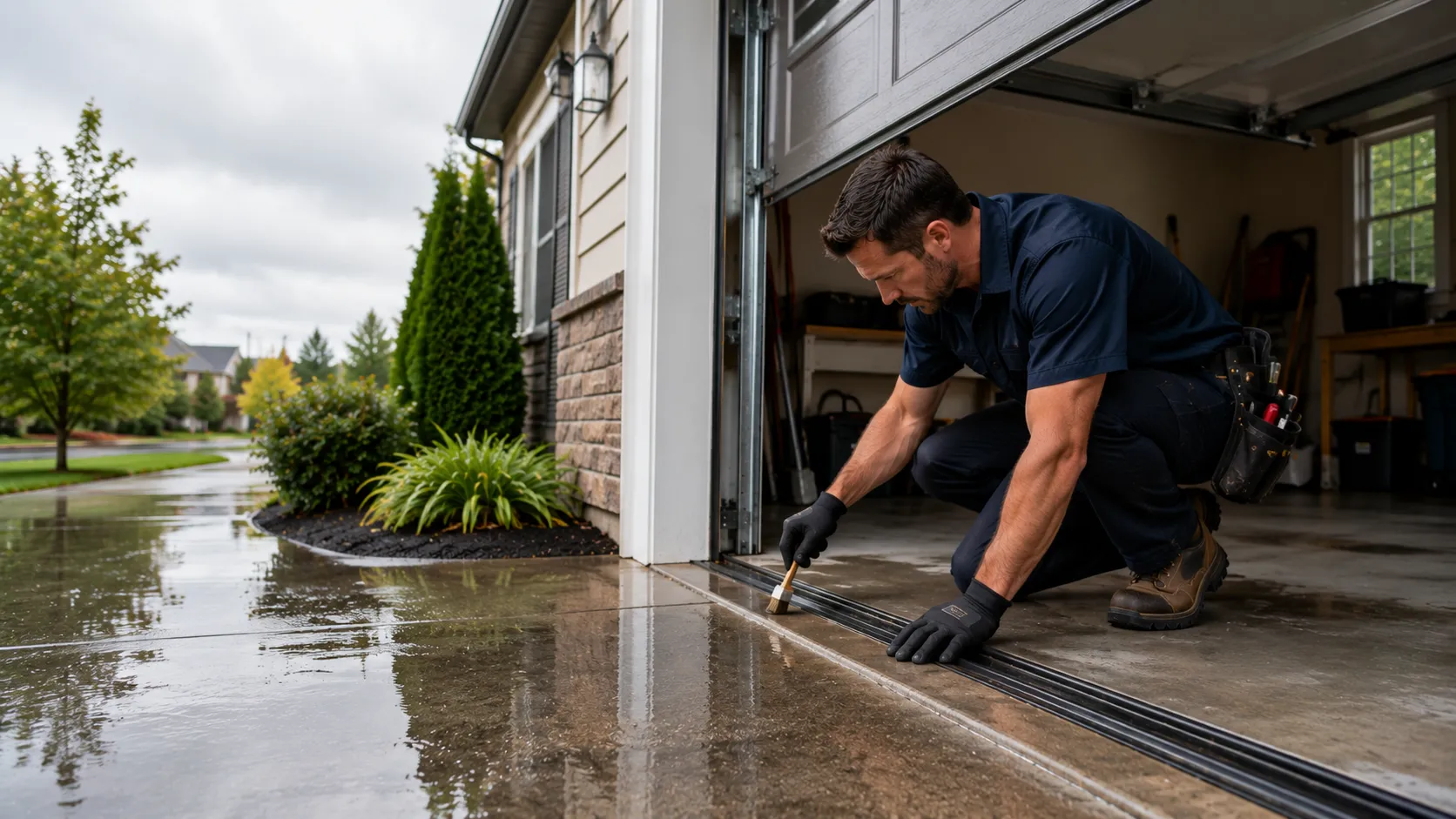
This is a cold-moderate climate, and the freeze-thaw cycle is what actually wears out an old door - not one hard winter, but decades of them. Steel panels from the 1947-1990 build era don't have the thermal breaks or weatherstripping channels that current doors do, so moisture gets behind the panel skin, freezes, and works the seams loose a little more each year. On wood panel doors from that same period, it's worse: the freeze-thaw swelling and shrinking eventually racks the panel out of square, and a door that's out of square binds on the track no matter how good the spring is.
Cold also stiffens torsion springs and hardens grease in the bearings, which is why an old door that limped along fine in September suddenly won't budge in January. If your door is fighting you every cold morning and it's original to a house from that 1947-1990 window, that's not a fluke - it's the age and the climate working together, and it's usually a sign the springs are near the end regardless of the temperature that day.
Checking It Yourself
Before you call anyone, pull the emergency release and lift the door by hand. If it's original to a house from the 1947-1990 stretch that makes up most of this area, it should feel roughly balanced - not light as a feather, not dead weight. A door that slams down or won't stay up on its own usually means the torsion spring has lost tension, which on a door this old is a repair worth doing rather than a reason to replace.
Next, look at the bottom panel and the track brackets where they bolt into the framing. Surface rust on a 1960s steel panel is normal and not a reason to replace anything. Rust that's eaten through the metal, or a track bracket that's pulled loose from framing that's also decades old, is a different story - that's where repair stops making sense and you're better off putting the money into a new door built for how this climate actually treats a garage.
If the door is heavy to lift, sags visibly on one side, or the panel flexes when you push on it, that's your sign to get someone out to look before you use it again.
How We Can Help
Garage Door Repair
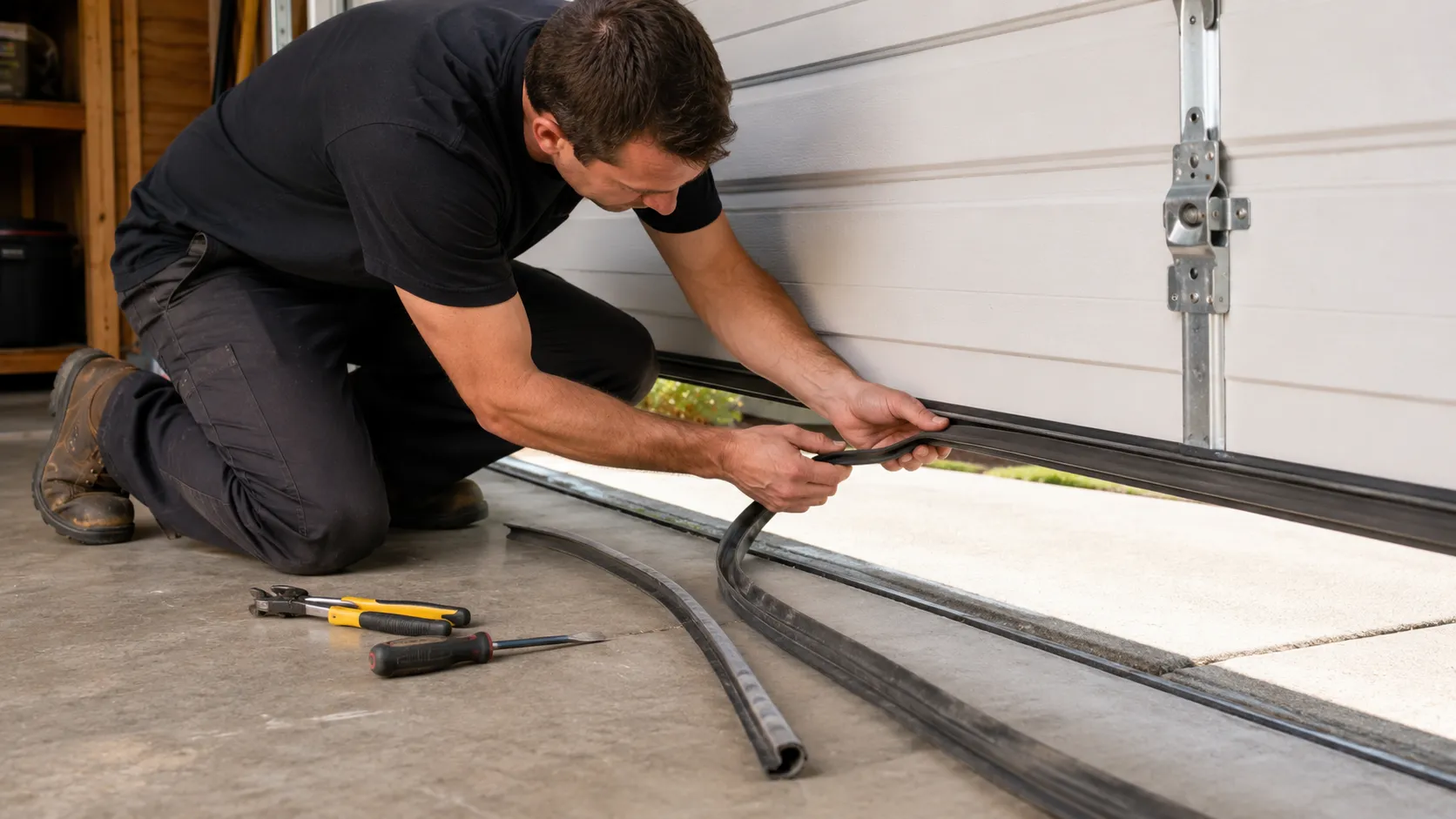
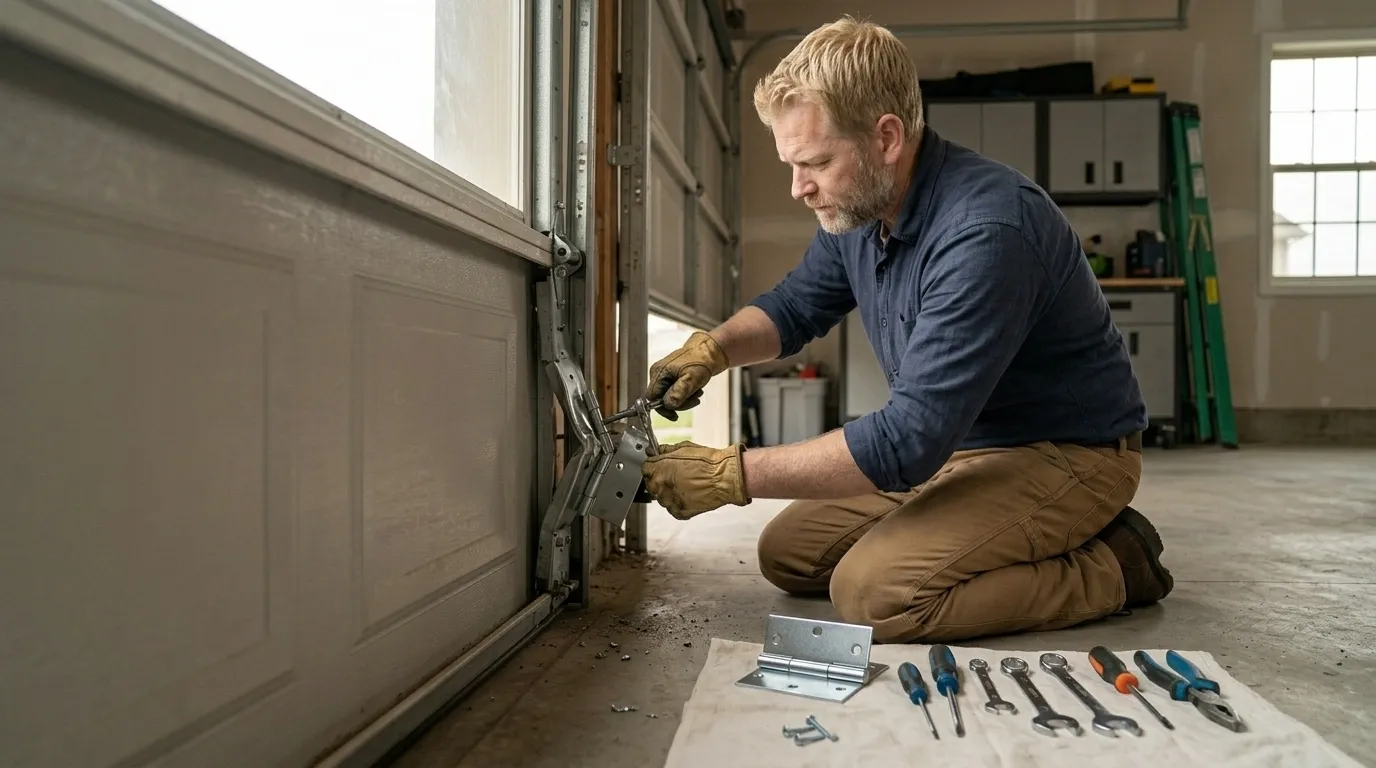
Springs, cables, tracks, rollers, and openers fixed by a tech who explains the problem before touching anything.
Learn more →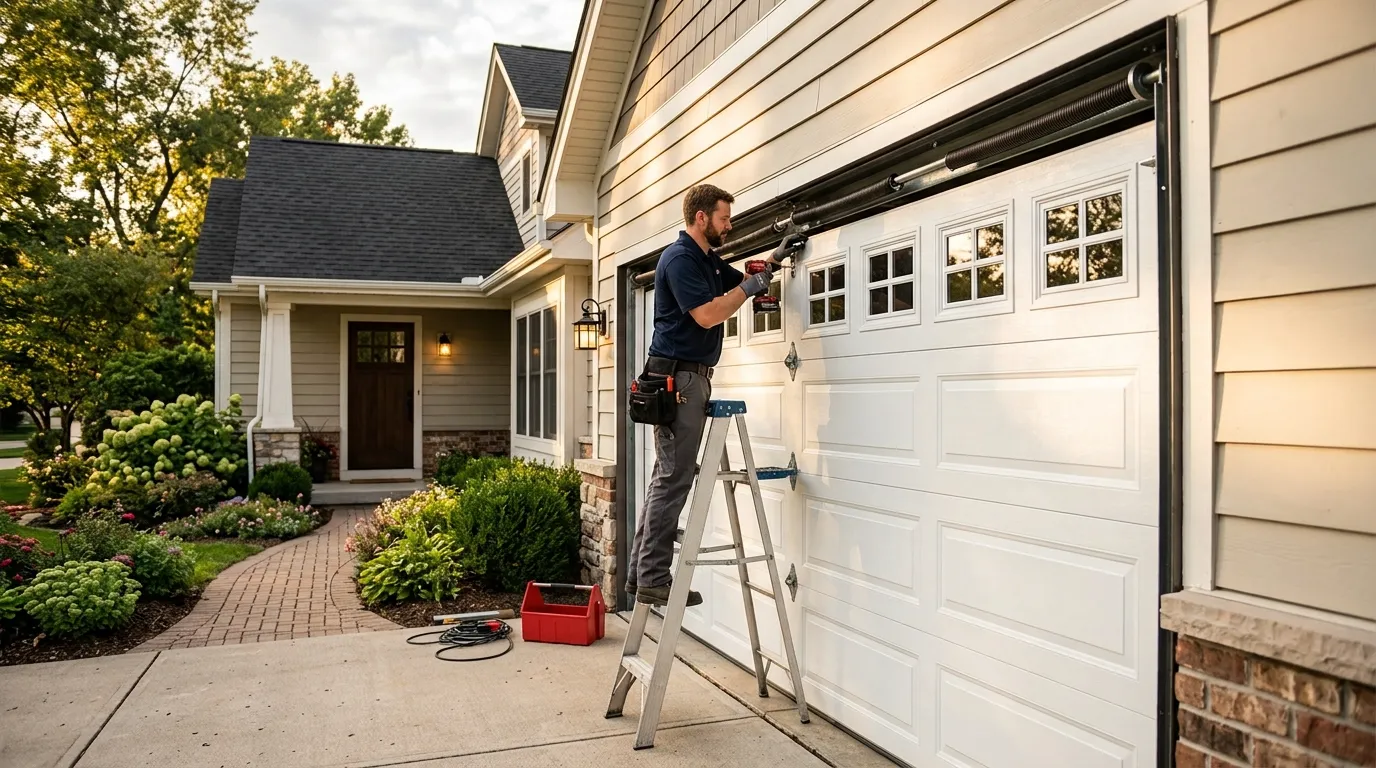
Garage Door Installation
New sectional doors sized and installed for the housing stock actually built in this area.
Learn more →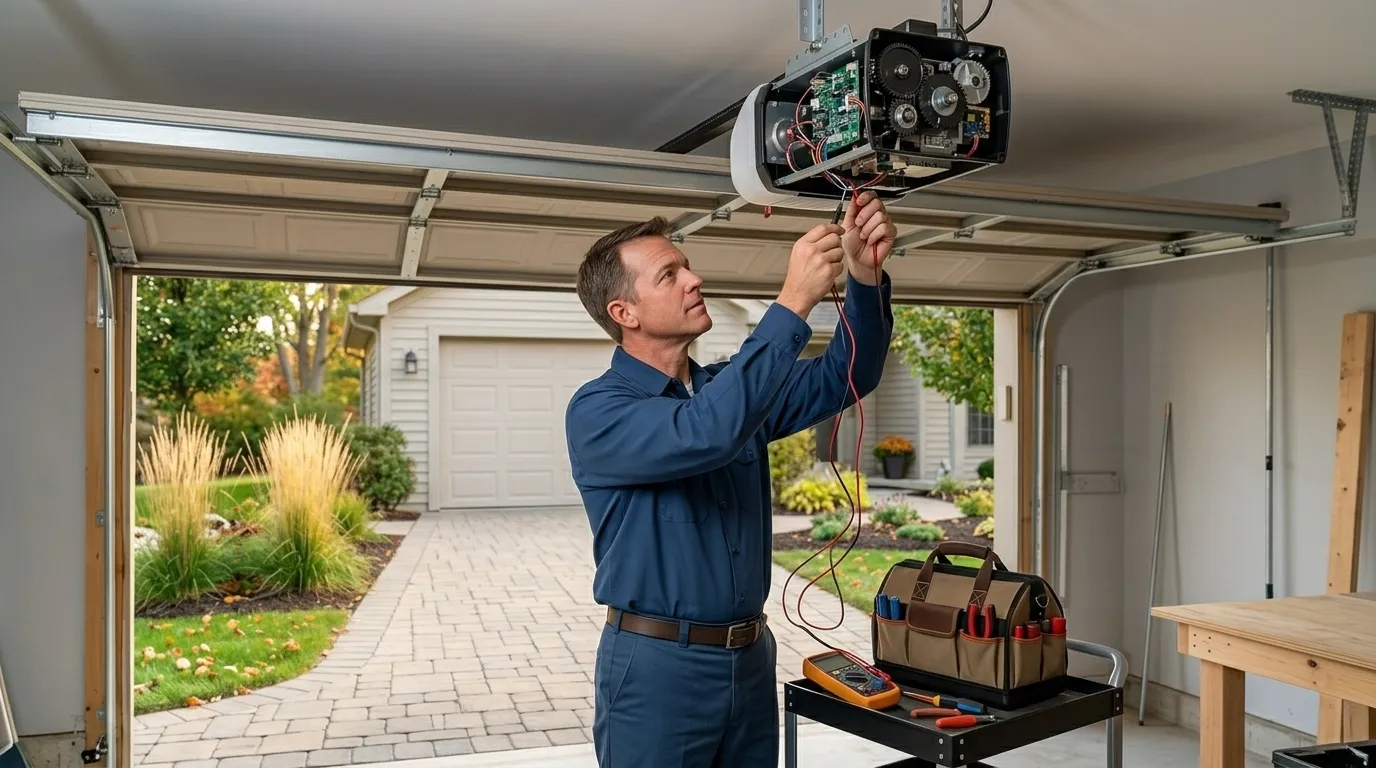
Garage Door Service
Tune-ups, lubrication, and safety checks that catch a small problem before it becomes a service call.
Learn more →Frequently Asked Questions
My garage door is original to a house built in the 1960s. Is it too old to repair?
Not necessarily. A lot of homes in this area date to that stretch, and the springs, tracks, and rollers on those doors are still serviceable parts. What matters more than the door's age is its condition - rust through the panel, a rotted wood frame, or a cracked bottom section usually means replacement makes more sense than another repair.
Why does my old door get harder to open every winter?
Cold stiffens torsion springs and thickens the grease in the bearings, so a door that's already worn from decades of use feels noticeably heavier in winter. If this happens every year and gets worse, the spring is likely near the end of its life regardless of the season, and replacing it usually solves the winter struggle too.
How do I know if I should repair or replace an old door?
Lift it by hand with the opener disconnected. If it's roughly balanced and just noisy or stiff, repair is usually the right call. If the panel is rusted through, the frame it's mounted to has deteriorated, or it's visibly out of square, replacement is typically the better use of your money.
Have a Door That Needs a Second Opinion?
Call and describe what it is doing - we will tell you what it likely is.