
St. Louis Garage Door Guide
Why Your Garage Door Jumps Its Track
St. Louis houses built mostly in the 1960s and 70s have original track hardware and slabs that move with the freeze-thaw cycle. Here's why doors jump track and what to check first.
- Licensed & Insured
- Same-Area Service Calls
- Upfront Pricing
What It Costs
We're not going to hand you a number here, because it depends on what's actually wrong, and on a house built in the 1960s or 70s that's a bigger range than people expect. Sometimes a track is just bent an inch out of true and it's a bracket adjustment and a re-hang - an hour of work. Sometimes the track itself is original steel, thin-gauge, and it's cracked at a weld from decades of the door slamming into it slightly crooked.
That's a track swap, not a tune-up. And if the rollers that rode in that track are the original steel ones (common on doors this age), they've usually worn a groove into the track that a straightened track won't fix - you're replacing both. The honest answer is we can't price it over the phone.
What we can tell you is that houses built before 1990 in this area, which is most of them, tend to need the track replaced rather than just adjusted, because the original hardware wasn't built to be re-aligned indefinitely.
One limitation worth saying plainly: if the opening itself has racked - the jamb is no longer square - no amount of track work fixes that on its own. That's a carpentry problem wearing a garage door costume, and we'll tell you if that's what we're looking at instead of selling you a track you don't need yet.

What Is Going On
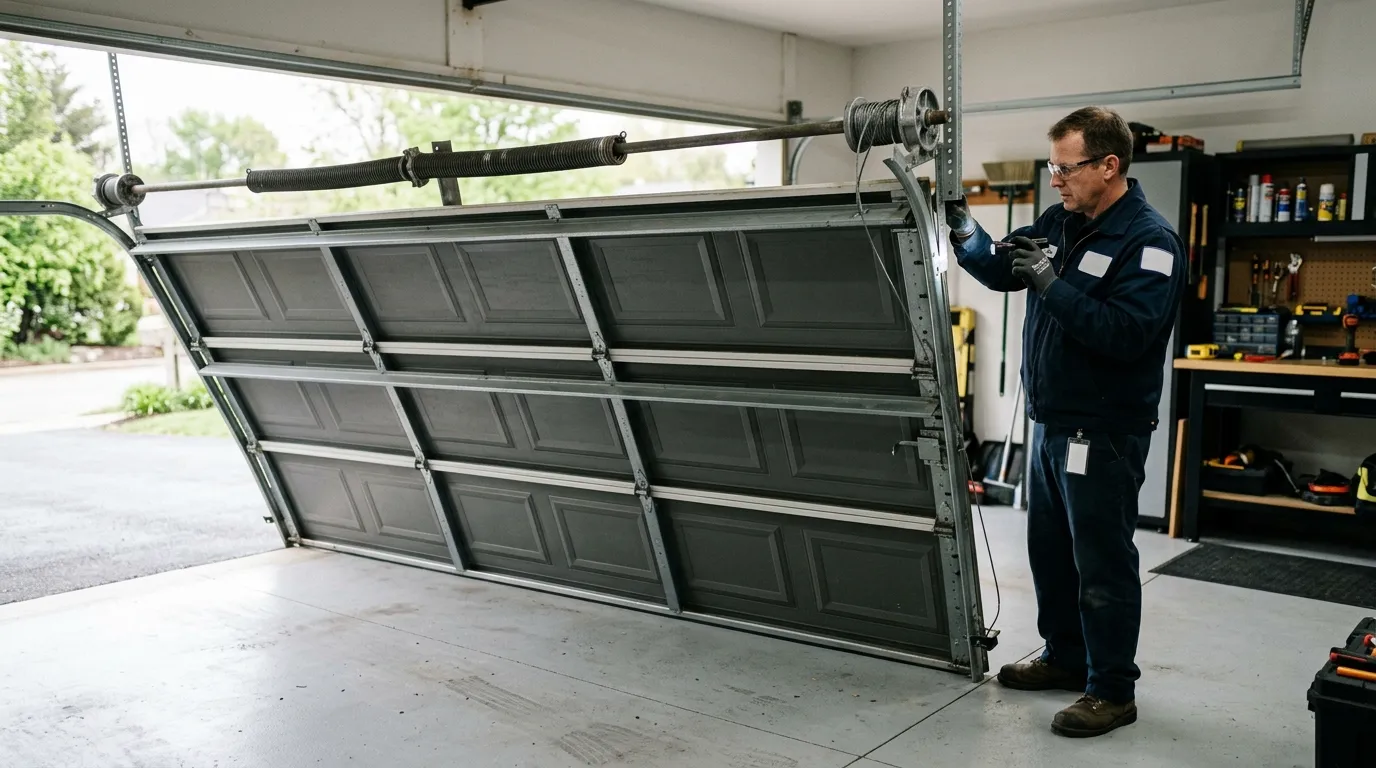
A garage door doesn't come off track because the door decided to. It comes off because the track stopped being straight, or the rollers stopped being round, or the cable stopped being even on both sides.
In a service area where most housing dates to 1947 through 1990 - median build year 1967 - what we're usually looking at is track that's been re-set, bumped, or adjusted by a previous owner (or a previous garage door company) enough times that the mounting brackets have worked loose in the framing. Wood framing that's 50-plus years old doesn't hold a lag screw the way it did when it was driven.
The other common cause on houses from that era: the door itself is heavier than the track and springs were sized for, because a hollow single-layer door got swapped out at some point for a heavier insulated one without anyone re-checking the track gauge. The new door sags against old track and walks itself out of the channel over a few years of normal use.
We also see cable drums that have shifted on the torsion shaft - more common on the older extension-spring setups still found on side-mounted hardware in this area's 1960s and 70s builds, where one side of the door lifts a fraction of a second before the other, and over hundreds of cycles that fraction adds up to the door walking sideways off the track.
What the Weather Here Does to It
St. Louis sits in a cold-moderate climate band, and that matters for a track problem more than people assume. The slab under the door isn't static - it moves through freeze-thaw cycles every winter, and a concrete slab that's 50 to 70 years old (matching the 1947-1990 housing stock across this area) has usually settled unevenly by now.
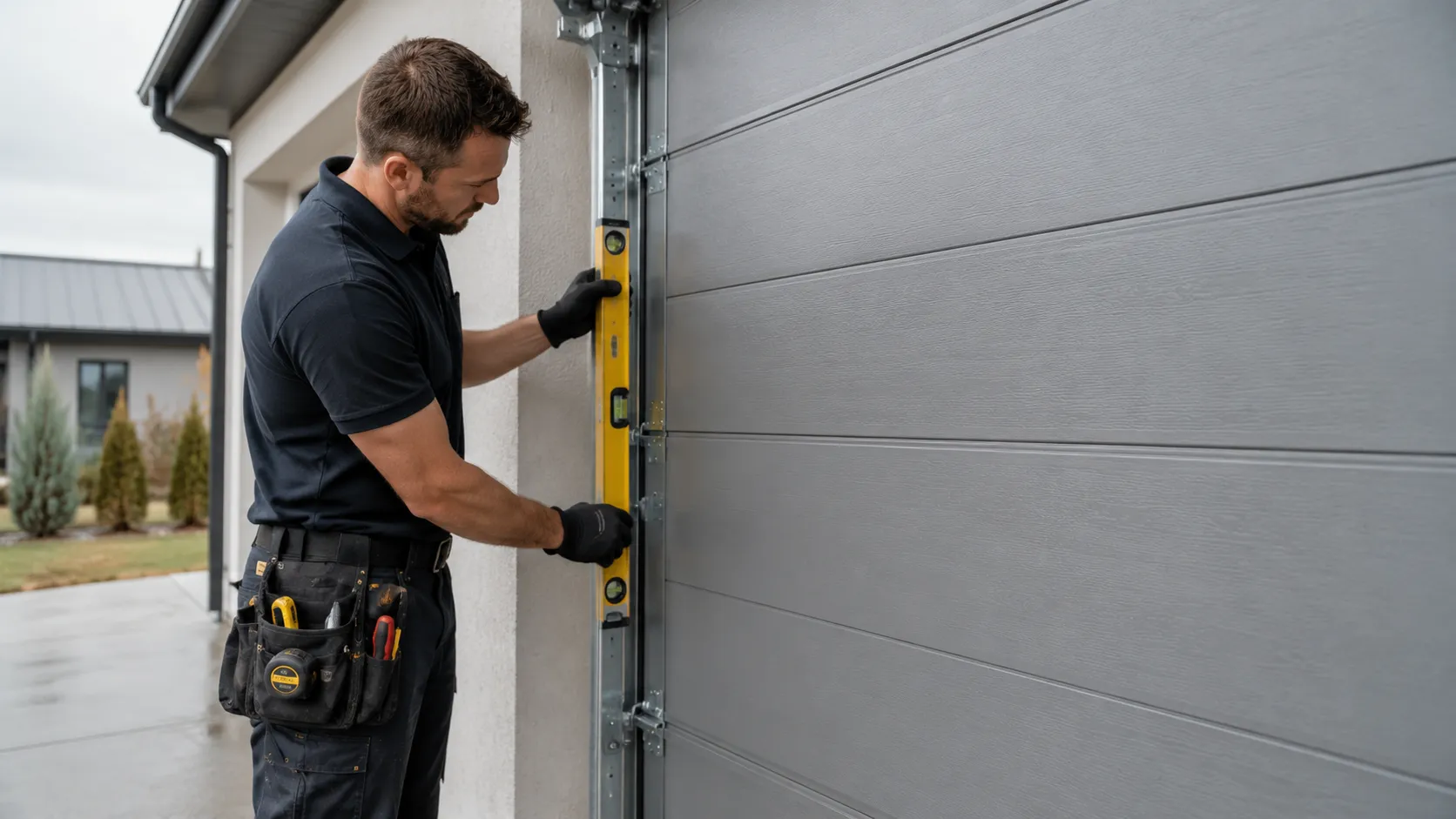
When the slab on one side of the door sits even a quarter inch lower than the other, the vertical track bolted to the framing above it is no longer plumb to the door edge. The door doesn't notice most of the year. Then a cold snap tightens the steel track a hair, the door catches a roller wrong on the way down, and it jumps.
Winter is also when we see the most track calls generally, because cold steel is less forgiving of an existing misalignment than warm steel - a gap that the door tolerated in August becomes the gap that throws a roller in January. This isn't a defect in the door. It's just what fifty-plus winters of freeze-thaw does to a slab and the hardware bolted above it.
Checking It Yourself
Before you call anyone, look at the track itself with the door open. Stand back and sight down the vertical section on each side - you're checking for a track that bows toward or away from the door, not just up-down but front-back too. A track that's pulled away from the wall at the top, even a half inch, is usually the bracket working loose in old framing, and it's often the actual cause rather than the door.
Next, check the rollers you can see without disassembling anything - the bottom two on each side. If they're the original steel rollers common in houses from the 1960s and 70s in this area, look for flat spots or a groove worn into the roller's edge. A roller that's gone oval will bind in the track and pull the door off-line every time it passes that spot.
Last, watch the door move through one full cycle from a safe distance. If one side visibly lifts before the other, that's a cable or drum issue, not a track issue, and it's not a DIY adjustment - torsion and extension springs under tension are the one thing on a garage door that hurt people who mess with them. If you see that lag, that's the call to make, not the track to bend back yourself.
How We Can Help
Garage Door Repair
Springs, cables, tracks, rollers, and openers fixed by a tech who explains the problem before touching anything.
Learn more →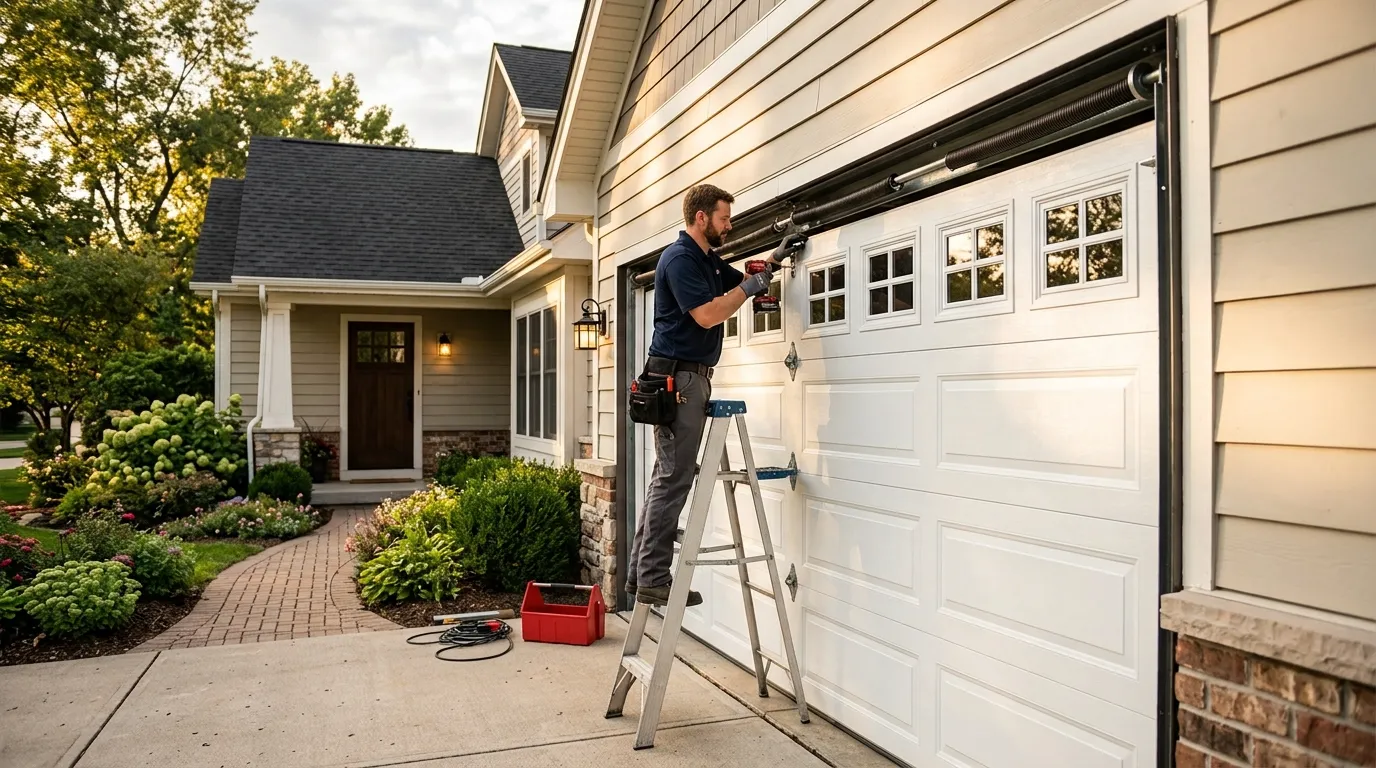
Garage Door Installation
New sectional doors sized and installed for the housing stock actually built in this area.
Learn more →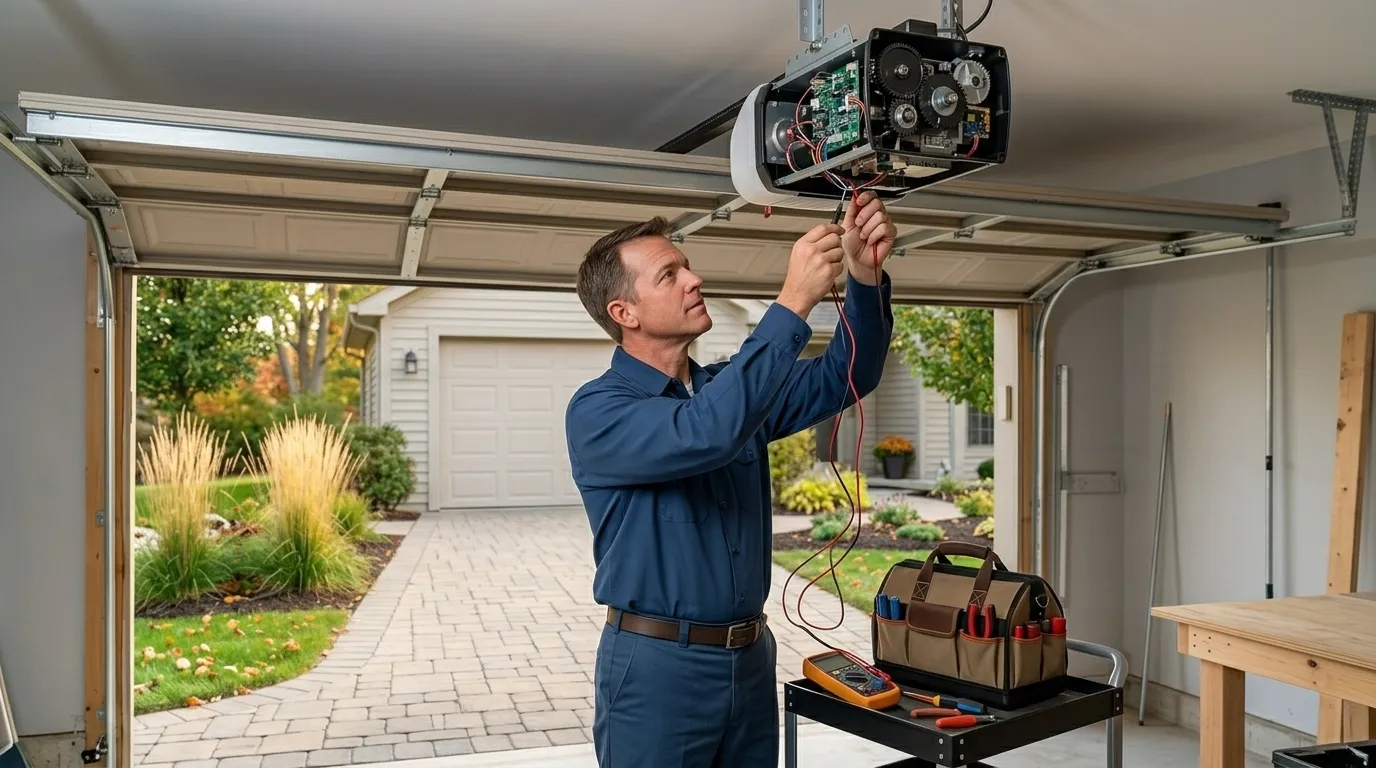
Garage Door Service
Tune-ups, lubrication, and safety checks that catch a small problem before it becomes a service call.
Learn more →Frequently Asked Questions
My door came off the track on one side only - is that the track or something else?
Usually something else. A door that jumps on one side while the other stays seated points to an uneven cable or drum, not a bent track. On houses with older extension-spring setups still common in this area's 1960s and 70s stock, that's the first thing we check before touching the track itself.
Can a bent track be straightened instead of replaced?
Sometimes, if the bend is minor and the steel hasn't cracked at a weld. But track on houses built before 1990 is often original, thin-gauge steel that's been adjusted before, and it can only take so many corrections before it's better to replace the section outright.
Does winter actually make this worse or does it just feel that way?
It's real. St. Louis gets genuine freeze-thaw cycling, and a slab that's shifted slightly over 50-plus years moves the track's alignment just enough that cold, stiffer steel catches a roller wrong more easily than it does in warm months.
Is it safe to push the door back onto the track myself?
Not if springs are involved, and on most doors they are. If the door is off track because of a cable or drum imbalance, forcing it back on can snap a cable under load. That's a call for us, not a DIY fix.
Have a Door That Needs a Second Opinion?
Call and describe what it is doing - we will tell you what it likely is.