
St. Louis Garage Door Guide
What Your Garage Door Is Trying to Tell You
Noises that mean something: what a St. Louis garage door built in the 1960s or 70s is telling you, and when a repair still makes more sense than replacement.
- Licensed & Insured
- Same-Area Service Calls
- Upfront Pricing
What It Costs
We can't put a number on a noise over the phone, and we won't pretend to. What a grinding or popping sound costs to fix depends entirely on what's making it - a worn roller is a different job than a cracked torsion spring, and a door that's original to a house built in 1967 (the median build year across this service area) often needs hardware nobody stocks off the shelf anymore. That's the honest limitation here: on some of the older one-piece and early sectional doors still running in this area, a spring or drum can take longer to source than a same-day repair on newer equipment.
We'd rather tell you that up front than quote a price and miss it. Across the 287,477 households and 146,725 owner-occupied houses in the neighborhoods we cover, most people aren't shopping for the cheapest fix - they're paying once and expecting the door to work. That's the number that matters more than a quoted price: get the diagnosis right the first time, on a door that's often 50-plus years into its life, and the cost sorts itself out from there.
What Is Going On
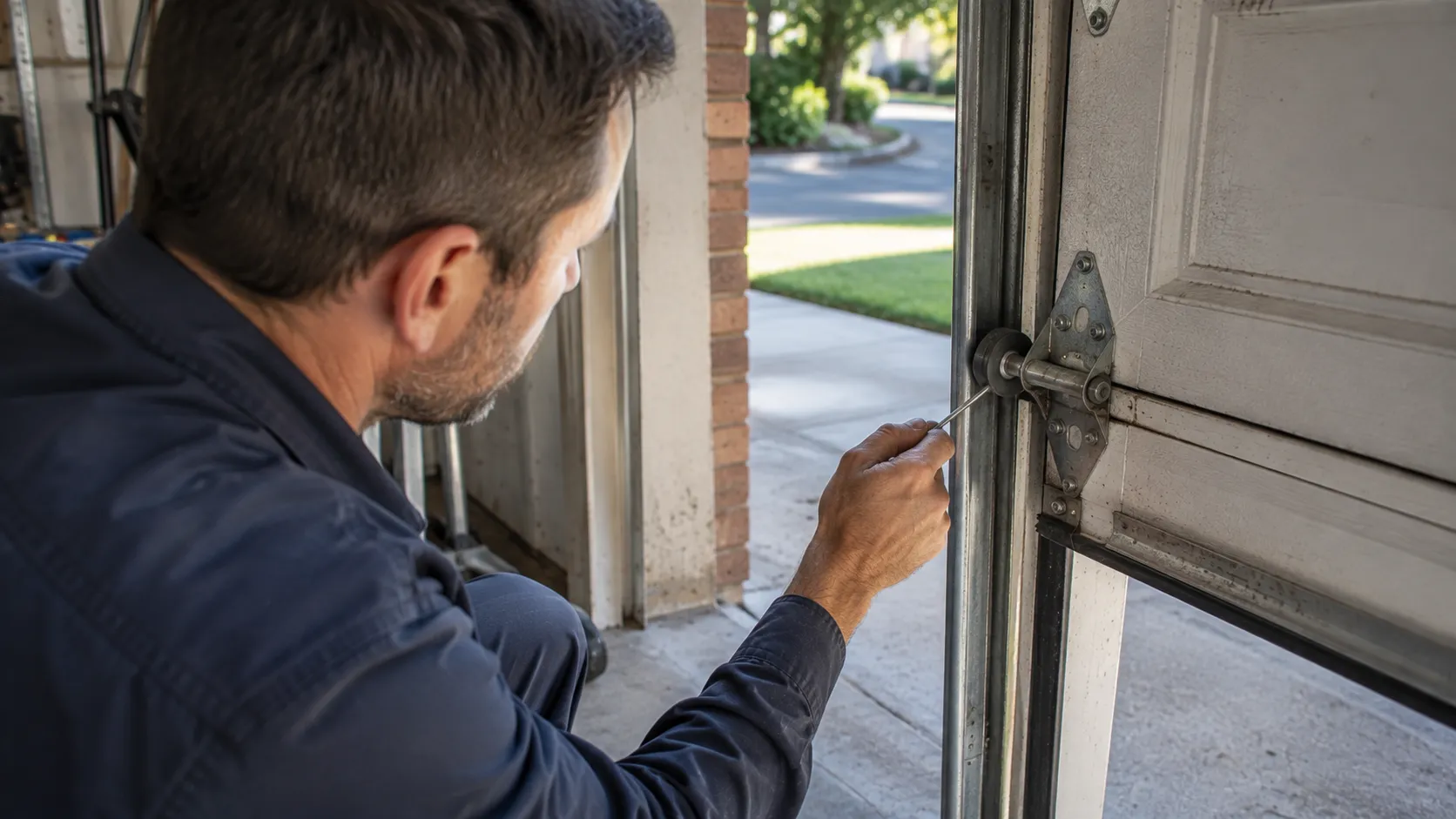
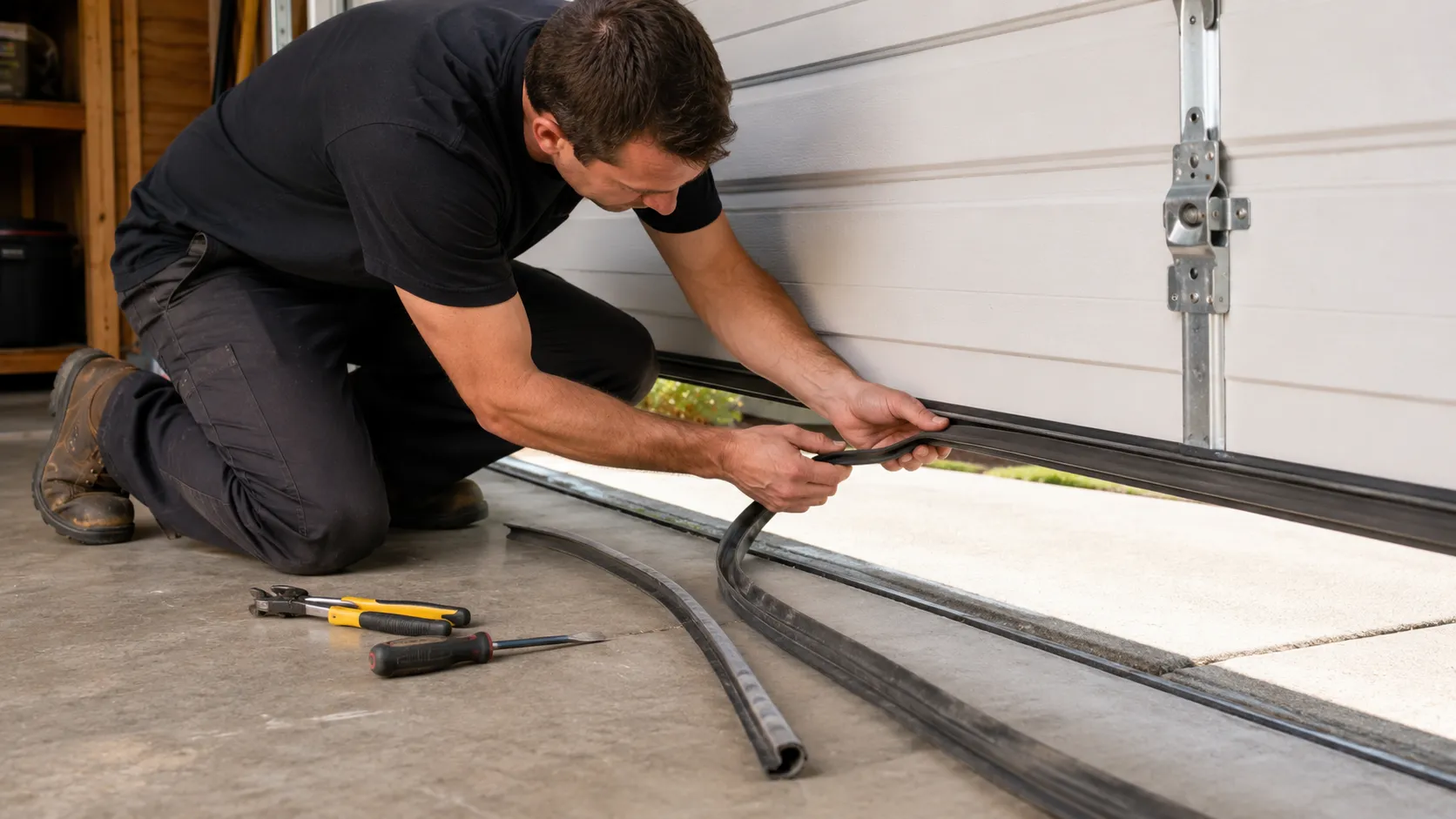
A screech usually means dry hinges or a roller that's worn its bearing smooth - common on doors that have been running since the 1960s or 70s, which is most of what's still installed across the 49 neighborhoods and towns in this service area, from Clayton and University City five miles out to Kirkwood and Sappington ten miles south. A rhythmic thump as the door travels is often a flat spot on an old steel roller, the kind that came standard before nylon rollers were common. A loud bang, usually just once, is almost always a torsion spring letting go - on houses built between 1947 and 1990, that spring has frequently never been replaced.
A grinding sound from the opener head is a stripped gear, and it gets worse, not better, if you keep running the door. None of these sounds fix themselves, and none of them are new-door problems. They're original-equipment problems, showing up on schedule for hardware that's been carrying the same weight for half a century.
What the Weather Here Does to It
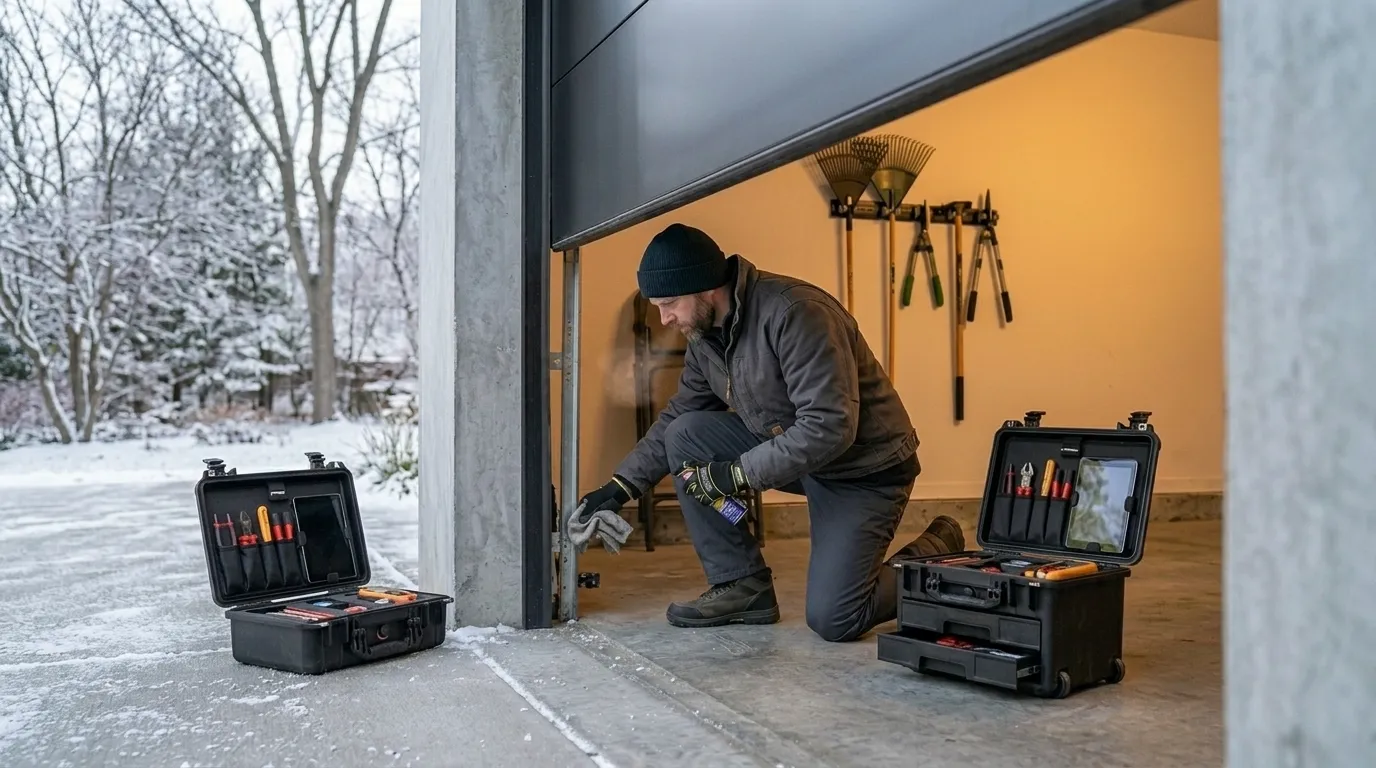
This area sits in a cold-moderate climate band, and that swing between summer heat and hard winter cold is rough on garage door metal. Steel track and hinge pins contract in a January cold snap enough to tighten clearances that were fine in August, which is when a door that's been quiet all year suddenly starts scraping or binding on the way up. Grease on rollers and hinges thickens in the cold too, turning a smooth roll into a slow grind until it warms back up or gets serviced.
On original hardware from the 1960s and 70s build era that's common across this service area, that seasonal tightening finds every bit of wear that was already there - a roller that was borderline in July fails outright the first cold week. It's not that the door broke overnight. It's that the cold took away the slack that was hiding the problem.
Checking It Yourself
Before you call anyone, open and close the door a couple of times and listen for where the sound happens - right at the top, partway up, or only when the opener kicks in. A squeal that stops once the door's moving is usually just a dry hinge; a squeal that continues the whole way is more likely a roller. Look at the springs above the door: if one looks stretched, gapped, or visibly different from the other, don't test it by hand and don't run the door again.
Check that the track bolts haven't worked loose, which happens on older installs after enough seasonal contraction and expansion. If the noise is new and sharp - a bang, a pop, a grinding that wasn't there last week - that's the point to stop opening the door and get it looked at, not to keep cycling it to see if it clears up. On a door that's original to a house from this era, waiting usually turns a $200 problem into a $500 one.
How We Can Help
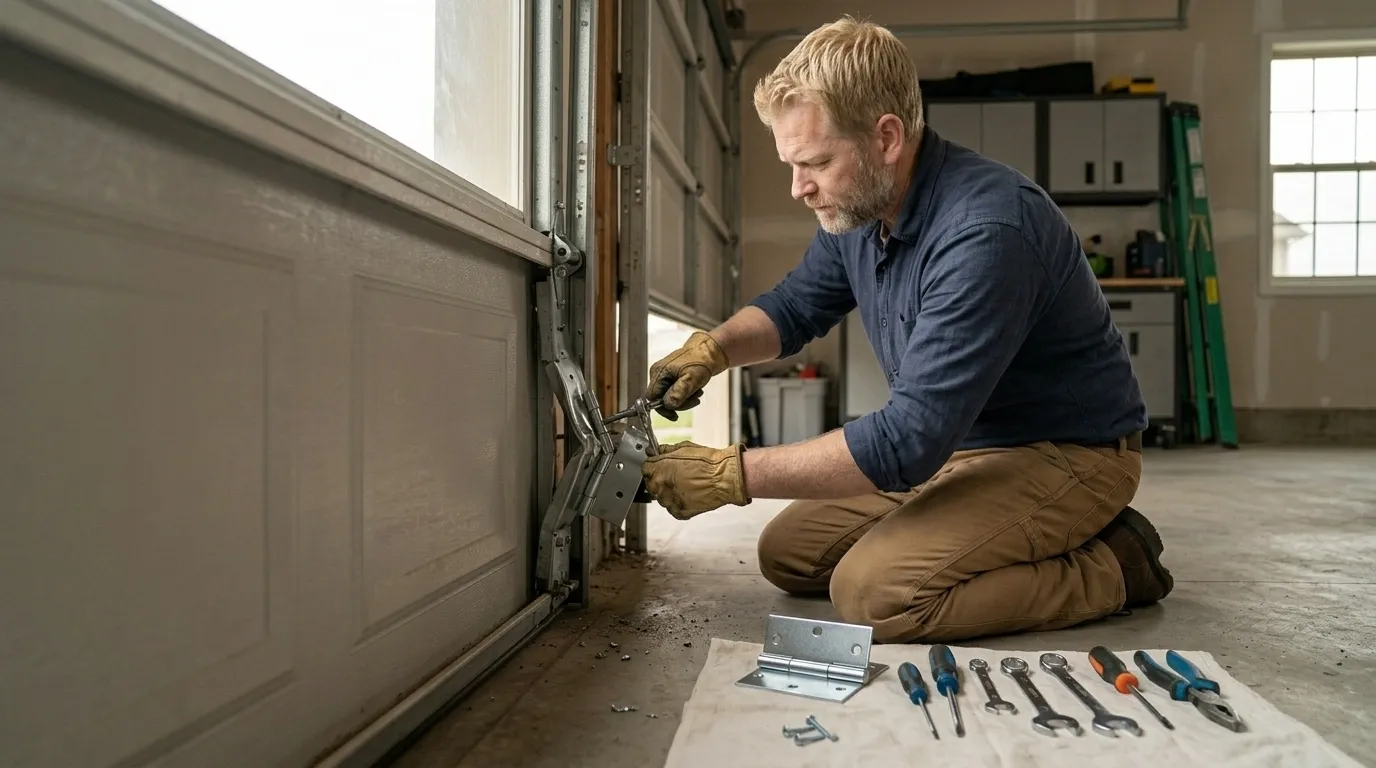
Garage Door Repair
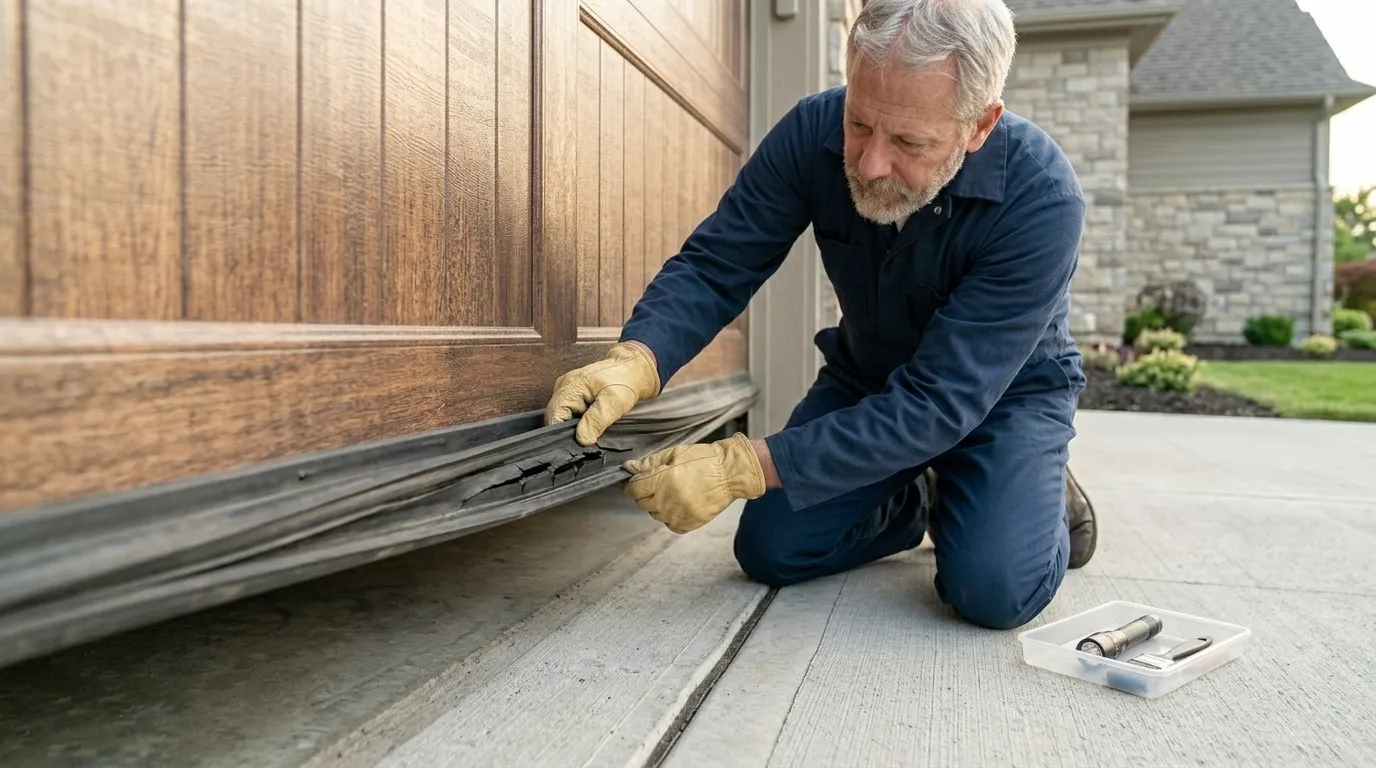
Springs, cables, tracks, rollers, and openers fixed by a tech who explains the problem before touching anything.
Learn more →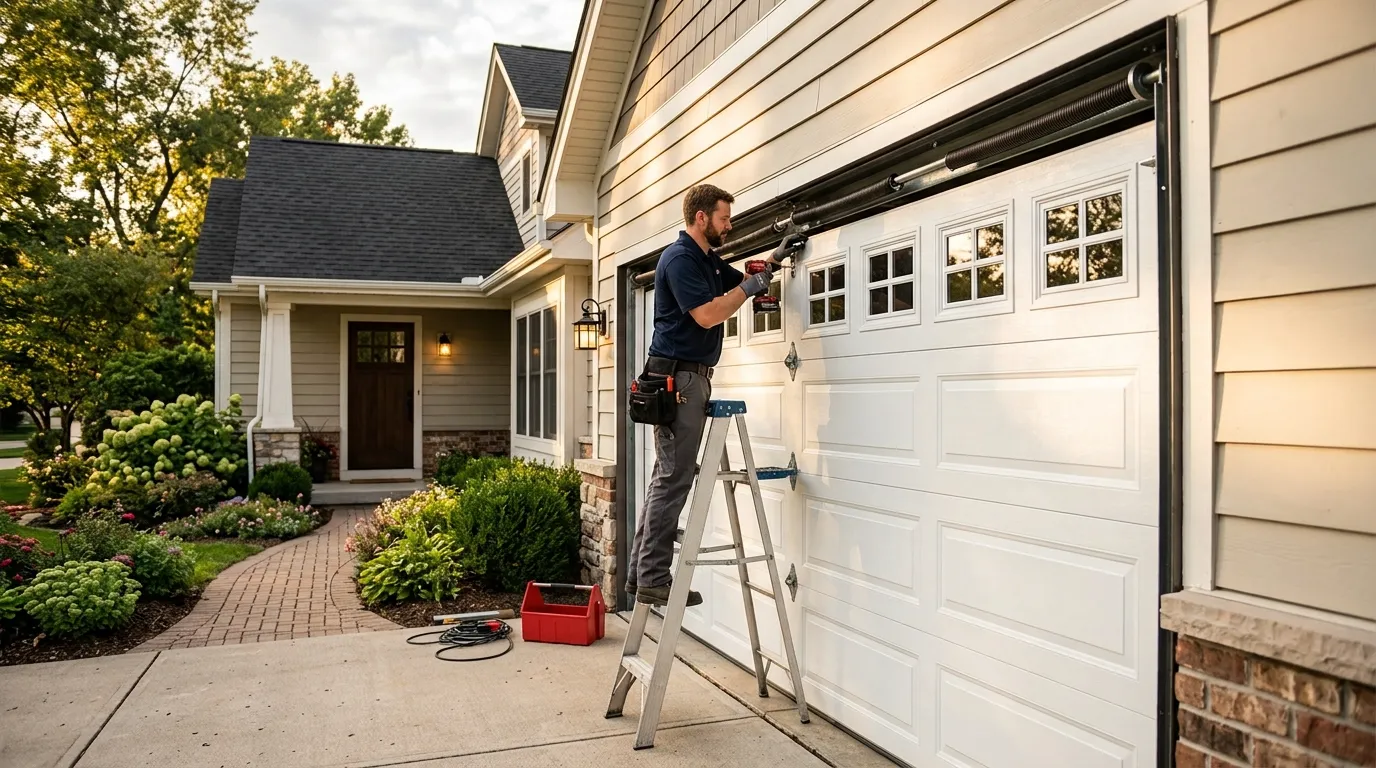
Garage Door Installation
New sectional doors sized and installed for the housing stock actually built in this area.
Learn more →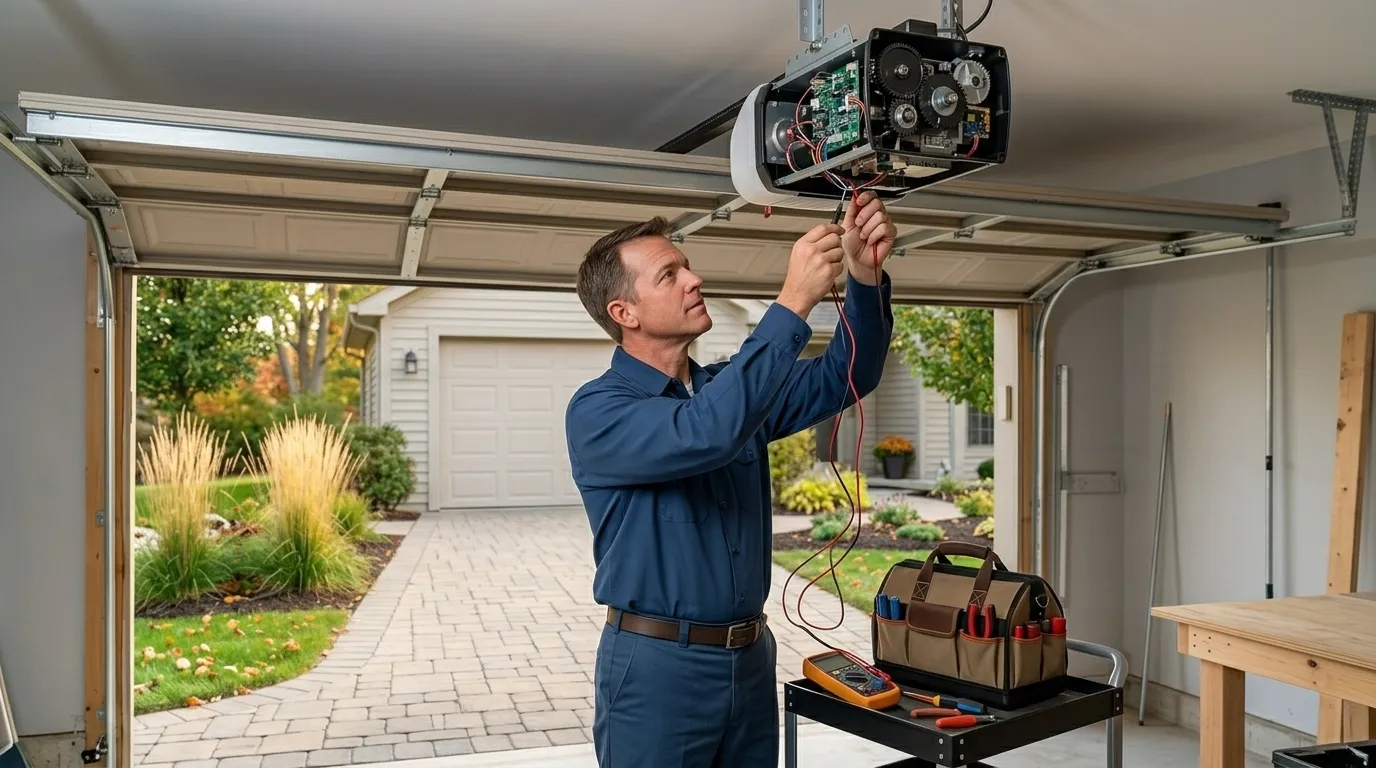
Garage Door Service
Tune-ups, lubrication, and safety checks that catch a small problem before it becomes a service call.
Learn more →Frequently Asked Questions
Why does my garage door only make noise in the winter?
Cold contracts the steel in your track and hinges enough to tighten clearances that were fine in warmer months. This area's cold-moderate climate band means that swing is real every year, and grease on older rollers thickens too, so a door that's fine in July can start scraping or grinding the first cold week of the season.
My house was built in the 1960s and the door has never been touched - is that a problem?
Not by itself, but it means the hardware is original. Most housing across this service area dates to the 1960s and 70s, and springs, rollers, and cables from that era are well past any rated life, even if they've never failed. A grinding or popping sound on a door that old is usually the first sign, not the last.
How much will it cost to fix a noisy garage door?
It depends on what's actually making the sound, so we won't quote a number without looking at it. A dry hinge is a small job; a cracked torsion spring on original 1960s or 70s hardware is bigger, and parts for older doors sometimes take longer to source than for newer ones.
Have a Door That Needs a Second Opinion?
Call and describe what it is doing - we will tell you what it likely is.