
Service
Garage Door Installation for St. Louis Houses Built 1947-1990
Most St. Louis homes date to 1947-1990, and original doors weren't built for our winters. We install cold-rated doors sized to fit your house's original opening.
- Licensed & Insured
- Same-Area Service Calls
- Upfront Pricing
What Happens When You Call
-
1
Call or Request a Quote
Tell us what the door is doing and roughly how old the house is - that alone points us toward the likely part before a truck leaves.
-
2
On-Site Diagnosis
A tech checks the spring, cables, tracks, and opener in person and tells you plainly what is actually wrong.
-
3
Straight Price, No Surprises
You get a number before any work starts. It covers parts and labor, nothing added after the fact.
-
4
Fixed the Same Visit
Most repairs are done in one trip. If a part needs sourcing, we tell you that upfront instead of guessing.
Why This Fails Locally
Across the St. Louis service area, the housing stock runs 1947 to 1990, with a median build year of 1967 and most of the 49 named areas we cover - from Kirkwood to Ferguson to Tower Grove South - dominated by 1960s and '70s construction. Doors from that era were built to a different standard: single-layer steel or wood, no insulation, hardware sized for a lighter panel.
That's fine until you factor in a cold moderate climate band with real freeze-thaw cycles every winter. Steel contracts, wood swells and shrinks, and the springs and rollers rated for a 1968 door start working harder than they were designed to. This isn't a St.
Louis-specific defect - it's just what happens when a 55-to-75-year-old door meets 55-to-75 winters of temperature swing. By the time a homeowner in University City or Webster Groves calls about a door that won't seal or won't stay aligned, the issue usually isn't one broken part. It's an original-era door and track system reaching the end of what it was built to do, in a climate that's been quietly working against it the whole time.
Replacement, not another patch repair, is often the honest answer at that point.
The Symptom
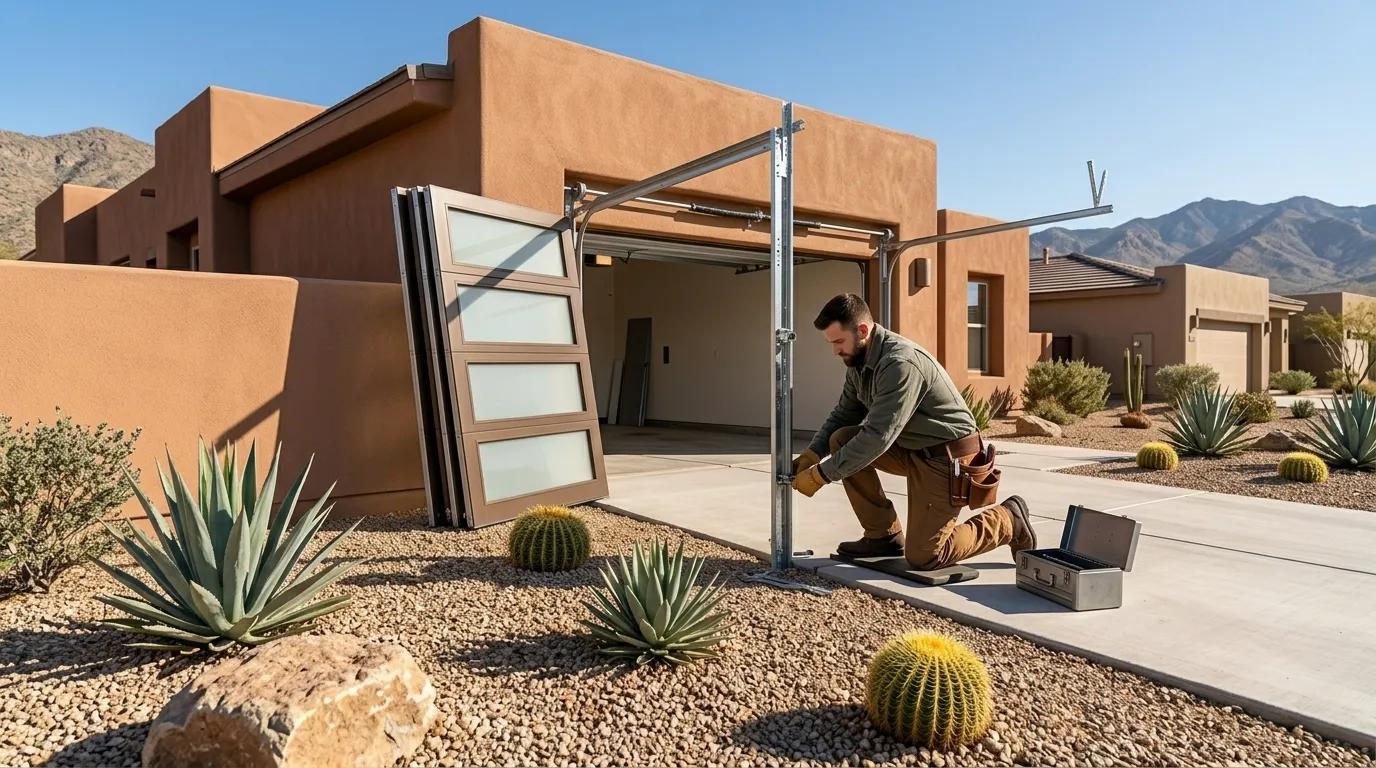
The pattern shows up the same way in most of these older houses: the door looks fine sitting closed, but it doesn't seal tight at the bottom corners anymore, or it shudders and pauses partway through the cycle instead of moving smooth. On the original single-layer doors common to the 1960s-70s stock, cold makes the steel panel stiffen slightly, and that's enough to bind against a track that's shifted a fraction of an inch over 50-plus years of seasonal expansion. Homeowners in the older sections near Central West End or Bevo often describe it as the door 'fighting' the opener near the top of travel.
Others notice daylight at the bottom seal that wasn't there five years ago - the panel itself has warped just enough that weatherstripping can't compensate. None of this is a single loose screw. It's cumulative wear on hardware that predates modern doors by decades, showing up as friction, gaps, and an opener working overtime to force a door through a stroke it wasn't built for anymore.
What the Repair Takes
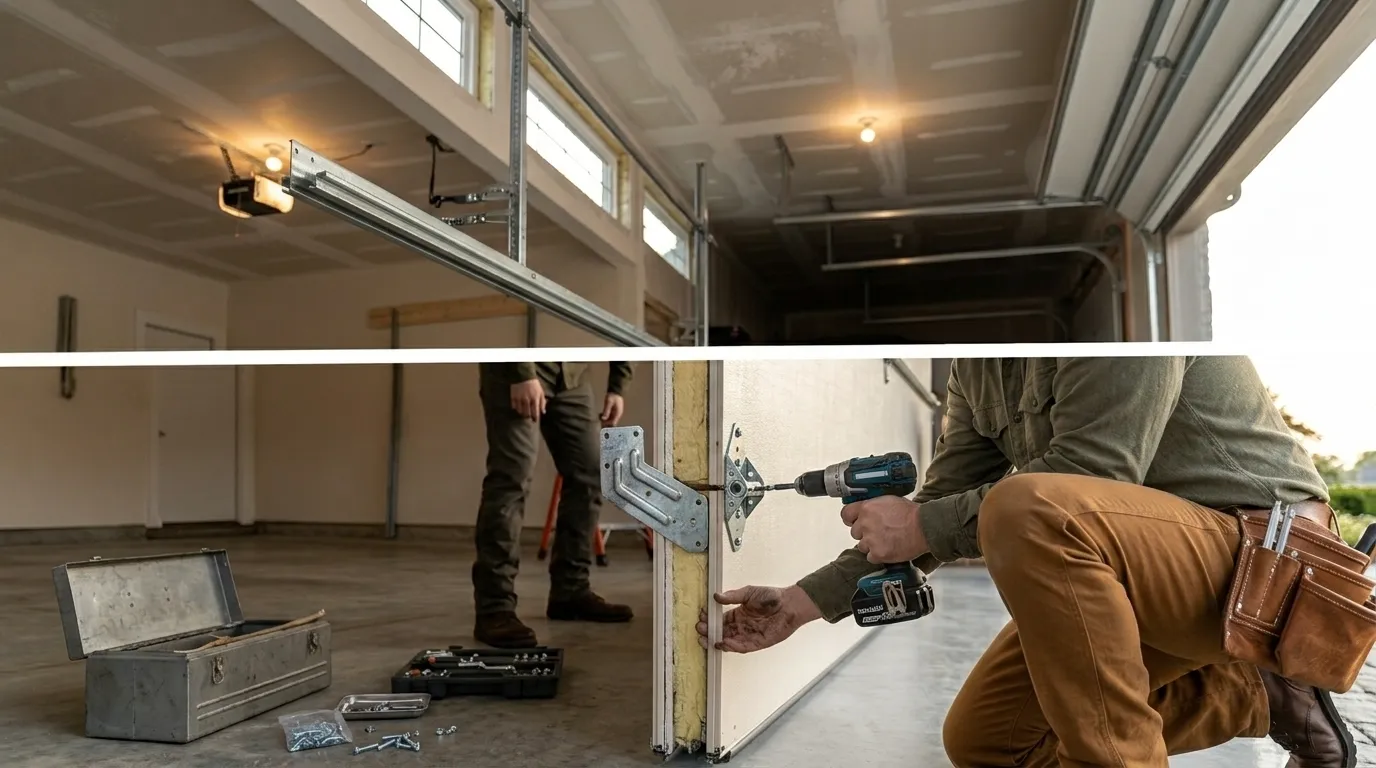
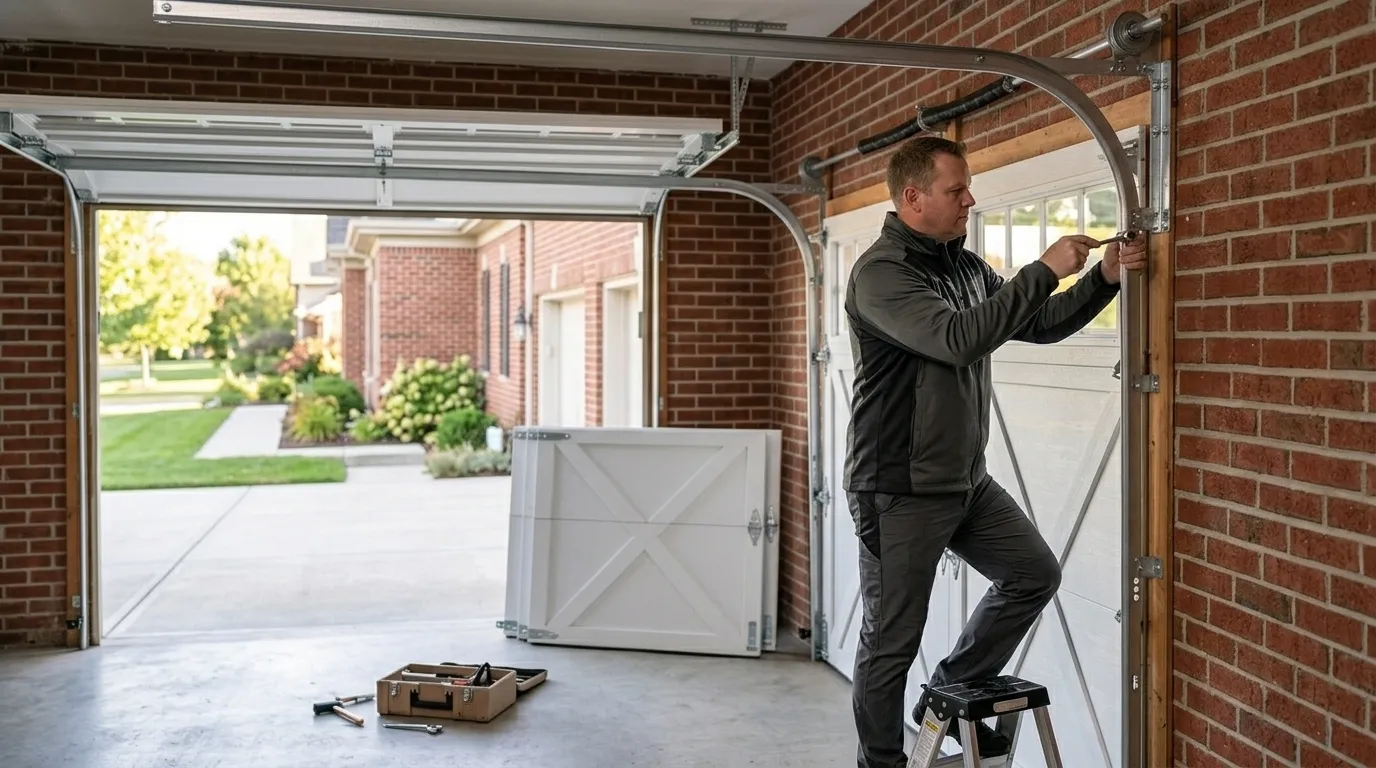
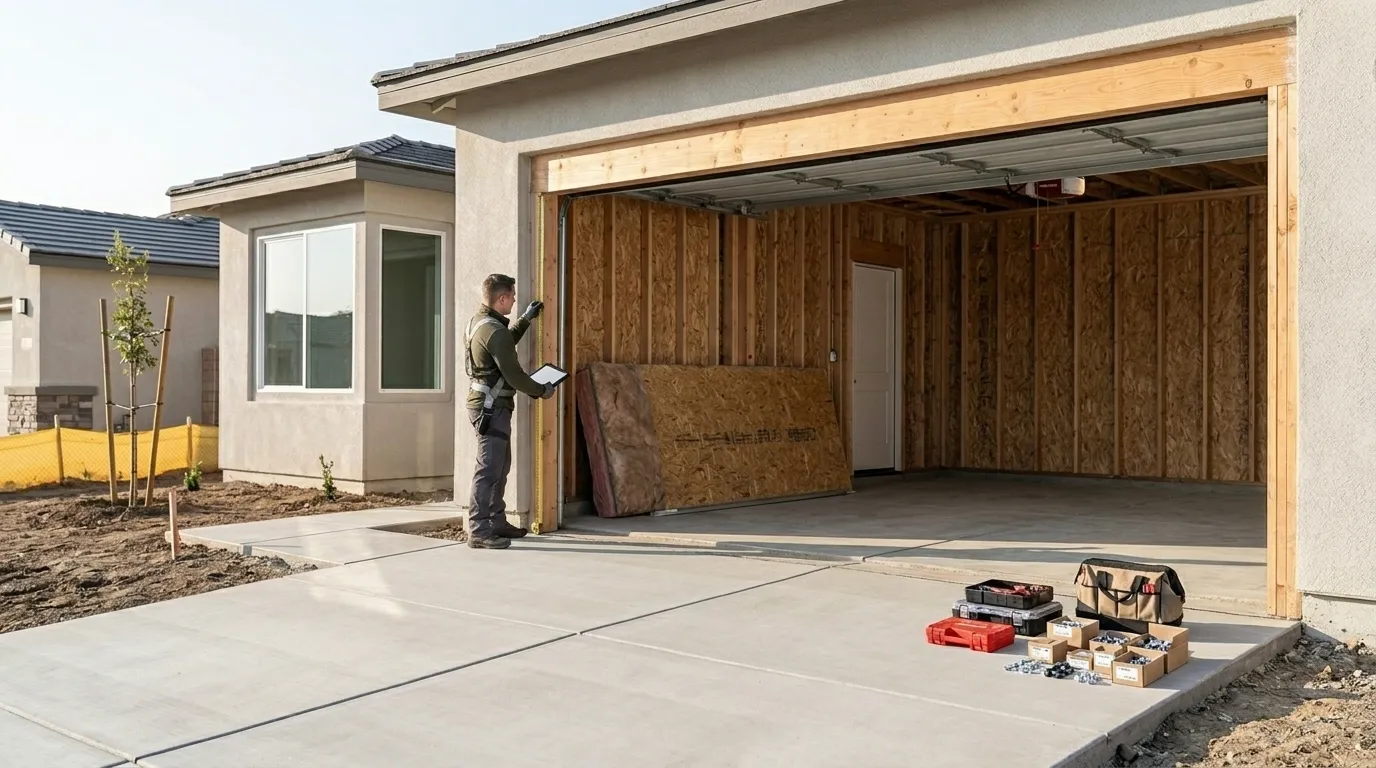
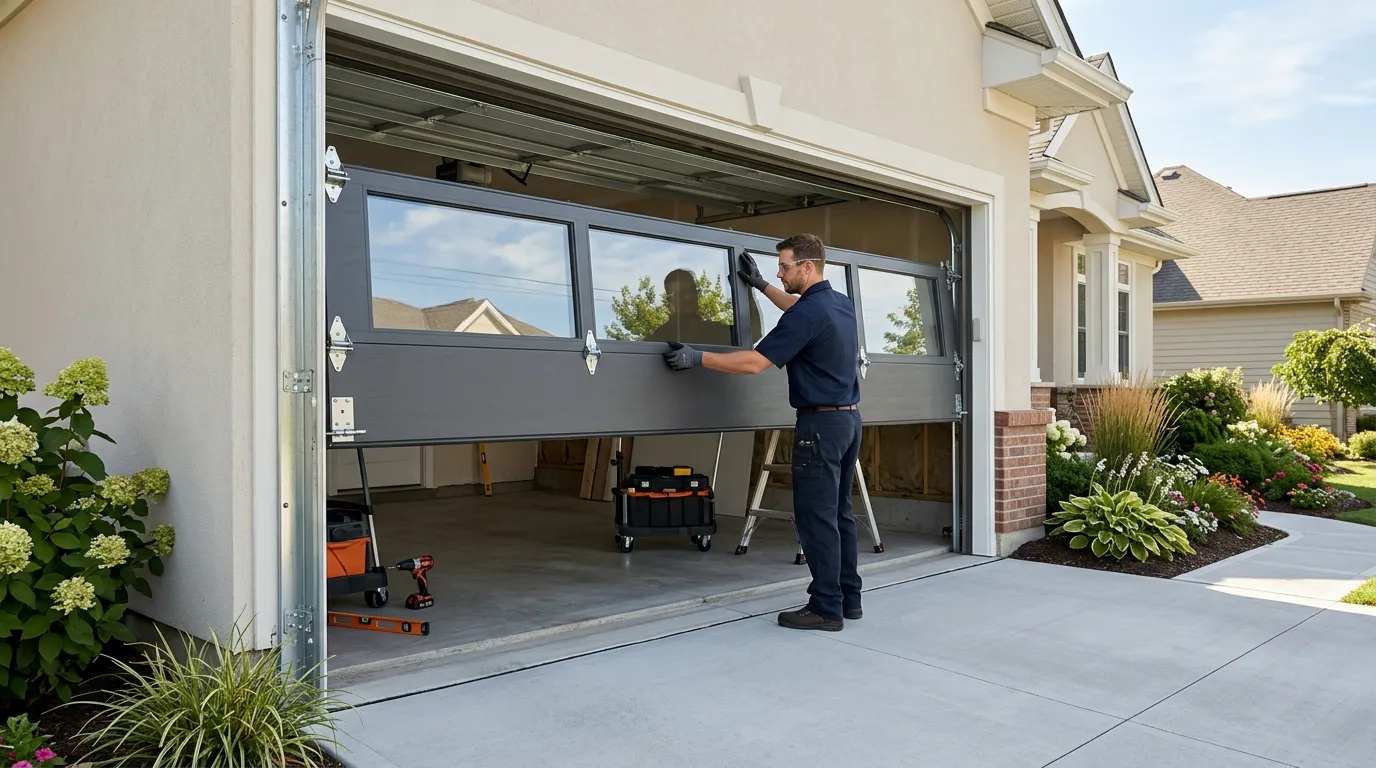
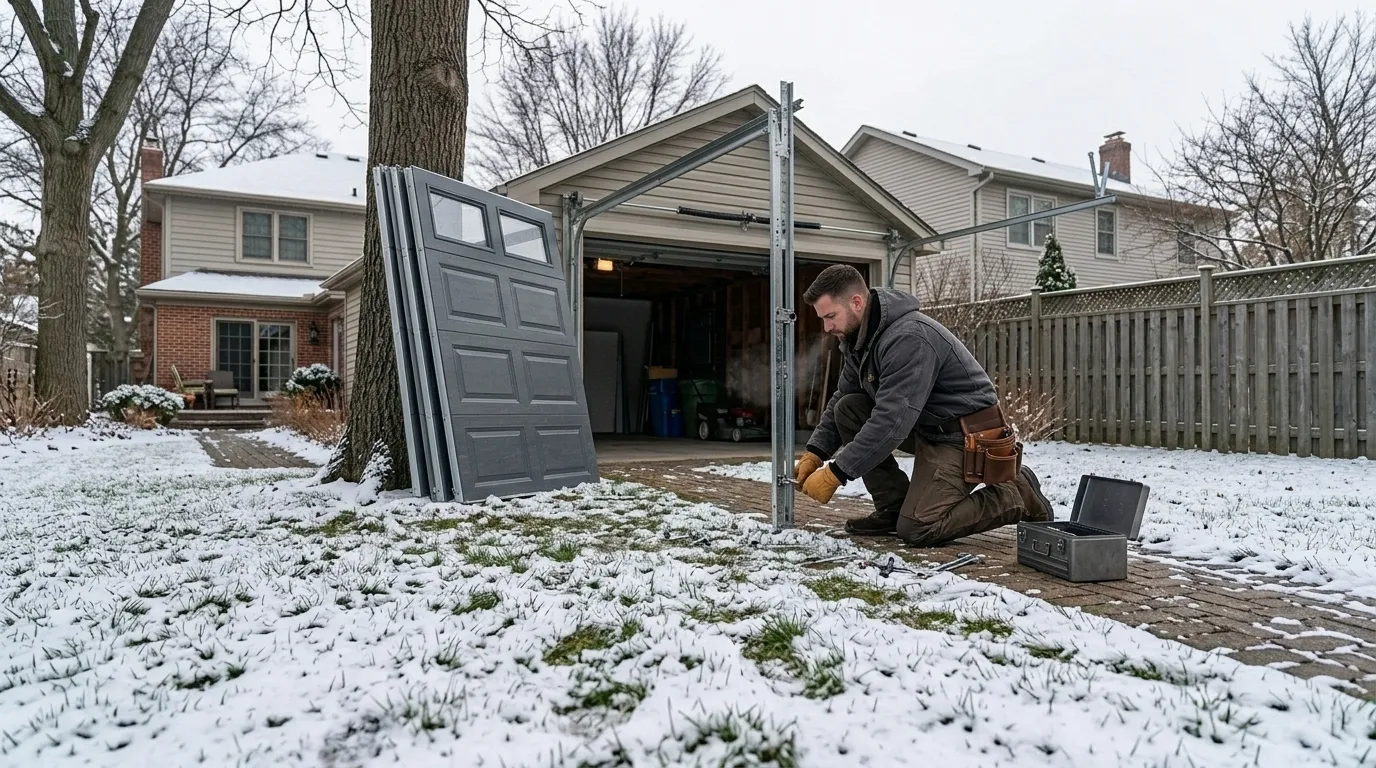
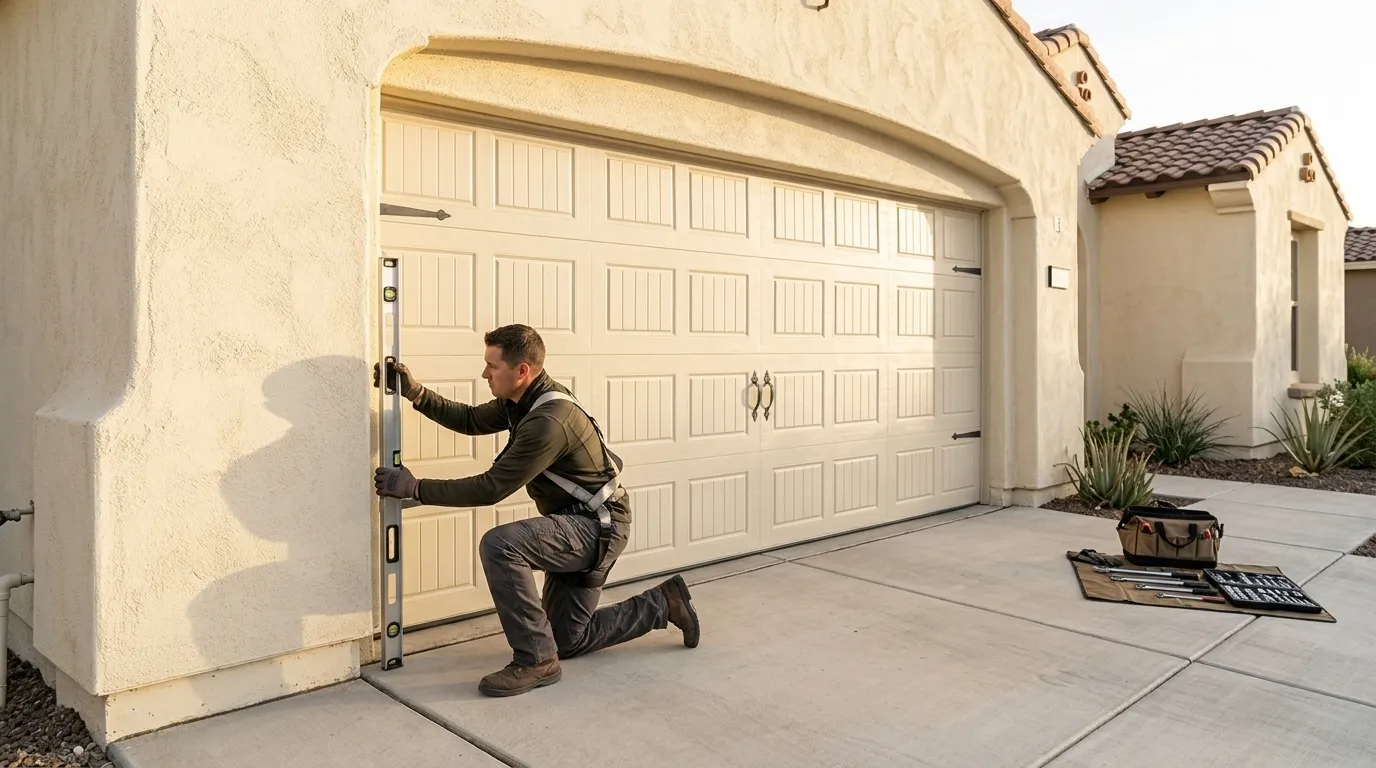
For a door in this condition, the job is a full swap: remove the old panel and track, check the opening framing (older houses built before modern code sometimes have openings a few inches off standard), and set new track and an insulated door sized to that specific opening. Insulation matters here - with a cold moderate climate, an uninsulated replacement just repeats the original problem in twenty years.
We size hardware to the actual door weight rather than reusing 1960s-spec springs on a heavier modern panel, which is a mismatch we see often on older houses that had a partial repair done at some point. One honest limit: if the opening itself is out of square from decades of foundation settling, that adds time and cost beyond a standard install, and we'll tell you that before we start, not after.
How Long You Are Without the Door
A standard install on an existing opening is typically a same-day job once the door and hardware are on site. Where it stretches out is parts - an insulated door sized for a nonstandard 1960s-era opening isn't always something we're carrying on the truck, and ordering the right width can add lead time before work even starts.
We'll give you a real number once we've measured, not a generic estimate. During the swap itself, the opening is open for a working window measured in hours, not days, but we plan around your schedule for when that window happens rather than showing up and leaving your garage exposed overnight.
Talk to a Technician Before You Book
Describe what the door is doing and get a straight answer on what it likely needs.
Other Ways We Can Help
Jobs Like Yours
Recent work from this service line.
Why St. Louis Calls Us
Frequently Asked Questions
Why does my garage door struggle more in winter than it used to?
If your house was built in the 1960s or '70s, which covers most of this area, the original door and hardware weren't designed with insulation or modern spring ratios. Cold moderate winters make steel stiffen and wood swell, and older track alignment that's drifted over decades has less room for error. It often means the door and hardware, not just one part, are due for replacement.
Will a new door fit my original 1960s opening?
Usually yes, but not automatically. Openings from the 1947-1990 building era sometimes run a few inches off today's standard sizing. We measure your actual opening before ordering so the new door and track match what's there, rather than assuming a modern standard size fits.
How long will I be without a garage door during install?
The physical swap is typically a same-day job measured in hours. The bigger variable is lead time on the door itself if your opening needs a nonstandard size - we'll tell you that number after measuring, not before.
Need Garage Door Installation for St. Louis Houses Built 1947-1990?
Call now for straight answers on cost and timing.