

Service
Garage Door Service for St. Louis's Older Torsion Systems
Most St. Louis garage doors date to the 1960s and 70s. We work on the original torsion hardware these houses still carry, not a generic swap-out.
- Licensed & Insured
- Same-Area Service Calls
- Upfront Pricing
What Happens When You Call
-
1
Call or Request a Quote
Tell us what the door is doing and roughly how old the house is - that alone points us toward the likely part before a truck leaves.
-
2
On-Site Diagnosis
A tech checks the spring, cables, tracks, and opener in person and tells you plainly what is actually wrong.
-
3
Straight Price, No Surprises
You get a number before any work starts. It covers parts and labor, nothing added after the fact.
-
4
Fixed the Same Visit
Most repairs are done in one trip. If a part needs sourcing, we tell you that upfront instead of guessing.
Why This Fails Locally
Walk through Central West End, Tower Grove South, or Bevo and you're looking at housing stock built mostly between 1947 and 1990, with the bulk going up in the 1960s and 70s. That matters for garage doors because a torsion spring is rated in cycles, not years, and a spring installed when the house was built has been through five or six decades of St. Louis winters.
Our climate band runs cold to moderate, with real swings between a January freeze and a July heat wave. Steel fatigues faster under that kind of temperature swing than it does in a climate that stays mild year-round. So the spring on a house from 1965 isn't just old, it's old and it's been cycling through weather extremes the whole time.
That combination is why we see the same failure pattern across the older neighborhoods in this service area far more than in newer subdivisions: a spring that finally lets go on a cold morning, usually the coldest week of the year, because cold steel is stiffer and takes more strain to lift the door than the same spring does in July.
The Symptom
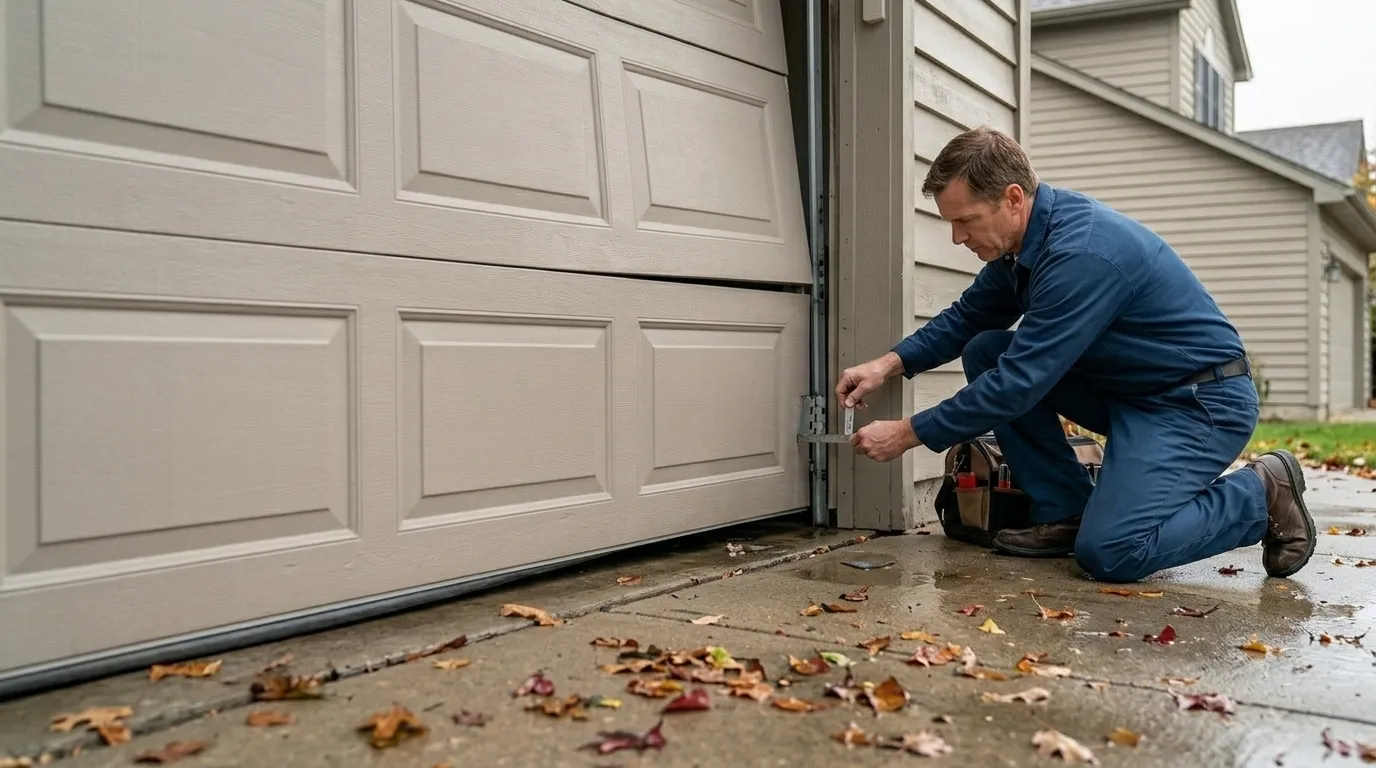
It usually starts small. The door groans on the way up instead of gliding. Then one morning it won't budge past a foot off the floor, or it drops fast on the way down instead of lowering evenly.
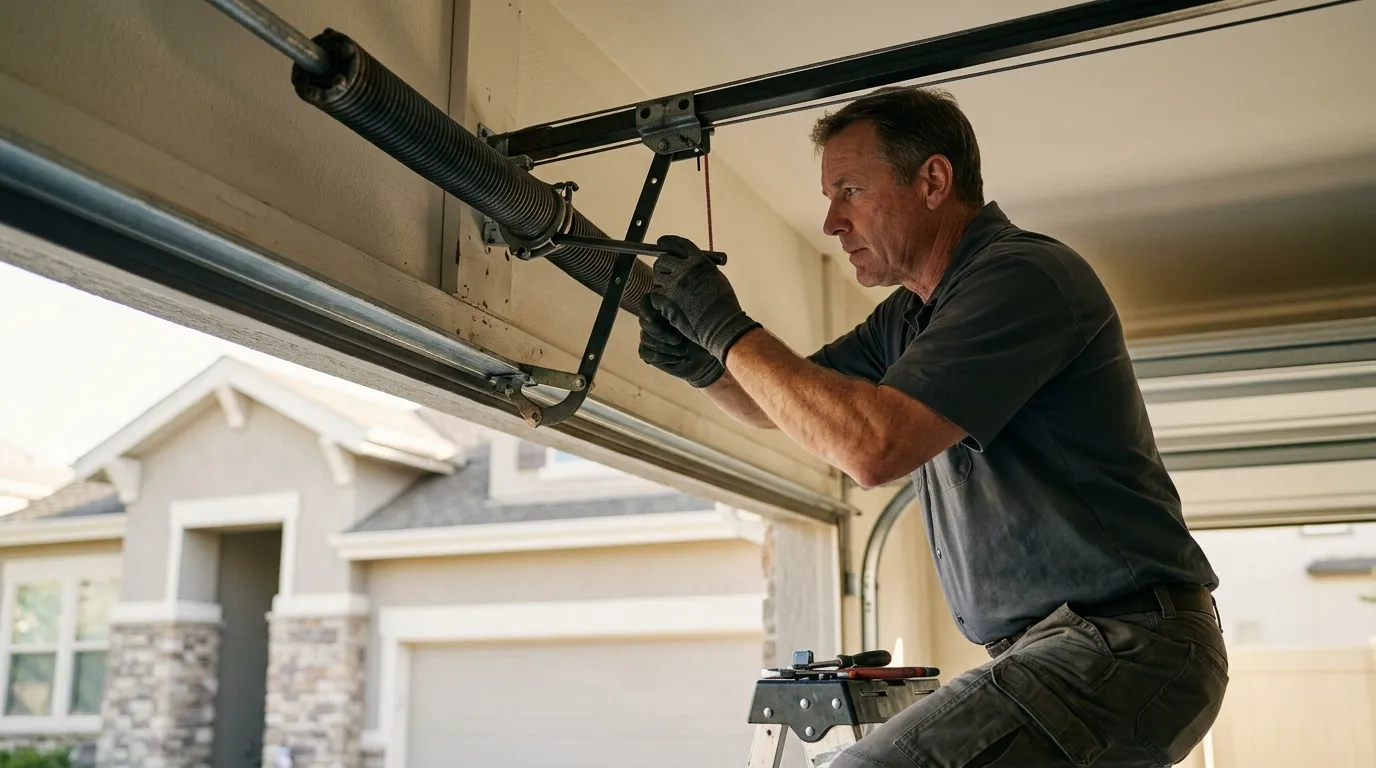
If you look up and see a gap in the coil, or one side of the spring hanging loose while the other stays wound tight, that's a broken torsion spring, not an opener problem, even though the opener is often what gets blamed first. On a lot of the original installs from the 1960s and 70s stock across this area, there's a single spring running the whole door rather than the two-spring setup that's now standard. When that one spring goes, the door has no lift assist left at all and an opener motor was never built to lift a full garage door on its own.
Trying to force it, by hand or by holding the opener button down, usually bends a track or cracks a panel, turning a spring job into a bigger one.
What the Repair Takes
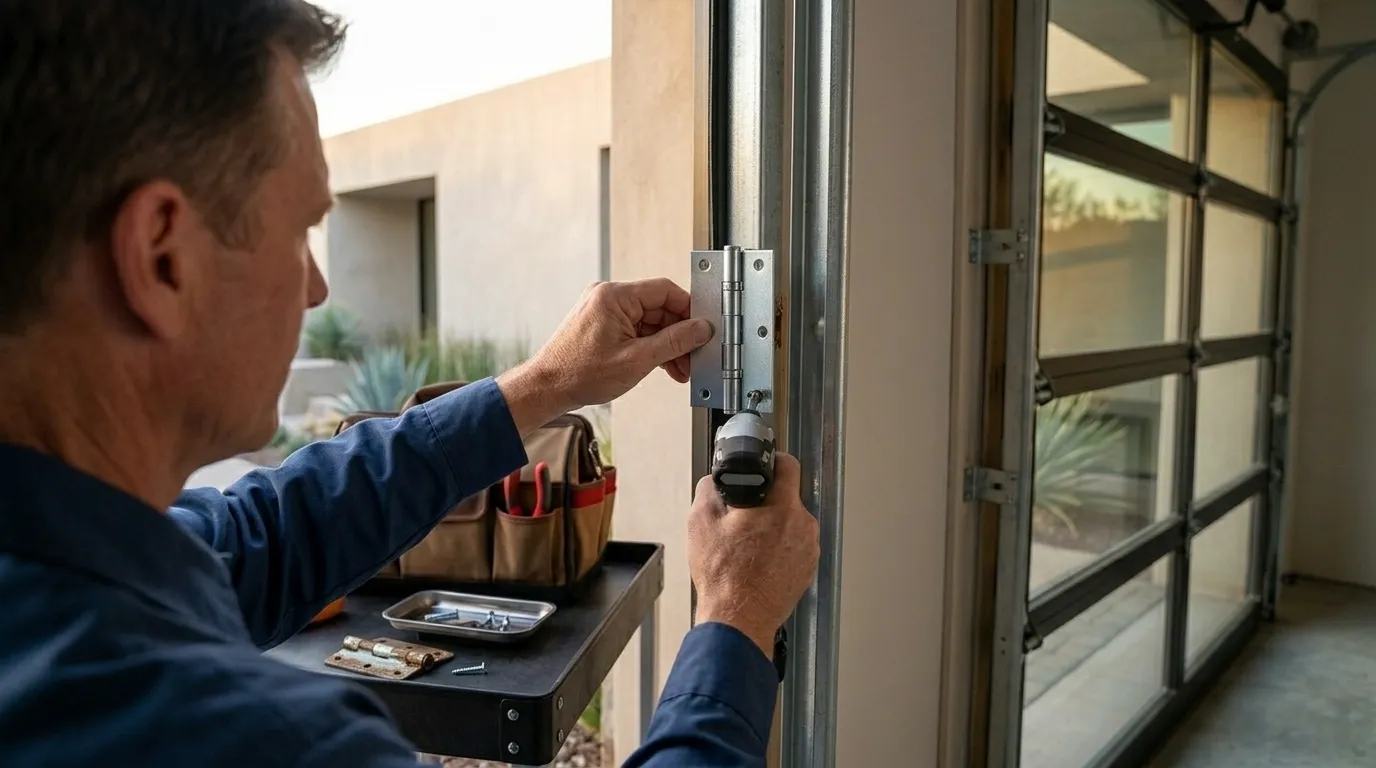
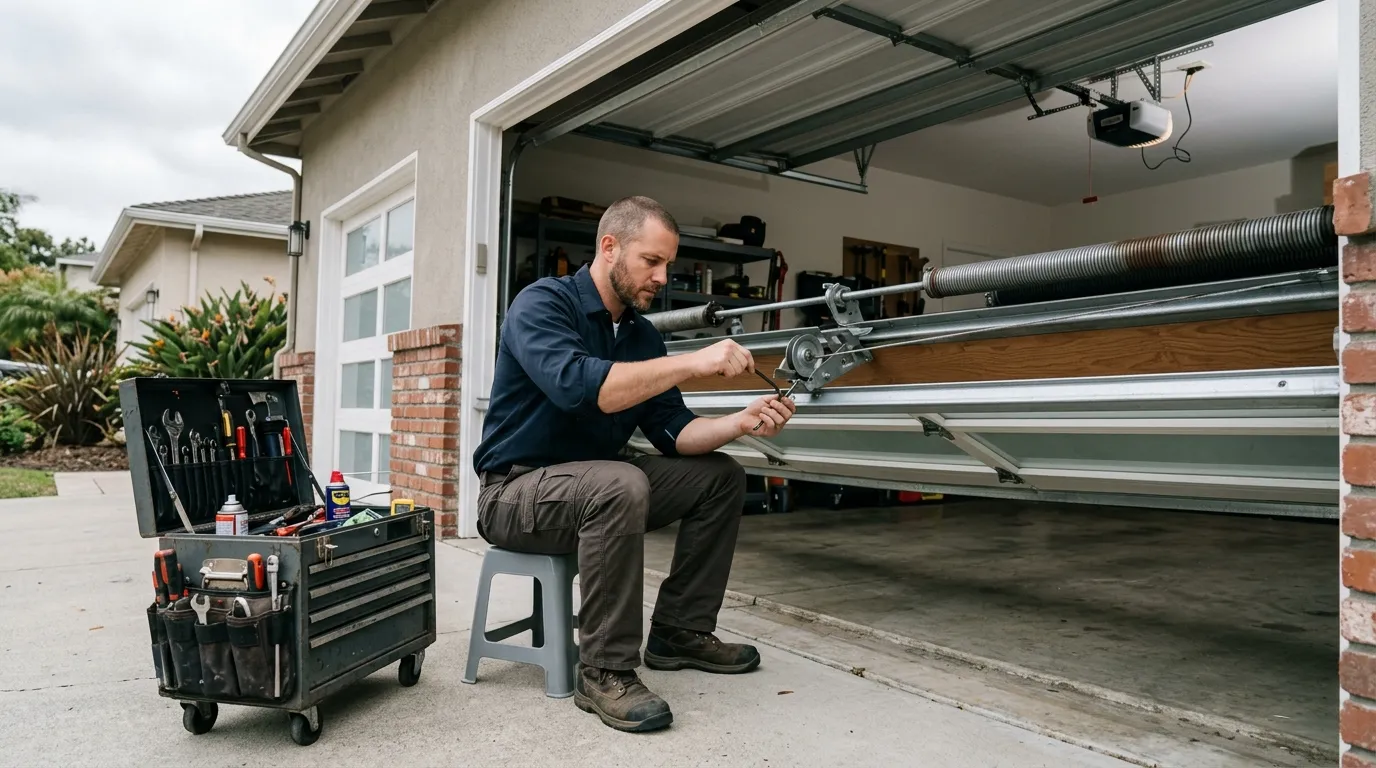
A straightforward torsion spring swap is a parts-and-labor job, not a diagnostic mystery, once we've confirmed it's the spring and not something the spring failure damaged on the way down. On the older single-spring setups common in this area's 1960s and 70s builds, we'll usually recommend moving to a two-spring configuration so the load is split and neither spring is carrying the full weight of the door alone. That's a judgment call based on door weight and how the existing hardware is holding up, not something we push on every job.
Where we draw the line: if the drums, shaft, or bearing plates are also worn from decades of use, replacing just the spring and leaving those parts in place is a short-term fix at best. We'll tell you when that's the case rather than quote a spring-only job that's going to bring you back to square one in a year. Given the median household income across this service area sits at $84,389, most owners want a clear answer on repair versus partial hardware replacement before we start, not a surprise add-on halfway through.
How Long You Are Without the Door
A torsion spring replacement, once we're on site with the right size spring for your door weight, is not an all-day job. The door goes from unusable to fully operational the same visit for the vast majority of these calls. Where it stretches out is parts availability if your door needs a spring size or drum that isn't standard stock, which shows up more often on older doors from the 1947-1990 era where wood panel weight and hardware specs vary more than they do on newer steel doors.
If that happens, we'll tell you up front rather than have you assume it's a same-visit fix. One honest limitation: we don't keep every spring size on the truck for every vintage of door out there, so a same-day repair on an unusual older setup sometimes means a return trip once the right part is in.
Talk to a Technician Before You Book
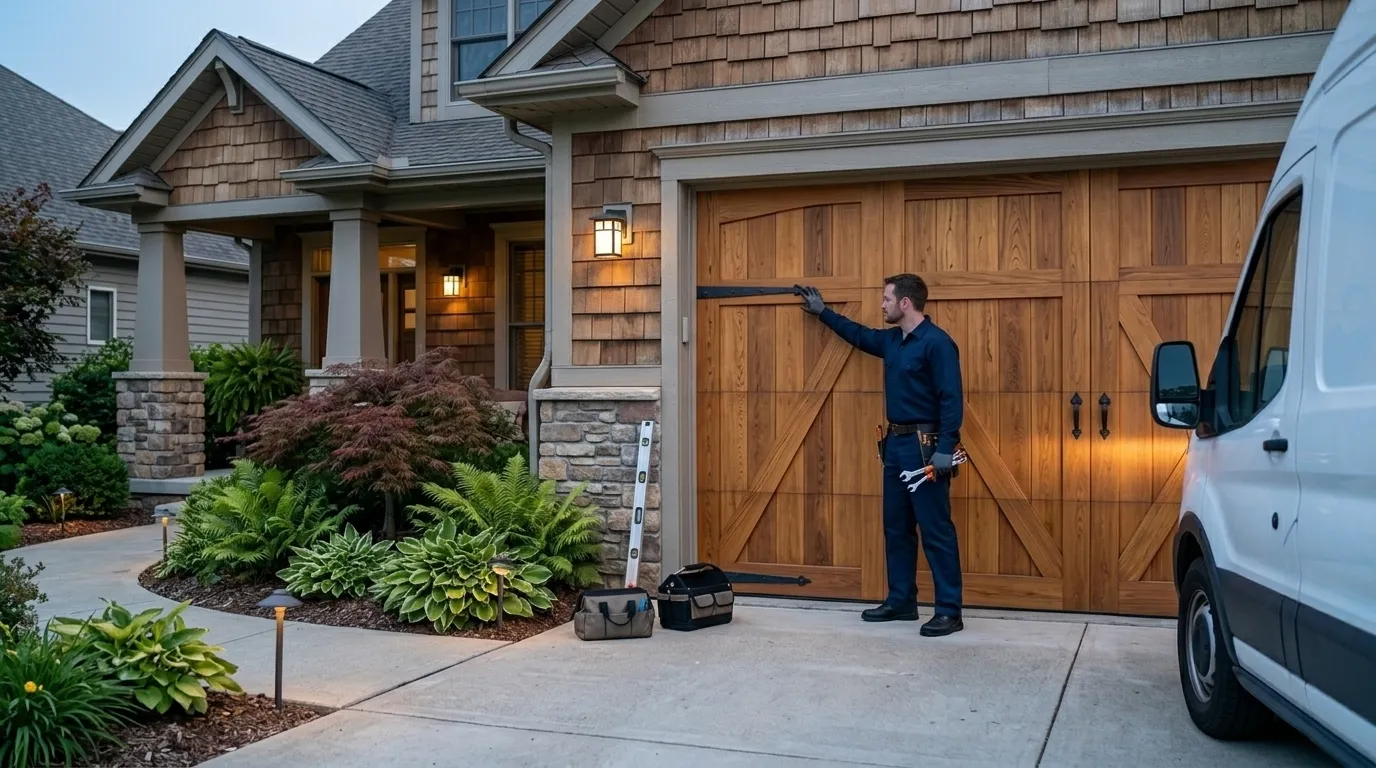
Describe what the door is doing and get a straight answer on what it likely needs.
Other Ways We Can Help
Jobs Like Yours
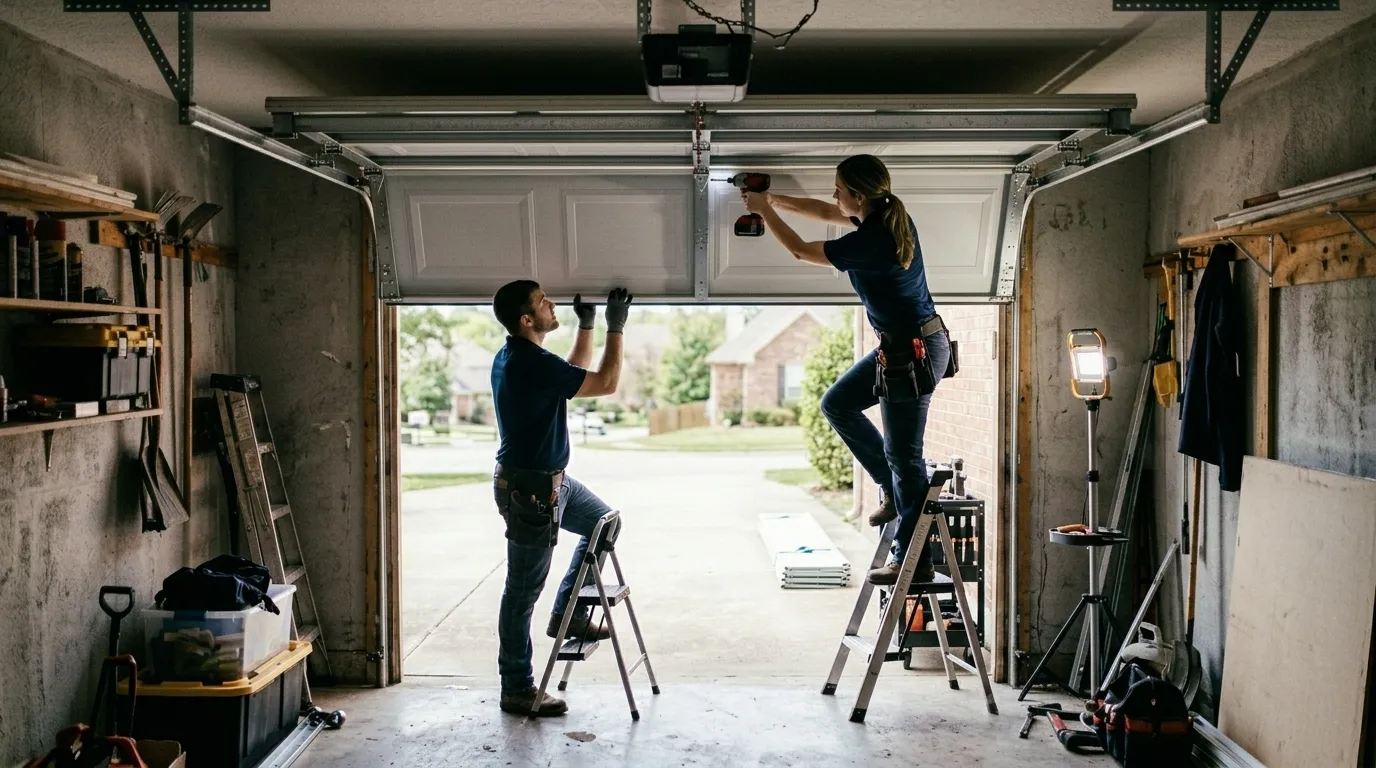
Recent work from this service line.

Why St. Louis Calls Us
Frequently Asked Questions
Why did my garage door spring break in the winter and not some other time of year?
Cold steel is stiffer and under more strain per cycle than warm steel. St. Louis's cold-to-moderate climate band puts real temperature swings on that spring year-round, and a spring near the end of its cycle life is most likely to snap on the coldest mornings when the steel is least flexible.
Do all the older houses around St. Louis have the same single-spring setup?
Not all, but it's common. A large share of the housing stock across this service area went up in the 1960s and 70s, and a single-spring torsion system was standard then. We check what's on your door before quoting anything, since some homes have already been upgraded to two springs over the years.
Can I just replace the spring myself?
We'd advise against it. A torsion spring is wound under heavy tension and the tools to safely release and reset that tension aren't things most homeowners have on hand. It's one of the few garage door jobs where the risk of injury is real enough that we don't recommend a DIY approach.
Need Garage Door Service for St. Louis's Older Torsion Systems?
Call now for straight answers on cost and timing.