
St. Louis Garage Door Guide
What Weather Seals and Draughts Mean for St. Louis Garage Doors
See how St. Louis winters push weather seals and draughts through 1960s and 70s garage doors, and what to check before cold air gets into your garage.
- Licensed & Insured
- Same-Area Service Calls
- Upfront Pricing
What It Costs
We don't have a set price to quote you here, and we're not going to guess one. What we can tell you is what drives the number up or down. A door built in the 1960s or 70s, which describes most of the housing stock in this part of St.
Louis, usually has a narrower bottom astragal channel than anything made in the last fifteen years. That means the replacement seal has to match an older track, not just whatever roll of vinyl is on the shelf. Side seals on those same doors are often stapled or nailed rather than clipped, which adds labor even though the part itself is cheap.
Across the service area there are roughly 146,725 owner-occupied houses, and a large share of them share this same original hardware, so we see the same job pattern over and over: cheap material, fussier install. If your door and frame have shifted out of square over the decades, which happens on houses this old, a new seal alone won't close the gap and you're looking at track or frame work instead. We'll tell you honestly when that's the case rather than sell you a seal that won't hold.
What Is Going On
Most of the housing here went up between 1947 and 1990, with the heaviest concentration in the 1960s and 70s, and that era matters more than people think. The rubber and vinyl used in garage door seals from that period wasn't UV-stable or cold-stable the way today's compounds are. Forty to seventy years of sun and temperature swings later, that material doesn't flex anymore, it just cracks.
On a lot of these original one-piece and early sectional doors, the bottom seal sits in a metal retainer that was never designed to be replaced easily, so owners leave a hardened, split seal in place for years past when it stopped doing anything. Side seals fare no better. Nail-on foam strips from that build era compress flat and stop touching the jamb at all.
What you're left with is a door that looks fine closed but has a visible line of daylight around three of its four edges. That's not a defect in the door, it's just age catching up with rubber that was only ever rated to last a couple of decades in the first place.
What the Weather Here Does to It
St. Louis sits in a cold, moderate climate band, and that combination is harder on seals than either extreme alone. A steady cold climate lets rubber go brittle and stay brittle.
A moderate one means you also get real freeze-thaw cycling through the winter, so a seal that's already stiff gets flexed cold, then let warm back up, over and over across a season. That's what causes visible cracking along the bottom astragal rather than just gradual hardening. On the older 1960s and 70s doors common across this area, the bottom seal often sits low enough that meltwater pools against it during a thaw, then refreezes overnight and pries the rubber away from the retainer.
Side seals crack at the same rate but you notice them less because the gap runs vertical instead of along the floor, so cold air moves through less obviously but just as steadily. None of this is dramatic weather. It's ordinary cold-and-thaw cycling doing what it does to forty-plus-year-old rubber, one winter at a time.
Checking It Yourself
Start with the dollar-bill test on the bottom seal: close the door on a bill at a few points along its width and pull. If it slides out with no resistance, the seal isn't sealing anymore. Next, walk the perimeter at night with the garage light off and a flashlight on outside the door, and have someone look for light coming through around the sides and top.
On older track-mount doors typical of this area's 1960s and 70s builds, check where the side seal meets the track bracket first, since that's where nail-on strips pull loose. Run a hand along the bottom seal itself; if it feels hard rather than pliable, or has visible cracks running along its length, it's done. One honest limitation: if the door or frame has racked out of square over the decades, which we see on houses this old, no amount of new weatherstrip will close the gap on its own, and that's a track or frame conversation, not a seal one.
Checking twice a year, once before winter and once after, catches most of this before it turns into a drafty garage all season.
How We Can Help
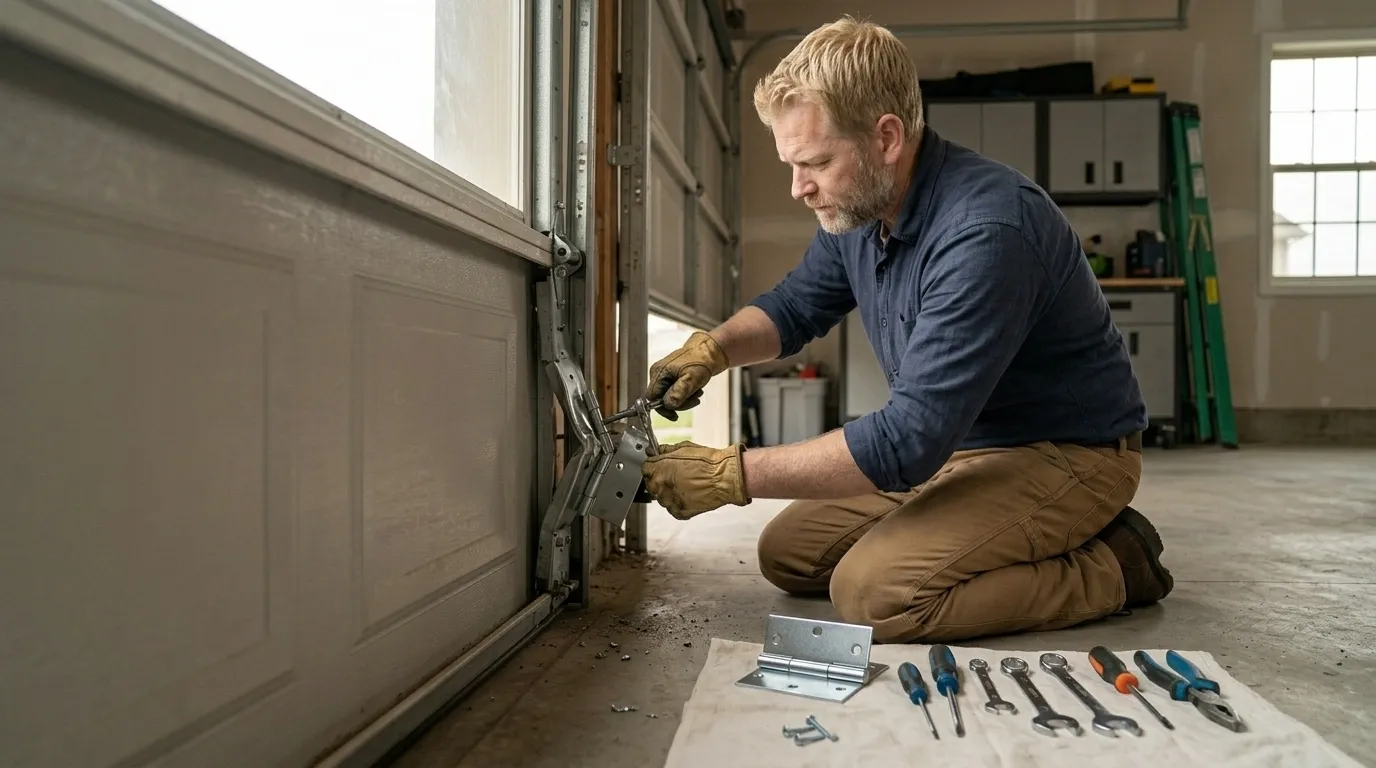
Garage Door Repair
Springs, cables, tracks, rollers, and openers fixed by a tech who explains the problem before touching anything.
Learn more →
Garage Door Installation
New sectional doors sized and installed for the housing stock actually built in this area.
Learn more →
Garage Door Service
Tune-ups, lubrication, and safety checks that catch a small problem before it becomes a service call.
Learn more →Frequently Asked Questions
Why does my garage door let in cold air even with the seal looking intact?
On doors from the 1960s and 70s, common across St. Louis, the rubber can look whole but has already gone stiff from decades of cold-and-thaw cycling. A hardened seal doesn't compress against the floor or jamb anymore, so air moves through even without a visible crack. Flex it by hand; if it doesn't bend easily, it's not sealing.
Is it the seal or the door itself that's letting draughts in?
Usually the seal, but not always. Houses built between 1947 and 1990 have had decades to settle, and some frames have shifted slightly out of square. If a new bottom seal still leaves a gap on one side only, that's a frame or track issue, not a seal one, and worth a second look before you buy more weatherstrip.
How often should I check my weather seals in a climate like this?
Twice a year works for most owners here: once before the cold sets in and once after the freeze-thaw cycling of a full winter has had its chance to crack anything brittle. That catches seal failure before you're dealing with a genuinely drafty garage mid-season.
Have a Door That Needs a Second Opinion?
Call and describe what it is doing - we will tell you what it likely is.