
St. Louis Garage Door Guide
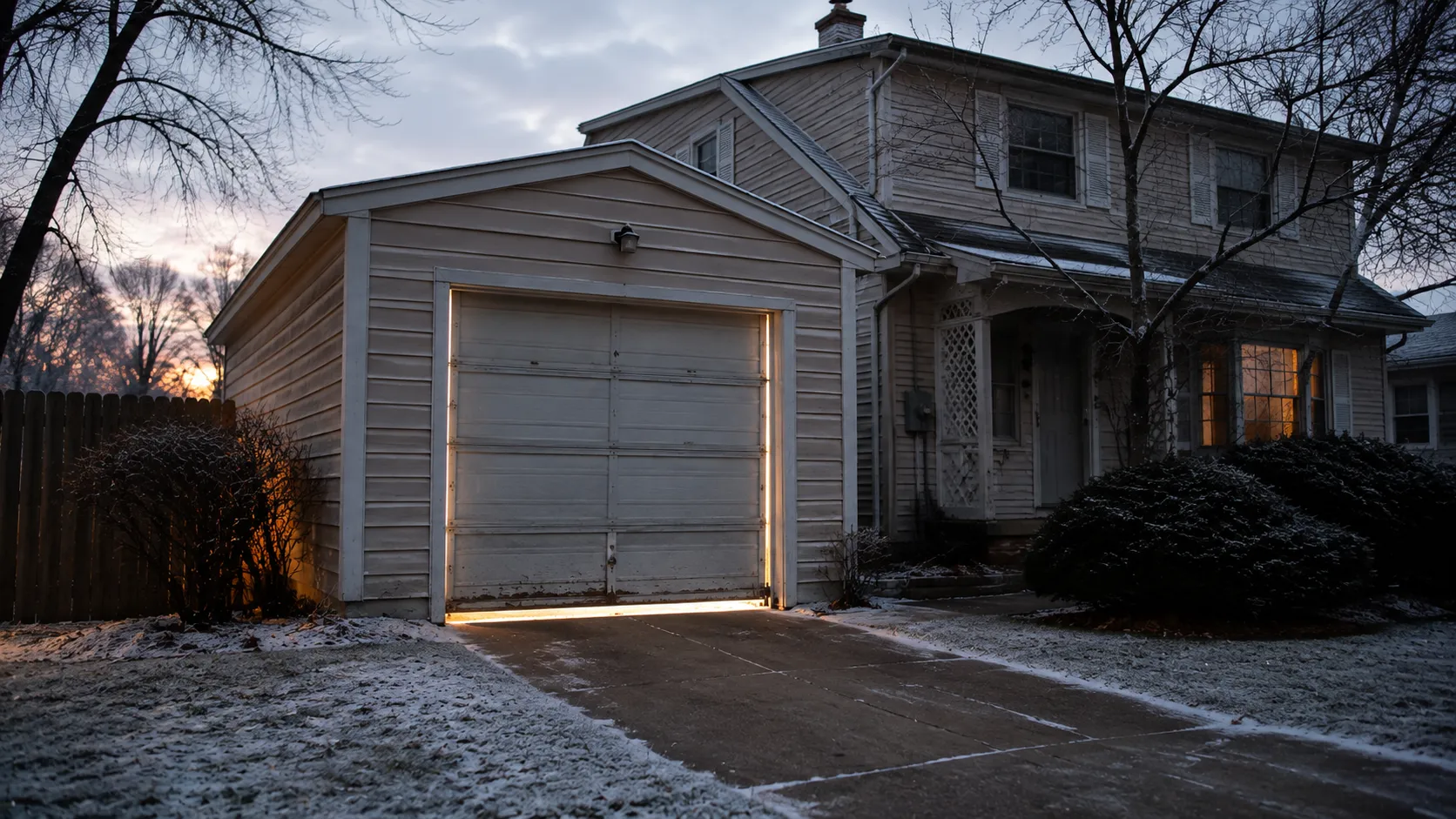
Garage Doors on St. Louis's Older Housing Stock
St. Louis Garage Door Pros work on the torsion springs, tracks, and openers common to the 1960s-70s housing stock across the metro's 49 named areas.
- Licensed & Insured
- Same-Area Service Calls
- Upfront Pricing
What It Costs
We don't post a price list here because what a job costs depends on what's behind the panel, and on a lot of St. Louis houses that's older hardware than the door itself lets on. Most of the homes we work on in this area went up between 1947 and 1990, with the bulk clustered in the 1960s and 70s.
That means a lot of torsion springs, drums, and tracks that were sized for doors half the weight of what's sold today, and openers that have been swapped out once or twice while the original track and hardware stayed put. A spring job on a house like that can turn into a track or drum job once we're up on the ladder looking at wear nobody could see from the driveway. We'll quote the actual repair before we touch anything - we just won't pretend a number on a webpage means much when the housing stock here varies as much as it does street to street.
What Is Going On
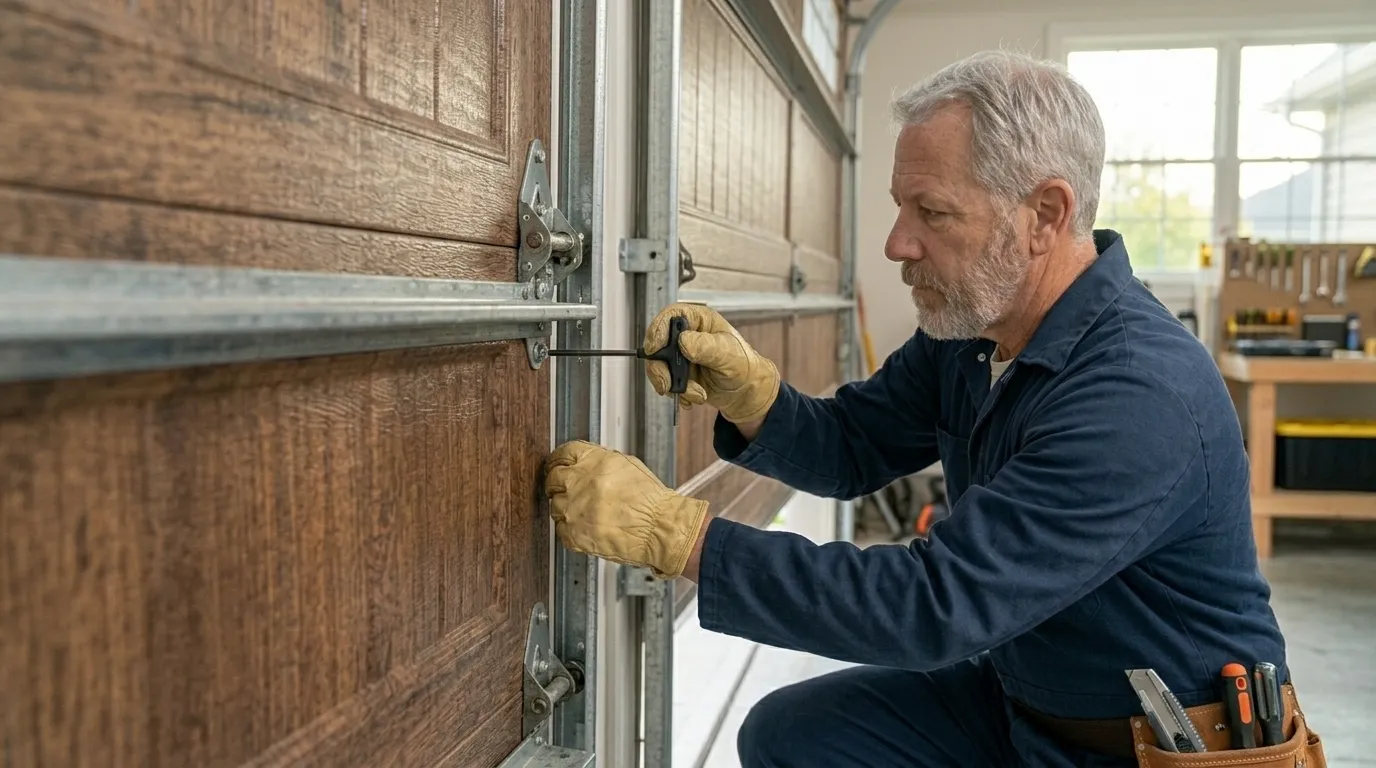
Doors on houses built before insulation rules didn't need to hold heat, because nobody expected a garage to be part of the house's thermal envelope. A single-layer steel or wood panel was fine when the attached garage was just a place to park. Decades later, a lot of owners in this area have finished a room over the garage or run ductwork through it, and now that same thin door is the weak point in the wall.
Add original hardware - springs, hinges, rollers - that's outlasted its rated cycle count by years, and you get doors that bind, sag at the corners, or drop hard when a cable frays. We see this pattern across the older sections of the metro: not one bad batch of doors, but one era of building that didn't plan for what these houses would need fifty years later.
What the Weather Here Does to It
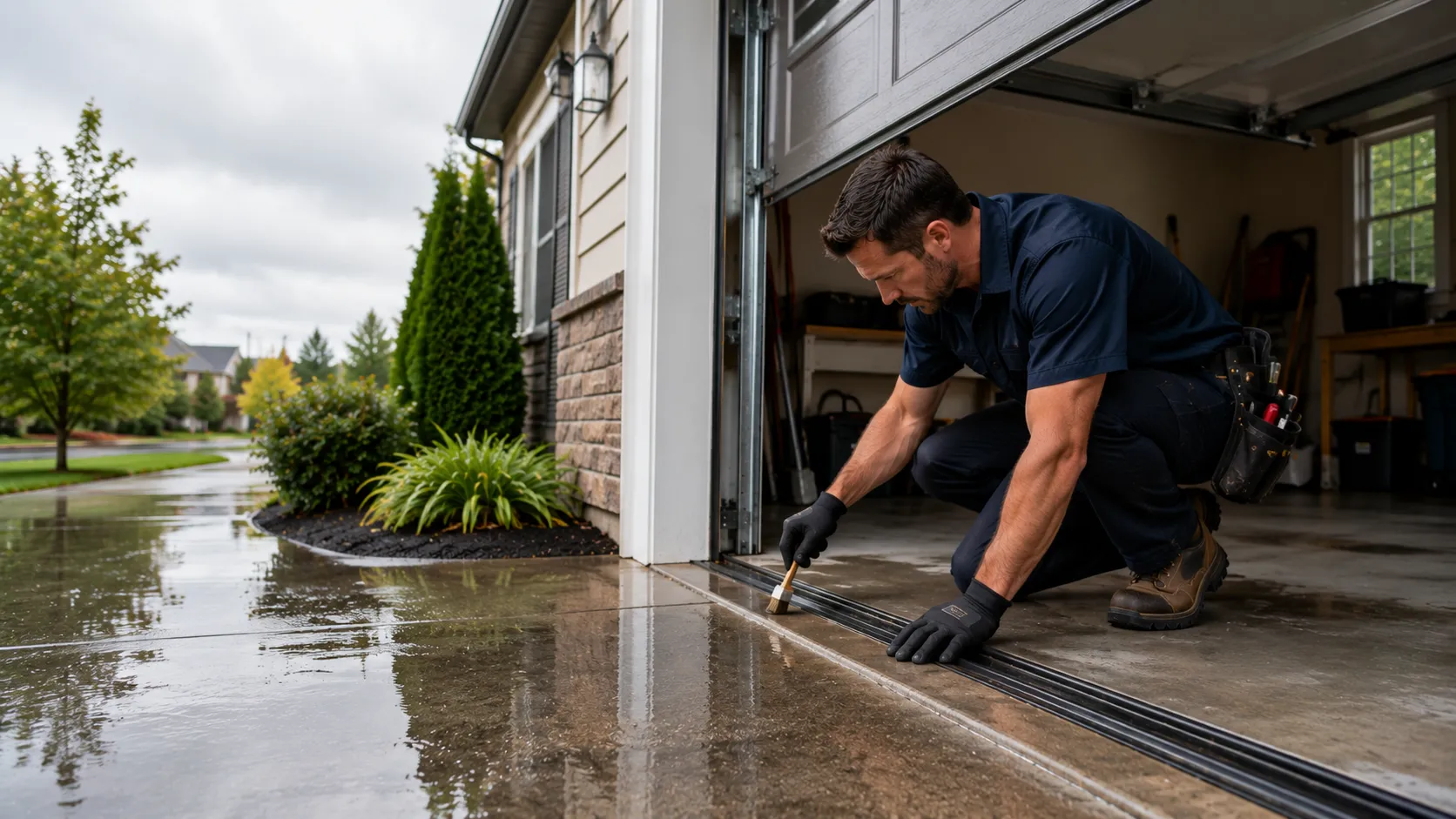
This is a cold-climate area with real seasonal swings, and an uninsulated steel door built for a 1960s garage handles that badly. Steel contracts in a hard freeze, and on an old door that's already a little out of square, that contraction is enough to make a panel bind in the track or a weatherstrip pull loose at the corner.
Torsion springs also lose tension faster with repeated cold-to-warm cycling than most owners expect, so a spring that was fine two winters ago can let go on the first genuinely cold morning of this one. None of that is unique to any one street - it's what this climate does to doors that were never built with insulation in mind, and it's why late fall and the first cold snap are when our phone rings most.
Checking It Yourself
Before you call, look at three things. First, the weatherstrip along the bottom and sides - if it's cracked, flattened, or pulling away from the track, cold air is getting in regardless of what's wrong with the door itself. Second, the springs above the door: a torsion spring with a visible gap where it's separated is broken, full stop, and the door shouldn't be opened by hand or by opener until it's replaced.
Third, run your hand along the track for rust or pitting, common on original hardware that's fifty-plus years old in this climate. What we can't tell you over the phone is whether a door like that is worth repairing versus replacing - once the track, springs, and panel are all original to a 1960s build, sometimes patching one piece just moves the next failure a few months down the road.
How We Can Help
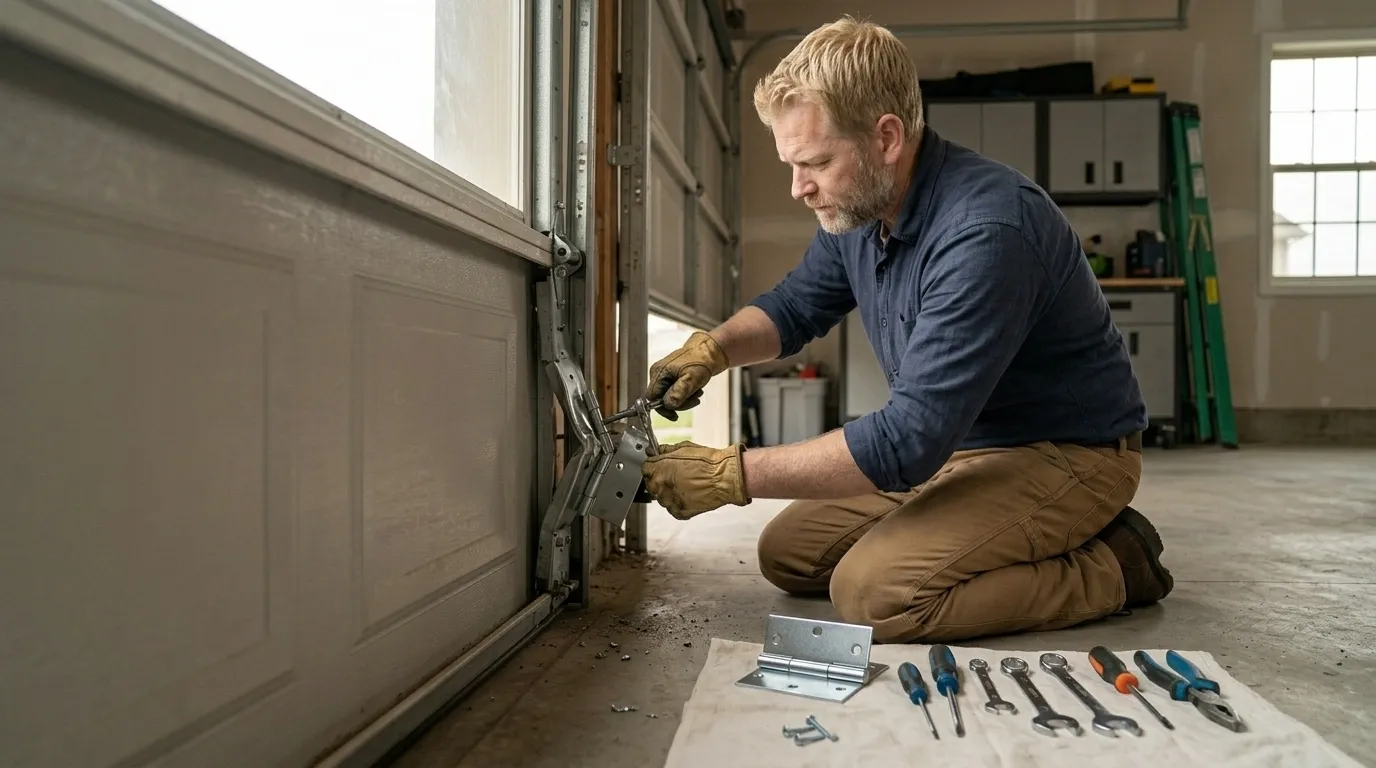
Garage Door Repair
Springs, cables, tracks, rollers, and openers fixed by a tech who explains the problem before touching anything.
Learn more →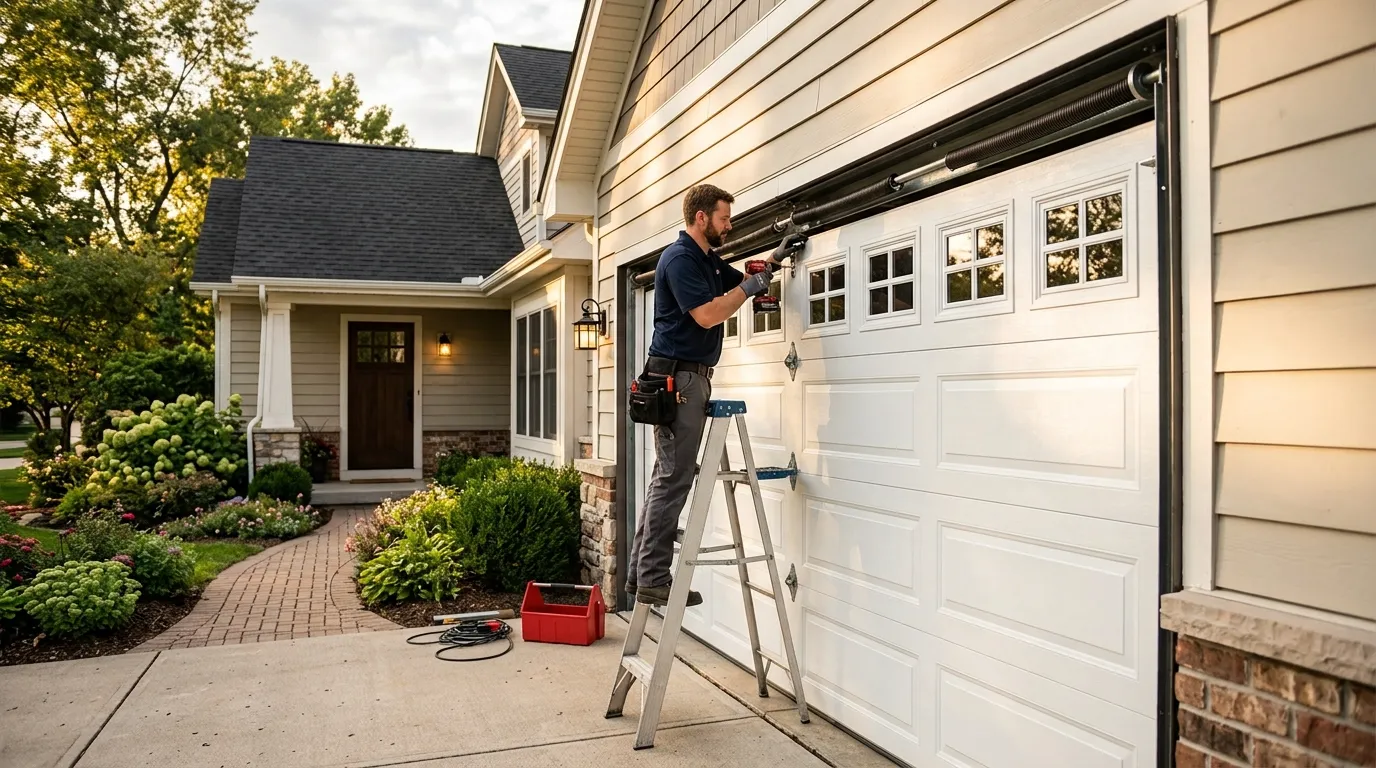
Garage Door Installation
New sectional doors sized and installed for the housing stock actually built in this area.
Learn more →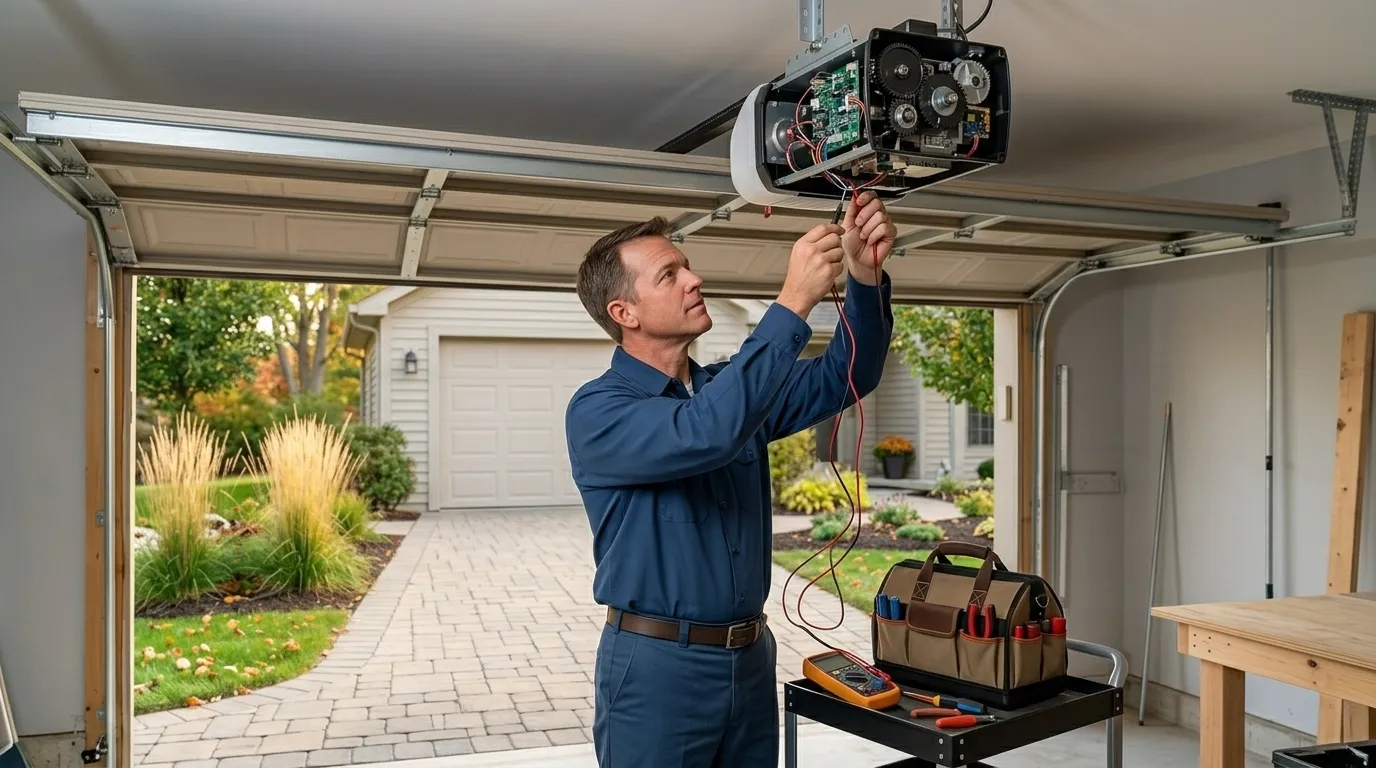
Garage Door Service
Tune-ups, lubrication, and safety checks that catch a small problem before it becomes a service call.
Learn more →Frequently Asked Questions
Why does my garage door feel colder than the rest of the house?
If your house was built in the era common across this area - roughly 1947 to 1990 - the garage door was likely never designed to insulate anything. Builders back then treated garages as unheated space, so the doors are thin steel or wood with no insulation layer, and in a cold-climate area like this, that gap is easy to feel, especially if the garage shares a wall with living space.
Is it normal for a spring to break in cold weather here?
It happens more in the first hard cold snap than any other time of year. Steel springs lose tension faster with cold-to-warm cycling, and on older hardware that's already near the end of its rated life, that extra stress is often what finally breaks it. It's not a defect specific to your door - it's the climate working on decades-old hardware.
Should I repair or replace an original 1960s garage door?
It depends on what's failing. If it's just the spring or weatherstrip, repair usually makes sense. If the track is pitted, the panel is out of square, and the springs are original, you're often patching one failure point while the next one is already forming - at that point replacement tends to cost less over a few years than repeated service calls.
Have a Door That Needs a Second Opinion?
Call and describe what it is doing - we will tell you what it likely is.