
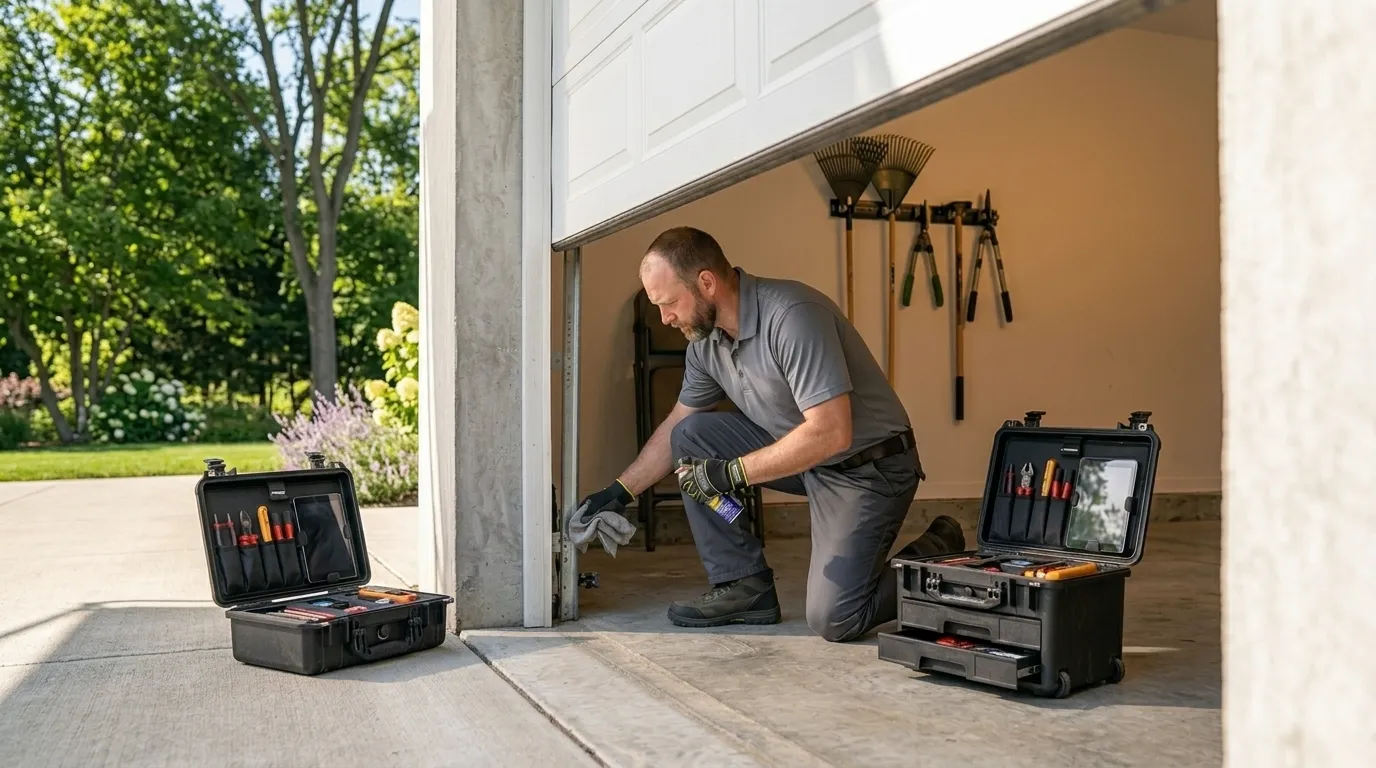
St. Louis Garage Door Guide
What Drives the Cost of a New Garage Door in St. Louis
St. Louis homes from the 1947-1990 building boom often need replacement doors, not repairs. See what drives the cost and how cold winters change your options.
- Licensed & Insured
- Same-Area Service Calls
- Upfront Pricing
What It Costs
We can't quote a number without seeing the door, and anyone who does over the phone is guessing. What we can tell you is what moves the price up or down in this market.
Housing across the service area went up mostly between 1947 and 1990, with the bulk of it dating to the 1960s and 70s. That matters because a door from that era is usually a single-layer panel on hardware that was never designed to be repaired piece by piece forever - springs, rollers, and cable drums all have a rated cycle life, and a lot of what's on these houses now has already used it up.
That pushes a good share of our calls toward full replacement instead of a patch job, because once the track is worn and the spring is near the end anyway, spending money on a partial fix just delays the same decision. Insulated steel doors cost more up front than the uninsulated single-layer doors common on older houses here, but in a cold-climate service area that insulation does real work all winter. We'll tell you plainly when a repair still makes sense and when it doesn't - we'd rather lose the upsell than sell you a fix that fails again in a year.
What Is Going On
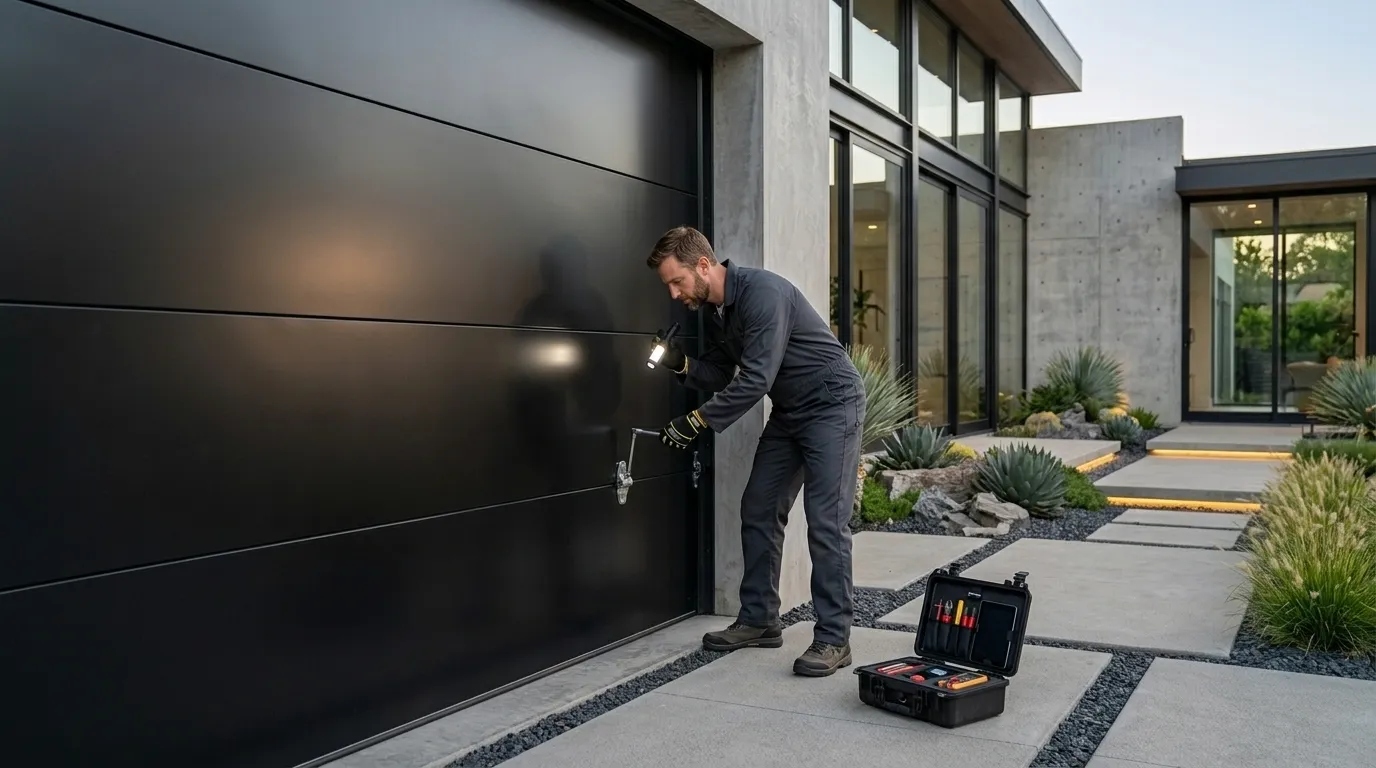
A lot of the doors we get called out to were installed when the house was built, sometime in that 1947-to-1990 window, and a big chunk of those are 1960s or 70s stock. That means original torsion or extension springs, original track, and in many cases the original opener too, all of it decades past when it should have been swapped.
What that looks like in practice: springs that finally let go after thousands of cycles, rollers that have worn oval instead of round, and cable that's frayed at the drum from years of the same stress point. None of this is unusual for a house of this age - it's just what happens when original hardware runs its full life without being replaced piecewise along the way. The door itself, the steel or wood panel, often outlasts the moving parts by a wide margin, which is why you'll see a door that looks fine but won't open, or opens crooked.
It's not the panel failing. It's everything behind it.
What the Weather Here Does to It
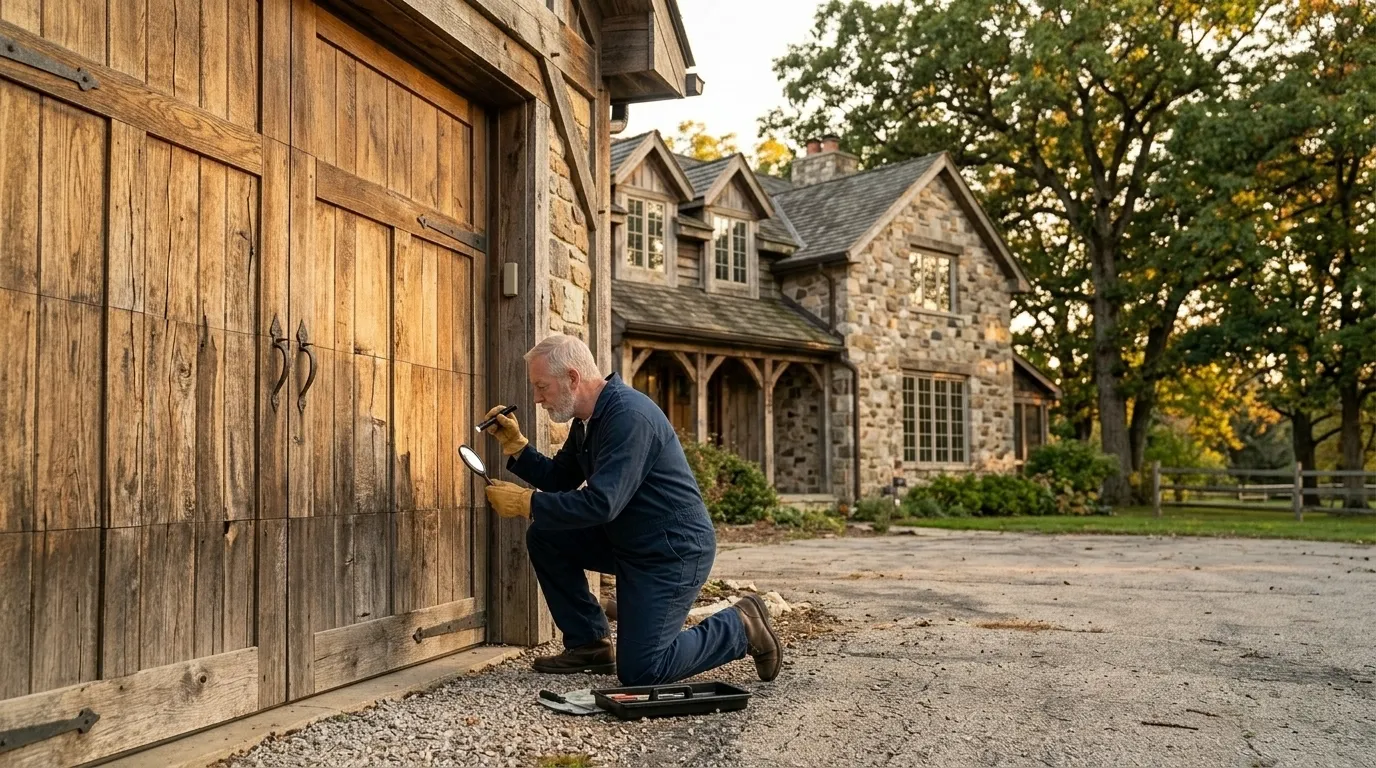
St. Louis sits in a cold, moderate climate band, and that means a real freeze-thaw cycle every winter, not an occasional cold snap.
Steel panels contract in January cold and expand again once temperatures climb, and that repeated movement is hard on anything that's slightly out of adjustment already. A track that's a quarter-inch off in October can bind completely by February once the metal has tightened up in the cold.
Springs feel it too. Cold makes steel less flexible, so a spring that's already near the end of its cycle life is more likely to snap on a cold morning than a mild one - that's why broken-spring calls cluster in winter here. Weatherstripping on older doors, especially the single-layer stock common from the 1960s and 70s building years, tends to crack and shrink in cold weather, which lets in more than just a draft; it lets in the moisture that rusts out a bottom panel from the inside.
None of this is exotic. It's just what a real winter does to hardware that's been in service a long time.
Checking It Yourself
Before you call anyone, there's a short list you can check on your own. Look at the springs above the door - if you see a gap in the coil or it looks stretched unevenly, that's a spring near failure, and we'd tell you plainly not to touch it yourself. Torsion springs are under real tension and this is the one repair on this list we don't recommend as a DIY job, cold weather or not.
Past that: pull the release handle with the door closed and lift it by hand. It should move smoothly and stay roughly where you put it. If it's heavy, drops on its own, or binds partway up, something in the spring or cable system is compromised.
Check the weatherstripping along the bottom for cracking or shrinkage, especially if your house dates to the 1960s or 70s building years common across this area - that original rubber doesn't hold up forever. And look at the rollers where they meet the track; oval wear or visible rust there means they're overdue. None of this tells you exactly what's wrong, but it tells you whether it's worth a call now or something you can watch through the season.
How We Can Help
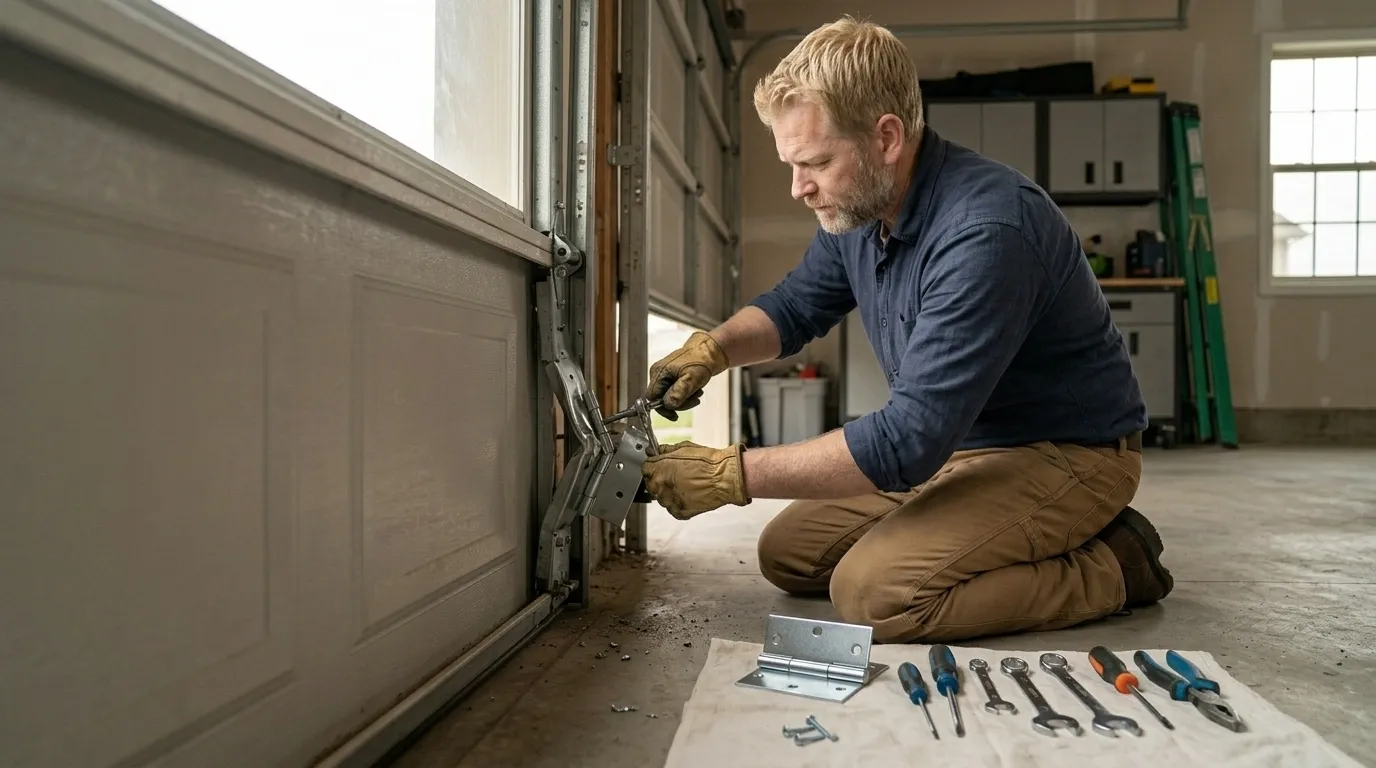
Garage Door Repair
Springs, cables, tracks, rollers, and openers fixed by a tech who explains the problem before touching anything.
Learn more →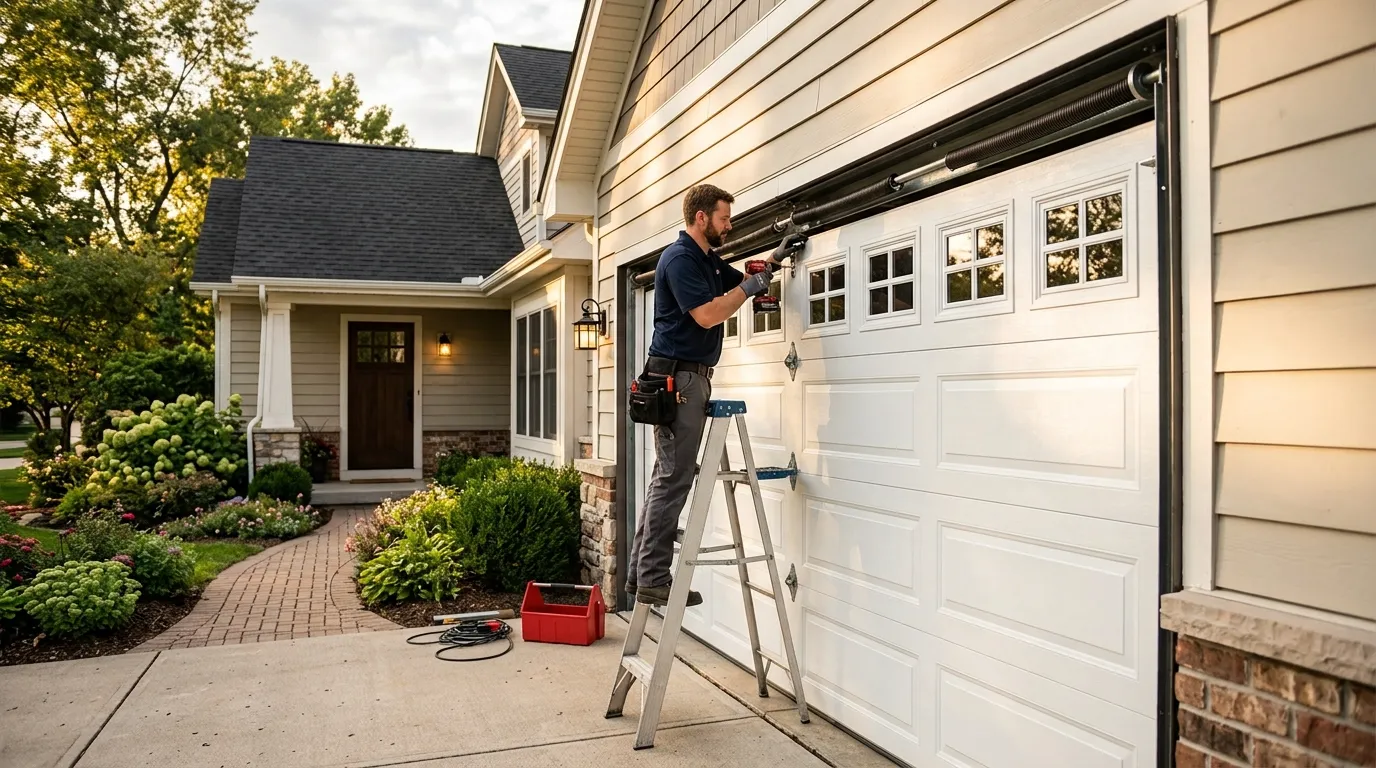
Garage Door Installation
New sectional doors sized and installed for the housing stock actually built in this area.
Learn more →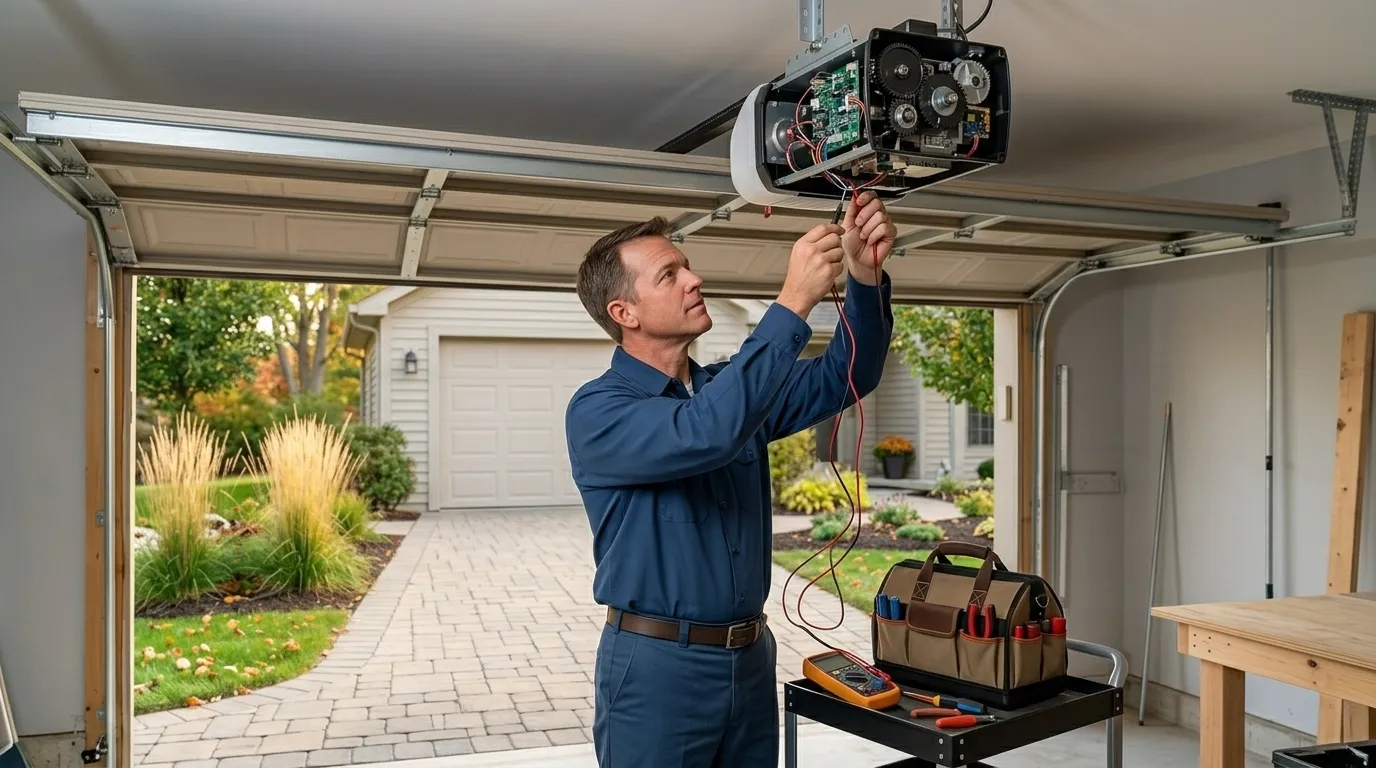
Garage Door Service
Tune-ups, lubrication, and safety checks that catch a small problem before it becomes a service call.
Learn more →Frequently Asked Questions
Is it cheaper to repair my door or replace it?
It depends on the door's age and what's actually broken. On a lot of the 1960s and 70s houses in this area, the original hardware has already outlived its rated cycle life, so a repair today often just delays the same failure elsewhere. We'll tell you honestly which side of that line your door is on before we recommend anything.
Why did my spring break in the middle of winter?
Cold makes steel less flexible, and a spring near the end of its cycle life is more likely to give out on a cold morning than a mild one. St. Louis sits in a cold, moderate climate band, so this pattern shows up every winter, not just in unusual weather.
How do I know if my door is original to the house?
If your house was built between 1947 and 1990, which covers most of this area, check the hardware style - original torsion setups and single-layer panels from that era look distinctly different from anything installed in the last fifteen years. If you're not sure, we can tell you on a visit.
Can I replace a spring myself to save money?
We don't recommend it. Torsion springs are under enough tension to cause serious injury if released wrong, and this is one job on the list we tell every homeowner to leave to someone who does it regularly, regardless of how simple it looks.
Have a Door That Needs a Second Opinion?
Call and describe what it is doing - we will tell you what it likely is.