
St. Louis Garage Door Guide
Detached vs. Attached Garages: What St. Louis Housing Stock Means for Your Door
St. Louis homes built mostly between 1947 and 1990 split between detached and attached garages. Here's how that history and our cold winters change what your door needs.
- Licensed & Insured
- Same-Area Service Calls
- Upfront Pricing
What It Costs
We can't quote a number here without seeing the door, but we can tell you what drives the bill either way. A detached garage built in the era common across this area - 1947 to 1990, with most stock clustering in the 1960s and 70s - often still runs original hardware: side-mounted torsion springs, steel track nobody makes in that gauge anymore, sometimes a jamb that's shifted enough that a stock replacement panel won't sit square.
That's a bigger job than swapping a section. An attached garage from the same build era usually got upgraded sooner, since it's part of the house envelope and shows problems faster - drafts, daylight around the frame - so owners tend to catch it earlier and the fix stays smaller.
With a median household income of $84,389 across the service area, most owners we talk to want the honest read on repair-versus-replace before committing, not a push toward a full teardown. If your detached door is original hardware from the 1960s, we'll tell you straight when patching it further is just delaying the inevitable, and when it's still fine to leave alone.
What Is Going On
Across the 49 named areas we work in - Clayton, Kirkwood, University City, Ferguson, and the rest - the housing split tells you a lot about what kind of garage you've got. Homes toward the older end of that 1947-1990 range, especially anything built before the mid-1960s, are more likely to have a detached garage set back from the house, often reached by a separate short driveway spur. As the stock rolls into the late 60s and 70s median, attached garages become the norm - built as part of the house, sharing a wall and usually a slab.
That matters because the door isn't just a door. On a detached structure it's often the only insulated surface in the building. On an attached one, it's the weak point in an otherwise conditioned wall.
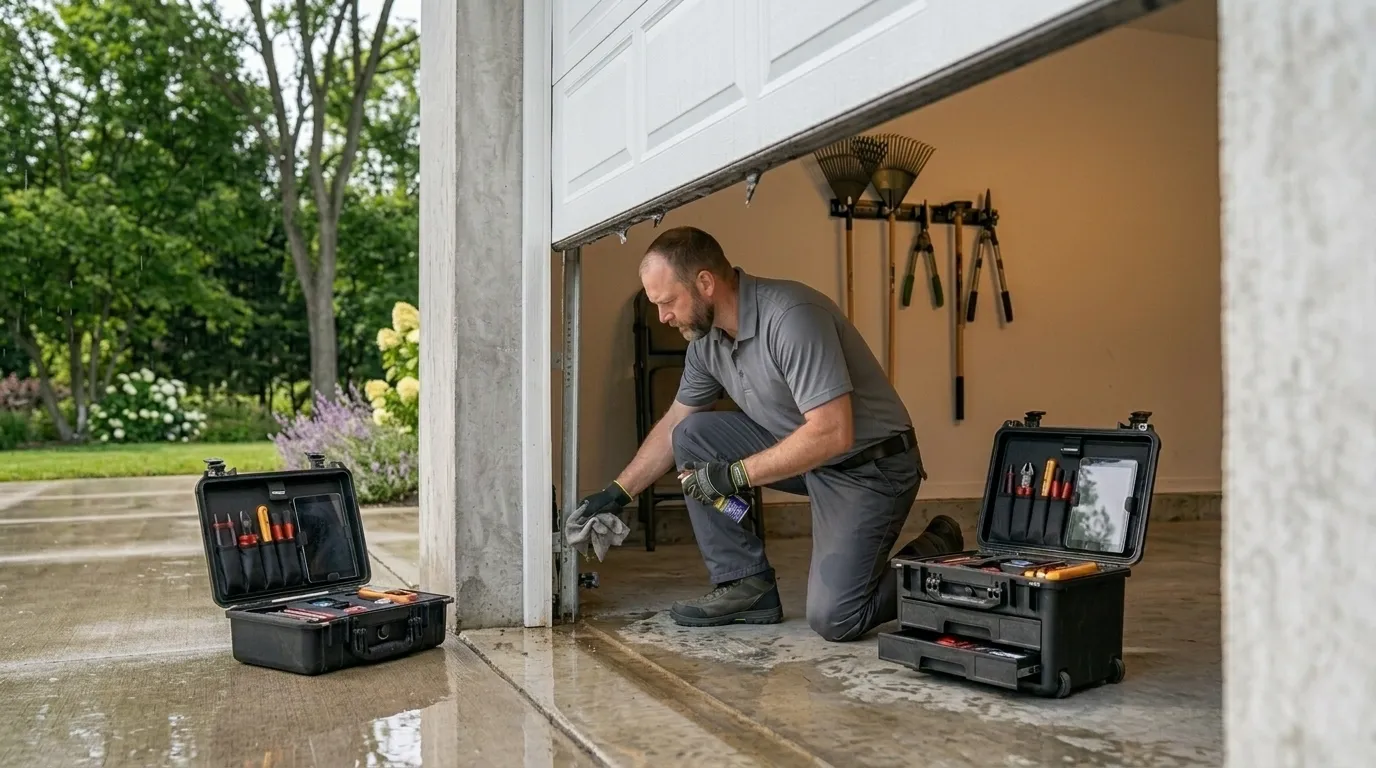
A worn seal on a detached door mostly costs you in drafts on the garage side. The same worn seal on an attached door pushes cold air straight against a wall the house is trying to heat. Same part, different consequence, and it comes down to which kind of structure you're standing in front of.
What the Weather Here Does to It
St. Louis sits in a cold, moderate climate band - real winter, real freeze-thaw cycling, not the extreme cold of the northern plains but enough to work metal and rubber hard over a season.
A detached garage has no shared wall to a heated house, so its interior swings closer to outdoor temperature all night, every night. That's the swing that dries out weatherstripping, shrinks rubber astragals until they gap at the corners, and over enough winters can bow a steel panel slightly at the seams where cold and residual daytime heat meet.
An attached garage runs warmer on average because it borrows heat through the shared wall, so its door doesn't see the same nightly extremes. That doesn't mean it's immune - a cold snap still stiffens torsion springs and can make an opener strain on the first pull of the morning - but the cycling is gentler. If you've got a detached garage on an older lot here, expect to replace bottom seals more often than a neighbor with an attached one, purely because of that temperature swing, not because either door is built worse.
Checking It Yourself
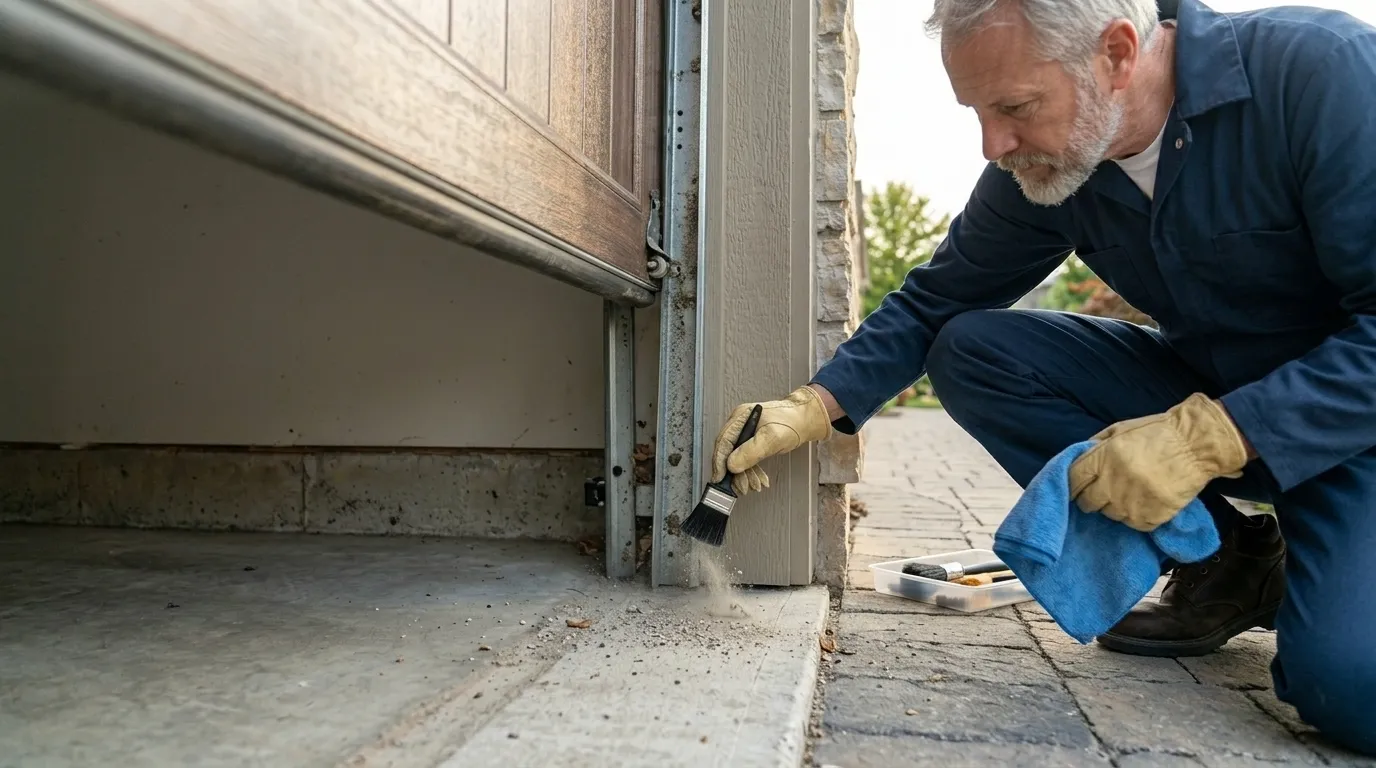
Start at the bottom seal. On a detached garage, run a hand along it on a cold morning - if you feel air moving through instead of resistance, the rubber's given up to the freeze-thaw cycling this area gets every winter. On an attached door, check the same seal but also put a hand on the wall a foot either side of the frame; if that wall feels noticeably colder than the rest of the garage, the door's the leak point in your house's envelope, not just the garage's.
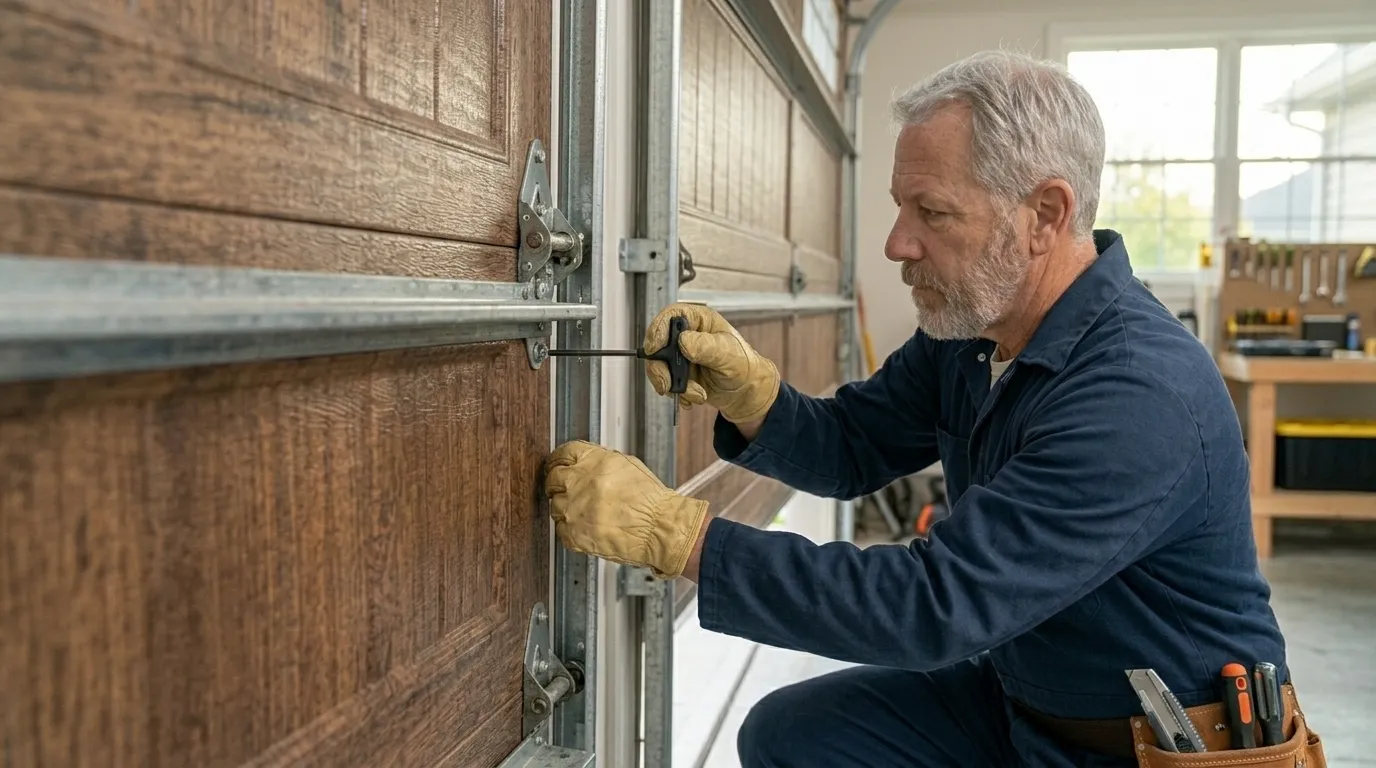
Next, look at the track mounting. Homes from the older end of our 1947-1990 range often have side-mounted brackets bolted straight to a wood jamb that's had decades to season and shrink slightly. Wiggle the bracket by hand - a little give is normal, more than that and the lag bolts have backed out of dried-out wood.
One honest limit: we can tell you what a seal or bracket problem looks like, but we can't tell you the exact age of your door's springs without a torque check on site, and guessing wrong on spring tension is how people get hurt. Leave that part to a call.
How We Can Help
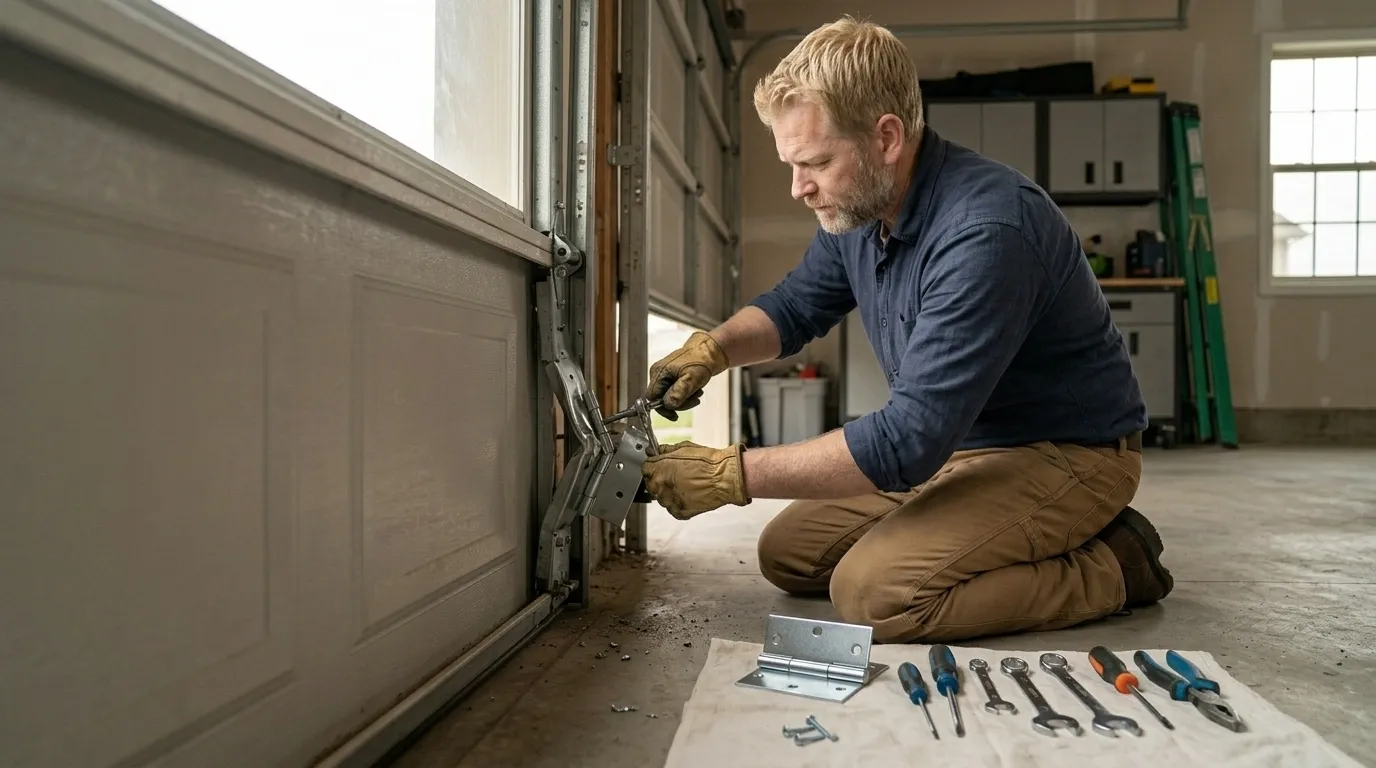
Garage Door Repair
Springs, cables, tracks, rollers, and openers fixed by a tech who explains the problem before touching anything.
Learn more →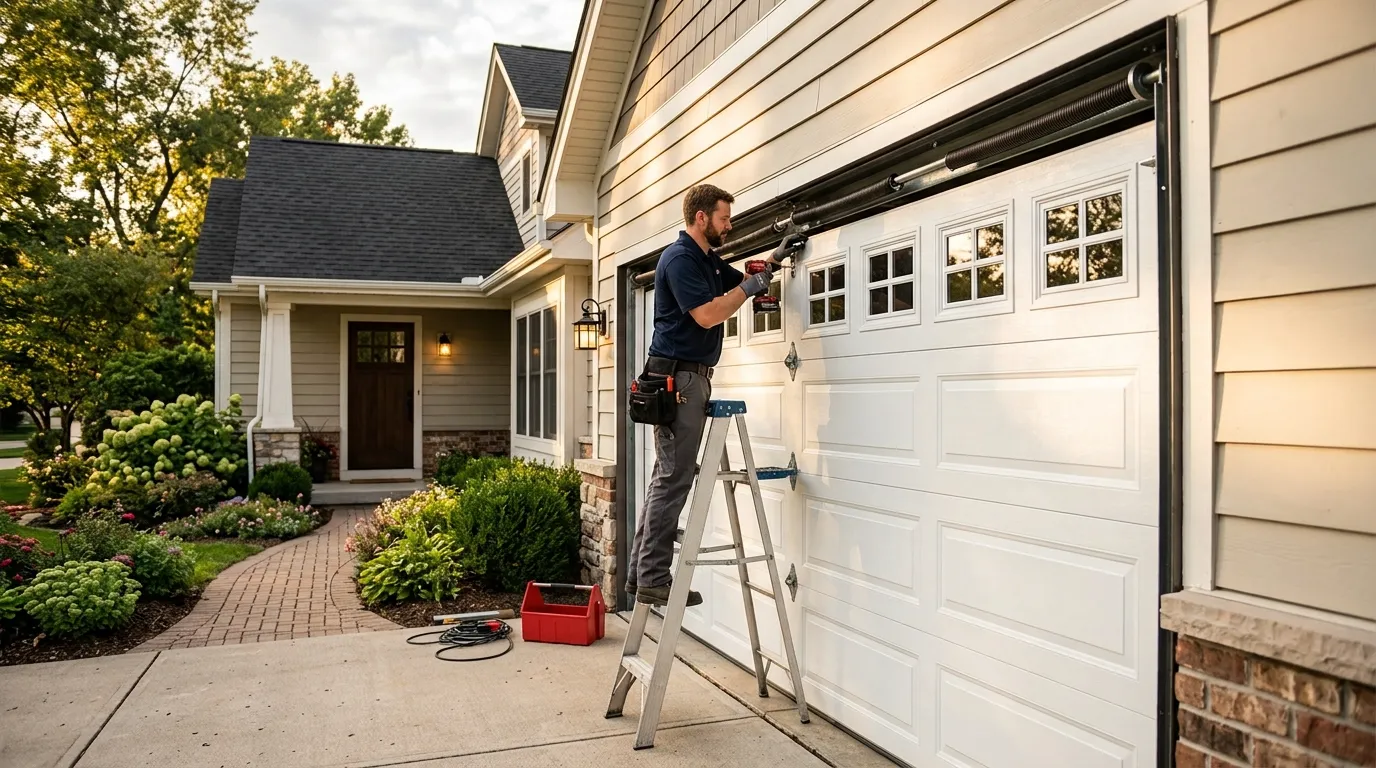
Garage Door Installation
New sectional doors sized and installed for the housing stock actually built in this area.
Learn more →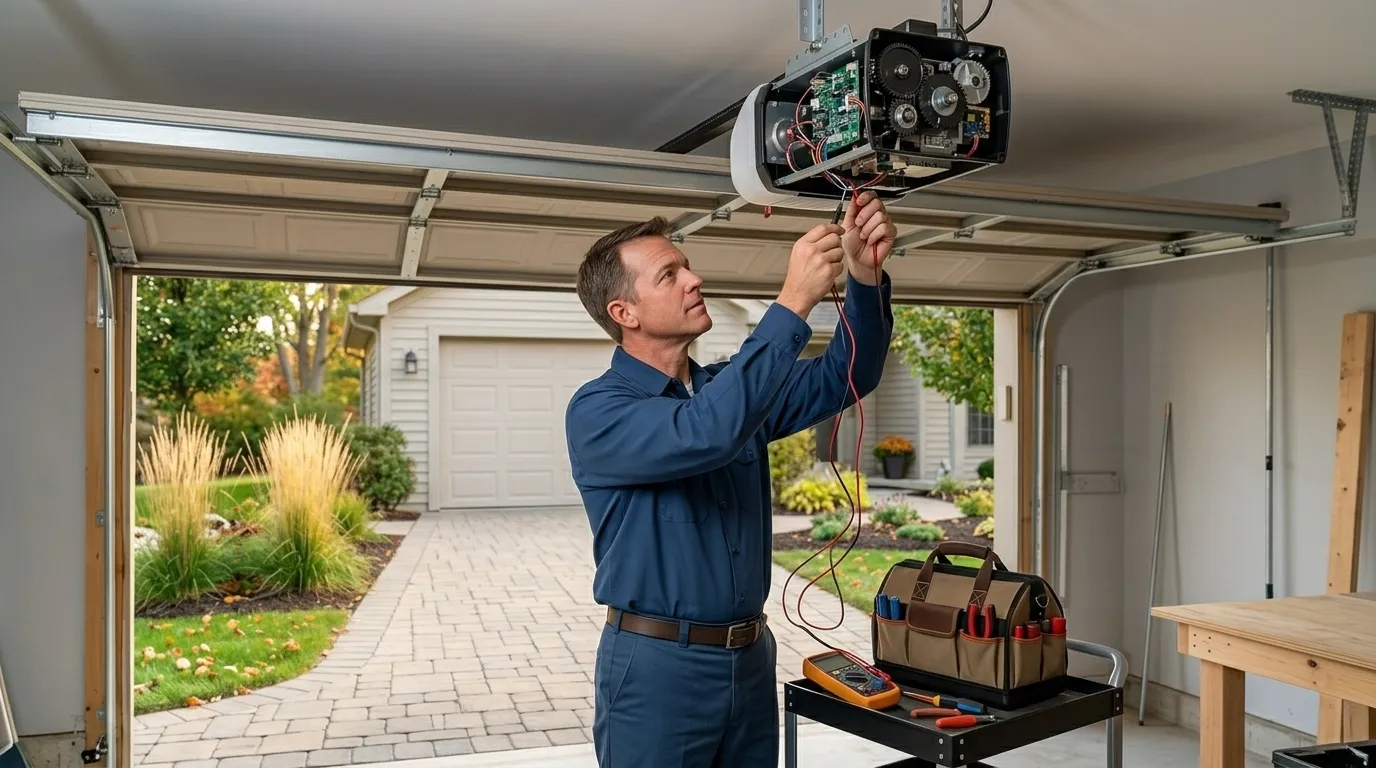
Garage Door Service
Tune-ups, lubrication, and safety checks that catch a small problem before it becomes a service call.
Learn more →Frequently Asked Questions
Is a detached garage door repair different from an attached one here?
Mechanically the door itself is often the same. The difference is what's around it - a detached structure on an older St. Louis lot is more likely to still have original 1960s-era side-mounted hardware, which takes longer to source parts for than the newer track systems common in attached garages built later in that same era.
Why does my detached garage door seal wear out faster than my neighbor's attached one?
A detached garage has no shared wall with a heated house, so it swings closer to outdoor temperature overnight. In our cold, moderate climate that nightly freeze-thaw cycling dries and shrinks rubber seals faster than it does on an attached door, which borrows some heat through the shared wall.
Does an older attached garage door affect my home's heating?
It can. If your house falls in the common 1947-1990 build range for this area, the attached garage door is often the least insulated surface in that wall. A worn seal there pushes cold air straight against living space, not just against the garage.
Have a Door That Needs a Second Opinion?
Call and describe what it is doing - we will tell you what it likely is.