
Nearby Community
Garage Door Service for Ferguson's 1950s Homes
Serving Ferguson's 1950s housing stock from St. Louis, 8 miles out. We know the original hardware on these post-war doors and what tends to fail first.
- Licensed & Insured
- Same-Area Service Calls
- Upfront Pricing
The Houses Here
Ferguson's houses mostly went up in 1957, which puts it a decade ahead of the service area's overall median build year of 1967. That matters more than it sounds like it should. A door built for a 1957 opening was almost always a single wide panel on extension springs mounted along the horizontal track, not the torsion-bar setup that became standard once builders moved into the 1960s and 70s across most of the rest of the area we cover.
If your house is one of the originals, or close to it, there's a decent chance the bracket spacing, the track radius, and even the header clearance don't match what a big-box replacement door assumes out of the crate. We've measured enough of these openings to know a stock kit sometimes needs an adapter plate or a reworked header bracket before it'll hang square. That's not a knock on the house - it's just older than the parts aisle expects.
How Soon We Can Come Out
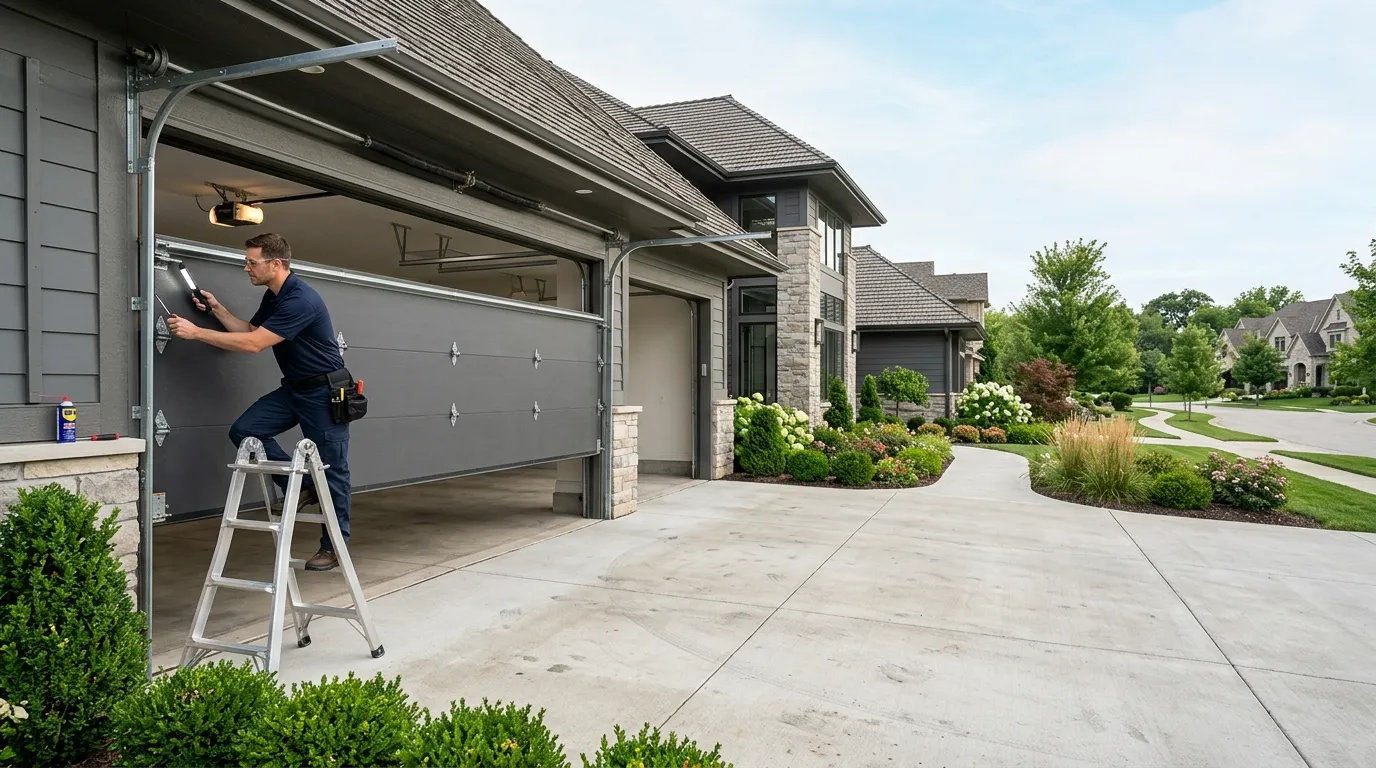
We run out of St. Louis, and Ferguson sits about 8 miles from there. We don't keep a crew stationed in Ferguson, so we're not going to promise a same-hour arrival - what we can tell you is that the drive is short enough that it doesn't add much to the wait compared with jobs closer to the shop.
If a spring lets go on a Tuesday morning, call and we'll give you a real window based on the day's schedule, not a number pulled out of thin air. We'd rather tell you 90 minutes and mean it than promise 20 and show up late.
What We Do Most in This Area
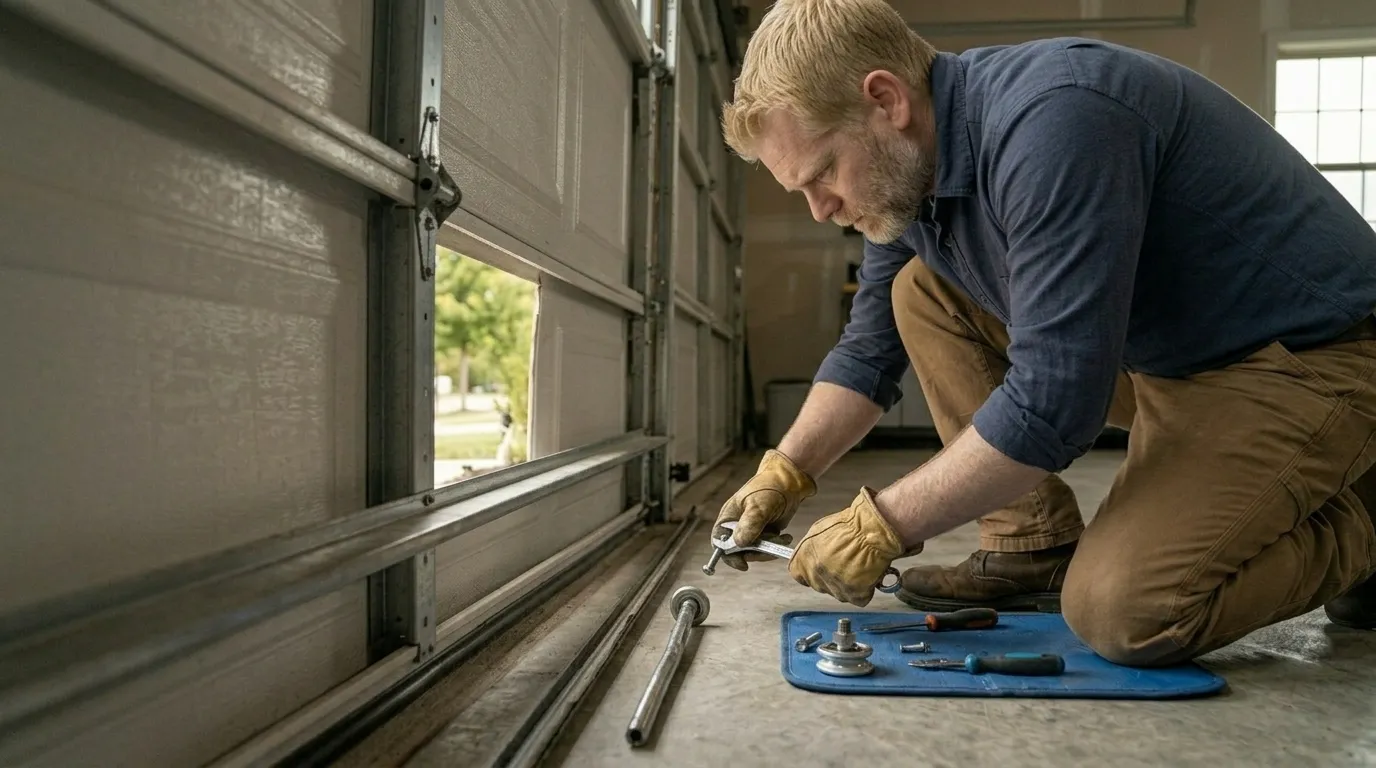
Given how much of Ferguson's stock traces back to the late 1950s, the calls we get here skew toward extension-spring failures and worn horizontal track rather than the torsion-spring snaps that dominate in the newer pockets of the area. Cold winters here - this whole region sits in a moderate-cold climate band - stiffen old grease in track rollers and pull rivets loose in panels that have been expanding and contracting for close to 70 years.
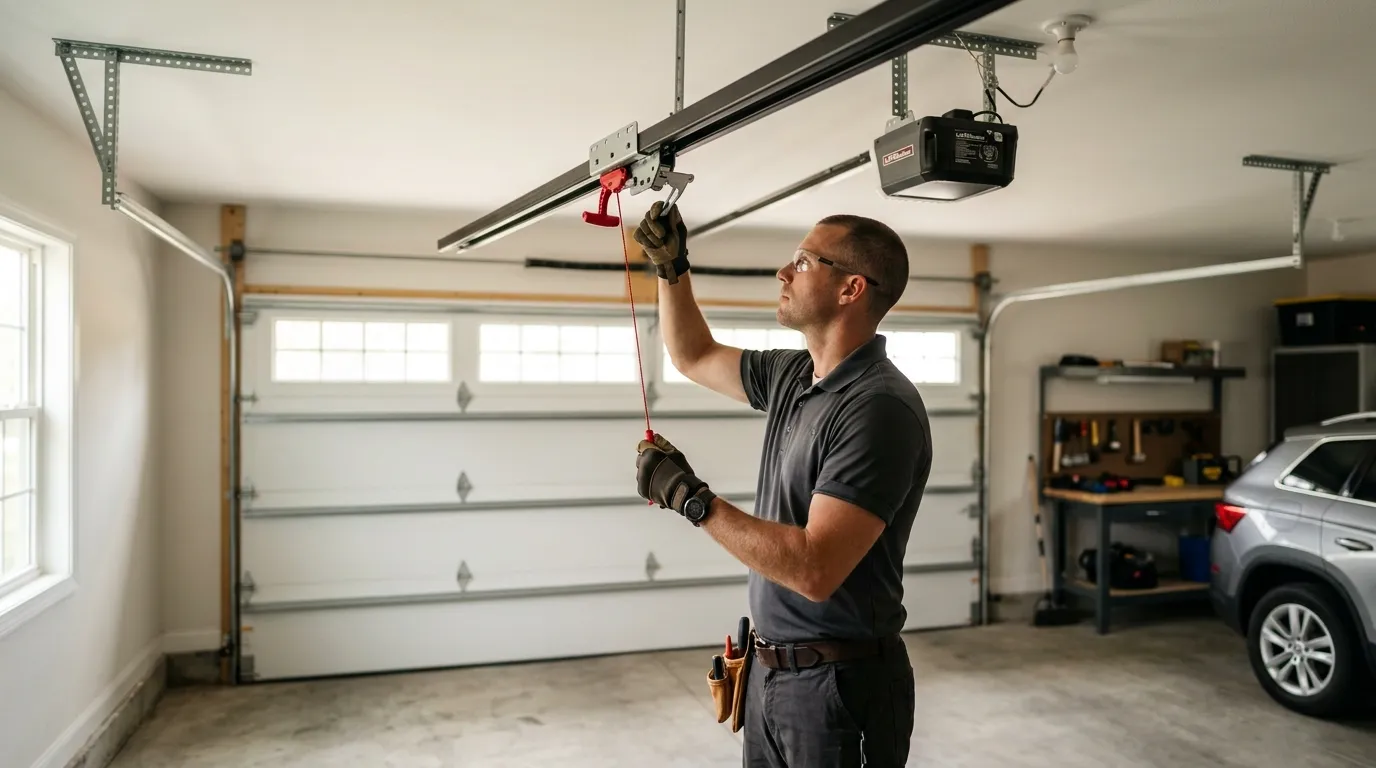
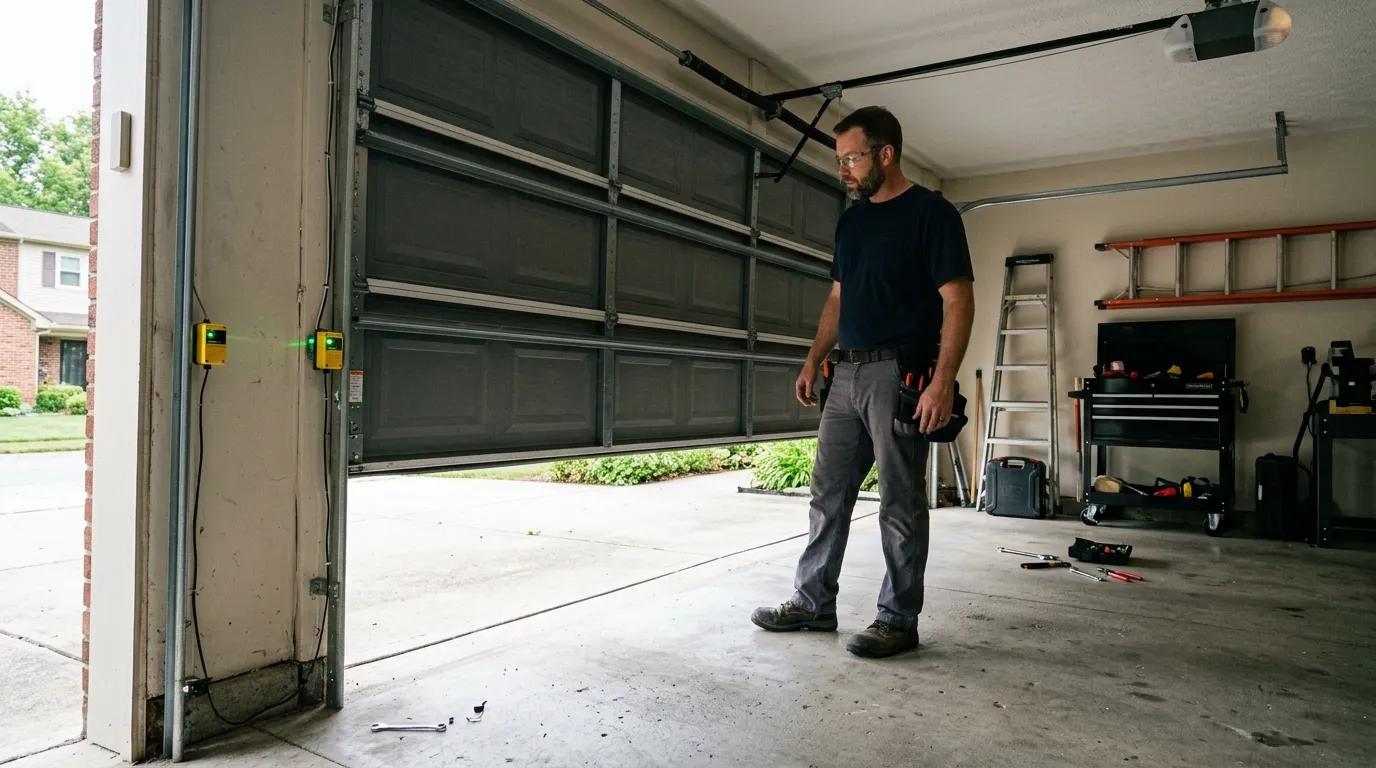
We also see a fair number of openers that were retrofitted onto original hardware decades after the door itself was installed, which sometimes means the safety reversal sensors were never brought up to current standard. With household income here running lower than the $84,389 median across the broader area we serve, we try to be upfront early about whether a repair actually makes sense versus letting a job run long on parts that are hard to source for a door this old.
How That Shows Up in the Door
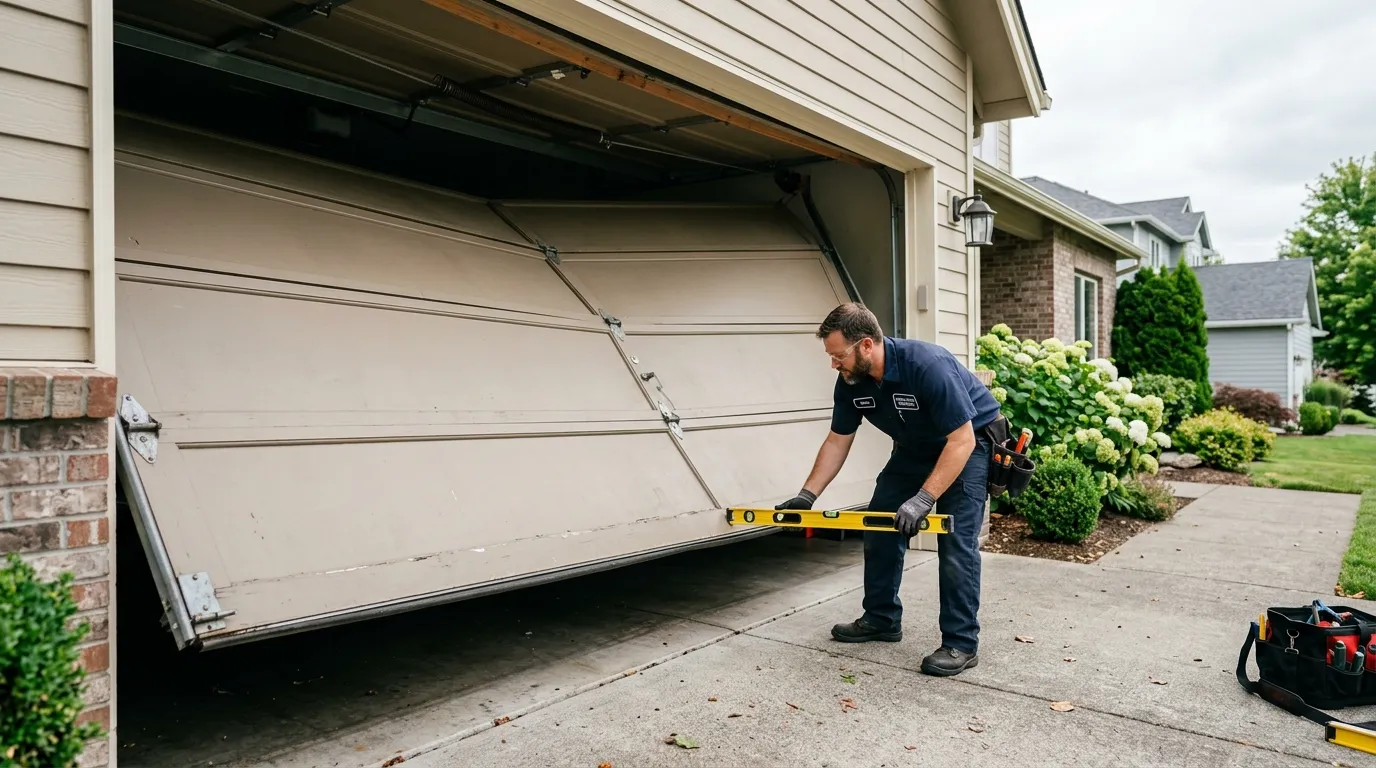
On a 1957 house, a sagging door is often not a broken spring at all - it's stretched extension springs that have lost tension gradually, which feels like the door is heavy at the bottom of its travel rather than snapping shut. We also see hinges worn oval from decades of a single-panel door flexing on hardware that was never designed for the added weight of a retrofit insulation kit. One honest limitation: original extension-spring hardware from this era is not something we stock in bulk, since most of it isn't manufactured the way it used to be.
If your setup needs an exact match rather than a compatible upgrade, that part may take longer to source than the repair itself. We'll tell you that up front rather than let you assume it's a same-day fix.
How We Can Help
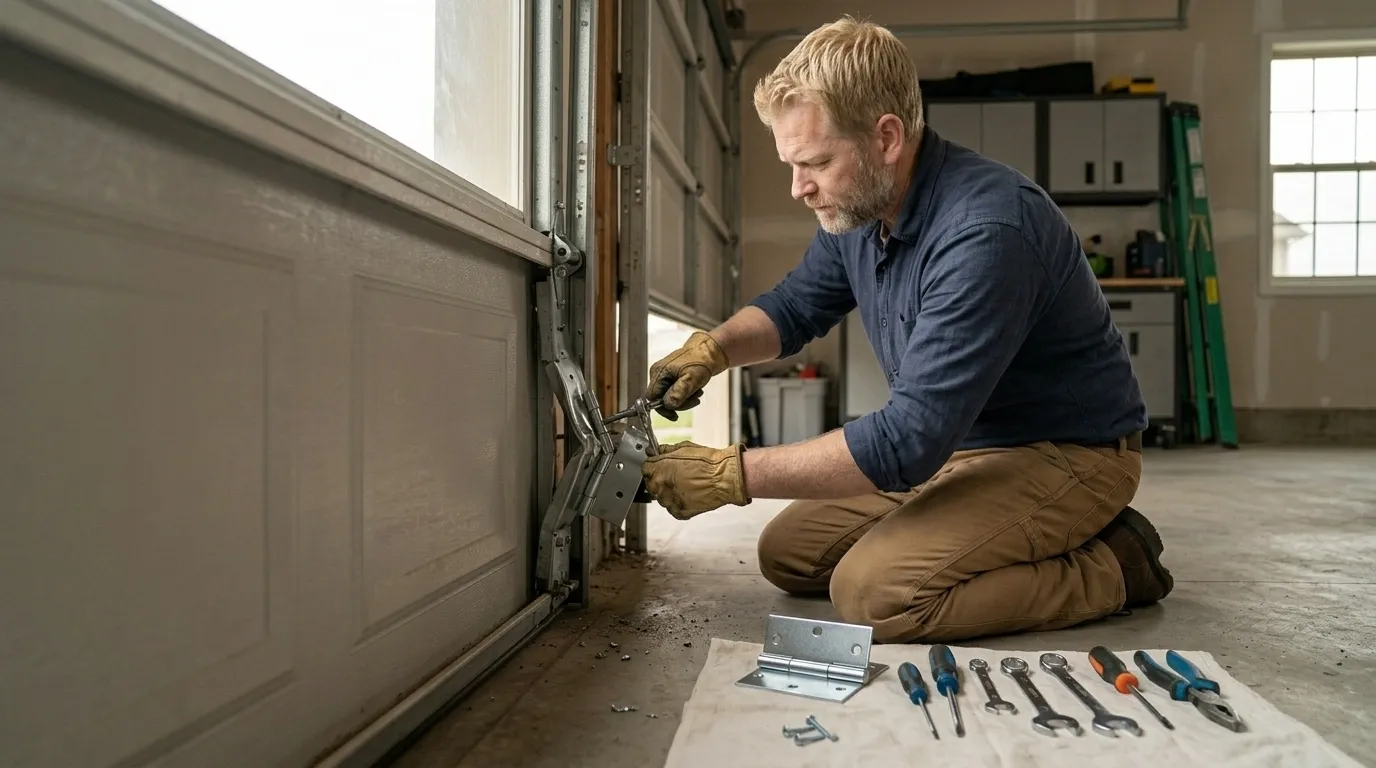
Garage Door Repair
Springs, cables, tracks, rollers, and openers fixed by a tech who explains the problem before touching anything.
Learn more →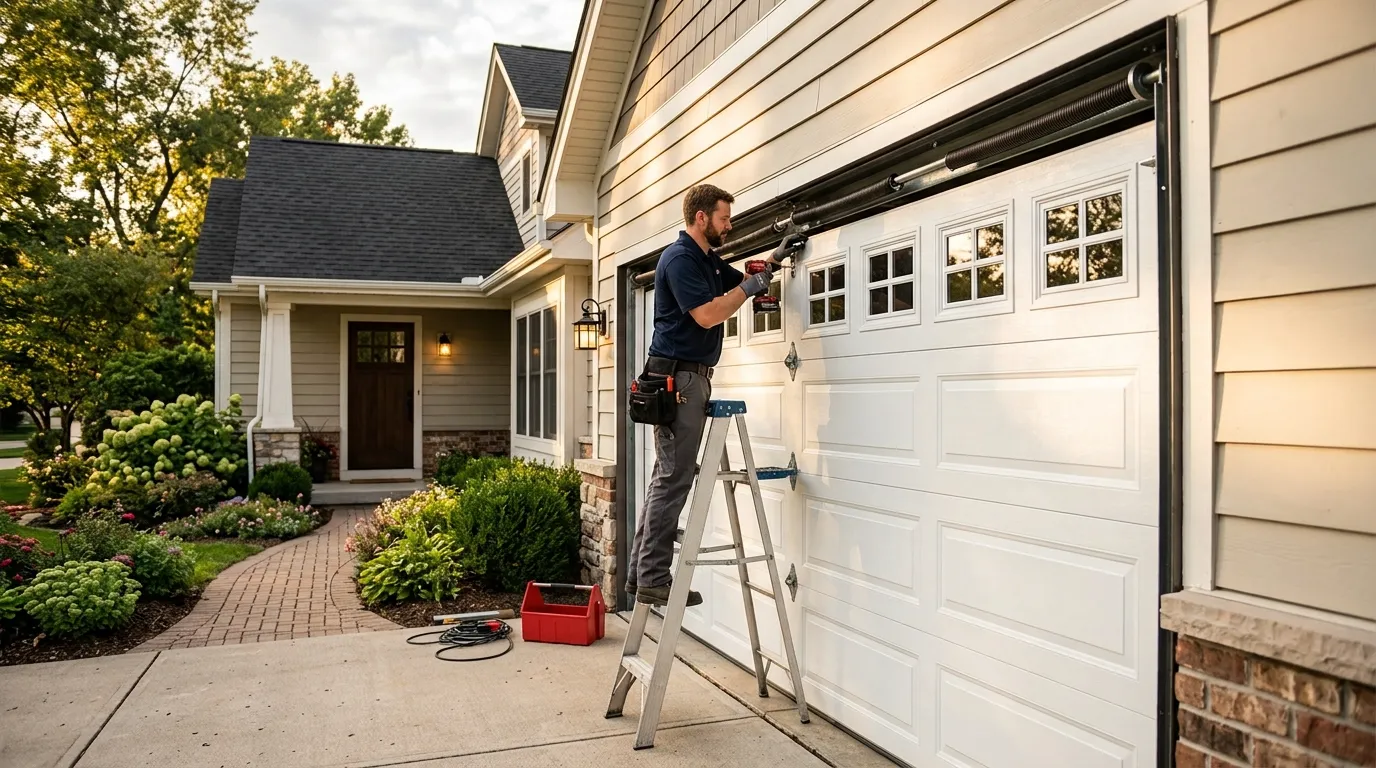
Garage Door Installation
New sectional doors sized and installed for the housing stock actually built in this area.
Learn more →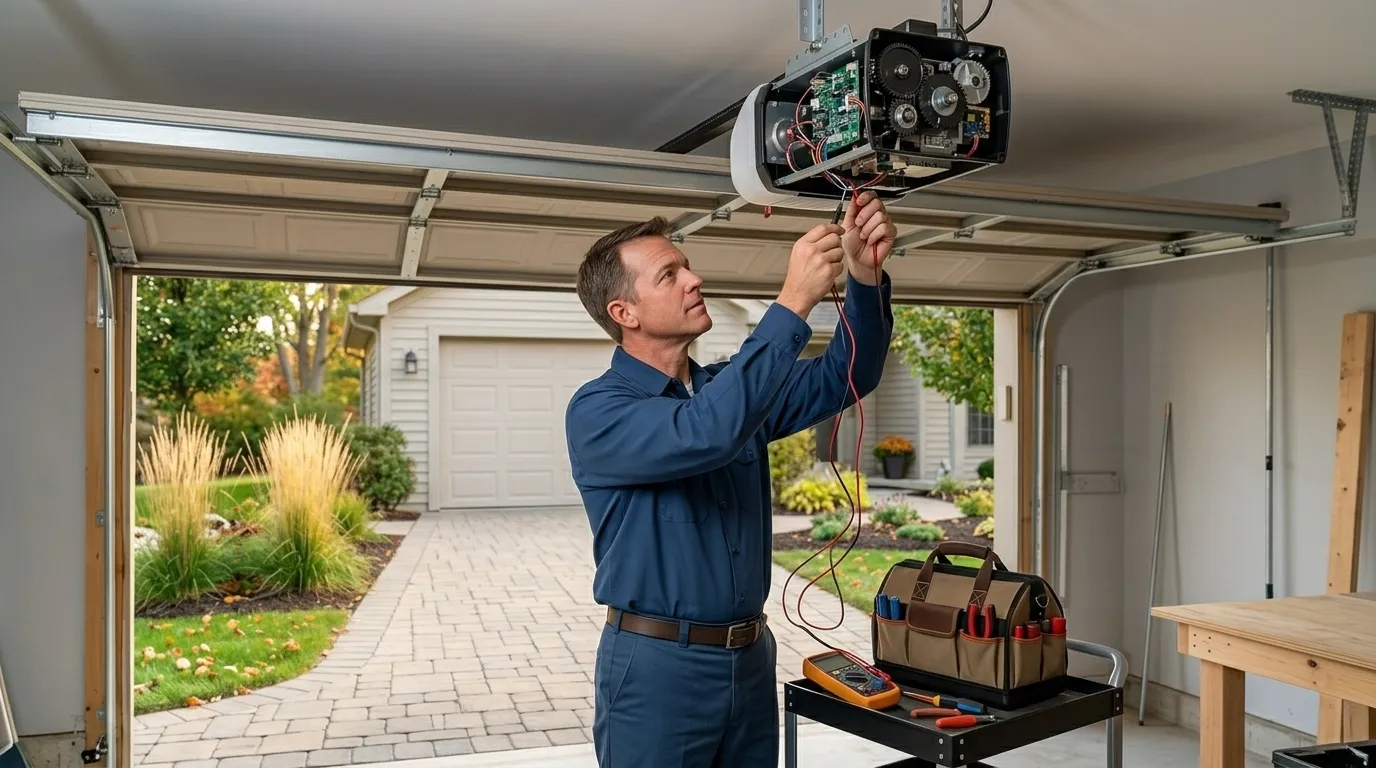
Garage Door Service
Tune-ups, lubrication, and safety checks that catch a small problem before it becomes a service call.
Learn more →What Happens When You Call
-
1
Call or Request a Quote
Tell us what the door is doing and roughly how old the house is - that alone points us toward the likely part before a truck leaves.
-
2
On-Site Diagnosis
A tech checks the spring, cables, tracks, and opener in person and tells you plainly what is actually wrong.
-
3
Straight Price, No Surprises
You get a number before any work starts. It covers parts and labor, nothing added after the fact.
-
4
Fixed the Same Visit
Most repairs are done in one trip. If a part needs sourcing, we tell you that upfront instead of guessing.
Recent Work Near Ferguson
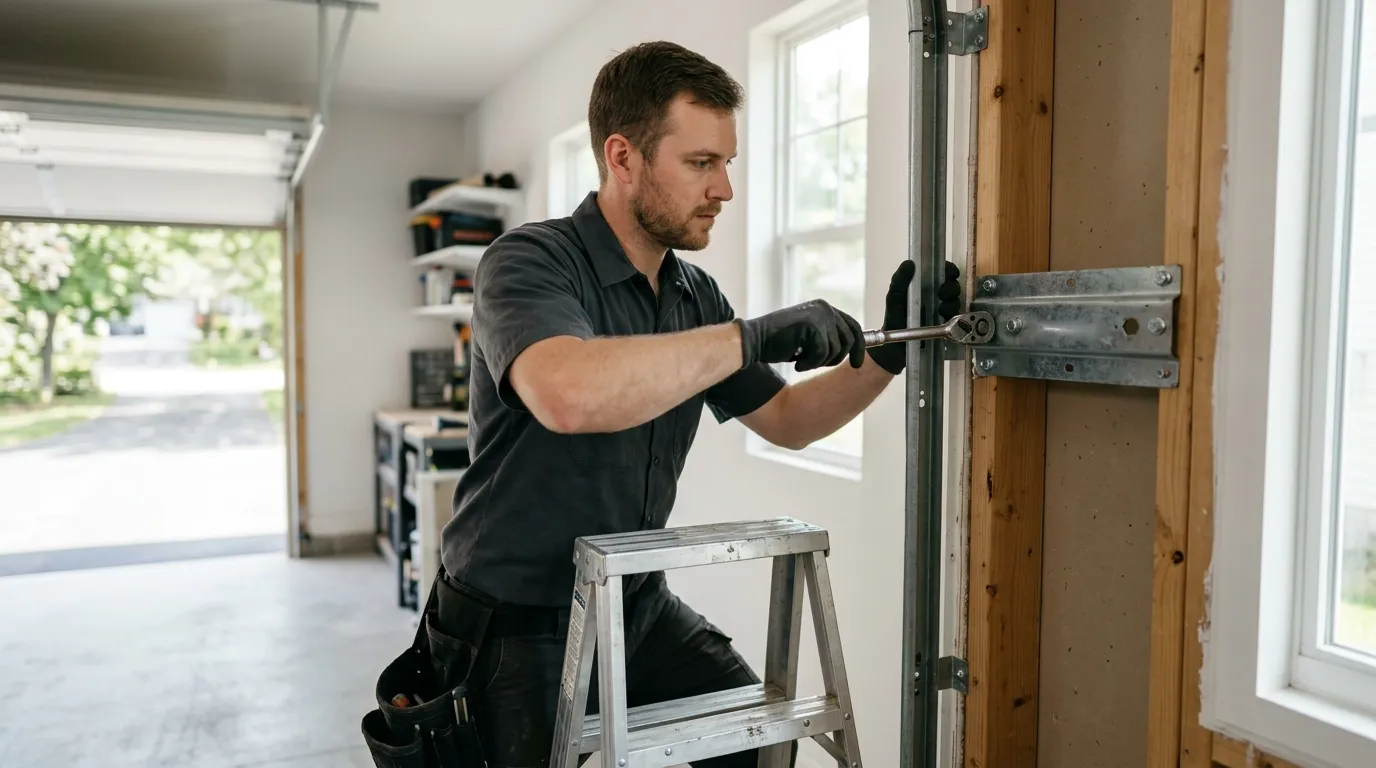
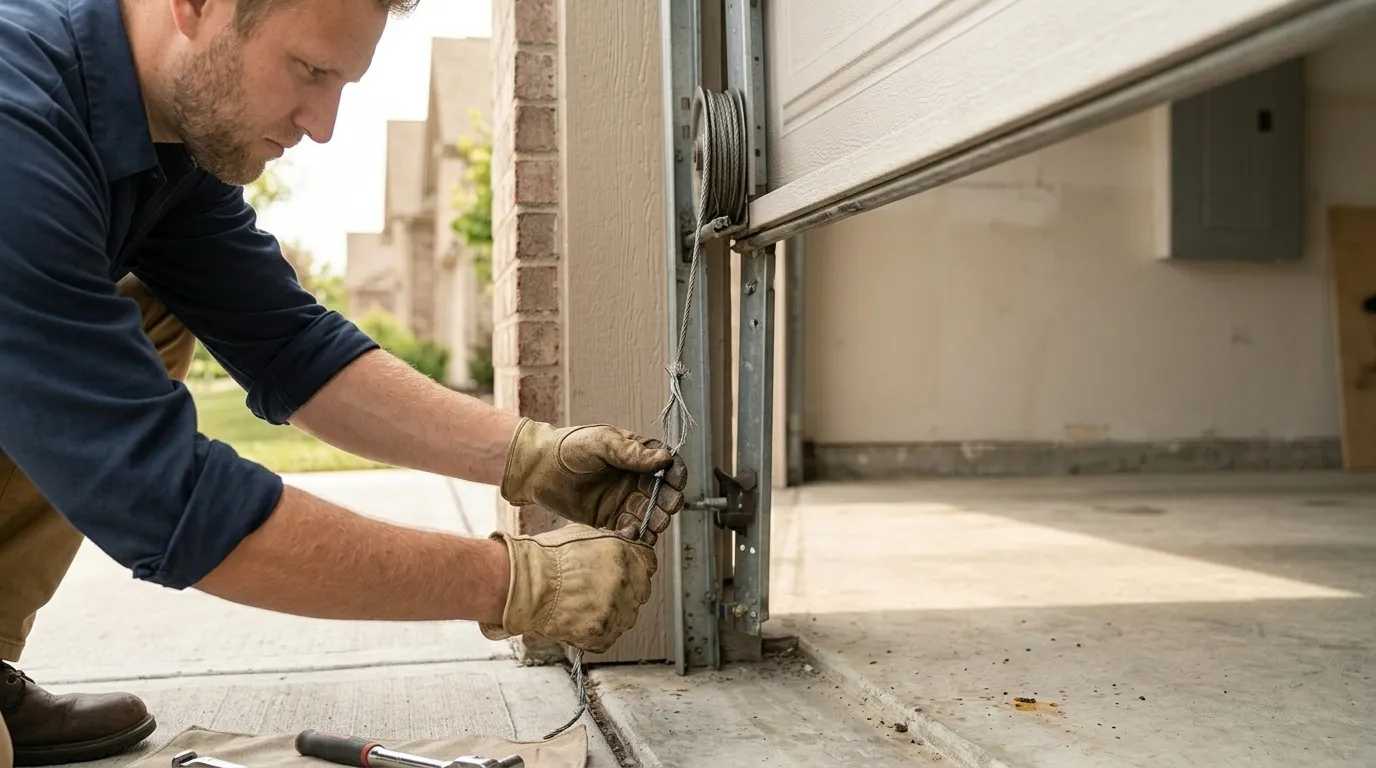
Frequently Asked Questions
Are the doors in Ferguson different from newer parts of the area?
Often, yes. Ferguson's housing mostly dates to 1957, which is earlier than the 1967 median across the wider service area. Many original doors here run on extension springs and horizontal track rather than the torsion-bar systems common in houses built through the 60s and 70s.
Do you have a crew based in Ferguson?
No. We work out of St. Louis and drive to Ferguson, which is about 8 miles away. We don't promise a fixed response time, but the distance is short enough that it's not usually a factor in scheduling.
Why did my extension springs stretch out instead of just breaking?
On older single-panel doors, extension springs tend to lose tension gradually over years of use rather than snapping the way torsion springs do. That gradual sag is common on the original hardware still found on many 1950s-era Ferguson homes.
Is it worth repairing an old door instead of replacing it?
Depends on the hardware. If your door still uses original extension-spring track from the 1950s, exact replacement parts can be hard to source and slow to get. Sometimes a compatible upgrade makes more sense than chasing an exact match - we'll walk through both options before you commit to either.
Get Your Door Fixed in Ferguson
Call now for same-area service.