
St. Louis Garage Door Guide
Why Your Garage Door Sensors Keep Drifting Out of Alignment
St. Louis garages built between 1947 and 1990 see sensor brackets shift with slab movement and cold-season swings. Here's why it happens and how to check yours.
- Licensed & Insured
- Same-Area Service Calls
- Upfront Pricing
What It Costs
We don't have a flat number to hand you here, because sensor calls in this service area split into two very different jobs. Sometimes it's a five-minute fix: someone nudged a bracket, a cobweb is blocking the beam, or the wire got pinched when a bike leaned against it. Other times, especially in a garage with the original 1960s or 70s bracket hardware, the mounting has rusted or the wood behind it has softened, and you're replacing hardware, not just aiming a sensor.
The honest answer is that we can't quote sensor work without seeing whether the bracket itself is sound. If the bracket is original to a house built in that 1947-1990 window and it's never been touched, budget for a look at the whole mount, not just the eye. We'll tell you straight if it's a five-minute alignment or a bracket swap before we start.
What Is Going On
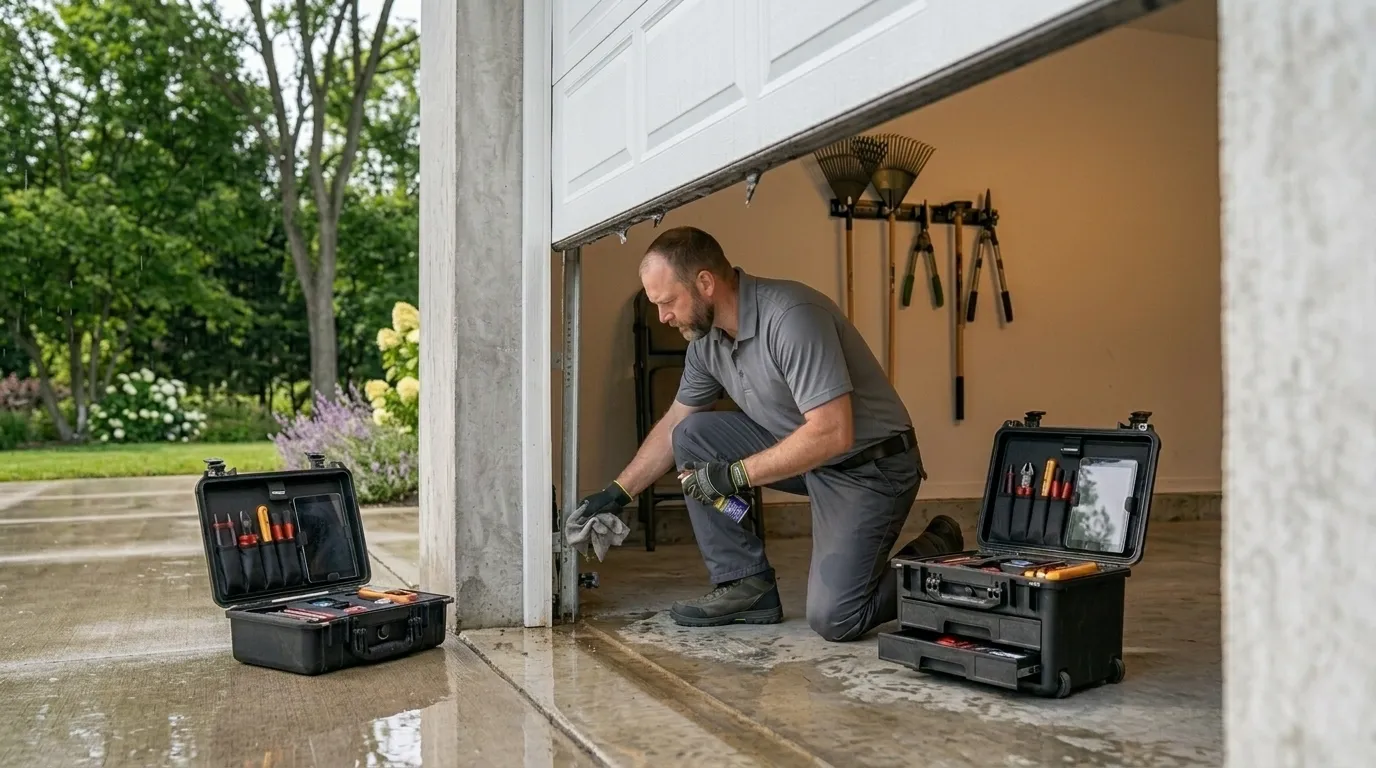
Safety sensors work off a straight-line infrared beam between two small eyes mounted a few inches off the slab on either side of the door track. That beam has to stay dead level to work. Across the St.
Louis service area, most of the housing stock went up between 1947 and 1990, with the heaviest concentration in the 1960s and 70s across the named neighborhoods here. Garages from that era were built on slabs that have had fifty to seventy years to settle, and the wood jambs or metal brackets sensors are screwed into have moved right along with them. A quarter-inch of settling at the base of the track is enough to tip a sensor eye out of the other one's line of sight.
It's not usually a broken part. It's an old slab and an old bracket that used to line up and don't anymore. That's why alignment issues on houses this age tend to come back even after a quick fix, unless the bracket itself gets re-set square instead of just re-aimed.
What the Weather Here Does to It
St. Louis sits in a cold moderate climate band, and that matters more for sensors than people expect. The slab under your garage door track goes through a real freeze-thaw cycle every winter here, and concrete that age doesn't move as one solid piece anymore.
It's got seams, patches, and settled corners, and those move at slightly different rates when the ground underneath freezes and thaws. A sensor bracket anchored near one of those seams can tip a degree or two over a winter without anyone touching it. Add in the metal bracket itself contracting in the cold and expanding again in summer, and a sensor that was dead-on in October can be reading half-blocked by February.
This is also when we see more rust bloom on original-era metal brackets, which loosens the screw bite and lets the whole bracket rock slightly every time the door runs. None of this happens overnight. It's a slow drift, which is exactly why most owners don't notice until the door starts refusing to close.
Checking It Yourself
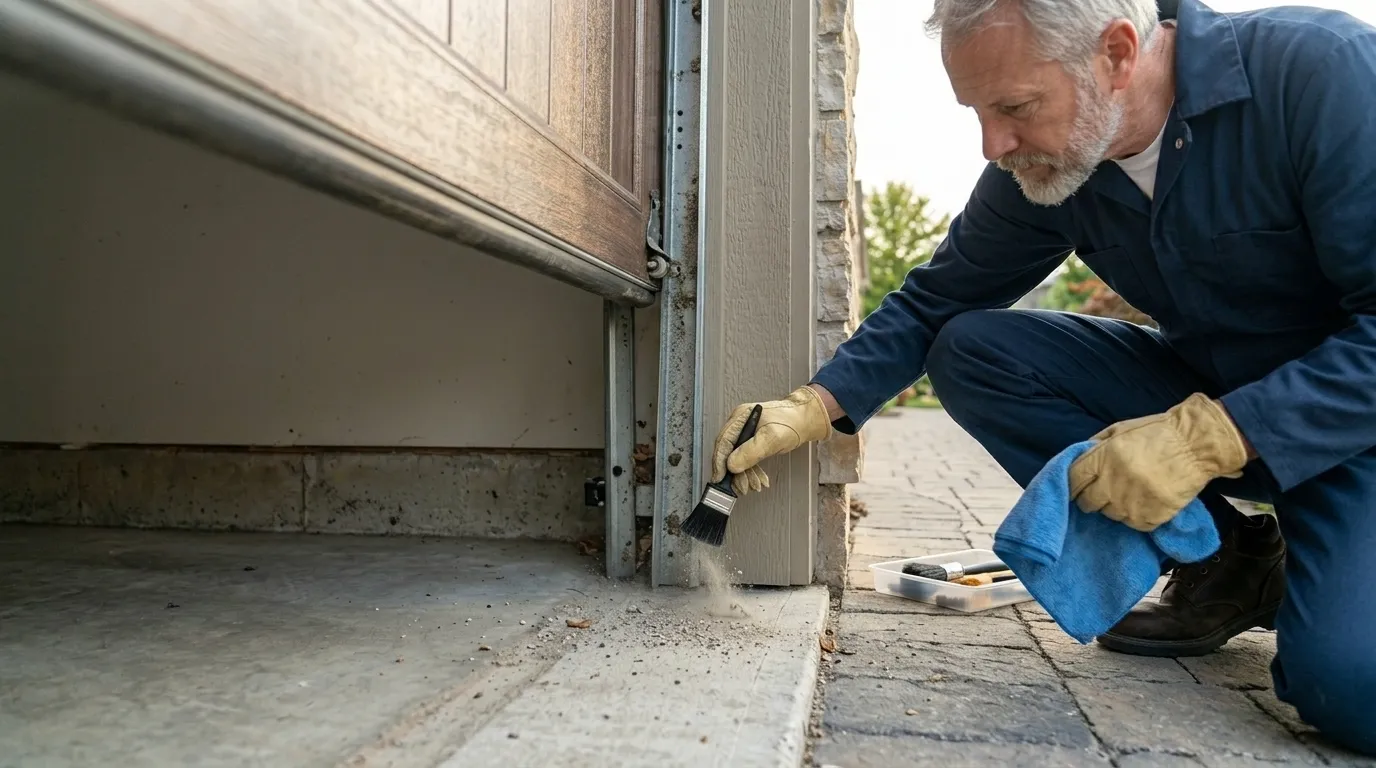
Before you call anyone, look at both sensor eyes from the side, not straight on. They should point at each other on the same flat plane, roughly six inches off the slab. If one looks tilted up or down even slightly, that's your drift.
Next, check the bracket itself, not just the sensor: give it a gentle push and see if it rocks. On houses from the 1960s and 70s stock common across this area, a rocking bracket usually means the anchor screws have backed out of softened or rusted wood, and re-aiming the sensor won't hold for long. Wipe both lenses with a dry cloth.
Then watch for the small LED on each sensor. Steady light on both usually means they're seeing each other; a blinking or dark light on either side means they're not. If the bracket is solid and the lenses are clean but the light still won't hold steady, that's worth a call rather than more guessing.
Trying to force a stubborn opener to close with a bad sensor reading is one repair we won't recommend you push through on your own.
How We Can Help
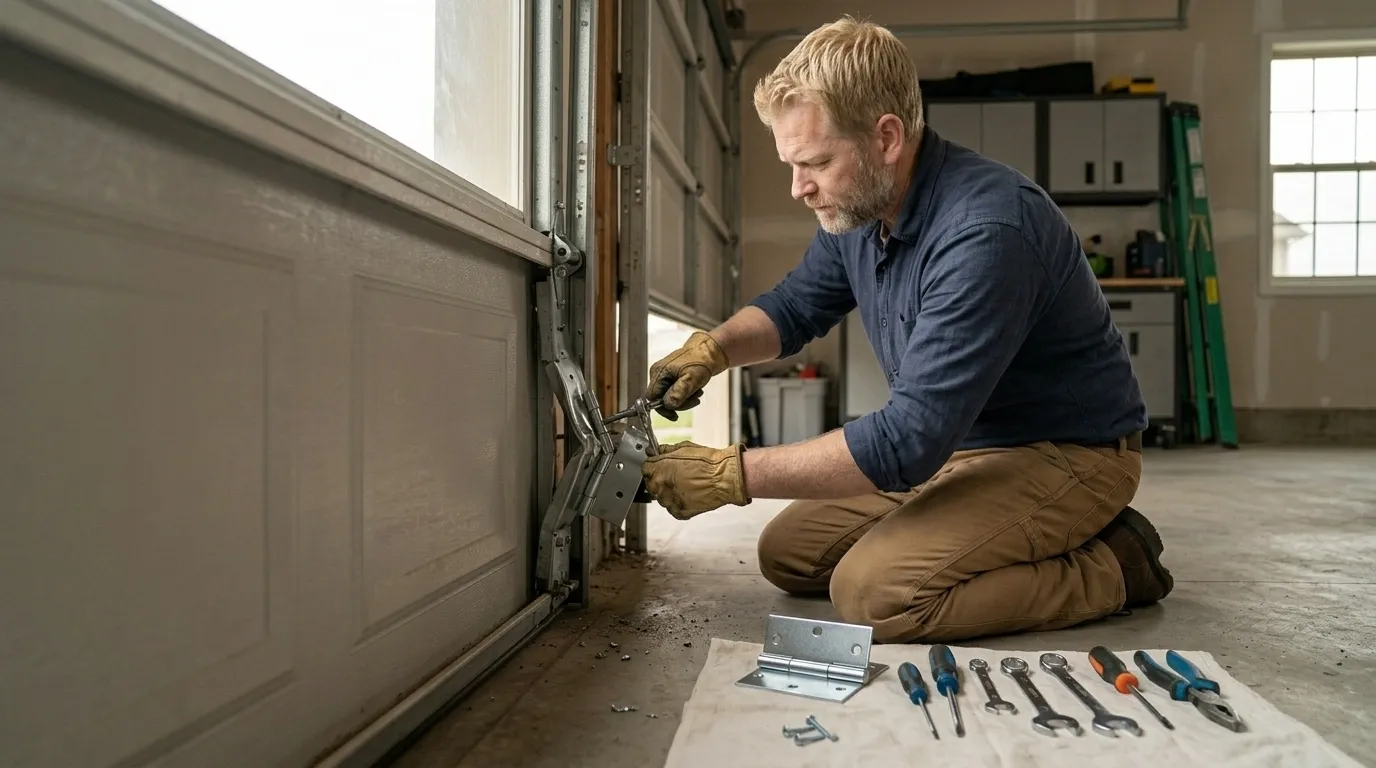
Garage Door Repair
Springs, cables, tracks, rollers, and openers fixed by a tech who explains the problem before touching anything.
Learn more →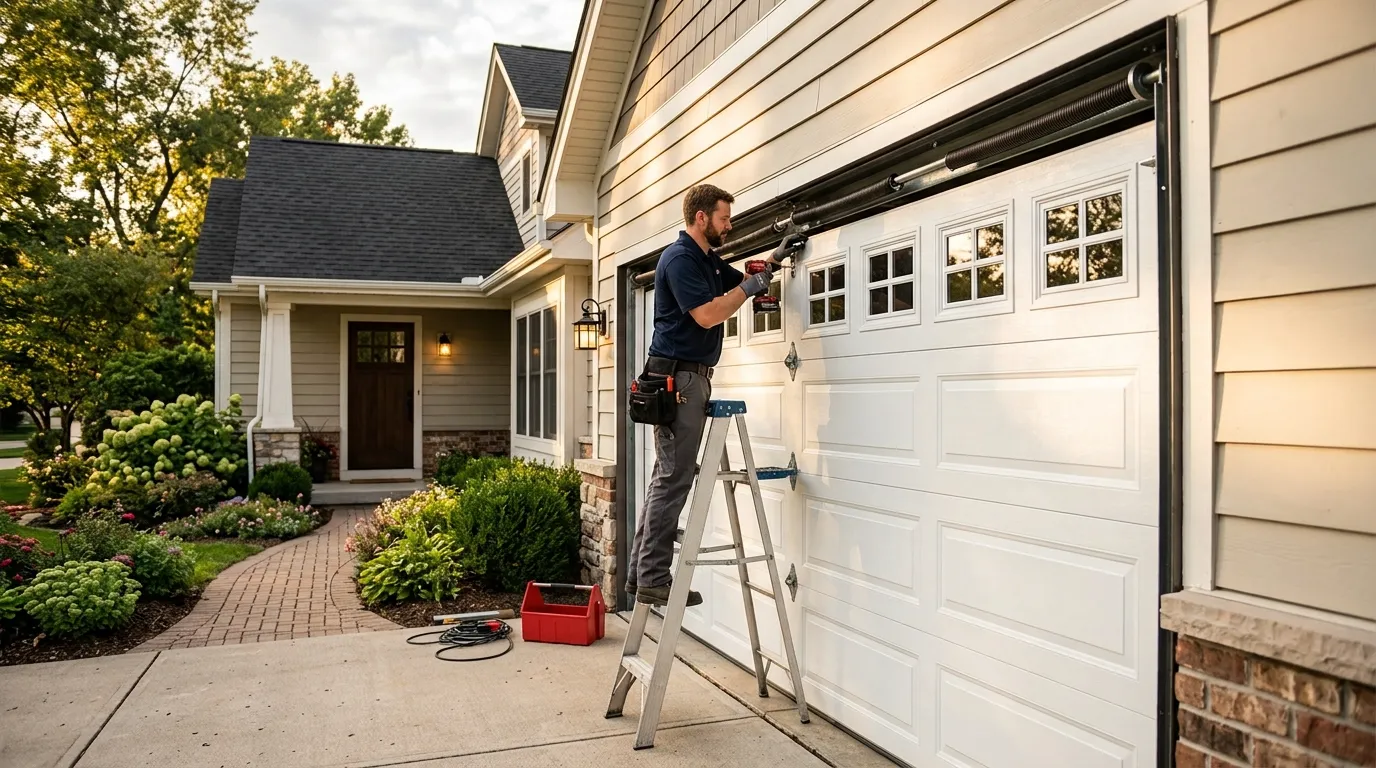
Garage Door Installation
New sectional doors sized and installed for the housing stock actually built in this area.
Learn more →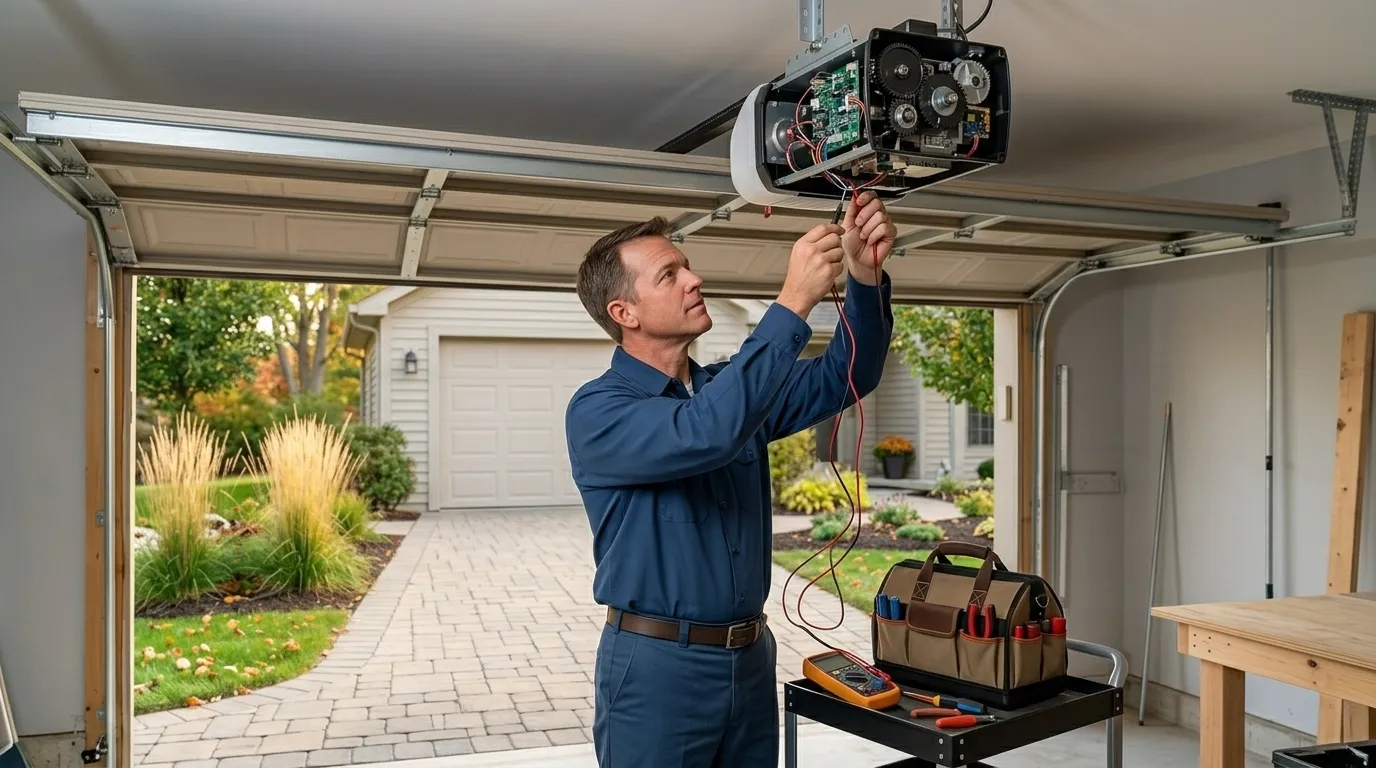
Garage Door Service
Tune-ups, lubrication, and safety checks that catch a small problem before it becomes a service call.
Learn more →Frequently Asked Questions
Why did my garage door sensors suddenly stop working after years of no trouble?
On houses in this area built between 1947 and 1990, it's rarely sudden. The slab and bracket have been drifting slowly for years, and the freeze-thaw swings of a St. Louis winter usually push it over the edge in the same season. What feels sudden is really the last quarter-inch of a long, slow shift.
Can I just re-aim the sensors myself without calling anyone?
Yes, if the bracket itself is solid. Loosen the wing nut, level the eye by watching for a steady LED, then retighten. The problem is brackets on original 1960s-70s hardware that rock when you touch them; re-aiming a loose bracket just buys you a few weeks before it drifts again.
Does the cold really affect a metal sensor bracket that much?
Enough to matter over a full winter. St. Louis sits in a cold moderate climate band, and the expansion and contraction of the metal bracket plus the freeze-thaw movement of the slab underneath it adds up. It's rarely one big shift, more a slow creep that shows up as the door refusing to close by February.
Have a Door That Needs a Second Opinion?
Call and describe what it is doing - we will tell you what it likely is.